Good morning, features editor Matt Heimer here, subbing for Alexei.
I’m guessing that a hefty percentage of readers of this newsletter frequently joke about being “addicted” to their smartphones, or to email, or Slack, or whatever their social feed of choice might be. But some people develop truly debilitating tech habits—the kind that render them unable to hold down a job or even get out of their bedrooms. And the question of what responsibility, if any, tech companies might bear for that problem could become Big Tech’s next big legal headache.
Two landmark civil trials on this issue are nearing a resolution: A jury is deliberating in one case, in California (Meta and Google’s YouTube are the defendants), while closing arguments have begun in another, in New Mexico (only Meta is a defendant there). It’s probably safe to say that neither verdict will be the last word—not with free speech issues, tech business models, and potentially billions of dollars in liability in play.
But however the lawsuits play out, the issue of tech’s impact on our behavior and our psyches is top of mind for a growing number of physicians, parents, and employers—and will only get more urgent as AI plays a bigger role in our lives. In a new feature today, Fortune‘s Kristin Stoller shows us what tech addiction looks like, talking with clients and caregivers from a residential detox center outside Seattle that, she writes, “treats tech addiction as a danger on the scale of alcohol or drug addiction.”
Kristin also pulls back to look at the big questions of whether “tech addiction” qualifies as a legitimate medical diagnosis, and what companies like Meta and Google should do to mitigate it if so. Wherever you stand on the issue, it’s a story that might make you rethink your own tech diet.
Matt Heimer
@MatthewHeimer
matt.heimer@fortune.com
Want to send thoughts or suggestions to Fortune Tech? Drop a line here.
Was this newsletter forwarded to you? Subscribe here!
What Mark Zuckerberg’s AI sidekick could teach CEOs
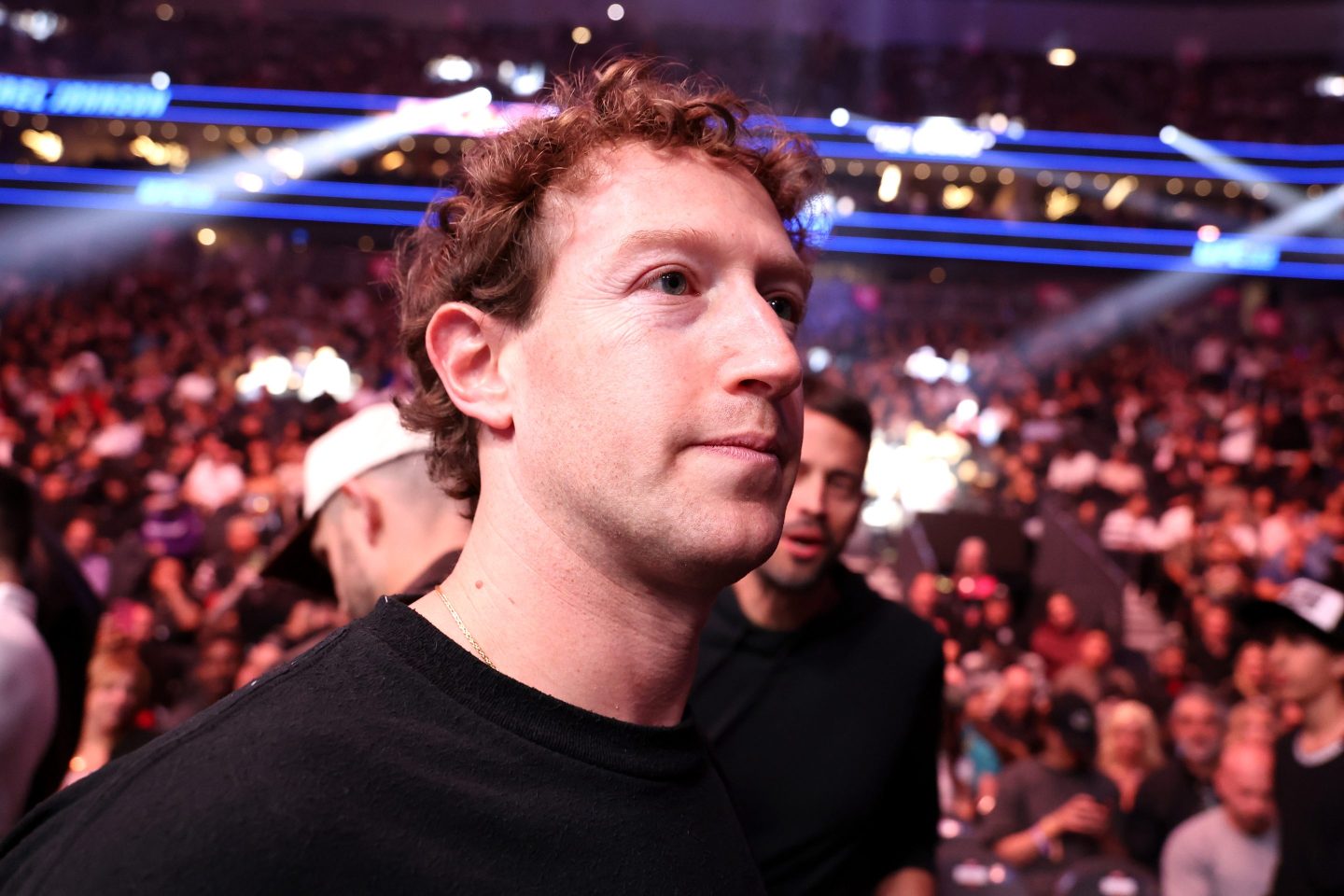
Mark Zuckerberg is nothing if not a true believer. Again and again, the Meta CEO and Facebook founder has thrown himself headfirst into his company’s top initiatives. A few years ago, he made himself the face of the company’s since-sidelined metaverse push, even running internal and media meetings inside Meta’s own VR offices and insisted that participants log in as avatars rather than on Zoom. He also regularly wears Meta’s bulky AI smart glasses in public, aesthetics be damned.
The chief executive is now walking the walk on another Meta imperative: AI adoption. According to the Wall Street Journal, Zuckerberg is building an AI agent to help him as CEO. Details are scarce on the still-in-development tool, but the WSJ reports that it’s getting Zuckerberg information faster, expediting processes that normally require him to query multiple people.
As Meta spends tens of billions of dollars building AI models and massive data centers to power them, it’s become borderline obsessed with staff-wide AI adoption. It is also reportedly among the tech giants that have established leaderboards that rank employees based on their consumption of tokens—a measure of AI use. But of all the methods of inducing AI adoption, Zuckerberg’s leading by example might be the most effective. Learn more from Fortune here. — Claire Zillman
OpenAI hires a former Meta ad veteran
OpenAI has brought on Dave Dugan, a former Meta exec, to lead its budding advertising business. Dugan, who spent more than a decade at Meta—most recently as the company’s vice president of global clients and agencies—has been named OpenAI’s vice president of global ad solutions. He’ll report to the company’s COO, Brad Lightcap, according to the Wall Street Journal.
The move comes as OpenAI begins testing ads on ChatGPT's free and lower-cost subscription tiers, with the high-profile hire signaling how aggressively the company is chasing new revenue streams to fund its sprawling AI infrastructure and research costs.
The decision to put ads in ChatGPT is a notable shift from CEO Sam Altman, who two years ago called advertising a "last resort" business model, citing concerns that it could erode user trust by making people suspect advertisers were influencing the chatbot's responses. OpenAI has said ads will not affect ChatGPT's answers and that user conversations won't be shared with advertisers—though rival Anthropic has already seized on the move, launching a series of ads targeting OpenAI's embrace of advertising.—Beatrice Nolan
Supermicro's chip-smuggling allegations have a precedent—involving Iran
Supermicro, the hardware manufacturer that has spent the past three years riding the AI wave in Silicon Valley, hit a wall last week when prosecutors accused its co-founder of smuggling Nvidia chips. But as Fortune reported Monday, it's not the first time Supermicro has run afoul of export-control regulations; two decades ago, it violated laws restricting trade with Iran.
The hardware manufacturer’s co-founder, Yih-Shyan “Wally” Liaw, was charged on Thursday with conspiring to smuggle about $2.5 billion worth of highly coveted Nvidia GPUs in servers to China. Prosecutors claim that Liaw and others routed servers with banned Nvidia H200 and B200 GPUs through an unnamed Southeast Asian company to Chinese buyers who wanted the chips. Supermicro has said it is cooperating with law enforcement and it was not named in the indictment.
But court records and the company’s own disclosures show that the latest allegations of smuggling to a restricted market show striking similarities to a 20-year-old enforcement action also involving Supermicro. In 2006, in a case little noticed at the time, Supermicro pleaded guilty in federal court to illegally exporting computer equipment to Iran, and paid a $150,000 fine to the Department of Justice. Separately, Supermicro settled parallel related actions with the Commerce and Treasury departments.
The two cases—separated by two decades and vast differences in scope—allegedly share a similar pattern: Find a neighboring country where it is legal to sell to, hide the real buyer, and ship the restricted tech to the illegal market. For more, read Fortune's report.—Amanda Gerut
More tech
—OpenAI is betting big on fusion energy from startup Helion, Axios reports. Helion's best-known investor is OpenAI's Sam Altman.
—Nvidia, Emerald AI partner with big power companies. The goal: faster connections between data centers and energy grids.
—Bitcoin bounces back as Trump gestures toward an Iran off-ramp.
—OnlyFans owner dies at 43. Leo Radvinsky passed "after a long battle with cancer."
—Thanks to agentic AI, 'the one-person unicorn is coming.' So says Alibaba.com's president, Kuo Zhang.