• Home
  • Latest
  • Fortune 500
  • Finance
  • Tech
  • Leadership
  • Lifestyle
  • Rankings
  • Multimedia
CommentaryFederal Reserve

The Strait of Hormuz is the fourth large supply shock this decade. Welcome to the new era of global disorder

By
Jon Hilsenrath
Jon Hilsenrath
Down Arrow Button Icon
By
Jon Hilsenrath
Jon Hilsenrath
Down Arrow Button Icon
March 21, 2026, 7:30 AM ET
powell
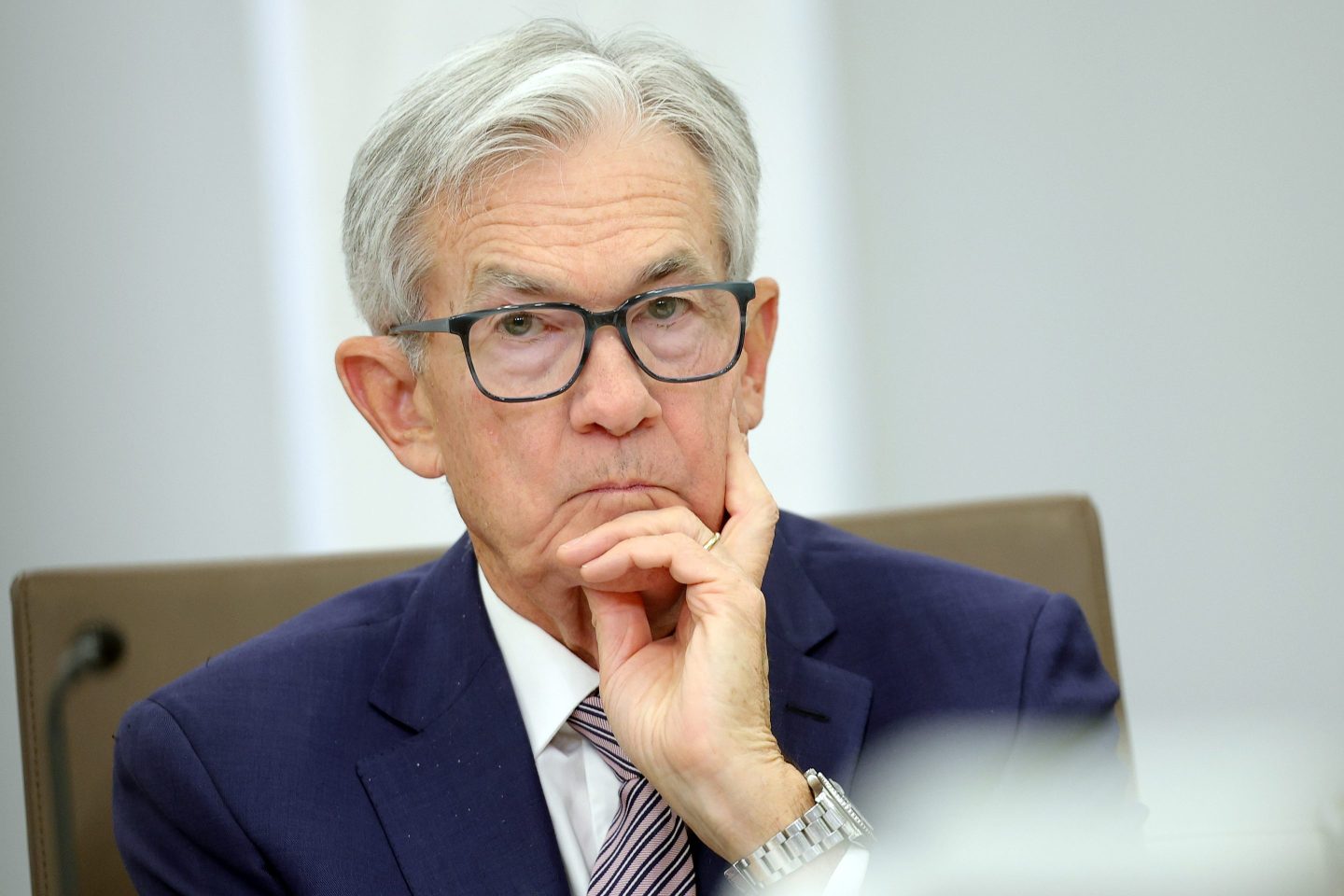
Federal Reserve Chair Jerome Powell participates in a board meeting at the Federal Reserve on March 19, 2026 in Washington, DC. Kevin Dietsch/Getty Images

In 2020, Covid shut down global supply chains and sent inflation surging. In 2022, Russia’s invasion of Ukraine triggered a global energy and food price shock. U.S. tariff policies in 2025 disrupted global trade and helped to stall a long-awaited retreat in domestic inflation. Now, in 2026, we have war in the Persian Gulf. Commerce has frozen in the Strait of Hormuz — and the script looks eerily familiar.

Recommended Video

Gasoline prices are rising — up more than 30% in a month, the largest increase in such a short span since Hurricane Katrina in 2005. Fertilizer is stuck at Middle East export hubs, potentially disrupting planting seasons from Iowa to Africa. Stock prices are falling. Economists are again talking about recession risks. Diesel is up nearly 40%, topping $5 a gallon — a serious problem for an economy where trucks, ships, trains, and farm equipment all run on it.

Four supply shocks in six years. At some point, you have to stop calling it bad luck.

It is time to start asking whether supply shocks are coincidence – a series of uncorrelated, unfortunate events – or whether something larger is going on that has changed the economic landscape for the long-term. If something has changed, then we need to start rethinking our models for how business and the economy work.

A pattern the Fed has missed

The need for a rethink starts at the world’s most consequential economic institution: The Federal Reserve. When asked at a press conference this week to make sense of serial supply shocks, the U.S. central bank chairman, Jerome Powell, seemed to miscalculate the common denominator. “I don’t know that the world has changed in a way that there will be more supply shocks,” he said.

In central bank parlance, the Fed still seems to think it might be able to “look through” yet another one of these events.

That’s a dangerous world view — and it’s one the Fed has reached before. After Covid, the Fed called inflation “transitory” and was slow to raise interest rates. Tariffs – a manmade form of supply shock designed to reorder global trade and raise prices – have been written off as another one-off event, even though they keep coming back. Now, facing the Hormuz disruption, Powell held out a possibility that this too shall pass, and inflation might revert to a norm that may no longer exist.

If the Fed is wrong again, the consequences for American consumers — already living with inflation above target for five straight years — could worsen.

A rupture, not a run of bad luck

The Fed is a large, inertial institution. It takes time to incorporate deviations from recent norms into its models. Officials tend to want to avoid getting ahead of themselves; they lean on established thinking.

Now is time for the Fed to start updating its thinking about supply shocks.

Repeated rounds of tariffs are human choices, as are wars in Iran and Ukraine, not some storm that blew in from nowhere. The Covid crisis certainly did have a large random element to it, but it also had common global denominators – it was propagated through a global order that didn’t respond well to the need for collaboration and containment required by a viral intruder.

Mark Carney, a former central banker who is now Prime Minister of Canada, put his finger on something important in comments in Davos early this year. These crises, he said, are symptoms of a “rupture in the world order,” a breakdown in global, rules-based cooperation and norms that in the past facilitated global integration and commerce.

Over decades, multinational businesses built and operated global supply chains that depended on cooperation and integration to function properly. When cooperation breaks down, the supply chains become vulnerable. They are now transmitting shocks rather than just facilitating commerce. Tariffs and war are examples, as was the chaotic global response to the Covid virus and its aftermath.

“A series of crises in finance, health, energy and geopolitics have laid bare the risks of extreme global integration,” said Carney, a long-time friend of Powell. “More recently, great powers have begun using economic integration as weapons, tariffs as leverage, financial infrastructure as coercion, supply chains as vulnerabilities to be exploited.” The result: Nations increasingly see themselves as fortresses, which counterintuitively makes them more fragile to economic shock.

Remarkably, Carney didn’t call for a return to the old order of global cooperation that, among other things, held down inflation and lifted billions of humans out of poverty in the past quarter century. A realist, he instead tried to see a way through a new era of fracture by seeking to band together with others like Canada caught in the middle of a deepening disorder.

An indefensible posture

The Fed’s models, and its way of thinking, were built during a period of global integration, stable supply chains, and cooperative international norms. As that world frays, the central bank runs the risk of making mistakes. It needs to develop a coherent, updated view of how the global economy is changing.

If supply shocks are a feature of a new global economic disorder, then inflation could prove more stubborn than the Fed’s old models project. That, in turn, could lead the central bank to keep interest rates lower than they ought to be, based on an expectation that inflation will revert to norms that no longer exist. That could make the stubborn economic challenge of inflation even worse.

The Fed was right to keep interest rates unchanged at its policy meeting this week. Expecting each new crisis to be a one-off event is no longer a defensible posture. We may be discovering that nagging inflation is a function of the rupture that Powell’s old friend Carney described just a few weeks earlier. 

The opinions expressed in Fortune.com commentary pieces are solely the views of their authors and do not necessarily reflect the opinions and beliefs of Fortune.


Join us at the Fortune Workplace Innovation Summit May 19–20, 2026, in Atlanta. The next era of workplace innovation is here—and the old playbook is being rewritten. At this exclusive, high-energy event, the world’s most innovative leaders will convene to explore how AI, humanity, and strategy converge to redefine, again, the future of work. Register now.
About the Author
By Jon Hilsenrath
See full bioRight Arrow Button Icon

Latest in Commentary

Finance
Lorem ipsum dolor sit amet, consectetur adipiscing elit, sed do eiusmod tempor incididunt ut labore et dolore magna aliqua. Ut enim ad minim veniam
By Fortune Editors
October 20, 2025
Finance
Lorem ipsum dolor sit amet, consectetur adipiscing elit, sed do eiusmod tempor incididunt ut labore et dolore magna aliqua. Ut enim ad minim veniam
By Fortune Editors
October 20, 2025
Finance
Lorem ipsum dolor sit amet, consectetur adipiscing elit, sed do eiusmod tempor incididunt ut labore et dolore magna aliqua. Ut enim ad minim veniam
By Fortune Editors
October 20, 2025
Finance
Lorem ipsum dolor sit amet, consectetur adipiscing elit, sed do eiusmod tempor incididunt ut labore et dolore magna aliqua. Ut enim ad minim veniam
By Fortune Editors
October 20, 2025
Finance
Lorem ipsum dolor sit amet, consectetur adipiscing elit, sed do eiusmod tempor incididunt ut labore et dolore magna aliqua. Ut enim ad minim veniam
By Fortune Editors
October 20, 2025
Finance
Lorem ipsum dolor sit amet, consectetur adipiscing elit, sed do eiusmod tempor incididunt ut labore et dolore magna aliqua. Ut enim ad minim veniam
By Fortune Editors
October 20, 2025

Most Popular

Finance
Lorem ipsum dolor sit amet, consectetur adipiscing elit, sed do eiusmod tempor incididunt ut labore et dolore magna aliqua. Ut enim ad minim veniam
By Fortune Editors
October 20, 2025
Finance
Lorem ipsum dolor sit amet, consectetur adipiscing elit, sed do eiusmod tempor incididunt ut labore et dolore magna aliqua. Ut enim ad minim veniam
By Fortune Editors
October 20, 2025
Finance
Lorem ipsum dolor sit amet, consectetur adipiscing elit, sed do eiusmod tempor incididunt ut labore et dolore magna aliqua. Ut enim ad minim veniam
By Fortune Editors
October 20, 2025
Finance
Lorem ipsum dolor sit amet, consectetur adipiscing elit, sed do eiusmod tempor incididunt ut labore et dolore magna aliqua. Ut enim ad minim veniam
By Fortune Editors
October 20, 2025
Finance
Lorem ipsum dolor sit amet, consectetur adipiscing elit, sed do eiusmod tempor incididunt ut labore et dolore magna aliqua. Ut enim ad minim veniam
By Fortune Editors
October 20, 2025
Finance
Lorem ipsum dolor sit amet, consectetur adipiscing elit, sed do eiusmod tempor incididunt ut labore et dolore magna aliqua. Ut enim ad minim veniam
By Fortune Editors
October 20, 2025
Fortune Secondary Logo
Rankings
  • 100 Best Companies
  • Fortune 500
  • Global 500
  • Fortune 500 Europe
  • Most Powerful Women
  • Future 50
  • World’s Most Admired Companies
  • See All Rankings
Sections
  • Finance
  • Fortune Crypto
  • Features
  • Leadership
  • Health
  • Commentary
  • Success
  • Retail
  • Mpw
  • Tech
  • Lifestyle
  • CEO Initiative
  • Asia
  • Politics
  • Conferences
  • Europe
  • Newsletters
  • Personal Finance
  • Environment
  • Magazine
  • Education
Customer Support
  • Frequently Asked Questions
  • Customer Service Portal
  • Privacy Policy
  • Terms Of Use
  • Single Issues For Purchase
  • International Print
Commercial Services
  • Advertising
  • Fortune Brand Studio
  • Fortune Analytics
  • Fortune Conferences
  • Business Development
  • Group Subscriptions
About Us
  • About Us
  • Editorial Calendar
  • Press Center
  • Work At Fortune
  • Diversity And Inclusion
  • Terms And Conditions
  • Site Map
  • About Us
  • Editorial Calendar
  • Press Center
  • Work At Fortune
  • Diversity And Inclusion
  • Terms And Conditions
  • Site Map
  • Facebook icon
  • Twitter icon
  • LinkedIn icon
  • Instagram icon
  • Pinterest icon
Jon Hilsenrath covered the Fed for the Wall Street Journal from 2008 through 2016, as part of a 26-year career that included Pulitzer nominations and awards. He runs Serpa Pinto Advisory, an economic advisory business, and is the author of Author of "Yellen," an economics book disguised as a love story, about former Treasury Secretary Janet Yellen, her Nobel-prize winning husband George Akerlof, and their turbulent journey in modern economics.

Latest in Commentary

war
CommentaryMiddle East
Companies are now on the front lines of war. They need to act like it
By Jeremy BashMarch 21, 2026
49 minutes ago
powell
CommentaryFederal Reserve
The Strait of Hormuz is the fourth large supply shock this decade. Welcome to the new era of global disorder
By Jon HilsenrathMarch 21, 2026
1 hour ago
gen z
CommentaryCareers
The entry-level job market is the worst it’s been in 37 years. Stop blaming Gen Z
By Janelle Jones and Nia LawMarch 21, 2026
3 hours ago
trump
Commentarynational debt
The U.S. just hit $39 trillion in debt. Here’s the constitutional fix that Congress won’t touch
By Steve H. Hanke and David M. WalkerMarch 20, 2026
20 hours ago
london
Commentaryinvestment banking
The 19th century banking problem that AI hasn’t solved yet
By Silvio Savarese and Sabastian NilesMarch 20, 2026
23 hours ago
spreng
CommentaryVenture Capital
Unicorns are flush with cash and stuck. A new kind of startup crisis is taking hold in 2026
By David SprengMarch 20, 2026
24 hours ago

© 2026 Fortune Media IP Limited. All Rights Reserved. Use of this site constitutes acceptance of our Terms of Use and Privacy Policy | CA Notice at Collection and Privacy Notice | Do Not Sell/Share My Personal Information
FORTUNE is a trademark of Fortune Media IP Limited, registered in the U.S. and other countries. FORTUNE may receive compensation for some links to products and services on this website. Offers may be subject to change without notice.









