• Home
  • Latest
  • Fortune 500
  • Finance
  • Tech
  • Leadership
  • Lifestyle
  • Rankings
  • Multimedia

Trendingnow

1

As CEO of the $96 billion Sam’s Club, Latriece Watkins is testing her mettle at the warehouse retailer that produced CEOs for Walmart, Target, and Walgreens

2

Jeff Bezos wants the bottom half of earners to pay zero income tax—he says nurses making just $75K should save $12K a year

3

As AI slashes white-collar jobs, Salesforce CEO Marc Benioff says almost no one is being hired—except in sales

1

As CEO of the $96 billion Sam’s Club, Latriece Watkins is testing her mettle at the warehouse retailer that produced CEOs for Walmart, Target, and Walgreens

2

Jeff Bezos wants the bottom half of earners to pay zero income tax—he says nurses making just $75K should save $12K a year

3

As AI slashes white-collar jobs, Salesforce CEO Marc Benioff says almost no one is being hired—except in sales
Future of Workgig economy

Seattle passed a law to pay gig workers more and it backfired for one reason: economics

By
Andrew Garin
Andrew Garin
,
Brian K. Kovak
Brian K. Kovak
,
Yuan An
Yuan An
, and
The Conversation
The Conversation
Down Arrow Button Icon
By
Andrew Garin
Andrew Garin
,
Brian K. Kovak
Brian K. Kovak
,
Yuan An
Yuan An
, and
The Conversation
The Conversation
Down Arrow Button Icon
March 19, 2026, 12:29 PM ET
uber
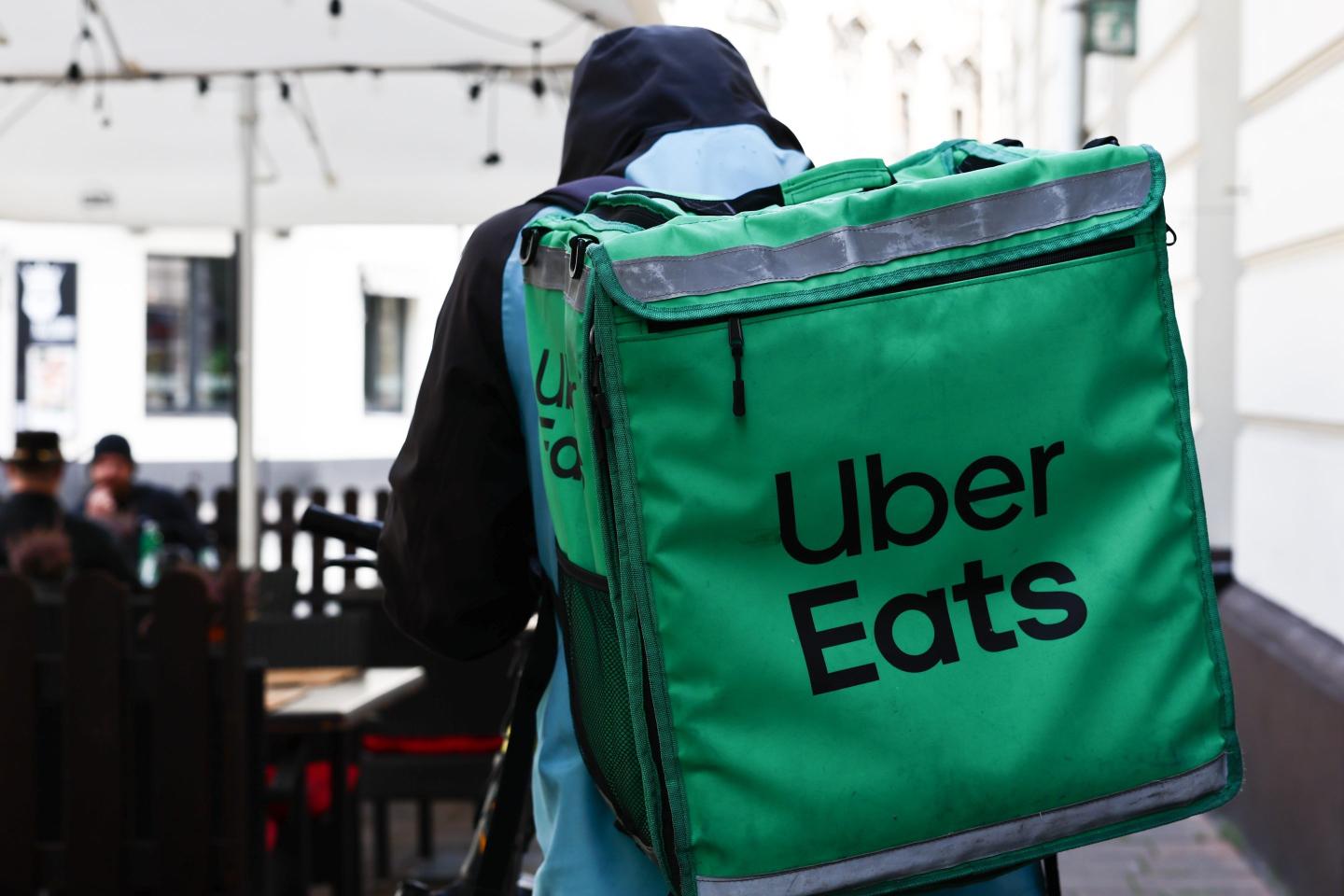
Here's how the gig economy works—or doesn't.Jakub Porzycki/NurPhoto via Getty Images

If you’ve ever ordered food through DoorDash, Uber Eats or Instacart, you may have realized the person who delivers it isn’t a salaried employee. They’re gig workers – independent contractors who pick up delivery tasks through an app, get paid per delivery and have no guaranteed hours, benefits or minimum wage protections.

Recommended Video

Policymakers in several cities have tried to change that.

Seattle is a good example. In January 2024, the city implemented a law requiring delivery apps to pay drivers a minimum rate for each task: a combination of per-minute and per-mile minimum compensation that set a floor of US$5 per delivery.

The goal was straightforward: ensure that the people bringing you your lunch earn a decent living.

We are labor economists who have extensively studied the emergence of the gig economy and previous policy efforts designed to provide economic security to workers in unstable employment situations. We wanted to know how new gig economy regulations like the one in Seattle were playing out in practice.

When we studied what happened to delivery drivers’ earnings after Seattle’s payment rule took effect, we found that despite base pay per delivery roughly doubling, their total monthly earnings barely changed. That’s because competition among drivers for delivery tasks intensified while customers made fewer orders and tipped less on each order in the aftermath. Those effects combined washed out almost all of the intended gains.

No change in monthly earnings

To understand the policy’s effects, we used detailed data from Gridwise, an app that gig workers use to track their earnings across multiple delivery and ride-sharing platforms. This gave us an unusually complete view of how much the drivers were earning across all of the apps and platforms they were using.

We compared what happened to the earnings of drivers who were primarily working in Seattle before the law took effect with the earning of drivers working in other parts of Washington state, where nothing had changed. By tracking both groups over the months before and after the policy, we isolated the policy’s impact from broader trends affecting all drivers.

Base pay per delivery in Seattle jumped from about $5 to over $12, as intended. But base pay is only part of the picture. Tips typically make up most of a platform delivery driver’s income, since customers generally tip 10% to 20% of the cost of their meals.

After the law took effect, tips fell sharply. Delivery apps passed higher costs on to consumers through new fees. DoorDash added a roughly $5 “regulatory response fee” to Seattle orders, and customers responded by tipping less.

Some platforms went further: Uber Eats removed the option for Seattle customers to tip at checkout. The drop in tips offset more than one-third of the base pay increase.

The other major change was that drivers started completing fewer deliveries.

Beginning in the second month after the policy took effect, Seattle drivers who had been consistently active on the apps prior to the change completed roughly 20% to 30% fewer monthly deliveries than they would have without the policy.

Importantly, these drivers didn’t leave the apps. They were still logging on and spending about the same amount of time working. They just weren’t getting as many delivery offers.

What were drivers doing with all that extra time on the app? Our data shows they were spending more of it waiting.

The share of on-app time spent actually performing paid deliveries fell substantially. Wait times between tasks increased by about five minutes, nearly doubling from pre-policy levels. And drivers went farther between deliveries – suggesting they were actively cruising toward restaurant-dense areas to find their next task, burning more gas without being paid for those extra miles they were logging.

Put those pieces together – higher pay per delivery, but fewer deliveries and lower tips – and they almost exactly cancel out. After a brief bump in the first month, monthly earnings returned to pre-policy levels.

Why gig markets are different

To understand why this happened, it helps to think about how gig delivery markets differ from traditional employment.

In a conventional job, raising the minimum wage creates a clear divide: Workers who keep their jobs earn more, while others may struggle to find work if their employers cut jobs.

But in gig delivery, there’s no such divide. There’s no hiring or firing involved; anyone can download the app and start looking for work. Delivery tasks are distributed among everyone who is online, and there’s no sharp boundary between having a job and not having one.

When what drivers get paid per delivery rises, gig work becomes more attractive, drawing new drivers into the market. Meanwhile, higher costs to pay drivers are passed along to consumers through increased delivery prices, which can lead to fewer orders and lower tips. More drivers chasing fewer deliveries means longer waits for tasks.

This process continues until the higher pay per task is fully offset by the longer gaps between paid work.

Our data confirms this pattern.

While deliveries by existing drivers fell sharply in Seattle, new entrants arrived. Within three months, newcomers were doing most of Seattle’s deliveries.

A food delivery gig worker holds up his smartphone with a food delivery order. The phone displays the information in Spanish.
A food delivery driver displays a food order on his phone that would earn him $3.52 for a 23-minute ride, not counting a return trip. Craig F. Walker/The Boston Globe via Getty Images

What this means going forward

To be sure, gig workers’ low pay is a real problem. The impulse behind Seattle’s law reflects legitimate concerns.

But our findings do suggest that efforts to directly regulate what gig workers earn per task they complete won’t easily fix that problem.

As long as anyone can join the platform and start competing for deliveries, the guarantee of higher pay per task will attract more drivers until the benefit is competed away through longer wait times.

Other cities and states are choosing this route

Actually raising earnings might require limiting the number of active drivers – something like the taxi medallion systems some cities once used to ensure high driver pay.

But entry barriers undermine the flexibility that draws many people to gig work in the first place. And platform behavior matters too: If apps eventually restore normal tipping features rather than strategically discouraging tips, which New York City and some other jurisdictions are now requiring, the picture for drivers could improve somewhat.

A big group of delivery workers people seen on a street with their motorcycles.
Delivery drivers await orders in the Queens borough of New York City. Lindsey Nicholson/UCG/Universal Images Group via Getty Images

Still, there may not be a solution that preserves all the benefits of the current system while also guaranteeing higher pay.

Nevertheless, several cities across the country are considering similar regulations.

New York City implemented its own minimum pay rate for delivery workers in late 2023. City councils and state lawmakers in Chicago, Colorado, Minnesota and elsewhere have proposed similar protections.

Seattle’s experience suggests all cities should proceed with caution and be aware of the limits of what per-task pay regulations can achieve when the door is always open to new workers.

Andrew Garin, Associate Professor of Economics, Carnegie Mellon University; Brian K. Kovak, Professor of Economics and Public Policy, Carnegie Mellon University, and Yuan An, Ph.D. Student in Economics, Carnegie Mellon University

This article is republished from The Conversation under a Creative Commons license. Read the original article.

The Conversation
The Fortune 500 Innovation Forum will convene Fortune 500 executives, U.S. policy officials, top founders, and thought leaders to help define what’s next for the American economy, Nov. 16-17 in Detroit. Apply here.
About the Authors
By Andrew Garin
See full bioRight Arrow Button Icon
By Brian K. Kovak
See full bioRight Arrow Button Icon
By Yuan An
See full bioRight Arrow Button Icon
By The Conversation
See full bioRight Arrow Button Icon

Latest in Future of Work

Finance
Lorem ipsum dolor sit amet, consectetur adipiscing elit, sed do eiusmod tempor incididunt ut labore et dolore magna aliqua. Ut enim ad minim veniam
By Fortune Editors
October 20, 2025
Finance
Lorem ipsum dolor sit amet, consectetur adipiscing elit, sed do eiusmod tempor incididunt ut labore et dolore magna aliqua. Ut enim ad minim veniam
By Fortune Editors
October 20, 2025
Finance
Lorem ipsum dolor sit amet, consectetur adipiscing elit, sed do eiusmod tempor incididunt ut labore et dolore magna aliqua. Ut enim ad minim veniam
By Fortune Editors
October 20, 2025
Finance
Lorem ipsum dolor sit amet, consectetur adipiscing elit, sed do eiusmod tempor incididunt ut labore et dolore magna aliqua. Ut enim ad minim veniam
By Fortune Editors
October 20, 2025
Finance
Lorem ipsum dolor sit amet, consectetur adipiscing elit, sed do eiusmod tempor incididunt ut labore et dolore magna aliqua. Ut enim ad minim veniam
By Fortune Editors
October 20, 2025
Finance
Lorem ipsum dolor sit amet, consectetur adipiscing elit, sed do eiusmod tempor incididunt ut labore et dolore magna aliqua. Ut enim ad minim veniam
By Fortune Editors
October 20, 2025

Most Popular

Finance
Lorem ipsum dolor sit amet, consectetur adipiscing elit, sed do eiusmod tempor incididunt ut labore et dolore magna aliqua. Ut enim ad minim veniam
By Fortune Editors
October 20, 2025
Finance
Lorem ipsum dolor sit amet, consectetur adipiscing elit, sed do eiusmod tempor incididunt ut labore et dolore magna aliqua. Ut enim ad minim veniam
By Fortune Editors
October 20, 2025
Finance
Lorem ipsum dolor sit amet, consectetur adipiscing elit, sed do eiusmod tempor incididunt ut labore et dolore magna aliqua. Ut enim ad minim veniam
By Fortune Editors
October 20, 2025
Finance
Lorem ipsum dolor sit amet, consectetur adipiscing elit, sed do eiusmod tempor incididunt ut labore et dolore magna aliqua. Ut enim ad minim veniam
By Fortune Editors
October 20, 2025
Finance
Lorem ipsum dolor sit amet, consectetur adipiscing elit, sed do eiusmod tempor incididunt ut labore et dolore magna aliqua. Ut enim ad minim veniam
By Fortune Editors
October 20, 2025
Finance
Lorem ipsum dolor sit amet, consectetur adipiscing elit, sed do eiusmod tempor incididunt ut labore et dolore magna aliqua. Ut enim ad minim veniam
By Fortune Editors
October 20, 2025
Fortune Secondary Logo
Rankings
  • 100 Best Companies
  • Fortune 500
  • Global 500
  • Fortune 500 Europe
  • Most Powerful Women
  • World's Most Admired Companies
  • See All Rankings
  • Lists Calendar
Sections
  • Finance
  • Fortune Crypto
  • Features
  • Leadership
  • Health
  • Commentary
  • Success
  • Retail
  • Mpw
  • Tech
  • Lifestyle
  • CEO Initiative
  • Asia
  • Politics
  • Conferences
  • Europe
  • Newsletters
  • Personal Finance
  • Environment
  • Magazine
  • Education
Customer Support
  • Frequently Asked Questions
  • Customer Service Portal
  • Privacy Policy
  • Terms Of Use
  • Single Issues For Purchase
  • International Print
Commercial Services
  • Advertising
  • Fortune Brand Studio
  • Fortune Analytics
  • Fortune Conferences
  • Business Development
  • Group Subscriptions
About Us
  • About Us
  • Press Center
  • Work At Fortune
  • Terms And Conditions
  • Site Map
  • About Us
  • Press Center
  • Work At Fortune
  • Terms And Conditions
  • Site Map
  • Facebook icon
  • Twitter icon
  • LinkedIn icon
  • Instagram icon
  • Pinterest icon

Latest in Future of Work

A woman stands with her hand resting on a table
Future of WorkJobs
When loyalty is rewarded: Top earners who stay in their jobs get much larger pay increases than those who switch
By Jacqueline MunisMay 30, 2026
2 hours ago
Dan Rogers speaking on stage.
AIAsana
Asana was battered by the AI boom. Now it’s betting its future on humans and agents working together.
By Beatrice NolanMay 29, 2026
14 hours ago
Conan O'Brien holds up a Harvard sports sweater given to him after he delivered the commencement address at Harvard University
SuccessCareers
Conan O’Brien tells Harvard graduates to play down their $250K Ivy League degree—and instead embrace being humble and ‘bad at things’
By Preston ForeMay 29, 2026
18 hours ago
The AI arms race in cybersecurity has started. Most companies aren’t ready
Cryptocyber
The AI arms race in cybersecurity has started. Most companies aren’t ready
By Philip MartinMay 29, 2026
18 hours ago
Lisa Su, CEO of AMD
SuccessJobs
AMD CEO Lisa Su tells grads they shape the future, not AI—and the world doesn’t just need ‘people who know how to use powerful tools’
By Emma BurleighMay 29, 2026
18 hours ago
r
CommentaryLayoffs
Big Tech is laying off developers. My company just hired its first. We’re both right about AI
By Rob CollieMay 29, 2026
22 hours ago

Most Popular

As CEO of the $96 billion Sam’s Club, Latriece Watkins is testing her mettle at the warehouse retailer that produced CEOs for Walmart, Target, and Walgreens
Magazine
As CEO of the $96 billion Sam’s Club, Latriece Watkins is testing her mettle at the warehouse retailer that produced CEOs for Walmart, Target, and Walgreens
By Emma HinchliffeMay 27, 2026
3 days ago
Jeff Bezos wants the bottom half of earners to pay zero income tax—he says nurses making just $75K should save $12K a year
Success
Jeff Bezos wants the bottom half of earners to pay zero income tax—he says nurses making just $75K should save $12K a year
By Preston ForeMay 21, 2026
9 days ago
As AI slashes white-collar jobs, Salesforce CEO Marc Benioff says almost no one is being hired—except in sales
Success
As AI slashes white-collar jobs, Salesforce CEO Marc Benioff says almost no one is being hired—except in sales
By Emma BurleighMay 28, 2026
2 days ago
UBS says Ron DeSantis has a problem with his plan to help 92% of homeowners save on property taxes: His own state's data
Personal Finance
UBS says Ron DeSantis has a problem with his plan to help 92% of homeowners save on property taxes: His own state's data
By Nick LichtenbergMay 28, 2026
2 days ago
Current price of oil as of May 29, 2026
Personal Finance
Current price of oil as of May 29, 2026
By Joseph HostetlerMay 29, 2026
21 hours ago
Researchers let AI models run a simulated society. Claude was the safest—and Grok committed 180 crimes and went extinct within 4 days
AI
Researchers let AI models run a simulated society. Claude was the safest—and Grok committed 180 crimes and went extinct within 4 days
By Jake AngeloMay 28, 2026
2 days ago

© 2026 Fortune Media IP Limited. All Rights Reserved. Use of this site constitutes acceptance of our Terms of Use and Privacy Policy | CA Notice at Collection and Privacy Notice | Do Not Sell/Share My Personal Information
FORTUNE is a trademark of Fortune Media IP Limited, registered in the U.S. and other countries. FORTUNE may receive compensation for some links to products and services on this website. Offers may be subject to change without notice.