• Home
  • Latest
  • Fortune 500
  • Finance
  • Tech
  • Leadership
  • Lifestyle
  • Rankings
  • Multimedia
Cybersecuritycyber

Every Fortune 500 CEO’s nightmare: the Iran war and the Pandora’s Box of AI cyber warfare

Nick Lichtenberg
By
Nick Lichtenberg
Nick Lichtenberg
Business Editor
Down Arrow Button Icon
Nick Lichtenberg
By
Nick Lichtenberg
Nick Lichtenberg
Business Editor
Down Arrow Button Icon
March 18, 2026, 3:54 PM ET
iran
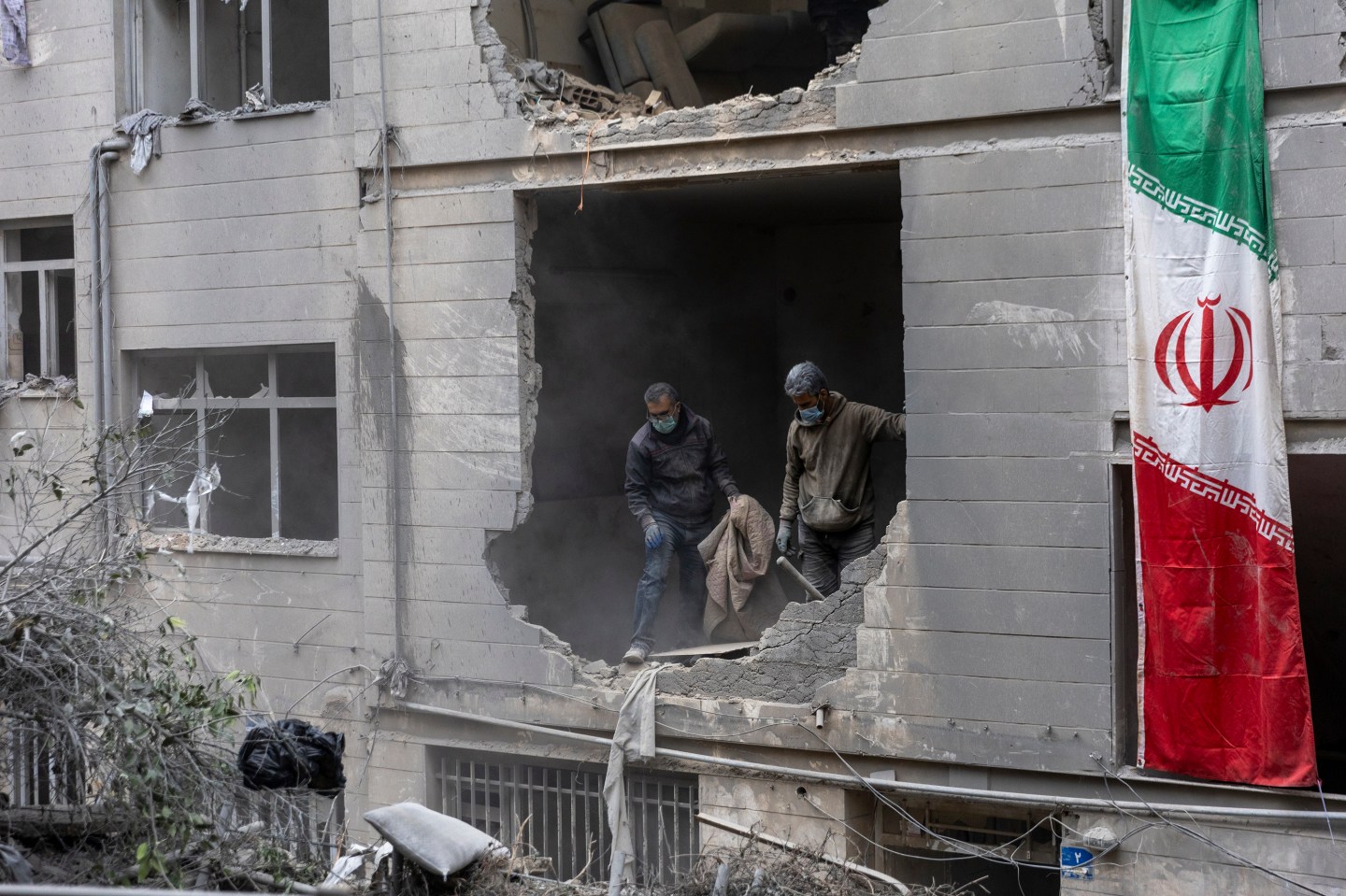
People clear rubble in a house in the Beryanak District after it was damaged by missile attacks two days before, on March 15, 2026 in Tehran, Iran. The United States and Israel continued their joint attack on Iran that began on February 28. Iran retaliated by firing waves of missiles and drones at Israel, and targeting U.S. allies in the region. Majid Saeedi/Getty Images

When U.S. and Israeli forces launched a sweeping air and sea campaign against Iran’s military infrastructure in late Feb. 2026, the missiles weren’t the only weapons that flew. Within hours, more than 60 Iranian-aligned cyber groups mobilized, according to Palo Alto Networks’ Unit 42, armed with AI-assisted reconnaissance tools and a mandate to strike back where it hurts most: America’s corporate nervous system.

Recommended Video

​Within hours, cybersecurity agencies in the UK and Canada both warned about heightened threat levels, followed by similar warnings from Europol and the Department of Homeland Security.

For Fortune 500 CEOs, the message couldn’t be clearer—or more unsettling. The Iran war has blown open a Pandora’s box of AI-powered cyber warfare, and no firewall, no matter how expensive, was built for what’s coming next.

A new attack template

Iran’s cyber playbook has already claimed its first major corporate victim. Iranian-aligned hackers disrupted operations at U.S. medical technology giant Stryker, as first reported by the Wall Street Journal and confirmed by the company—a sobering signal that the private sector is squarely in the crosshairs.

According to threat intelligence firm Flashpoint, the Iranian-aligned hackers executed a sophisticated “no-malware” attack on Stryker—not through traditional malicious code, but by weaponizing Microsoft Intune, a legitimate cloud-based endpoint management service, to remotely wipe devices across the company’s network. The attack has sent a chill through every corporate IT department in America: the tools used to manage your own infrastructure can now be turned against you.​

The more chilling template, analysts warn, isn’t the conventional data breach—it’s a coordinated campaign designed to destroy institutional trust from the inside out. Iran’s state-backed hacking groups, including Void Manticore aka Handala, have already deployed ransomware-style attacks, distributed denial-of-service operations, and “wiper” attacks engineered to permanently erase data from corporate servers. These aren’t smash-and-grab operations. They are psychological warfare at enterprise scale.

According to Flashpoint, the Handala Hack Team claimed responsibility for breaching a Mossad “secret treasury,” allegedly leaking 50,000 confidential emails. In a chilling escalation, the group also claimed to have identified the precise geographic coordinates of a target through cyber reconnaissance—and that a kinetic missile strike followed. Cyber and physical warfare, in other words, are no longer separate domains.

“Aggressive and creative resistance is baked into the ethos of the Iranian security apparatus,” Brian Carbaugh, co-founder and CEO of AI-based security firm Andesite and a former director of the CIA’s elite Special Activities Center, previously told Fortune. “For business leaders and those protecting businesses and making decisions at a very high level, they need to be prepared for this to continue on for some time and for the conflict to take a number of different courses of direction and swerve around the road.”​

AI as the great equalizer—and the great threat multiplier

What separates this conflict from previous cyber flashpoints is the role of artificial intelligence (AI) on both sides of the battlefield. U.S. and Israeli forces have used AI platforms from Palantir and the Pentagon’s Maven Smart System to execute more than 15,000 strikes since the war began—over 1,000 per day—with remarkable precision, according to security columnist Shimon Sherman of the Jewish News Syndicate. AI has compressed the military “kill chain” from days to minutes, he added.​ (Iran, for it’s part, has used its firepower to target data centers in the UAE).

But cybersecurity firm CloudSek argued in a blog post that the same compression is now available to Iran’s proxies—and to any hacker group with a laptop and access to an AI reconnaissance pipeline. AI tools have sharply lowered the barrier to identifying and exploiting exposed industrial control systems, default credentials, and internet-facing corporate infrastructure across America. Threat groups with no prior industrial control systems background are now, effectively, sophisticated actors overnight.

​Flashpoint said the 313 Team, an Iranian-aligned Cyber Islamic Resistance group, claimed a complete shutdown of the official British Army website—a clear signal that state-adjacent institutions and critical government infrastructure are primary targets.

The defender is already behind

What makes the current threat environment uniquely dangerous for corporate America is the simultaneous convergence of physical and cyber disruption. On March 17 alone, a drone strike on the Fujairah oil hub in the UAE halted refining operations; a Kuwaiti-flagged LNG tanker was damaged by drone debris near the Strait of Hormuz; and the U.S. Embassy in Baghdad suffered its heaviest attack since the war began. These are not abstract geopolitical events—they are direct shocks to the energy supply chains that power global commerce.

“The conflict has entered a stage where the economic and operational impacts are becoming much more visible,” said Josh Lefkowitz, CEO of Flashpoint, in a statement issued Wednesday. “We’re seeing disruption at major transportation hubs, pressure on global shipping routes, and cyber activity targeting private companies already creating ripple effects across supply chains, travel, and day-to-day commercial operations. For organizations connected to the region, the risk environment now includes simultaneous physical disruption and cyber activity.”

The timing couldn’t be worse for corporate America. The Cybersecurity and Infrastructure Security Agency (CISA)—the federal government’s primary cyber defense body—is hobbled by furloughs, a leadership reshuffle, and the lingering effects of a partial government shutdown. The cavalry, in other words, is understaffed and reorganizing.​

Meanwhile, Iran’s own command structure has been decimated by allied strikes—including the elimination of Ali Larijani and Gholamreza Soleimani, commander of the Basij paramilitary unit—which, paradoxically, makes the threat more dangerous, not less. “The Iranian leadership vacuum is likely going to lead to more unpredictable, decentralized proxy attacks,” Kathryn Raines, a former NSA expert who is now a threat intel team lead at Flashpoint, told Fortune‘s Amanda Gerut. Decentralized means harder to anticipate, harder to attribute, and harder to stop.​

President Trump has also accused Iran of weaponizing AI for disinformation, allegedly collaborating with media outlets to shape narratives around the conflict. Corporate reputations—not just networks—are now targets.​

The boardroom imperative

Every Fortune 500 CEO sitting in a board meeting this week faces the same stark reality: the Iran war has permanently altered the cyber threat landscape. AI hasn’t just made attacks faster—it has made them cheaper, stealthier, and accessible to a sprawling ecosystem of state proxies and opportunistic hacktivists who share the same AI-assisted toolkit.

The Pandora’s box is open. The question isn’t whether the next major attack on a U.S. corporation is coming—it’s whether the C-suite will be ready when it does.

Additional reporting contributed by Amanda Gerut.
In 2001, Fortune first convened “The Smartest People We Know,” bringing together CEOs and founders, builders and investors, thinkers and doers. Since then, Fortune Brainstorm Tech has been the place where bold ideas collide. From June 8–10, we will return to Aspen—where it all began—to mark 25 years of Brainstorm. Register now.
About the Author
Nick Lichtenberg
By Nick LichtenbergBusiness Editor
LinkedIn icon

Nick Lichtenberg is business editor and was formerly Fortune's executive editor of global news.

See full bioRight Arrow Button Icon

Latest in Cybersecurity

Finance
Lorem ipsum dolor sit amet, consectetur adipiscing elit, sed do eiusmod tempor incididunt ut labore et dolore magna aliqua. Ut enim ad minim veniam
By Fortune Editors
October 20, 2025
Finance
Lorem ipsum dolor sit amet, consectetur adipiscing elit, sed do eiusmod tempor incididunt ut labore et dolore magna aliqua. Ut enim ad minim veniam
By Fortune Editors
October 20, 2025
Finance
Lorem ipsum dolor sit amet, consectetur adipiscing elit, sed do eiusmod tempor incididunt ut labore et dolore magna aliqua. Ut enim ad minim veniam
By Fortune Editors
October 20, 2025
Finance
Lorem ipsum dolor sit amet, consectetur adipiscing elit, sed do eiusmod tempor incididunt ut labore et dolore magna aliqua. Ut enim ad minim veniam
By Fortune Editors
October 20, 2025
Finance
Lorem ipsum dolor sit amet, consectetur adipiscing elit, sed do eiusmod tempor incididunt ut labore et dolore magna aliqua. Ut enim ad minim veniam
By Fortune Editors
October 20, 2025
Finance
Lorem ipsum dolor sit amet, consectetur adipiscing elit, sed do eiusmod tempor incididunt ut labore et dolore magna aliqua. Ut enim ad minim veniam
By Fortune Editors
October 20, 2025

Most Popular

Finance
Lorem ipsum dolor sit amet, consectetur adipiscing elit, sed do eiusmod tempor incididunt ut labore et dolore magna aliqua. Ut enim ad minim veniam
By Fortune Editors
October 20, 2025
Finance
Lorem ipsum dolor sit amet, consectetur adipiscing elit, sed do eiusmod tempor incididunt ut labore et dolore magna aliqua. Ut enim ad minim veniam
By Fortune Editors
October 20, 2025
Finance
Lorem ipsum dolor sit amet, consectetur adipiscing elit, sed do eiusmod tempor incididunt ut labore et dolore magna aliqua. Ut enim ad minim veniam
By Fortune Editors
October 20, 2025
Finance
Lorem ipsum dolor sit amet, consectetur adipiscing elit, sed do eiusmod tempor incididunt ut labore et dolore magna aliqua. Ut enim ad minim veniam
By Fortune Editors
October 20, 2025
Finance
Lorem ipsum dolor sit amet, consectetur adipiscing elit, sed do eiusmod tempor incididunt ut labore et dolore magna aliqua. Ut enim ad minim veniam
By Fortune Editors
October 20, 2025
Finance
Lorem ipsum dolor sit amet, consectetur adipiscing elit, sed do eiusmod tempor incididunt ut labore et dolore magna aliqua. Ut enim ad minim veniam
By Fortune Editors
October 20, 2025
Fortune Secondary Logo
Rankings
  • 100 Best Companies
  • Fortune 500
  • Global 500
  • Fortune 500 Europe
  • Most Powerful Women
  • Future 50
  • World’s Most Admired Companies
  • See All Rankings
Sections
  • Finance
  • Fortune Crypto
  • Features
  • Leadership
  • Health
  • Commentary
  • Success
  • Retail
  • Mpw
  • Tech
  • Lifestyle
  • CEO Initiative
  • Asia
  • Politics
  • Conferences
  • Europe
  • Newsletters
  • Personal Finance
  • Environment
  • Magazine
  • Education
Customer Support
  • Frequently Asked Questions
  • Customer Service Portal
  • Privacy Policy
  • Terms Of Use
  • Single Issues For Purchase
  • International Print
Commercial Services
  • Advertising
  • Fortune Brand Studio
  • Fortune Analytics
  • Fortune Conferences
  • Business Development
  • Group Subscriptions
About Us
  • About Us
  • Editorial Calendar
  • Press Center
  • Work At Fortune
  • Diversity And Inclusion
  • Terms And Conditions
  • Site Map
  • About Us
  • Editorial Calendar
  • Press Center
  • Work At Fortune
  • Diversity And Inclusion
  • Terms And Conditions
  • Site Map
Fortune Secondary Logo
Rankings
  • 100 Best Companies
  • Fortune 500
  • Global 500
  • Fortune 500 Europe
  • Most Powerful Women
  • Future 50
  • World’s Most Admired Companies
  • See All Rankings
Sections
  • Finance
  • Fortune Crypto
  • Features
  • Leadership
  • Health
  • Commentary
  • Success
  • Retail
  • Mpw
  • Tech
  • Lifestyle
  • CEO Initiative
  • Asia
  • Politics
  • Conferences
  • Europe
  • Newsletters
  • Personal Finance
  • Environment
  • Magazine
  • Education
Customer Support
  • Frequently Asked Questions
  • Customer Service Portal
  • Privacy Policy
  • Terms Of Use
  • Single Issues For Purchase
  • International Print
Commercial Services
  • Advertising
  • Fortune Brand Studio
  • Fortune Analytics
  • Fortune Conferences
  • Business Development
  • Group Subscriptions
About Us
  • About Us
  • Editorial Calendar
  • Press Center
  • Work At Fortune
  • Diversity And Inclusion
  • Terms And Conditions
  • Site Map
  • About Us
  • Editorial Calendar
  • Press Center
  • Work At Fortune
  • Diversity And Inclusion
  • Terms And Conditions
  • Site Map
  • Facebook icon
  • Twitter icon
  • LinkedIn icon
  • Instagram icon
  • Pinterest icon

Latest in Cybersecurity

iran
Cybersecuritycyber
Every Fortune 500 CEO’s nightmare: the Iran war and the Pandora’s Box of AI cyber warfare
By Nick LichtenbergMarch 18, 2026
2 hours ago
boy holding phone in front of his face
PoliticsSocial Media
Social media companies are scrambling to verify minors online. Congress just made it a lot more complicated
By Catherina GioinoMarch 18, 2026
3 hours ago
RunSybil CEO and cofounder Ari Herbert-Voss
Cybersecuritycyber
Exclusive: AI cybersecurity startup RunSybil, founded by OpenAI’s first security hire, raises $40 million led by Khosla Ventures
By Sharon GoldmanMarch 18, 2026
12 hours ago
matrix style green screen of text behind a physical deadbolt
CybersecurityMeta
As Meta removes privacy controls, TikTok explains why it never had any
By Catherina GioinoMarch 17, 2026
1 day ago
AIPalantir Technologies
Palantir CEO Alex Karp says there was ‘never a sense’ AI products would be used for domestic surveillance in Anthropic-DoD feud
By Jessica MathewsMarch 13, 2026
5 days ago
Elon Musk looks down with one hand pressed to his mouth.
AIAmazon
‘Proceed with caution’: Elon Musk offers warning after Amazon reportedly had mandatory meeting to address ‘high blast radius’ and AI-related incidents
By Sasha RogelbergMarch 11, 2026
7 days ago

Most Popular

placeholder alt text
Personal Finance
Current price of silver as of Tuesday, March 17, 2026
By Joseph HostetlerMarch 17, 2026
1 day ago
placeholder alt text
Economy
‘This is the way’: Elon Musk endorses Warren Buffett’s famed 5-minute plan to fix the national debt
By Jacqueline MunisMarch 17, 2026
1 day ago
placeholder alt text
Investing
Peter Thiel is actively convincing billionaires to abandon the Giving Pledge—and it may be working
By Jake AngeloMarch 16, 2026
2 days ago
placeholder alt text
Economy
McDonald's newest $3 value menu is sounding an alarm about America's K-shaped economy
By Marco Quiroz-GutierrezMarch 17, 2026
1 day ago
placeholder alt text
Personal Finance
Current price of gold as of March 17, 2026
By Danny BakstMarch 17, 2026
1 day ago
placeholder alt text
Economy
‘100% completely unsustainable as a society.’ Billionaire advisor calls out widening inequality that leaves America’s poorest 80% ‘falling behind’
By Tristan BoveMarch 17, 2026
1 day ago

© 2026 Fortune Media IP Limited. All Rights Reserved. Use of this site constitutes acceptance of our Terms of Use and Privacy Policy | CA Notice at Collection and Privacy Notice | Do Not Sell/Share My Personal Information
FORTUNE is a trademark of Fortune Media IP Limited, registered in the U.S. and other countries. FORTUNE may receive compensation for some links to products and services on this website. Offers may be subject to change without notice.