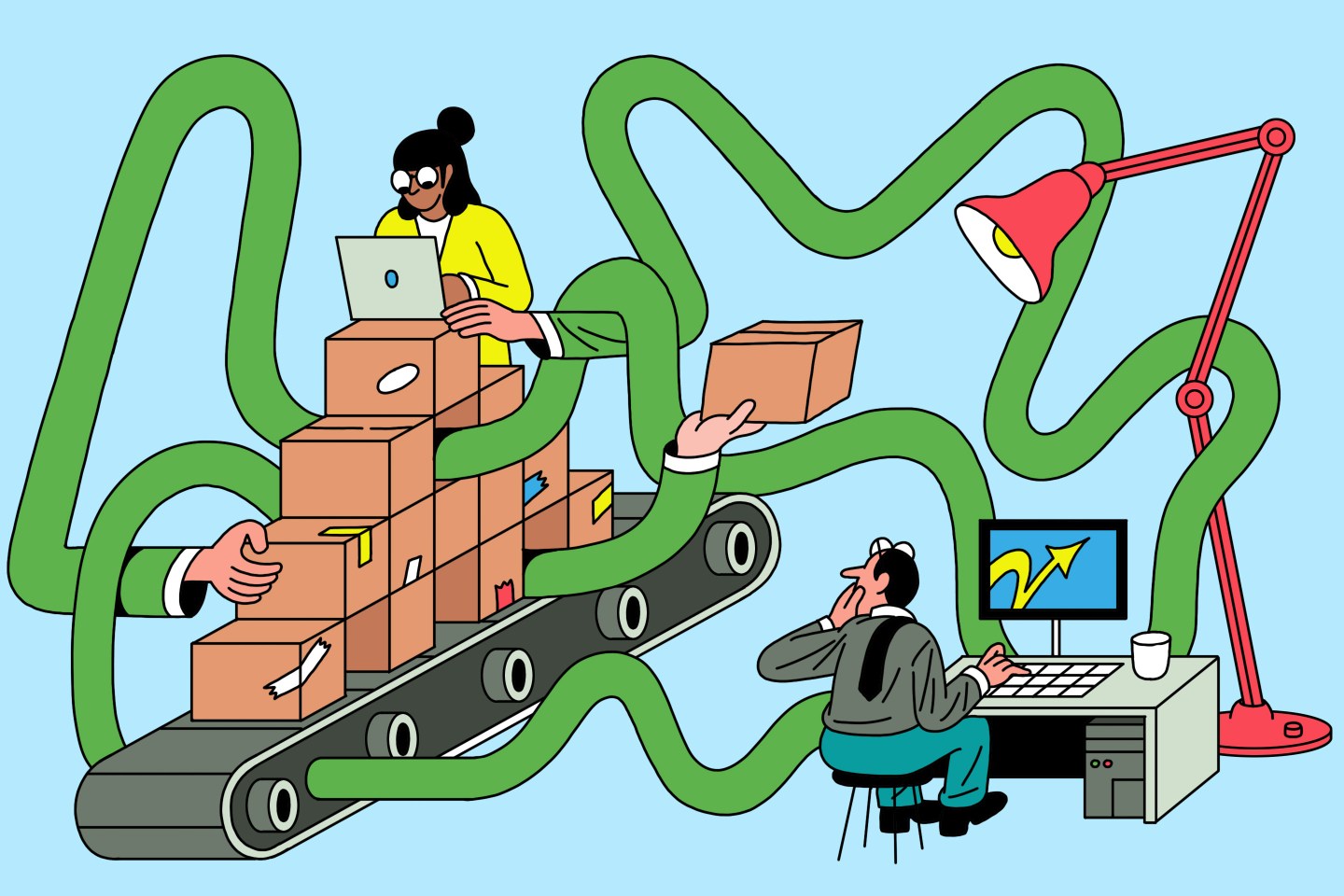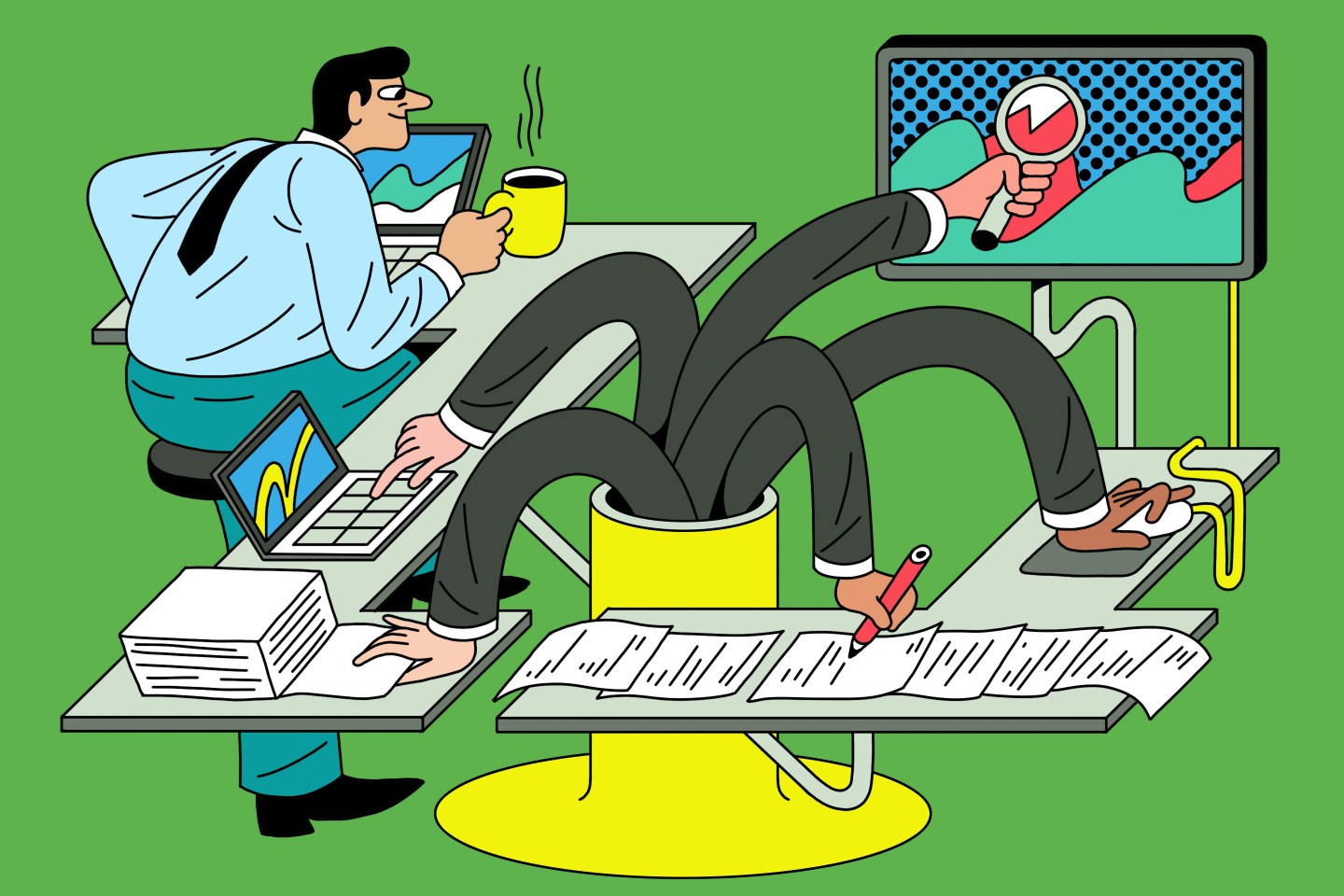

At sales enablement company Seismic, a six-person team of engineers is operating differently than the rest of the organization. They are working with more uncertainty and fewer rules, and their mandate is to fail fast.
Carefully staffed with the company’s most forward-thinking “10x engineers”—a common term for those who deliver far more value than their peers—this incubation team is building AI products for Seismic’s customers and guiding its internal workforce. For example, they launched an agent to create presentations using content from approved sources and a tool for role-playing sales conversations. Most important, however, they are not just trying to push the technological edge but are laser-focused on specific use cases that will benefit the business. They are also accountable for the success of every product they create.
When generative AI launched the new AI boom, Seismic realized the technology would have to drive both the company’s innovation priorities as well as how it operates internally, according to Krish Mantripragada, the company’s chief technology and product officer.
“So under that sort of strategy, incubation is smack in the middle of it,” he said.
The incubation team is one of Seismic’s five AI pillars, and it’s the one the company especially credits with driving the velocity of its AI transformation. Since forming the team, Seismic said it saw products built with AI go to market two to three times as fast as non-AI products.
Failing fast to move fast
Seismic previously had an incubation team, but when generative AI came onto the scene, the team became a greater priority and shifted to focus solely on the emerging technology.
Mantripragada, who launched the team, said he had to reconfigure it with talent that had the right skill sets for the moment. He identified people across the organization who were not only full-stack engineers but had a strong business background and the deepest understanding of the company’s customer problems and use cases. Today, these incubation team engineers are all in on this work, not splitting their time between teams or moonlighting with incubation while remaining staffed elsewhere in the organization.
For the incubation team, Mantripragada said Seismic “essentially relaxed all rules,” in terms of the vibe coding they can do, the tools they can incorporate, and the faster pace at which they are able to release products. The hope is that this will allow them to fail faster.
For example, the team was previously working on an analytics agent that would let users ask any questions about analytics. After a monthslong pilot, the answers were not as accurate as they needed them to be (only about 90% accurate, according to Mantripragada). While pilot users loved it, it wasn’t good enough for the masses, so they pulled it. But prior to the version that made it to pilot, the team had to make a lot of U-turns: experiments they started and restarted; times they started from scratch because a competitor’s new and improved model came out. Without the ability to fail fast and start over, they wouldn’t have gotten as far as they did while navigating those new developments.
Beyond operating at a faster speed, Mantripragada said the team’s mandate is also to operate in an environment of greater uncertainty, where it’s never clear how long the tech you’re working on will stay at the forefront and where results may not materialize.
“When we first started working on AI agents, there was no stack,” he said. “MCP and A2A [protocol standards for agentic technologies] came up much later. And so being able to take more risks and evaluate a concept which may or may not work going forward; and being able to throw away stuff that we feel is not going to go; to evaluate multiple paths at the same time and pick the one that has the most promise, that is the charter for this group. They go explore things that may or may not materialize always, which is not how typical product teams operate.”
Where tech meets business
A lot of companies assemble incubation or “innovation” teams. Not all of them work out. The key, according to Mantripragada, is structuring them so that they are very “product-business-minded.” You can’t just have them in a corner doing experiments or pushing the technological edge without real ties to what the business needs to accomplish and can benefit from.
“That was something that we made a part of the culture of this team—or the goals, objectives of this team—from day one: that we’re not going to staff this with a set of scientists for theoretical experimentation to push technologies. This is going to be about, ‘Can this solve the specific use case we’re looking for?’” said Mantripragada.
The incubation team works directly with not only product teams, but also customers. Even when an effort from the team goes into the next step of productization, it remains accountable. And it’s never a handoff: A person from the incubation team stays closely aligned to the first version to make sure the team is getting feedback and can weigh in on how things need to be fine-tuned.
“They’re not isolated,” Mantripragada said. “But connected in strategic ways.”
Driving AI change management
Having a team solely focused on understanding the tools and potential benefits of generative AI also turned out to be a valuable source for Seismic’s own internal AI transformation. The incubation engineers not only create useful tools, but have been a means for Seismic to propagate techniques to the rest of its workforce.
“They became sort of evangelists and change agents for how things were supposed to be done, and shared their lessons,” Mantripragada said.
He described how Seismic created forums where the incubation team gave demos, shared their practices, and showcased their products, including the ones that didn’t work. This became an early source of practical knowledge and experiences for the rest of the product engineering teams.
“We’re already seeing where some of the techniques that came out of incubation, that came out of this work, have already been applied into the various engineering teams,” said Mantripragada.
Read more from the latest Fortune AIQ special report, which highlights the one strategy, tool, or approach companies are using to bring the most out of enterprise AI.