As missiles and drones curtail energy production across the Persian Gulf, analysts warn that water, not oil, may be the resource most at risk in the energy-rich but arid region.
On Sunday, Bahrain accused Iran of damaging one of its desalination plants. Earlier, Iran said a U.S. airstrike had damaged an Iranian plant.
Hundreds of desalination plants sit along the Persian Gulf coast, putting individual systems that supply water to millions within range of Iranian missile or drone strikes. Without them, major cities could not sustain their current populations.
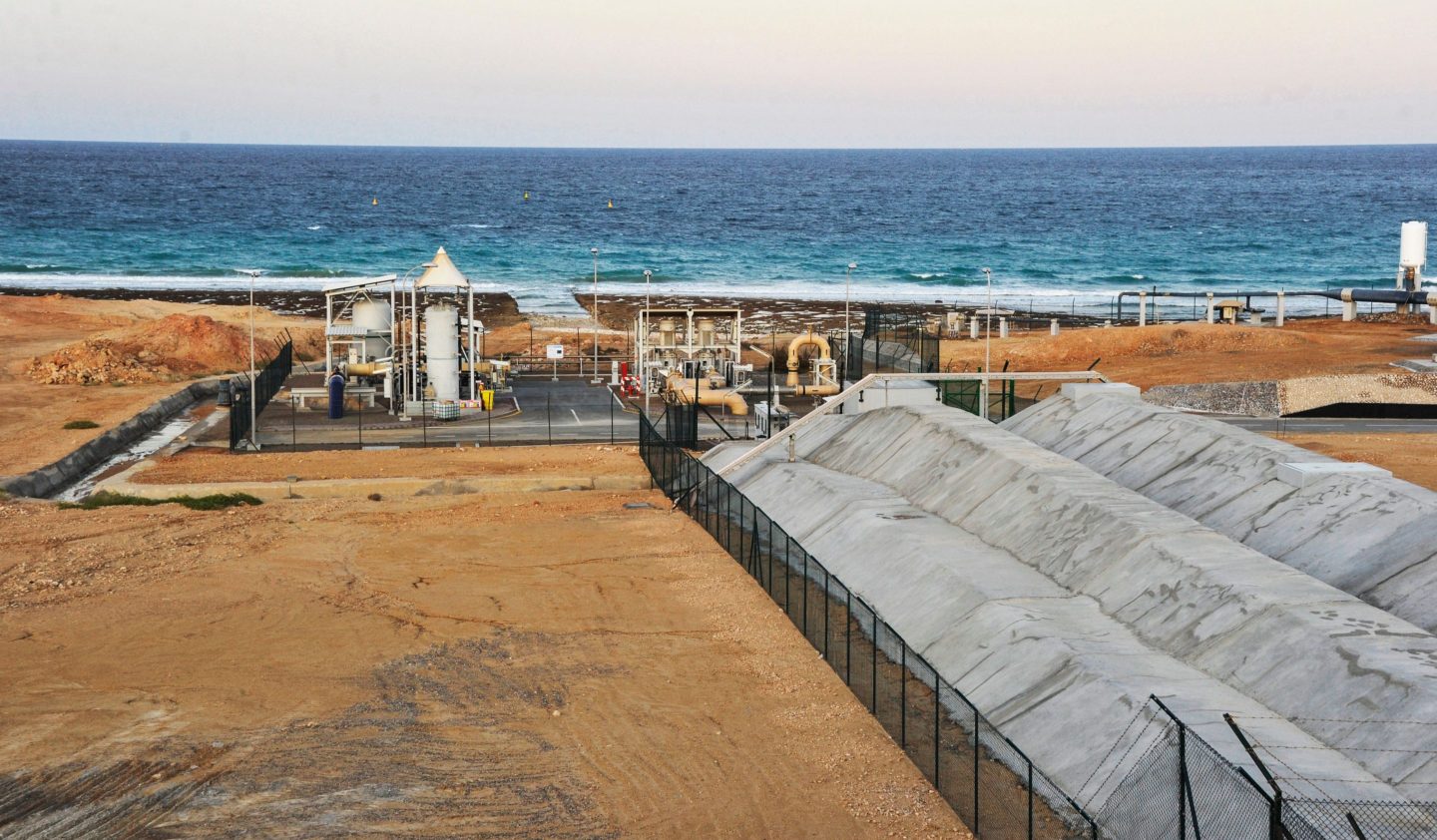
In Kuwait, about 90% of drinking water comes from desalination, along with roughly 86% in Oman and about 70% in Saudi Arabia. The technology removes salt from seawater — most commonly by pushing it through ultrafine membranes in a process known as reverse osmosis — to produce the freshwater that sustains cities, hotels, industry and some agriculture across one of the world’s driest regions.
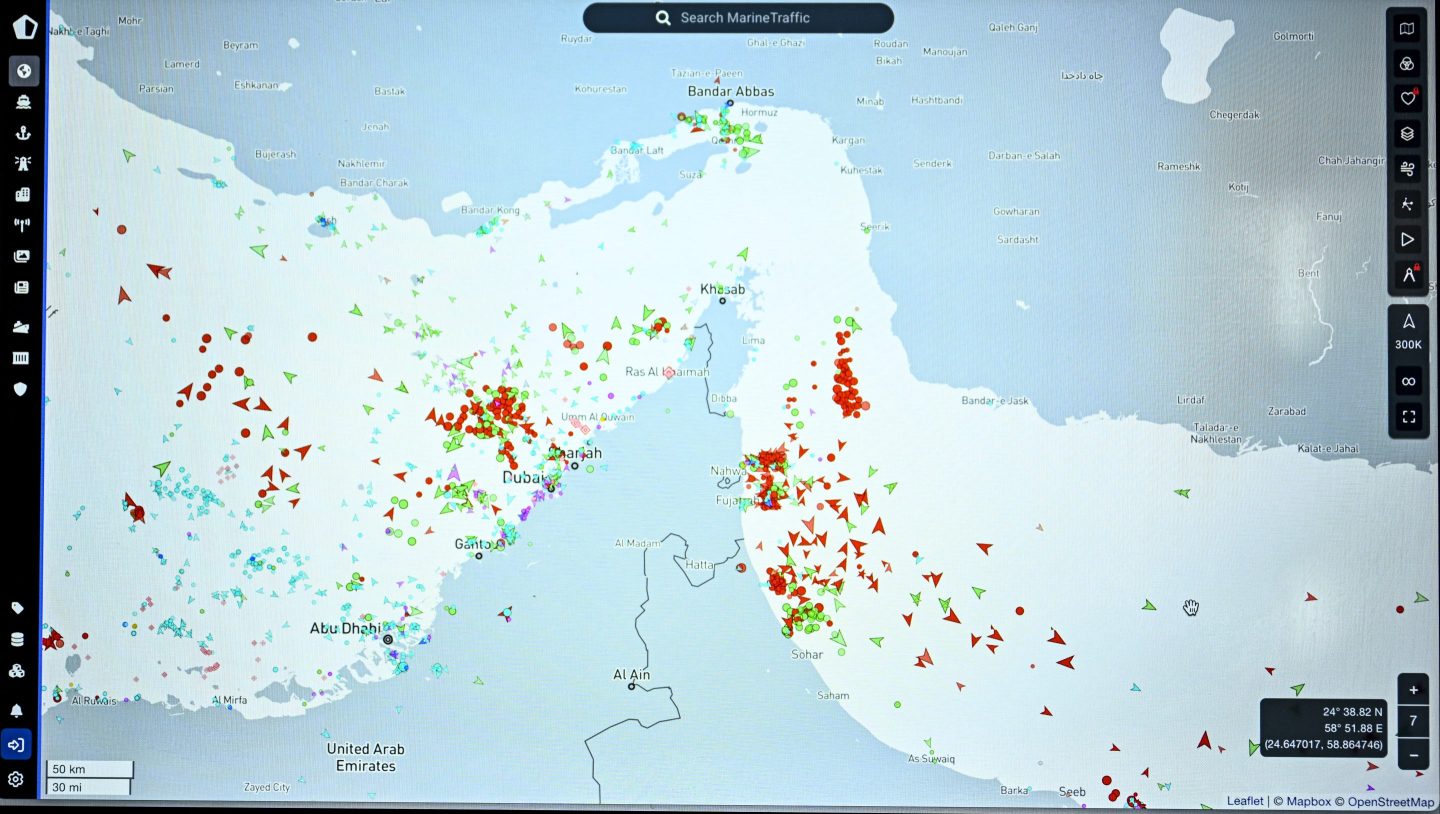
For people living outside the Middle East, the main concern of the Iran war has been the impact on energy prices. The Gulf produces about a third of the world’s crude exports and energy revenues underpin national economies. Fighting has already halted tanker traffic through key shipping routes and disrupted port activity, forcing some producers to curb exports as storage tanks fill.
But the infrastructure that keeps Gulf cities supplied with drinking water may be equally vulnerable.
“Everyone thinks of Saudi Arabia and their neighbors as petrostates. But I call them saltwater kingdoms. They’re human-made fossil-fueled water superpowers,” said Michael Christopher Low, director of the Middle East Center at the University of Utah. “It’s both a monumental achievement of the 20th century and a certain kind of vulnerability.”
Early signs of risk
The war that began Feb. 28 with U.S. and Israeli attacks on Iran has already brought fighting close to key desalination infrastructure. On March 2, Iranian strikes on Dubai’s Jebel Ali port landed some 12 miles from one of the world’s largest desalination plants, which produces much of the city’s drinking water.
Damage also was reported at the Fujairah F1 power and water complex in the United Arab Emirates, and at Kuwait’s Doha West desalination plant. The damage at the two facilities appeared to have resulted from nearby port attacks or debris from intercepted drones.
On Sunday, Bahrain accused Iran of indiscriminately attacking civilian targets and damaging one of its desalination plants, though it didn’t say supplies have gone offline. The island nation, home to the U.S. Navy’s Fifth Fleet, has been among the countries targeted by Iranian drones and missiles.
Earlier, Iran said a U.S. airstrike damaged an Iranian desalination plant. Abbas Araghchi, the country’s foreign minister, said the strike on Qeshm Island in the Strait of Hormuz had cut into the water supply for 30 villages. He warned that in doing so “the U.S. set this precedent, not Iran.”
Many Gulf desalination plants are physically integrated with power stations as co‑generation facilities, meaning attacks on electrical infrastructure could also hinder water production. Even where plants are connected to national grids with backup supply routes, disruptions can cascade across interconnected systems, said David Michel, senior fellow for water security at the Center for Strategic and International Studies.
“It’s an asymmetrical tactic,” he said. “Iran doesn’t have the same capacity to strike back at the United States and Israel. But it does have this possibility to impose costs on the Gulf countries to push them to intervene or call for a cessation of hostilities.”
Desalination plants have multiple stages — intake systems, treatment facilities, energy supplies — and damage to any part of that chain can interrupt production, according to Ed Cullinane, Middle East editor at Global Water Intelligence, a publisher serving the water industry.
“None of these assets are any more protected than any of the municipal areas that are currently being hit by ballistic missiles or drones,” Cullinane said.
A long-standing concern
Gulf governments and U.S. officials have long recognized the risks these systems pose for regional stability: if major desalination plants were knocked offline, some cities could lose most of their drinking water within days. A 2010 CIA analysis warned attacks on desalination facilities could trigger national crises in several Gulf states, and prolonged outages could last months if critical equipment were destroyed.
More than 90% of the Gulf’s desalinated water comes from just 56 plants, the report stated, and “each of these critical plants is extremely vulnerable to sabotage or military action.”
A leaked 2008 U.S. diplomatic cable warned the Saudi capital of Riyadh “would have to evacuate within a week” if either the Jubail desalination plant on the Gulf coast or its pipelines or associated power infrastructure were seriously damaged.
Saudi Arabia has since invested in pipeline networks, storage reservoirs and other redundancies designed to cushion short-term disruptions, as has the UAE. But smaller states such as Bahrain, Qatar and Kuwait have fewer backup supplies.
Climate change could threaten water plants
As warming oceans increase the likelihood and intensity of cyclones in the Arabian Sea and raise the chances of landfall on the Arabian Peninsula, storm surge and extreme rainfall could overwhelm drainage systems and damage coastal desalination.
The plants themselves contribute to the problem. Desalination is energy-intensive, with plants worldwide producing between 500 and 850 million tons of carbon emissions annually, approaching the roughly 880 million tons emitted by the entire global aviation industry.
The byproduct of desalination, highly concentrated brine, is typically discharged back into the ocean, where it can harm seafloor habitats and coral reefs, while intake systems can trap and kill fish larvae, plankton and other organisms at the base of the marine food web.
As climate change intensifies droughts, disrupts rainfall patterns and fuels wildfires, desalination is expected to expand in many parts of the world.
The threat is not hypothetical
During Iraq’s 1990-1991 invasion of Kuwait and the subsequent Gulf War, Iraqi forces sabotaged power stations and desalination facilities as they retreated, said the University of Utah’s Low. At the same time, millions of barrels of crude oil were deliberately released into the Persian Gulf, creating one of the largest oil spills in history.
The massive slick threatened to contaminate seawater intake pipes used by desalination plants across the region. Workers rushed to deploy protective booms around the intake valves of major facilities.
The destruction left Kuwait largely without fresh water and dependent on emergency water imports. Full recovery took years.
More recently, Yemen’s Houthi rebels have targeted Saudi desalination facilities amid regional tensions.
The incidents underscore a broader erosion of long-standing norms against attacking civilian infrastructure, Michel said, noting conflicts in Ukraine, Gaza and Iraq.
International humanitarian law, including provisions of the Geneva Conventions, prohibit targeting civilian infrastructure indispensable to the survival of the population, including drinking water facilities.
The potential for harmful cyberattacks on water infrastructure is a growing concern. In 2023 and 2024, U.S. officials blamed Iran-aligned groups for hacking into several American water utilities.
Iran’s own water supply at risk
After a fifth year of extreme drought, water levels in Tehran’s five reservoirs plunged to some 10% of their capacity, prompting President Masoud Pezeshkian to warn the capital may have to be evacuated.
Unlike many Gulf states that rely heavily on desalination, Iran still gets most of its water from rivers, reservoirs and depleted underground aquifers. The country operates a relatively small number of desalination plants, supplying only a fraction of national demand.
Iran is racing to expand desalination along its southern coast and pump some of the water inland, but infrastructure constraints, energy costs and international sanctions have sharply limited scalability.
“They were already thinking of evacuating the capital last summer,” Cullinane of Global Water Intelligence said. “I don’t dare to wonder what it’s going to be like this summer under sustained fire, with an ongoing economic catastrophe and a serious water crisis.”