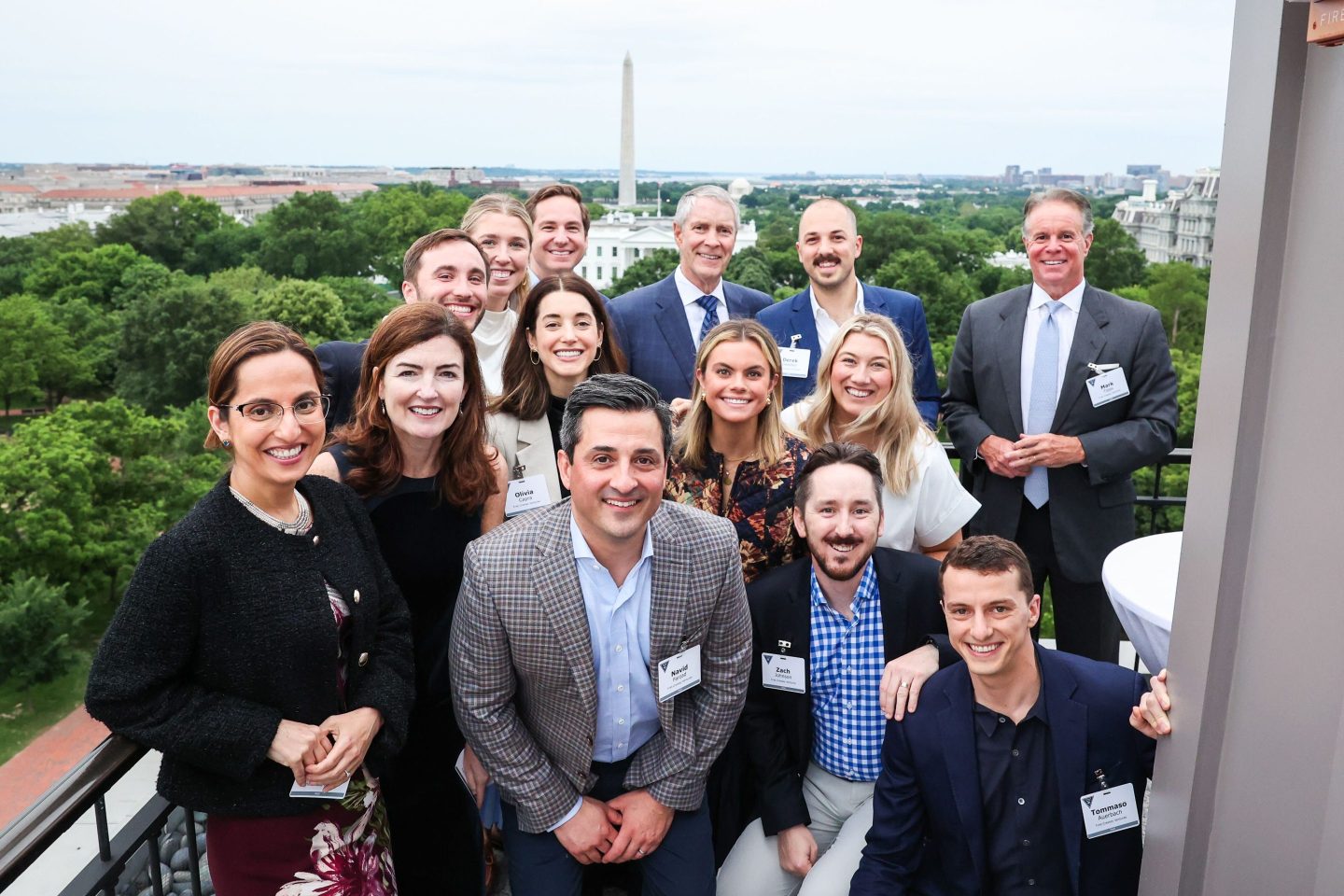
Health care in America is in rapid flux, and few would know that better than former Sen. Bill Frist.
“Lots of people say: ‘With the policy so messed up in Washington right now, why in the world do you spend so much time thinking about it?’” he told Fortune. “It’s because I have a great belief that … the only way to get to large scale is good policy. I see the power of things like the Medicare Modernization Act, which introduced prescription drugs. Believe it or not, before that, prescription drugs weren’t part of Medicare at all.”
Frist served 12 years in the U.S. Senate, after spending about 20 as a doctor. In 2016, he teamed up with Bryan Cressey to start a Nashville-based venture capital firm focused specifically on health care services. The firm’s portfolio includes Ambience, Thyme Care, Visana, and Devoted Health. And now, Frist Cressey Ventures has raised its $425 million fourth fund, Fortune has exclusively learned.
“We don’t do molecules, we don’t do devices,” said Frist. “All those are great things, but take a different group of specialty people. We go really deep. We’re specialists in the $3 trillion world of health services.”
AI has created a floodgate moment in health care startup investment, as VCs inundate the space, claiming there’s serious AI ROI in health care. But Bill Sheahan, chief innovation officer and SVP at MedStar Health (and a Frist Cressey LP), points out that this all might be tougher than it looks.
“Health care is an interesting example of, historically, when we’ve inserted technology—say, electronic health records—we haven’t necessarily made things easier,” said Sheahan. “In some cases, we’ve made things harder. There’s this burden of the way technology in health care operates today that I think AI and automation can unlock.”
AI is part of the equation for Frist Cressey, but not the whole picture—which is somewhat hard to see because policy is evolving so fast: “Even right now, there’s not one policy coming out of Washington,” Frist told Fortune, adding that there are increasingly opportunities for private companies to work in tandem with government.
And there will be problems to solve. President Trump’s One Big Beautiful Bill is expected to overhaul and imperil safety-net hospitals and rural health care. The latter is an area that Frist is especially interested in.
“A lot of people have invested in [rural health care], and each one has failed for a specific reason,” said Frist. “No company has yet been able to do it well.”