
• Home
  • Latest
  • Fortune 500
  • Finance
  • Tech
  • Leadership
  • Lifestyle
  • Rankings
  • Multimedia
EnergyFusion

Sam Altman’s fusion startup Helion Energy hits 150 million degree plasma temperature—a milestone that could bring first grid power in 2028

Jordan Blum
By
Jordan Blum
Jordan Blum
Editor, Energy
Down Arrow Button Icon
Jordan Blum
By
Jordan Blum
Jordan Blum
Editor, Energy
Down Arrow Button Icon
February 13, 2026, 5:00 AM ET
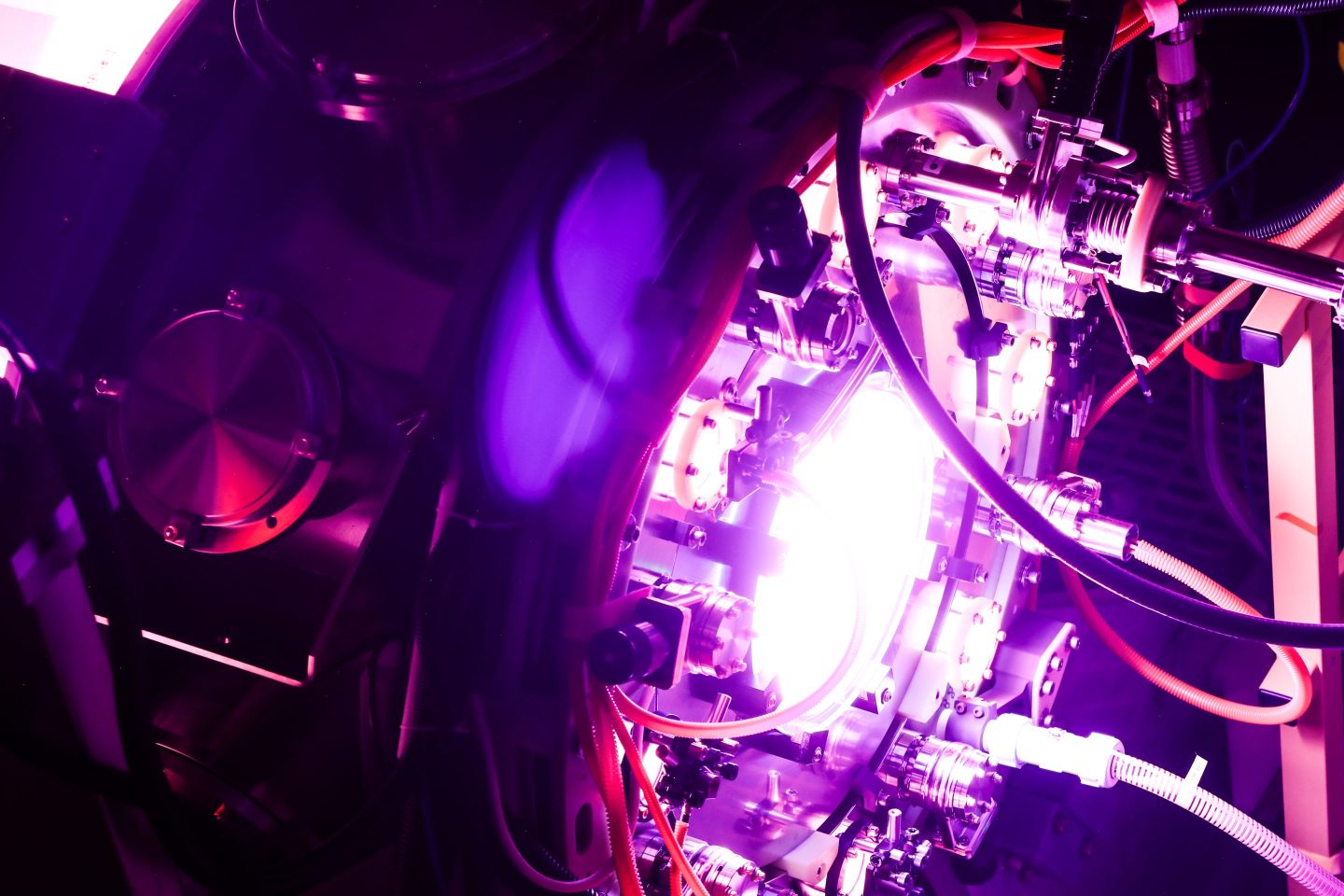
Helion Energy's Polaris fusion energy prototype was built just outside of Seattle, Washington.
Helion Energy's Polaris fusion energy prototype was built just outside of Seattle, Washington.Helion Energy

The Sam Altman-chaired Helion Energy fusion power developer announced a new milestone Feb. 13 achieving record plasma temperatures at 150 million degrees Celsius—10 times the core of the sun—as part of its immensely ambitious goal to bring power to the grid in Washington state in 2028.

Recommended Video

Startup developers of fusion energy—the so-called power of the stars in a jar—are racing to prove their technologies and bring clean, limitless electricity to the grid to meet the power needs of the AI boom. While Helion has the most aggressive timeline for first commercial power—under contract for Microsoft data centers—skeptics have questioned Helion’s start date, its unique technological approach versus competitors, and its relative lack of scientific updates until now.

“While interstitial milestones are really important to show that the technology works and you can get regulatory approval, at the end of the day, it’s about deploying power plants at scale to support the growing power needs,” Helion cofounder and CEO David Kirtley told Fortune.

“We’re on schedule to still have first electrons to the grid in 2028. It is an aggressive milestone. It’s going to be hard,” Kirtley said. “Part of that is the progressive iteration and parallel development right now in Malaga, Washington.”

While the plasma heat achievement was set at Helion’s seventh-generation prototype, Polaris, in suburban Seattle, Helion already is building its 50-megawatt commercial power plant, Orion, 130 miles away in Malaga—near Microsoft’s growing data center campus. Helion is not yet assembling the fusion reactor, which requires additional engineering and design finetuning.

Developing multiple projects in parallel—including an assembly line manufacturing system—is key to Helion’s rapid pace and success, Kirtley said. “It’s how we have been able to build seven generations of fusion systems and do it much quicker than anyone else in fusion. Core to the philosophy of how we operate is that rapid build, test, iterate, and build again.”

Whereas traditional nuclear fission energy creates power by splitting atoms, fusion uses heat to create energy by melding them together. In the simplest form, it fuses hydrogen found in water into an extremely hot, electrically charged state known as plasma to create helium—the same process that powers the sun. When executed properly, the process triggers endless reactions to make energy for electricity. But stars rely on overwhelming gravitational pressure to force their fusion. Here on Earth, creating and containing the pressure needed to force the reaction in a consistent, controlled way remains an engineering challenge.

And, because fusion reactors are almost infinitely smaller than stars, they need to produce heat in much hotter concentrations than stars. The sun is about 15 million degrees Celsius at its core, or 27 million° F.

About 100 million degrees Celsius is considered the minimum threshold for sustained commercial fusion power, hence the enthusiasm over the new milestone.

Helion was founded in 2013 and Altman became chairman and a major financial backer in 2015—shortly before he cofounded OpenAI. Altman also became chair of the nuclear fission, small modular reactor (SMR) startup Oklo that same year. Other key Helion investors include LinkedIn cofounder Reid Hoffman and Facebook cofounder and current Asana CEO Dustin Moskovitz. Kirtley said Altman’s role is to focus on the long-term vision.

“A question I get from Sam is, ‘How do we move faster?’” Kirtley said. “We’re already on an aggressive timeframe. ‘How do we move faster than that? How do we deploy power at scale quickly?’”

Unique fusion approach

Kirtley previously worked at NASA-backed MSNW on fusion-driven rocket technologies. He cofounded Helion with a dual focus of fusion power and fusion propulsion. The propulsion work helped Helion innovate its unique power approach, he said.

“One thing you learn about working in space and building systems to fly in space is you can’t waste anything. Every ounce of weight is critical; every watt of power is critical,” Kirtley said. “You must be very efficient everywhere and all the time. If you take that same approach and apply it to fusion, all the physics requirements dramatically reduce.”

Most fusion technologies, as well as nuclear fission, are based on generating heat to power steam turbines, which produce the electricity. Helion’s technology captures the electricity during the fusion process—skipping the need for turbines.

“That’s really the fundamental difference that we believe allows us to move much faster than other people,” Kirtley said. “That shrinks the scale of the fusion system. It minimizes how hard it is to do.”

Helion’s fusion fuel combines deuterium from water with tritium. Helion was the first company licensed to use radioactive tritium as a fusion source. But the end goal is to use deuterium and helium-3, which Helion aims to produce by fusing the same deuterium atoms. Helium-3 allows the process to generate more electricity with less heat.

Arguably Helion’s chief fusion competition is Nvidia and Bill Gates-backed Commonwealth Fusion Systems (CFS), which has deeper pockets but is taking a more conservative approach. Commonwealth leans on the most traditional fusion technology—highly relative for a nascent industry that’s never generated electricity on the grid.

CFS is currently building its SPARC fusion prototype to come online next year. But that won’t provide power to the grid. If SPARC succeeds, CFS’ first commercial fusion plant, ARC, is slated to be built and to come online in the early 2030s just outside of Richmond, Virginia. If all goes as planned, the 400-megawatt plant—much more power than Helion’s Orion—would produce enough electricity to service about 300,000 homes.

CFS leans on the so-called tokamak design—shortened from toroidal chamber magnetic—which relies on its powerful magnets. The technology essentially involves a massive, doughnut-shaped machine that traps the plasma in a high-temperature, superconducting magnetic field. But the process generates heat, not electricity.

Helion’s smaller, but faster approach uses magneto-inertial fusion. Theoretically, the plasmas collide in the fusion chamber and are compressed by magnets around the machine. That heats the plasma, initiating fusion reactions and resulting in a change in the plasma’s magnetic field. This change interacts with the magnets, increasing their magnetic field, and initiating a flow of new electricity through the coils.

The bottom line is it’s quite complicated and there’s no guarantee of success for any of the fusion developers. But Kirtley said he’s confident fusion power can make a notable dent in the U.S. power grid within the next decade and keep growing from there.

“If all we do is build the world’s first fusion power plant, as a company, we failed,” Kirtley said. “Our goal is to deploy clean and safe baseload power to the world. That means building technologies in a way that is scalable, mass producible, and must be low cost so that the customer wants it.”


Join us at the Fortune Workplace Innovation Summit May 19–20, 2026, in Atlanta. The next era of workplace innovation is here—and the old playbook is being rewritten. At this exclusive, high-energy event, the world’s most innovative leaders will convene to explore how AI, humanity, and strategy converge to redefine, again, the future of work. Register now.
About the Author
Jordan Blum
By Jordan BlumEditor, Energy

Jordan Blum is the Energy editor at Fortune, overseeing coverage of a growing global energy sector for oil and gas, transition businesses, renewables, and critical minerals.

See full bioRight Arrow Button Icon

Latest in Energy

Finance
Lorem ipsum dolor sit amet, consectetur adipiscing elit, sed do eiusmod tempor incididunt ut labore et dolore magna aliqua. Ut enim ad minim veniam
By Fortune Editors
October 20, 2025
Finance
Lorem ipsum dolor sit amet, consectetur adipiscing elit, sed do eiusmod tempor incididunt ut labore et dolore magna aliqua. Ut enim ad minim veniam
By Fortune Editors
October 20, 2025
Finance
Lorem ipsum dolor sit amet, consectetur adipiscing elit, sed do eiusmod tempor incididunt ut labore et dolore magna aliqua. Ut enim ad minim veniam
By Fortune Editors
October 20, 2025
Finance
Lorem ipsum dolor sit amet, consectetur adipiscing elit, sed do eiusmod tempor incididunt ut labore et dolore magna aliqua. Ut enim ad minim veniam
By Fortune Editors
October 20, 2025
Finance
Lorem ipsum dolor sit amet, consectetur adipiscing elit, sed do eiusmod tempor incididunt ut labore et dolore magna aliqua. Ut enim ad minim veniam
By Fortune Editors
October 20, 2025
Finance
Lorem ipsum dolor sit amet, consectetur adipiscing elit, sed do eiusmod tempor incididunt ut labore et dolore magna aliqua. Ut enim ad minim veniam
By Fortune Editors
October 20, 2025

Most Popular

Finance
Lorem ipsum dolor sit amet, consectetur adipiscing elit, sed do eiusmod tempor incididunt ut labore et dolore magna aliqua. Ut enim ad minim veniam
By Fortune Editors
October 20, 2025
Finance
Lorem ipsum dolor sit amet, consectetur adipiscing elit, sed do eiusmod tempor incididunt ut labore et dolore magna aliqua. Ut enim ad minim veniam
By Fortune Editors
October 20, 2025
Finance
Lorem ipsum dolor sit amet, consectetur adipiscing elit, sed do eiusmod tempor incididunt ut labore et dolore magna aliqua. Ut enim ad minim veniam
By Fortune Editors
October 20, 2025
Finance
Lorem ipsum dolor sit amet, consectetur adipiscing elit, sed do eiusmod tempor incididunt ut labore et dolore magna aliqua. Ut enim ad minim veniam
By Fortune Editors
October 20, 2025
Finance
Lorem ipsum dolor sit amet, consectetur adipiscing elit, sed do eiusmod tempor incididunt ut labore et dolore magna aliqua. Ut enim ad minim veniam
By Fortune Editors
October 20, 2025
Finance
Lorem ipsum dolor sit amet, consectetur adipiscing elit, sed do eiusmod tempor incididunt ut labore et dolore magna aliqua. Ut enim ad minim veniam
By Fortune Editors
October 20, 2025
Rankings
  • 100 Best Companies
  • Fortune 500
  • Global 500
  • Fortune 500 Europe
  • Most Powerful Women
  • Future 50
  • World’s Most Admired Companies
  • See All Rankings
Sections
  • Finance
  • Leadership
  • Success
  • Tech
  • Asia
  • Europe
  • Environment
  • Fortune Crypto
  • Health
  • Retail
  • Lifestyle
  • Politics
  • Newsletters
  • Magazine
  • Features
  • Commentary
  • Mpw
  • CEO Initiative
  • Conferences
  • Personal Finance
  • Education
Customer Support
  • Frequently Asked Questions
  • Customer Service Portal
  • Privacy Policy
  • Terms Of Use
  • Single Issues For Purchase
  • International Print
Commercial Services
  • Advertising
  • Fortune Brand Studio
  • Fortune Analytics
  • Fortune Conferences
  • Business Development
About Us
  • About Us
  • Editorial Calendar
  • Press Center
  • Work At Fortune
  • Diversity And Inclusion
  • Terms And Conditions
  • Site Map
  • Facebook icon
  • Twitter icon
  • LinkedIn icon
  • Instagram icon
  • Pinterest icon

Latest in Energy

data center
PoliticsData centers
Politicians scramble on data centers after putting their voters on the hook for Big Tech’s job-killing AI efforts
By Marc Levy and The Associated PressFebruary 13, 2026
6 minutes ago
A woman on the street holding a carboard sign reading, "We say NO to the data center"
EnergyData centers
Middle-class Americans are paying for the data center and AI boom with higher electric bills and even food costs, Goldman Sachs warns
By Sasha RogelbergFebruary 13, 2026
1 hour ago
EnergyFusion
Sam Altman’s fusion startup Helion Energy hits 150 million degree plasma temperature—a milestone that could bring first grid power in 2028
By Jordan BlumFebruary 13, 2026
4 hours ago
The CEO of coal producer Peabody Energy, Jim Grech, left, hands a trophy to U.S. President Donald Trump during an event on the use of coal in the East Room of the White House on Feb. 11, 2026 in Washington, DC. The lobbyist group, the Washington Coal Club, awarded Trump the inaugural "Undisputed Champion of Coal" award. Trump also is signing an executive order directing the Defense Department to buy electricity from coal-fired power plants. (Photo by Anna Moneymaker/Getty Images)
Energyclimate change
The Trump administration calls its climate change policy shift the ‘largest deregulatory action’ in history—but experts say the impact will be limited
By Jordan BlumFebruary 12, 2026
22 hours ago
sid
CommentaryOil
Forget ‘peak oil’: the era of scarcity is dead, and now we’re drowning in abundance
By Siddharth MisraFebruary 12, 2026
23 hours ago
A member of the Kurdish security forces guards an oil refinery on the outskirts of Mosul, Iraq, in June 2014.
EnergyBig Oil
Big Oil embraces global exploration again as Chevron returns to Libya
By Jordan BlumFebruary 11, 2026
2 days ago

Most Popular

placeholder alt text
Crypto
Bitcoin reportedly sent to wallet associated with Nancy Guthrie’s ransom letter providing potential clue in investigation
By Carlos GarciaFebruary 11, 2026
2 days ago
placeholder alt text
Economy
Some folks on Wall Street think yesterday’s U.S. jobs number is ‘implausible’ and thus due for a downward correction
By Jim EdwardsFebruary 12, 2026
1 day ago
placeholder alt text
Economy
‘Nothing short of self-sabotage’: Watchdog warns about national debt setting new record in just 4 years
By Tristan BoveFebruary 11, 2026
2 days ago
placeholder alt text
Economy
America’s national debt borrowing binge means interest payments will rocket to $2 trillion a year by 2036, CBO says
By Eleanor PringleFebruary 11, 2026
2 days ago
placeholder alt text
Commentary
Something big is happening in AI — and most people will be blindsided
By Matt ShumerFebruary 11, 2026
2 days ago
placeholder alt text
Success
Ex–Google exec says degrees in law and medicine are a waste of time because they take so long to complete that AI will catch up by graduation
By Preston ForeFebruary 11, 2026
2 days ago

© 2026 Fortune Media IP Limited. All Rights Reserved. Use of this site constitutes acceptance of our Terms of Use and Privacy Policy | CA Notice at Collection and Privacy Notice | Do Not Sell/Share My Personal Information
FORTUNE is a trademark of Fortune Media IP Limited, registered in the U.S. and other countries. FORTUNE may receive compensation for some links to products and services on this website. Offers may be subject to change without notice.