Tech companies are hurdling toward a goal of artificial general intelligence, or AGI—technology that matches or exceeds human cognitive abilities. Anthropic CEO Dario Amodei and Tesla CEO Elon Musk have predicted the advent of human-level artificial intelligence could arrive as early as this year. Despite optimism about the technology among business leaders, AI experts say it could have catastrophic impacts if left uncontrolled.
Ex-Google insider and AI expert Tristan Harris joined The Diary of a CEO podcast with host Steven Bartlett last November to discuss the pursuit of AGI, which he acknowledges most industry leaders believe could arrive by as soon as 2027. Harris said the mad dash to achieve human-level AI could create harmful incentives for unchecked growth, ultimately deteriorating safety, security, and economic well-being.
“It’s a kind of competitive logic that self-reinforces itself,” Harris said. “It forces everyone to be incentivized to take the most shortcuts, to care the least about safety or security, to not care about how many jobs get disrupted, to not care about the well-being of regular people.”
Today, AI companies are operating with minimal regulation. On the first day of his second term, President Donald Trump rolled back Biden-era AI regulations aimed at ensuring safe and secure implementation that supported workers facing job disruptions. And in December, Trump signed an executive order preempting regulation of the technology, preventing a patchwork of state laws that the president said could “stymie innovation.” Harris argued unfettered AI growth is not in the average American’s best interest.
“The default path is not in [the people’s] interest,” he said. “The default path is companies racing to release the most powerful, inscrutable, uncontrollable technology we’ve ever invented with the maximum incentive to cut corners on safety.”
A greater labor threat than immigration and NAFTA
One of Harris’s main concerns about the current trajectory of AI development is the technology’s looming impact on the job market. He said the ability of advanced AI to replace human work for free should be a greater concern than immigration taking people’s jobs.
“If you’re worried about immigration taking jobs, you should be way more worried about AI,” Harris said. “It’s like a flood of millions of new digital immigrants that are Nobel Prize–level capability, work at superhuman speed, and will work for less than minimum wage.”
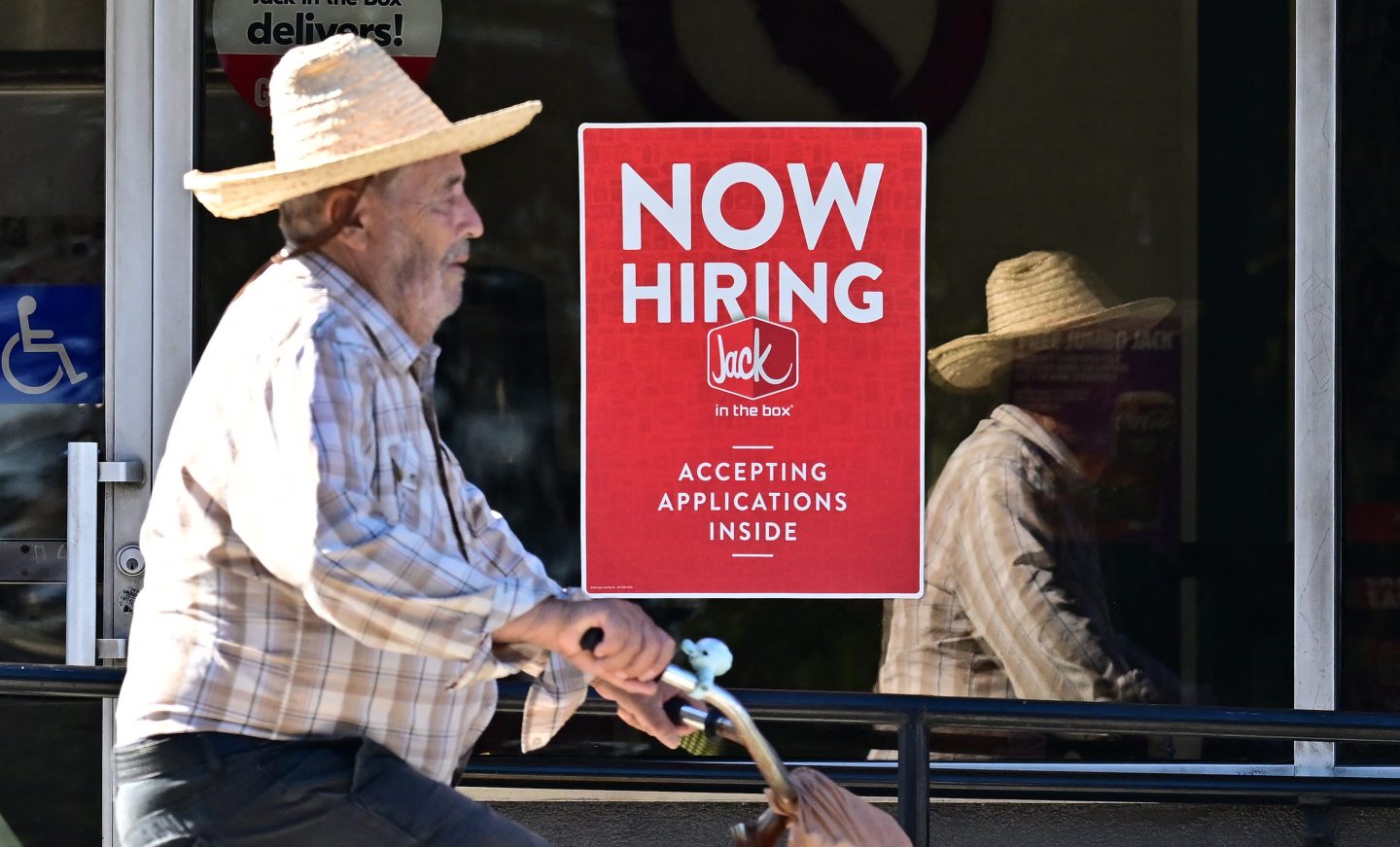
Early research shows the burgeoning impact of AI on jobs. A recent study by Stanford University evaluating payroll data showed AI is causing a 13% decline in jobs for early-career workers. Rapid AI implementation has also triggered job cuts, contributing to about 55,000 layoffs in 2025, according to outplacement firm Challenger, Gray & Christmas. Last year, Microsoft slashed 9,000 jobs, citing a desire to implement AI. And Salesforce cut 4,000 customer service jobs in an AI push.
“AI is like another version of NAFTA. It’s like NAFTA 2.0,” Harris said of the North American Free Trade Agreement, the trade deal between the U.S., Canada, and Mexico that critics, including Trump, argue hurt the U.S. job market. “Except instead of China appearing on the world stage who will do the manufacturing labor for cheap, suddenly this country of geniuses in a data center created by AI appears on the world stage, and it will do all of the cognitive labor in the economy for less than minimum wage.”
Brewing backlash
Harris predicts the current unstructured AI buildout could hinder growth “unless there’s a massive political backlash because people recognize that this issue will dominate every other issue,” he said during the interview.
The early rumblings of that fallout have already bubbled to the surface in some states. Despite Trump’s executive order, 26 states have enacted some degree of AI legislation, according to law firm Bryan Cave Leighton Paisner, with states such as New York and California proposing stringent requirements around safety and data-use transparency. Harris said swift regulation is pressing because as AI takes over jobs, human political power could become watered down as human workers grow less valuable economically.
“This is the last moment that human political power will matter,” he said. “Does the state need humans anymore? Their GDP is coming in almost entirely from the AI companies. So suddenly, this political class, this political power base, they become the useless class.”