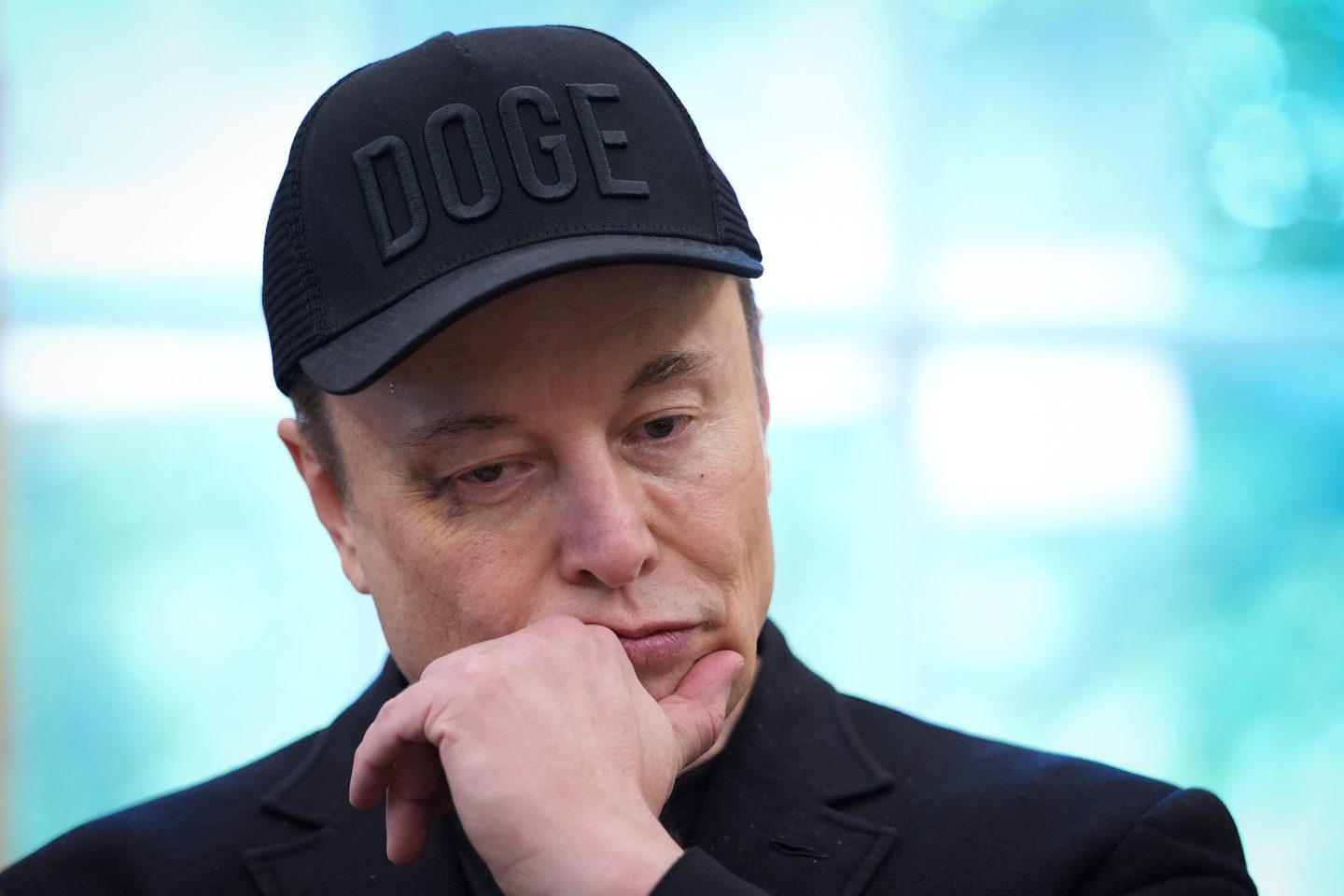
Elon Musk’s net worth surged to $852 billion this week—a record high set into motion by the merger of two of his companies, SpaceX and xAI, ahead of a highly anticipated IPO later this year. But even with more wealth to his name than anyone in history, Musk doesn’t seem convinced that the number in his bank account translates into personal fulfillment.
“Whoever said, ‘Money can’t buy happiness’ really knew what they were talking about,” Musk wrote this week on X, a post that’s garnered over 96 million views.
The remark sparked reaction across his social platform, including from members of the ultrawealthy who have grappled with the same dilemma. Hedge fund billionaire Bill Ackman offered Musk some pointed advice—urging him to focus more on philanthropy and perspective.
“A lot of happiness comes from helping others. You have helped millions, and someday it will likely be billions. You just need to appreciate what you have accomplished for so many,” he wrote.
Ackman also suggested it might be time for Musk to settle down with a long-term partner. Musk has 14 children with four different women.
“Happiness can also be found in a long-term relationship with someone really special. It is time for you to find that someone for the long term. Just my two cents.”
Mark Cuban, the billionaire investor and former Shark Tank star, agreed with Musk to an extent, but said linking wealth to happiness isn’t cut and dry. Essentially, money doesn’t fundamentally change happiness so much as magnify what’s already there.
“If you were happy when you were poor, you will be insanely happy if you get rich,” Cuban hit back on X. “If you were miserable, you will stay miserable, just with a lot less financial stress.”
What the experts say
Researchers have long tried to answer the age-old question of whether money can buy happiness—and the answer is more nuanced than a simple yes or no.
A widely cited 2010 Princeton University study found that day-to-day emotional well-being increased with income but plateaued beyond roughly $75,000. More recent research from the University of Pennsylvania’s Wharton School complicates that finding. It shows that happiness rises with income, but people who are already unhappy tend to see happiness gains level off once their income reaches around $100,000 annually.
“In the simplest terms, this suggests that for most people larger incomes are associated with greater happiness,” Matthew Killingsworth, a senior fellow at Wharton and the lead author, said.
“The exception is people who are financially well-off but unhappy. For instance, if you’re rich and miserable, more money won’t help. For everyone else, more money was associated with higher happiness to somewhat varying degrees.”
These findings align with the message Cuban appeared to send Musk: Money often acts as an amplifier, but not a cure. While it can ease stress and expand choices, it can’t automatically resolve things like strained personal relationships or underlying feelings about life.
Elon Musk says it’s ‘very hard’ to do good with philanthropy
While much of Musk’s wealth is tied up in company valuations rather than cash, the sheer scale of his fortune still affords extraordinary flexibility. Even accounting for illiquid assets, Musk has access to resources few people in history have ever had—enough to acquire virtually any home or technology or even make an unprecedented impact through philanthropy.
But despite Ackman’s suggestion that Musk would be happier if he gave more of his money away, the world’s richest man has insisted even that’s not as simple as it seems.
“I agree with love of humanity, and I think we should try to do things that help our fellow human beings,” Musk said on the WTF podcast late last year. “But it’s very hard.
“The biggest challenge I find with my foundation is trying to give money away in a way that is truly beneficial to people,” Musk added. “It’s very easy to give money away to get the appearance of goodness. It is very difficult to give money away for the reality of goodness. Very difficult.”
Musk is far from alone in grappling with that tension. Many tech leaders, including Mark Zuckerberg, Larry Ellison, and Musk himself—have signed the Giving Pledge, an initiative launched by Bill Gates, Melinda French Gates, and Warren Buffett to give the majority of their wealth to charitable causes. But critics note that many signatories have moved slowly in fulfilling those commitments. Billionaire investor Peter Thiel reportedly urged Musk to abandon the pledge, arguing that Gates would otherwise direct the money to “left-wing nonprofits.”
Gates, for his part, has been more candid about what extreme wealth can—and can’t—deliver. Asked in 2019 during a Reddit Q&A session if being a billionaire made him happier than if he were middle-class, the Microsoft cofounder said yes.
“I don’t have to think about health costs or college costs,” Gates said. “Being free from worry about financial things is a real blessing.”
However, he added: “Of course, you don’t need a billion to get to that point. We do need to reduce the cost growth in these areas.”