America’s economy is increasingly one of haves and have-nots. The already wealthy are generally feeling the good times, while lower-income households are hit by inflation and a slow hiring market. It’s been termed a K-shaped economy, and depending on which metrics you look at, it’s been around for a while.
Economists have cited a variety of factors over the past year to determine that today’s economy is one mostly driven by inequality, including rising stock prices and home values primarily benefiting wealthier Americans, while inflation has manifested prominently in higher grocery and restaurant prices.
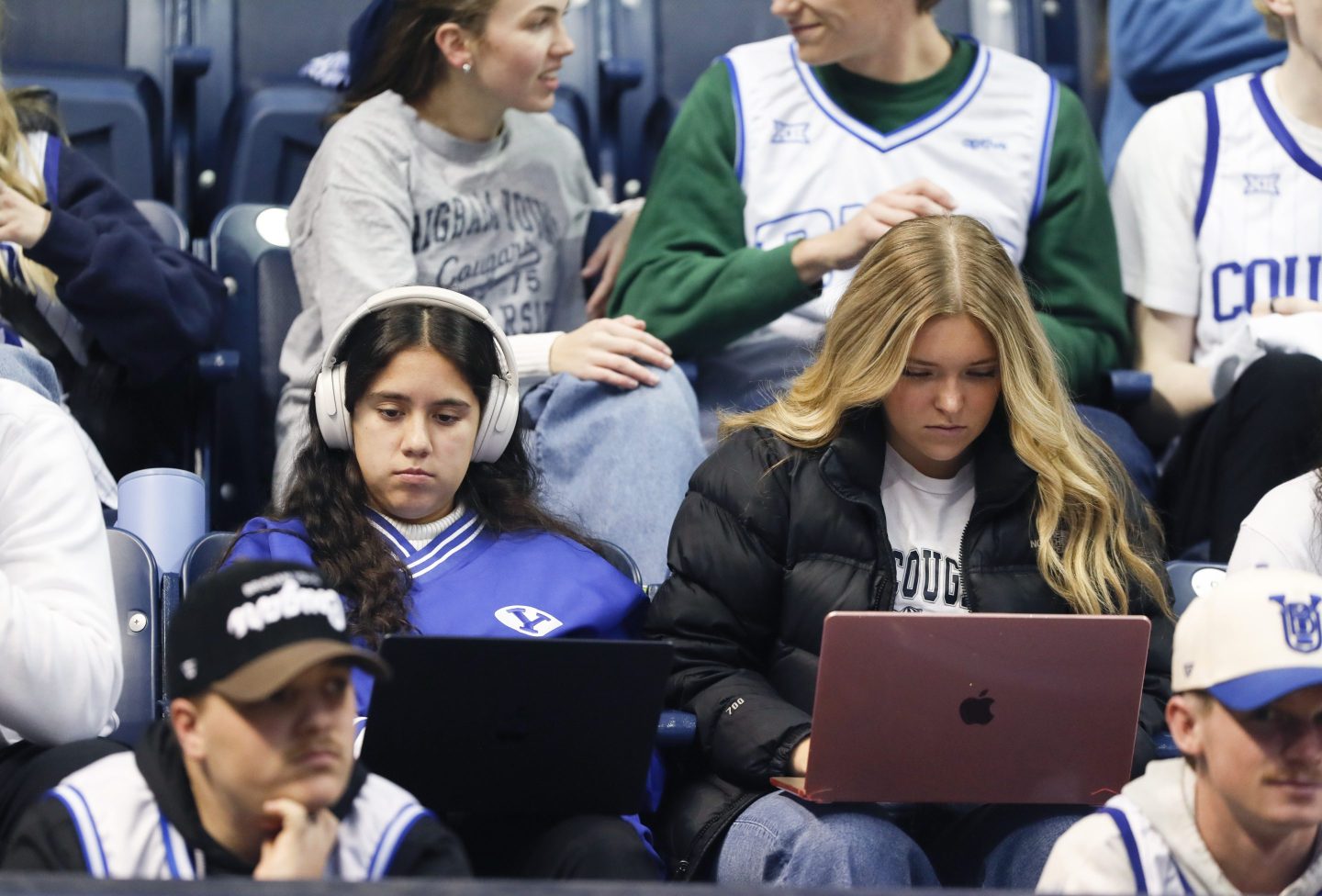
But the variable that has arguably received the most attention has been consumer spending, specifically how it diverges depending on the demographics in question. The Federal Reserve Bank of New York recently looked at this question through the lens of educational attainment, and the results suggest that, while many young Americans contemplate professional lives that do not require a bachelor’s, the ability to keep pace with the economy is still at least somewhat predicated on one’s level of education.
In a dataset released Tuesday, the New York Fed analyzed monthly consumer spending data for 200,000 Americans between January 2023 and December 2025. Adjusted for inflation, retail spending among Americans without a college degree rose by around 4% during that period. But it rose by nearly 6% for consumers with a college degree. Each month over the past three years, degree-holders averaged a 0.14% increase in spending relative to the previous month, while non-degree counterparts managed only 0.05%.
“Despite the relatively more difficult labor market faced by college graduates in 2025, they are continuing to consume more than nongraduates do at the same or higher rate than they did in the previous few years,” the Fed researchers wrote. “The difference in the trend in retail spending between college graduates and nongraduates is consistent with the story of a ‘K-shaped economy.’”
Educated spending
Spending has been a key driver of the K-shape argument, seen as an explanation for why the economy is still growing despite inflation and job market headwinds. The top 10% of Americans now make up around 50% of spending, according to Moody’s Analytics. But the New York Fed’s analysis is the first to look at consumer spending based on educational attainment.
Educational attainment has long been a key divergence in the U.S. Where people live, their employment status, and what their political ideologies turn out to be have often been boiled down to whether or not they hold a college degree. The finding that those who have graduated from college have more spending power isn’t necessarily new either. Even a decade ago, government researchers with the Social Security Administration showed that lifetime earnings for degree-holders could be anywhere from $630,000 to $1.5 million more than what high school graduates could expect to make.
But the Fed’s new results come at a time when many young Americans are questioning whether college is worth it at all anymore. New college registrations are dipping, with some citing affordability concerns, a souring entry-level job market, and fears artificial intelligence might make some junior and white-collar employment redundant.
Many young Americans are opting for alternatives like community colleges, where new undergraduate registrations eclipsed those at four-year colleges last fall. Others are opting for skills in trades, with some blue-collar positions seen as well-paid and better insulated from AI.
For students deciding to forgo college, the latest research suggests the worst option might be interrupting one’s education altogether. In addition to the Fed’s recent findings on consumer spending, November data from the St. Louis Fed took a long view at the divergence in unemployment between high school and college grads. Researchers found that the former consistently dealt with an unemployment rate higher by at least 2.3 percentage points, a difference that becomes especially pronounced during economic downturns.
To be sure, even though college-goers are spending more than non-degree-holders, it doesn’t necessarily mean that they can, at least for younger graduates. Between habits like “treat culture” and “doom spending,” in general, Gen Zers seem to be more comfortable spending than saving compared with previous generations at the same age. Over the next few years, Gen Z is expected to become the highest-spending generation in history, and over the next few decades, their combined income could rise to $74 trillion. Whatever role Gen Z college graduates have in feeding the K-shaped economy today, it will likely grow in the years to come.