The Federal Reserve on Wednesday held interest rates steady at 3.50% to 3.75%, attempting to project an image of stability as the U.S. financial landscape splits into two jarring realities: a stock market at record heights and a currency under pressure.
The decision, widely expected by 97% of investors, arrived just as the S&P 500 crossed the psychological 7,000-point threshold for the first time in history. But the euphoria in equities—“AMERICA IS BACK!!!” President Donald Trump cried on Truth Social—was matched by a move in the opposite direction for the greenback. The U.S. dollar index (DXY) has shed more than 10% of its value over the past year, sliding further after Trump signaled late Tuesday a multiyear low for the currency was “great.” The U.S. dollar index rebounded slightly on Wednesday as Treasury Secretary Scott Bessent said on CNBC: “The U.S. always has a strong dollar policy.”
In its policy statement, the Fed said economic activity has continued to expand at a “solid pace,” though job gains are low, and the unemployment rate has shown signs of stabilizing. Inflation, the Federal Open Market Committee said, “remains somewhat elevated.” While acknowledging some progress on price pressures, officials emphasized that they still require “greater confidence” that inflation is moving sustainably toward the 2% target before resuming the rate-cutting cycle that defined the end of 2025.
The Fed also underscored increased uncertainty around its outlook and said it would attend to both sides of the mandate.
The central bank, however, now finds itself in a precarious bind. While a weaker dollar theoretically aids U.S. exports, it complicates the Fed’s mandate by threatening to, in effect, import inflation and also rattle critical foreign investors needed to fund a massive U.S. deficit.
Nela Richardson, ADP’s chief economist, told CNBC the dollar’s decline is a “double-edged sword.”
“[It] does make U.S. exports more competitive abroad, but a weak dollar at home doesn’t always have the confidence of markets,” she said. “And that confidence is going to be very important as we look at other things that are a struggle for the U.S. economy, like sticky inflation, like high deficits and debts, and the need to sell Treasuries, both domestically and abroad.”
That confidence crisis is already showing up in households. Consumer sentiment crashed in January to 84.5, a 12-year low that places American morale below the miseries of the 2020 lockdowns. That disconnect between a stock market at 7,000 and a pessimistic public facing a “low-hire, low-fire” labor market for the better half of the past year, continues to fuel concern over the “K-shaped economy.”
Dissent at the Fed
The internal rift at the Fed remains unresolved since December’s meeting, which produced the most formal dissents since 2019. Two officials—Stephen Miran and Christopher Waller—dissented from Wednesday’s decision, preferring that the Fed lower the Federal funds rate by 25 basis points.
Extra eyes are on Waller’s verdict, since he is a rumored finalist for the chairmanship after Jerome Powell’s term is up in May. Analysts have suggested a vote from Waller in favor of interest rate cuts, aligning with the president’s browbeating demands for lower borrowing costs—could be seen as a bellwether for his candidacy.
Trump is expected to name the successor as early as this week, with prediction markets currently favoring Rick Rieder, BlackRock’s chief investment officer of global fixed income. Rieder, who has no prior experience within the Federal Reserve system, has recently seen his odds on Polymarket surge to 55% following positive remarks from the White House. However, the prediction markets have been extremely volatile, and recent reports say it is still very much up in the air who Trump will choose.
“Markets aren’t focused on today’s decision alone,” Michael McGowan, managing director of investment strategy at Pathstone, wrote in a note. “They’re focused on leadership paths that could redefine the future of the Fed.”
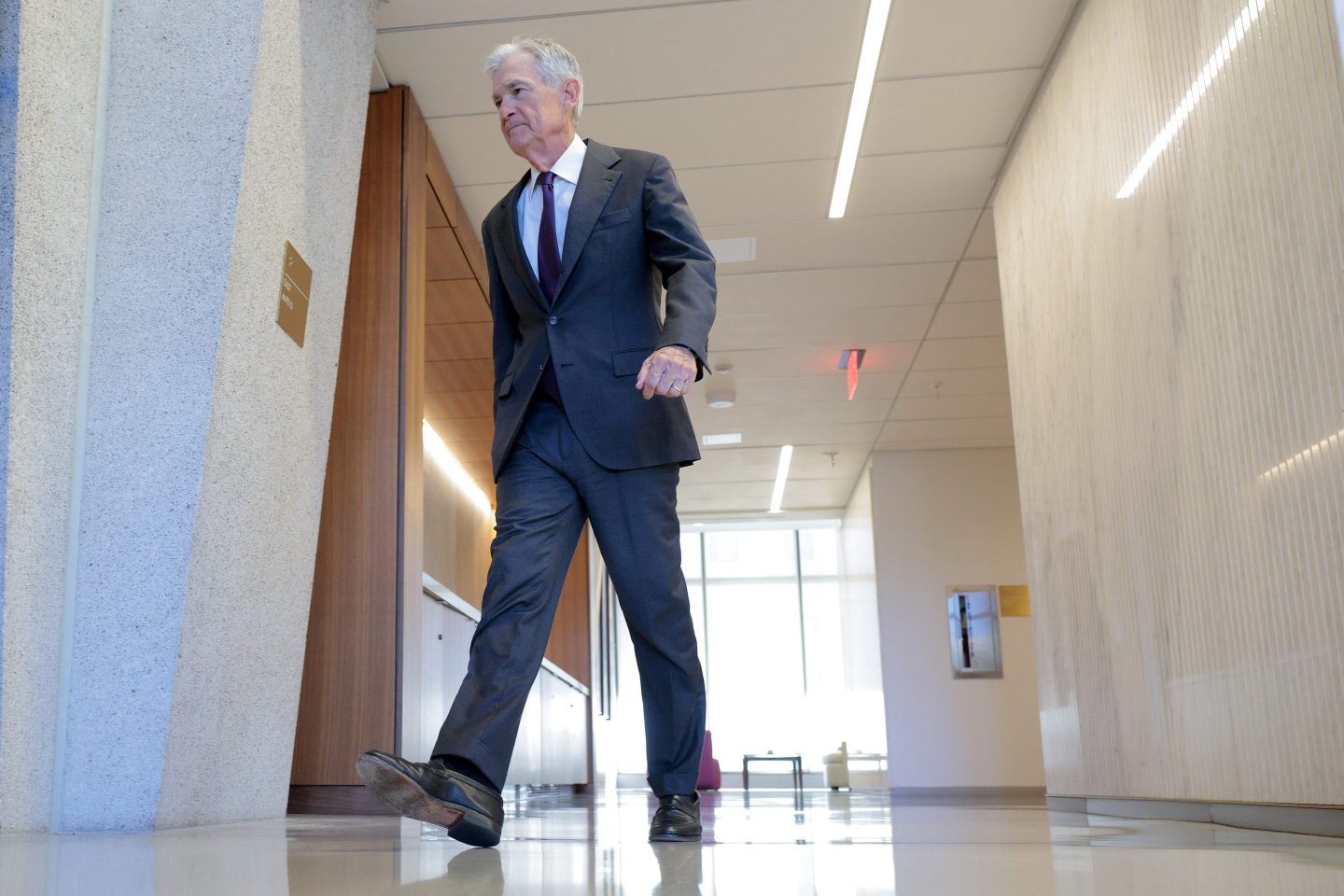
The afternoon now turns to Powell’s 2:30 p.m. press conference. This will be the first time Powell fields questions from reporters since he revealed earlier this month that the Justice Department, led by U.S. Attorney Jeanine Pirro, had served the Fed with grand jury subpoenas. The criminal probe centers on whether Powell misled Congress regarding a $2.5 billion renovation of the Fed’s Washington headquarters.
Powell has dismissed the investigation as a “pretext,” stating in a video message the threat of indictment is a direct consequence of the Fed “setting interest rates based on our best assessment of what will serve the public, rather than following the preferences of the president.”