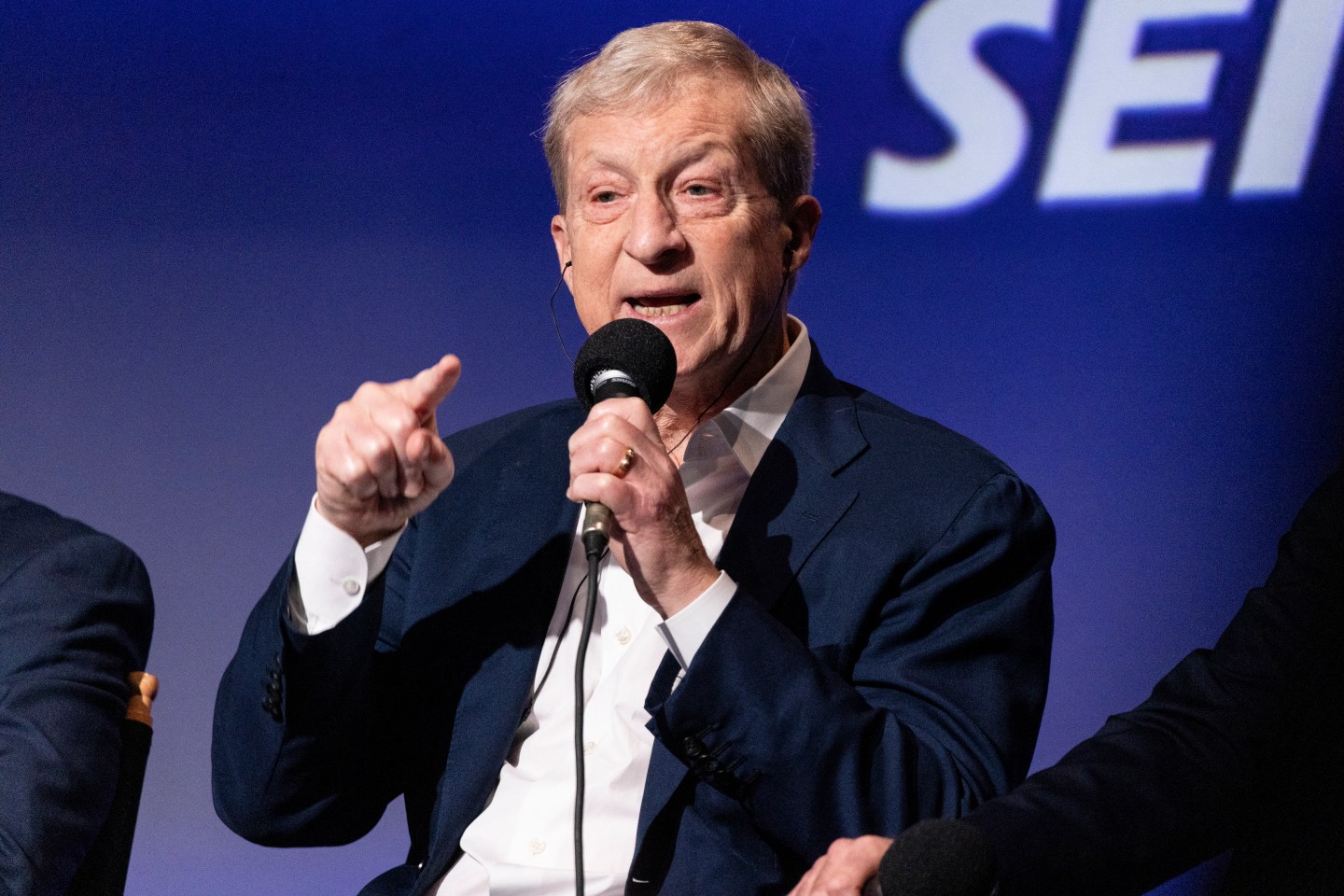
Billionaire Tom Steyer came out in favor of a proposed tax on California’s wealthiest residents, adding a prominent voice to a debate that has divided top Democrats and rattled Silicon Valley’s elite.
Steyer, who is running for California governor, said he’ll vote for the one-time 5% tax on billionaire wealth if it reaches the November ballot, even as he expressed concerns about the levy’s design.
“As drafted, the billionaire tax is a temporary fix to a permanent, structural problem, trying to backfill the damage caused by the Trump administration’s disastrous cuts to Medi-Cal, the healthcare system for more than one in three Californians,” Steyer said in a post on his Substack. “Let me be clear though: If there’s an opportunity to tax wealthy people to fund health care and education, I’d vote for it all day long.”
His support deepens the divisions among Democrats and progressives over how to approach the tax, which was proposed by a union as a way to fund health care. Governor Gavin Newsom and another candidate to replace him, Katie Porter, have opposed the measure. Vermont Senator Bernie Sanders and one of his California allies, US Representative Ro Khanna, have endorsed it.
If the proposal passes, Steyer could be facing a more than $237 million tax bill based on his $4.75 billion net worth, according to the Bloomberg Billionaires Index.
Read More: Silicon Valley Rich Fear Union That Could Cost Them Billions
The billionaire tax is far from reality. The union behind the measure must gather almost 900,000 signatures to qualify it for the ballot. It would then need to a secure a majority of votes in November to become law.
The tax would generate tens of billions in revenue from billionaires’ wealth but it could cost the state hundreds of millions per year in long-term revenue if the super-rich choose to leave, according to a state analysis of the measure.
Steyer has staked his gubernatorial campaign on closing corporate tax loopholes and decrying the rich. He previously spent over $340 million on his presidential campaign in 2020, which he abandoned after a poor showing in South Carolina’s Democratic primary.