There may be no AI-related topic more popular right now than job automation. It buzzes across watercoolers, airwaves, and dining room tables. Dozens of publications have printed lengthy editorials on the eventuality of job decimation. Thousands of world leaders have discussed it behind closed doors at their elite gatherings.
Unsurprisingly, it’s also one of the topics people ask me about most. The common question is, “won’t AI take all of our jobs?” The concern behind it is explained like this: If machines get really smart and really cheap, won’t they take our jobs? If they take our jobs, won’t we lose our money? And if we lose our money, won’t we starve?
To be clear. I have tremendous concern about the consequences of job automation, but not for economic reasons.
In October 2024, nearly 50,000 longshoremen, or dockworkers, along the U.S. East Coast walked off the job in one of the largest strikes in modern labor history. The work stoppage shut down almost half of America’s ocean shipping and cost an estimated $2 billion–$4 billion a day.
On the strike’s second morning, Harold Daggett, the fiery head of the International Longshoremen’s Association and one of the most powerful men in the supply chain economy, appeared on CNN and calmly told the American people they had no idea how dangerous he was. Pointing directly into the camera, he promised the strike would “cripple” the economy because “everything in the United States comes in on a ship.” His message was unmistakable. The dockworkers weren’t just another union, they were a choke point for the global economy, and they knew it.
What made the strike remarkable wasn’t its scale. It was its demand.
Daggett and his union weren’t asking for higher wages and they weren’t asking for safer working conditions—the two tenets of organized labor since unions began. What they demanded was something even more fundamental, a guarantee from the ports that their jobs would exist.
Watching Daggett’s interview live, I was struck by two things. The way he stared into the camera, the certainty in his voice, made it clear he wasn’t bluffing. It felt less like a negotiation and more like a very serious threat. It also felt very clear to me that this was only the beginning. Many more strikes of this kind would follow. Understanding the longshoremen, then, might help me understand the impending tide of labor disputes.
I reached out to dozens of union members through every channel I could find. Seven—all men; it’s a 92% male union—agreed to speak with me, off the record. The conversations were thoughtful, candid, and surprisingly measured. I asked dozens of questions, and what I learned was that behind the slogans on their picket signs (“Automation Hurts Families” and “Robots Don’t Pay Taxes”) was something deeper than economic anxiety.
When I asked, Do you believe you could be gainfully employed outside the union? five said yes. When I asked, What is the most important part of your job? four said community.
When I asked, Was anyone in your family in the union? five named fathers, uncles, or grandfathers.
And when I asked, Do you want anyone in your family to join the union? five said yes, and one told me he would keep having children until he had a son who could.
Their fight was not just about wages, or even jobs, but about identity. They admitted they could find other work. What they feared losing most was the life that came with this work. The camaraderie of the yard, the shorthand conversations over morning coffee, the mastery of a trade they knew as well as their own hands, and above all, the sense of legacy.
At the end of my conversations I asked each of them a deliberately uncomfortable question, which I now ask everyone: who would benefit economically if the ports were automated?
Automating the ports would improve shipping speeds providing cheaper, and more reliable supply lines. Consumers, including the longshoremen and their families, would enjoy lower costs and better service.
Everyone would benefit economically from port automation.
Most people on earth, every single day, ask some version of the same question, sometimes implicitly, sometimes explicitly: When will this good or service be better, faster, or cheaper?
What we often overlook is that this is usually another way of asking: When will a person be removed from the process of making or providing this? We’re not asking because we’re cruel; we’re asking it because we are conditioned to expect constant economic progress. For generations, we’ve believed, with good reason, that the world should get better, faster, and cheaper all the time. We are rational economic actors following a shared cultural script.
What we rarely acknowledge is that this script was written by the sacrifices of our ancestors, whose jobs were automated away, almost always to our collective economic benefit. The weavers replaced by textile mills saw their craft vanish, but clothing became cheaper and more abundant. The scribes replaced by movable type lost their livelihoods, but literacy spread to millions. Over time, automation has consistently raised living standards, not destroyed them.
There’s another sobering reality to the dockworkers’ fight: they were picketing automation that would have saved a lot of their own lives. In 2022, U.S. transportation and material-moving workers faced a fatal injury rate nearly four times the national average. Industry data and expert analyses show that automating port operations would significantly improve safety by reducing direct human involvement with heavy machinery and hazardous tasks. The dockworkers know this. They just don’t see it as a reason to give up the work that defined them.
That’s why the “job automation → starvation” narrative is a red herring. Historically, automation has improved life for both sides of the equation: for workers, jobs tend to become safer and less physically punishing; for consumers, products and services become more affordable, higher quality, and widely available. The same will be true for AI. But for the people living through it, the loss will be felt first as a rupture in identity, not livelihood.
For thousands of years, humans have tied identity to occupation. In the modern world, that bond is stronger than ever. A 2023 Pew survey found that 51% of Americans consider their job a central part of their identity. In a future where roles change constantly, it will be harder and harder to have a single, lifelong career. Even if you keep the same title, the work beneath it may transform every few years. The two most common last names in the United States are Smith and Miller because, until very recently, we named ourselves after our occupation.
With the rise of AI, one of the hardest adjustments we will face—and perhaps the greatest emotional sacrifice we will have to make—is extricating our job from our identity. That’s the real cost. That might sound liberating in theory, but in practice it will feel like a loss for many. Even if there is more and better food on the table, people may feel net-harmed by the emotional toll. This process of identity displacement seems inevitable—and is likely to be one of the greatest sources of resistance to AI, just as it was for the dockworkers.
As philosopher and economist John Maynard Keynes said, considering similar realities, “mankind will be deprived of its traditional purpose.” We won’t be miserable because we can’t feed ourselves, but because we’ve lost a familiar way of answering the question, Who am I?
The answer is simple to describe but not easy to live: we will have to extricate our purpose, our belief in ourselves, and our sense of self-worth from our jobs, because working life is about to change so much, so often. Even if we keep doing the job we have today, it will likely feel very different in five years.
The real test of this era will be whether we can redefine who we are without the anchor of a single, lifelong role, and find purpose in what comes next.
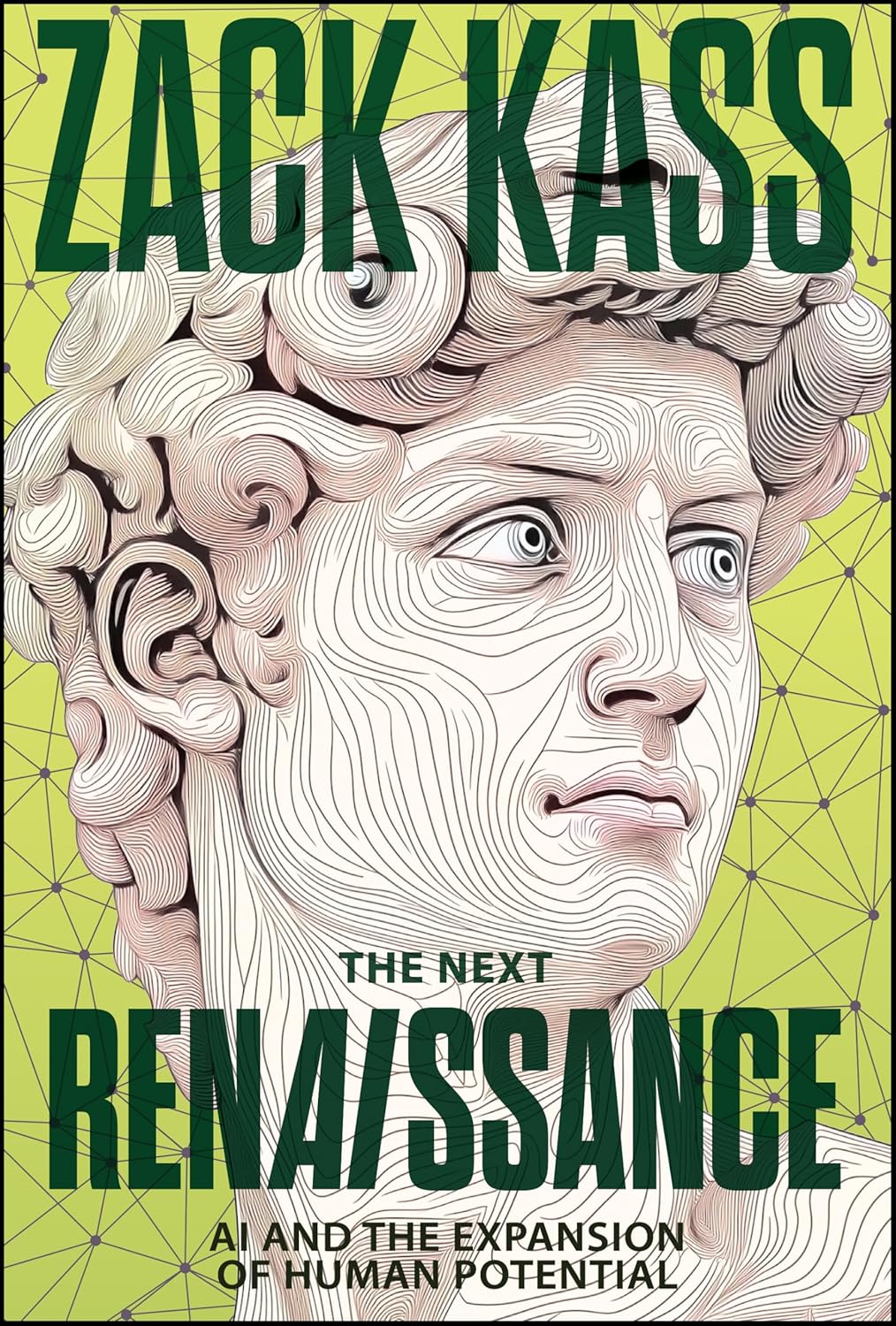
Excerpted with permission from the publisher, Wiley, from The Next Renaissance: AI and the Expansion of Human Potential by Zack Kass. Copyright © 2026 by John Wiley & Sons, Inc. All rights reserved. This book is available wherever books and eBooks are sold.