• Home
  • Latest
  • Fortune 500
  • Finance
  • Tech
  • Leadership
  • Lifestyle
  • Rankings
  • Multimedia
CommentaryHiring

What hiring someone who served 20 years in prison taught us about loyalty at work

By
Brian Koehn
Brian Koehn
and
Adam Claussen
Adam Claussen
Down Arrow Button Icon
By
Brian Koehn
Brian Koehn
and
Adam Claussen
Adam Claussen
Down Arrow Button Icon
January 18, 2026, 8:05 AM ET
prison
Is a retention strategy for American business sitting in prison?Getty Images

Employers across the country are saying the same thing. Loyalty is harder to find. Turnover feels constant. Training costs keep rising. Teams feel less stable than they once did.

Recommended Video

What often goes unsaid is the quieter truth behind those complaints.

Many employers are systematically excluding some of the most loyal workers available. Millions of capable job seekers are screened out automatically because they have a criminal record. At the same time, companies insist they cannot find dependable employees. Both of those things cannot be true.

We come to this issue from opposite sides of the same system, and now we sit on the same side of the table.

One of us spent decades as a correctional warden, responsible for staffing safe facilities and trying to send people home better prepared for work and community than when they arrived. The other served decades in the federal prison system on a 213-year sentence stemming from a series of armed robberies committed in his early 20s, and is now an executive at Social Purpose Corrections, working with employers and correctional leaders on workforce development and reentry outcomes.

What we have learned, from very different vantage points, is that the labor shortage many employers describe is often self-inflicted.

Inside prison, we watched men and women show up every day to demanding jobs, complete difficult programs, earn degrees, and hold themselves to high standards in environments that would burn out many free world employees. The talent was there. The discipline was there. The loyalty was there.

What was missing was access.

When people return home, many never make it past automated screening systems. Not because of skill or work ethic, but because of a checkbox. Doors close before conversations begin. Over time, that exclusion does not just limit opportunity for individuals. It limits the workforce for employers.

This is not a feel-good argument. It is supported by evidence.

Research cited by the Society for Human Resource Management has found that employees with criminal records perform as well as, and in some cases better than, their peers. A peer reviewed study published in the IZA Journal of Labor Policy found that in several job categories, employees with criminal records demonstrated longer tenure and lower voluntary turnover than employees without records.

In a labor market defined by churn, loyalty is not sentimental. It is operational.

Employers often explain their hesitation in terms of risk. Risk to culture. Risk to liability. Risk to the brand. Those concerns are understandable. What is less often acknowledged is the cost of constant turnover, understaffed operations, and teams that never stay long enough to fully contribute.

From where we sit now, we see three things’ companies miss when they automatically filter people with records out of the applicant pool.

First, retention upside. People who finally get a real shot after years of closed doors do not treat it casually. They fight to keep it.

Second, culture signal. When a company hires someone who has had to earn trust the hard way, it sends a message to the entire workforce that growth is possible here and that people are not disposable.

Third, problem solving experience. People who have survived and transformed inside prison have spent years managing scarcity, conflict, and high stakes decisions. That is not a liability. It is an asset.

Fair chance hiring is not about lowering standards. It is about applying standards with intention. Background checks still matter. Performance still matters. Accountability still matters. What changes is the assumption that a past conviction permanently defines a person’s value at work.

At Social Purpose Corrections, where we both work today, fair chance hiring is not a slogan. It is a daily operating reality. People are hired with clear expectations, measured outcomes, and accountability, just like anywhere else. That approach has reinforced what the data already suggests. When people are trusted with responsibility, many rise to it.

Across the country, employers are demonstrating the same principle.

Awake Window and Door Co., a manufacturer based in Arizona, built its business from the start as a fair chance employer. More than half of its workforce is formerly incarcerated, and the company has grown while maintaining a stable, committed team. That is not charity. It is a business decision focused on retention.

There is also a broader impact worth acknowledging. Stable employment is widely recognized as one of the strongest predictors of reduced recidivism. When people leaving incarceration find meaningful work, families stabilize, communities are safer, and fewer people return to prison. The same decisions that improve retention can also reduce long term social costs.

For business leaders wondering where to start, the path does not require a leap of faith. It requires disciplined experimentation.

Audit your hiring filters. Remove blanket exclusions that prevent qualified candidates from ever reaching a human decision maker.

Pilot fair chance roles or sites. Start with one function or location. Set clear performance standards. Measure retention and turnover against your baseline.

Partner with organizations that understand this workforce. Do not improvise. Work with groups that can help design policies, support employees, and prepare managers to lead with clarity and accountability.

None of this requires lowering the bar. It requires recognizing that loyalty and potential do not disappear because of a line on an application.

Business leaders pride themselves on seeing opportunity where others see risk. Fair chance hiring remains one of the clearest opportunities left to do exactly that.

Loyalty is not gone. The workforce is not broken.

We are simply hiring past it.

Join us at the Fortune Workplace Innovation Summit May 19–20, 2026, in Atlanta. The next era of workplace innovation is here—and the old playbook is being rewritten. At this exclusive, high-energy event, the world’s most innovative leaders will convene to explore how AI, humanity, and strategy converge to redefine, again, the future of work. Register now.
About the Authors
By Brian Koehn
See full bioRight Arrow Button Icon
By Adam Claussen
See full bioRight Arrow Button Icon

Latest in Commentary

Finance
Lorem ipsum dolor sit amet, consectetur adipiscing elit, sed do eiusmod tempor incididunt ut labore et dolore magna aliqua. Ut enim ad minim veniam
By Fortune Editors
October 20, 2025
Finance
Lorem ipsum dolor sit amet, consectetur adipiscing elit, sed do eiusmod tempor incididunt ut labore et dolore magna aliqua. Ut enim ad minim veniam
By Fortune Editors
October 20, 2025
Finance
Lorem ipsum dolor sit amet, consectetur adipiscing elit, sed do eiusmod tempor incididunt ut labore et dolore magna aliqua. Ut enim ad minim veniam
By Fortune Editors
October 20, 2025
Finance
Lorem ipsum dolor sit amet, consectetur adipiscing elit, sed do eiusmod tempor incididunt ut labore et dolore magna aliqua. Ut enim ad minim veniam
By Fortune Editors
October 20, 2025
Finance
Lorem ipsum dolor sit amet, consectetur adipiscing elit, sed do eiusmod tempor incididunt ut labore et dolore magna aliqua. Ut enim ad minim veniam
By Fortune Editors
October 20, 2025
Finance
Lorem ipsum dolor sit amet, consectetur adipiscing elit, sed do eiusmod tempor incididunt ut labore et dolore magna aliqua. Ut enim ad minim veniam
By Fortune Editors
October 20, 2025

Most Popular

Finance
Lorem ipsum dolor sit amet, consectetur adipiscing elit, sed do eiusmod tempor incididunt ut labore et dolore magna aliqua. Ut enim ad minim veniam
By Fortune Editors
October 20, 2025
Finance
Lorem ipsum dolor sit amet, consectetur adipiscing elit, sed do eiusmod tempor incididunt ut labore et dolore magna aliqua. Ut enim ad minim veniam
By Fortune Editors
October 20, 2025
Finance
Lorem ipsum dolor sit amet, consectetur adipiscing elit, sed do eiusmod tempor incididunt ut labore et dolore magna aliqua. Ut enim ad minim veniam
By Fortune Editors
October 20, 2025
Finance
Lorem ipsum dolor sit amet, consectetur adipiscing elit, sed do eiusmod tempor incididunt ut labore et dolore magna aliqua. Ut enim ad minim veniam
By Fortune Editors
October 20, 2025
Finance
Lorem ipsum dolor sit amet, consectetur adipiscing elit, sed do eiusmod tempor incididunt ut labore et dolore magna aliqua. Ut enim ad minim veniam
By Fortune Editors
October 20, 2025
Finance
Lorem ipsum dolor sit amet, consectetur adipiscing elit, sed do eiusmod tempor incididunt ut labore et dolore magna aliqua. Ut enim ad minim veniam
By Fortune Editors
October 20, 2025
Rankings
  • 100 Best Companies
  • Fortune 500
  • Global 500
  • Fortune 500 Europe
  • Most Powerful Women
  • Future 50
  • World’s Most Admired Companies
  • See All Rankings
Sections
  • Finance
  • Leadership
  • Success
  • Tech
  • Asia
  • Europe
  • Environment
  • Fortune Crypto
  • Health
  • Retail
  • Lifestyle
  • Politics
  • Newsletters
  • Magazine
  • Features
  • Commentary
  • Mpw
  • CEO Initiative
  • Conferences
  • Personal Finance
  • Education
Customer Support
  • Frequently Asked Questions
  • Customer Service Portal
  • Privacy Policy
  • Terms Of Use
  • Single Issues For Purchase
  • International Print
Commercial Services
  • Advertising
  • Fortune Brand Studio
  • Fortune Analytics
  • Fortune Conferences
  • Business Development
About Us
  • About Us
  • Editorial Calendar
  • Press Center
  • Work At Fortune
  • Diversity And Inclusion
  • Terms And Conditions
  • Site Map
  • Facebook icon
  • Twitter icon
  • LinkedIn icon
  • Instagram icon
  • Pinterest icon
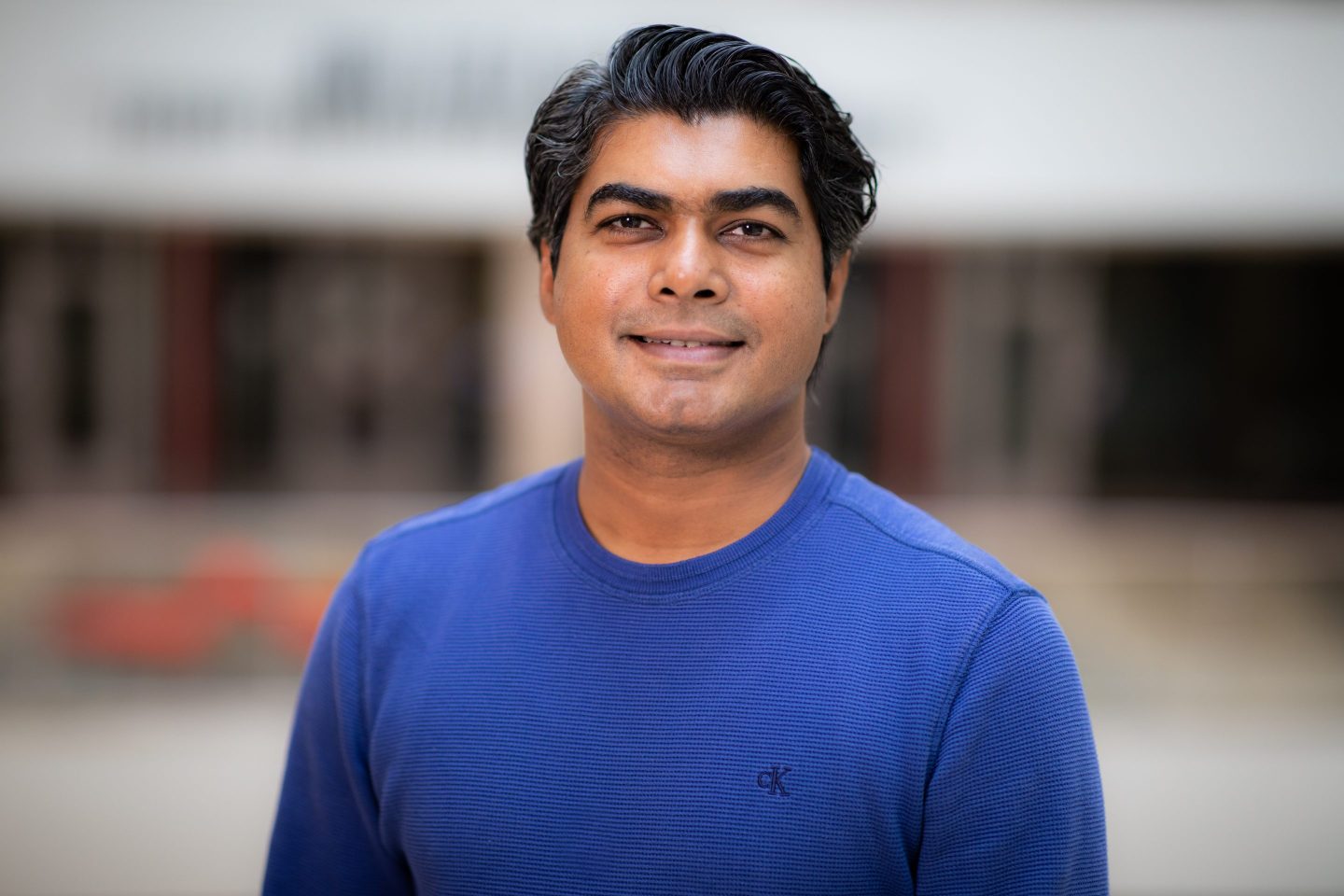
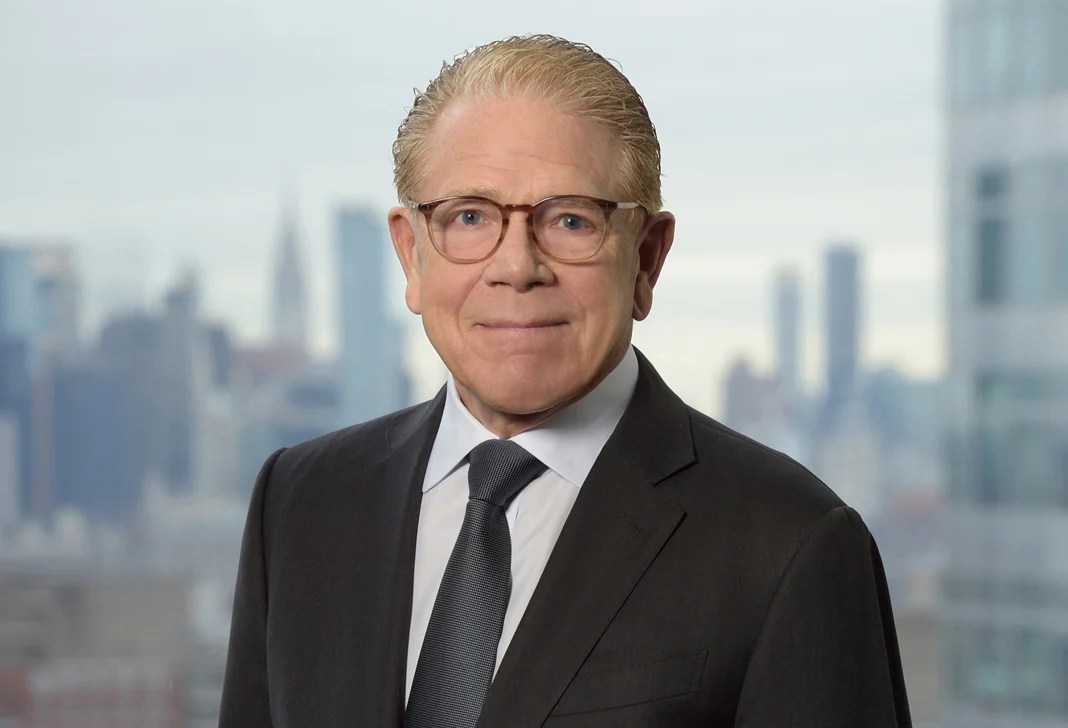
Brian Koehn is the founder of Social Purpose Corrections and one of the most diverse experienced correctional operators in the United States, with a career that includes serving in multiple correctional warden roles and leading operations across multiple incarceration models. Adam Claussen is an executive at Social Purpose Corrections who served 20 years of a 213-year sentence in the federal prison system and now works on workforce development and reentry outcomes.

Latest in Commentary

boardroom
CommentaryCorporate Governance
When AI decides how shareholders vote, boards need to rethink governance
By Jane SadowskyJanuary 17, 2026
1 day ago
moreland
CommentaryHuman resources
Fortune 500 exec: College grads aren’t ready for today’s jobs
By Mary MorelandJanuary 17, 2026
1 day ago
depa
CommentaryConsulting
Adaptability is the new job security and 4 more future AI trends from EY’s global chief innovation officer
By Joe DepaJanuary 16, 2026
2 days ago
verma
CommentaryGoogle
Google Meet exec on the knowledge engine hiding in your calendar: meetings become IP
By Awaneesh VermaJanuary 16, 2026
2 days ago
sharma
CommentaryTraining
AI will infiltrate the industrial workforce in 2026—let’s apply it to training the next generation, not replacing them
By Kriti SharmaJanuary 15, 2026
3 days ago
CommentaryBusiness
Using AI just to reduce costs is a woeful misuse of a transformative technology
By Nigel VazJanuary 15, 2026
3 days ago

Most Popular

placeholder alt text
Newsletters
The oil CEO who stood up to Trump is a follower of the disciplined 'Exxon way' and has a history of blunt statements
By Jordan BlumJanuary 13, 2026
5 days ago
placeholder alt text
Banking
'Absolutely, positively no chance, no way, no how, for any reason': Dimon says he'd never run the Fed but 'would take the call' to lead Treasury
By Jacqueline MunisJanuary 16, 2026
2 days ago
placeholder alt text
Politics
The Nobel Prize committee doesn't want Trump getting one, even as a gift—but they treated Obama very differently
By Nick LichtenbergJanuary 16, 2026
2 days ago
placeholder alt text
Economy
Making billionaires illegal by taxing their wealth wouldn’t even fund the government for a year, budget expert says
By Nick LichtenbergJanuary 17, 2026
1 day ago
placeholder alt text
Success
Jensen Huang tells Stanford students their high expectations may make it hard for them to succeed: 'I wish upon you ample doses of pain and suffering'
By Orianna Rosa RoyleJanuary 16, 2026
2 days ago
placeholder alt text
Success
Warren Buffett's son says he didn’t know his dad was a billionaire until he was in his 20s—and his friends were just as surprised
By Sydney LakeJanuary 17, 2026
1 day ago

© 2025 Fortune Media IP Limited. All Rights Reserved. Use of this site constitutes acceptance of our Terms of Use and Privacy Policy | CA Notice at Collection and Privacy Notice | Do Not Sell/Share My Personal Information
FORTUNE is a trademark of Fortune Media IP Limited, registered in the U.S. and other countries. FORTUNE may receive compensation for some links to products and services on this website. Offers may be subject to change without notice.