• Home
  • Latest
  • Fortune 500
  • Finance
  • Tech
  • Leadership
  • Lifestyle
  • Rankings
  • Multimedia
Economynational debt

National debt is already killing the American Dream, says top economist—and it might push the U.S. into an outright depression

Eleanor Pringle
By
Eleanor Pringle
Eleanor Pringle
Senior Reporter, Economics and Markets
Down Arrow Button Icon
Eleanor Pringle
By
Eleanor Pringle
Eleanor Pringle
Senior Reporter, Economics and Markets
Down Arrow Button Icon
January 18, 2026, 3:00 AM ET
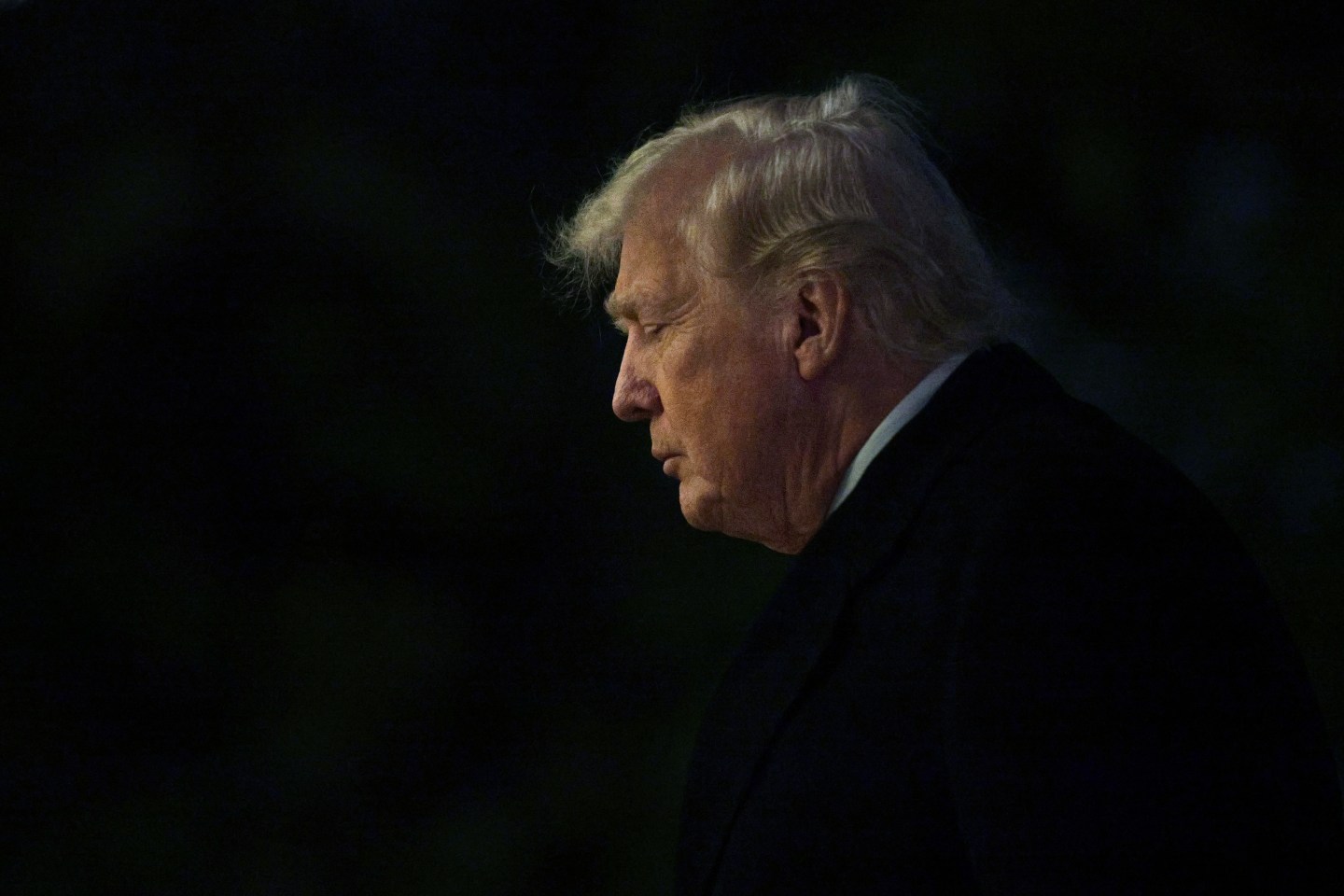
U.S. President Donald Trump walks on the South Lawn after landing at the White House on January 4, 2026, in Washington, D.C.
President Donald Trump on the South Lawn of the White House, Jan. 4, 2026, in Washington, D.C.Alex Wong—Getty Images

The government’s $38.5 trillion national debt is suffocating the American Dream, a leading economist has warned, and if a highly debated debt crisis comes to fruition the country could be facing an all-out economic depression.

Many factors have been blamed for the death of the American Dream. Most recently, it has been housing stock, with President Trump moving to bar large Wall Street investors from buying up single-family homes. Elsewhere, JPMorgan CEO Jamie Dimon agrees that housing is a barrier but so is education, saying opportunities need to be more accessible to young people across the country.

Meanwhile, the rising cost of retirement, raising children, and owning a car has led many to believe they can only achieve the lofty heights of the American Dream if they have $5 million in the bank.

Recommended Video

However, many of these symptoms trickle back to the vast sum America owes to its debtors, according to Kurt Couchman, a senior fellow in fiscal policy at think tank Americans for Prosperity. In the final three months of 2025, the government spent $276 billion in interest on the debt, which the likes of Bridgewater Associates founder Ray Dalio warn will one day squeeze out government investment needed to bolster economic prosperity.

In congressional testimony last month, Couchman told the House Judiciary Subcommittee on the Constitution and Limited Government that “the growing debt risks a bond market reckoning with potentially dire consequences for the American people. The actions of their representatives in Congress will determine whether the conditions of the American Dream—peace, freedom, and prosperity—survive, or if the future is decline.”

Already, that future is being hampered, Couchman, author of Fiscal Democracy in America, told Fortune in a phone interview. The affordability crisis (inflation by any other name) was largely sparked by an “explosion” in monetary supply at the onset of the pandemic, he outlined.

“We’ve already experienced the inflationary aspects of excessive federal spending and debt,” said Couchman, who previously served in government affairs positions at the Committee for a Responsible Federal Budget. “We’re now at the point where if you look at [the Congressional Budget Office], World Bank, [International Monetary Fund], and others, they say that once the debt burden … surpasses a certain threshold of GDP that it starts to slow economic growth.”

Economists aren’t necessarily worried by the total level of debt (in fact, government debt is a necessary foundation of global markets). Rather it’s the debt-to-GDP ratio, which measures a nation’s borrowing against its growth. If this tips too far out of balance, growth can be hampered by the excessive amount of cash needed for interest payments.

“So that means there’s fewer opportunities,” Couchman added. “The opportunities that are there aren’t paying as well. Productivity is being suppressed.”

Is the worst-case scenario a possibility?

The worst-case scenario is a debt crisis. This is the moment at which the U.S. cannot find buyers for its debt and is either forced to rein in spending, agree to higher interest payments to secure loans, or significantly increase its money supply to lower the value of the repayments—which comes with inflationary or hyperinflationary effects.

In this case, Couchman believes, the “likelihood of having a recession, if not a severe recession or maybe even a depression, become possibilities.” He added: “The global, economic instability could translate into some real security risks and even threats to our political systems because of the kinds of politicians that people may respond to if they’re feeling especially desperate. Those are all challenges to the American Dream that stem from the growing debt burden.”

Many speculators argue that while national debt is a problem, it is not a crisis that will ever become a reality: After all, one could argue the U.S. is too big to fail, and has within its power the ability to avert such a squeeze.

And Couchman notes, while a recession is an inevitability (“They happen every five years on average, plus or minus a few years, so sooner or later we’ll have one of those”), America has a chance to avoid anything more sinister if it “learn[s] from the mistakes of others abroad or in the States before we get to that moment and turn the ship.”

A solution

There’s no easy fix for the government’s spending habits. At least, not a solution that will be popular, and as such, not one which elected politicians will be keen to put their neck on the line for. Because of this, the national debt issue is often described as a game of “chicken,” with one administration to the next betting their successors will be the administration to address the poisoned chalice.

There are many options to rectify the balance, the least popular being to pull back spending. More broadly, the federal government could adopt a set of budget-balancing “fiscal rules.” While a more palatable option, that also means it’s less effective: According to an analysis from Oxford Economics of IMF data for more than 120 countries, on average, there’s a 1.1%-of-GDP improvement in the primary balance in the three years up to and including adopting a fiscal rule. However, there’s then a deterioration of the exact same percentage in the subsequent two years.

Couchman’s request is simpler: transparency. The author and economist is making the same plea as Thomas Jefferson did to his Treasury secretary more than 200 years ago, when he wrote: “We might hope to see the finances of the Union as clear and intelligible as a merchant’s books, so that every Member of Congress and every man of any mind in the Union should be able to comprehend them, to investigate abuses, and consequently to control them.”

“The most important thing Congress could do, to not only fix the budget but also restore democracy within Congress, is to do a real budget with all spending and all revenue in it so you can see everything,” Couchman said. “All the committees will get to manage their portfolios, and you can have real discussions about tradeoffs, what’s more valuable, what’s not, what we need to do, and what we can live without.”

Join us at the Fortune Workplace Innovation Summit May 19–20, 2026, in Atlanta. The next era of workplace innovation is here—and the old playbook is being rewritten. At this exclusive, high-energy event, the world’s most innovative leaders will convene to explore how AI, humanity, and strategy converge to redefine, again, the future of work. Register now.
About the Author
Eleanor Pringle
By Eleanor PringleSenior Reporter, Economics and Markets
LinkedIn icon

Eleanor Pringle is an award-winning senior reporter at Fortune covering news, the economy, and personal finance. Eleanor previously worked as a business correspondent and news editor in regional news in the U.K. She completed her journalism training with the Press Association after earning a degree from the University of East Anglia.

See full bioRight Arrow Button Icon

Latest in Economy

Finance
Lorem ipsum dolor sit amet, consectetur adipiscing elit, sed do eiusmod tempor incididunt ut labore et dolore magna aliqua. Ut enim ad minim veniam
By Fortune Editors
October 20, 2025
Finance
Lorem ipsum dolor sit amet, consectetur adipiscing elit, sed do eiusmod tempor incididunt ut labore et dolore magna aliqua. Ut enim ad minim veniam
By Fortune Editors
October 20, 2025
Finance
Lorem ipsum dolor sit amet, consectetur adipiscing elit, sed do eiusmod tempor incididunt ut labore et dolore magna aliqua. Ut enim ad minim veniam
By Fortune Editors
October 20, 2025
Finance
Lorem ipsum dolor sit amet, consectetur adipiscing elit, sed do eiusmod tempor incididunt ut labore et dolore magna aliqua. Ut enim ad minim veniam
By Fortune Editors
October 20, 2025
Finance
Lorem ipsum dolor sit amet, consectetur adipiscing elit, sed do eiusmod tempor incididunt ut labore et dolore magna aliqua. Ut enim ad minim veniam
By Fortune Editors
October 20, 2025
Finance
Lorem ipsum dolor sit amet, consectetur adipiscing elit, sed do eiusmod tempor incididunt ut labore et dolore magna aliqua. Ut enim ad minim veniam
By Fortune Editors
October 20, 2025

Most Popular

Finance
Lorem ipsum dolor sit amet, consectetur adipiscing elit, sed do eiusmod tempor incididunt ut labore et dolore magna aliqua. Ut enim ad minim veniam
By Fortune Editors
October 20, 2025
Finance
Lorem ipsum dolor sit amet, consectetur adipiscing elit, sed do eiusmod tempor incididunt ut labore et dolore magna aliqua. Ut enim ad minim veniam
By Fortune Editors
October 20, 2025
Finance
Lorem ipsum dolor sit amet, consectetur adipiscing elit, sed do eiusmod tempor incididunt ut labore et dolore magna aliqua. Ut enim ad minim veniam
By Fortune Editors
October 20, 2025
Finance
Lorem ipsum dolor sit amet, consectetur adipiscing elit, sed do eiusmod tempor incididunt ut labore et dolore magna aliqua. Ut enim ad minim veniam
By Fortune Editors
October 20, 2025
Finance
Lorem ipsum dolor sit amet, consectetur adipiscing elit, sed do eiusmod tempor incididunt ut labore et dolore magna aliqua. Ut enim ad minim veniam
By Fortune Editors
October 20, 2025
Finance
Lorem ipsum dolor sit amet, consectetur adipiscing elit, sed do eiusmod tempor incididunt ut labore et dolore magna aliqua. Ut enim ad minim veniam
By Fortune Editors
October 20, 2025
Rankings
  • 100 Best Companies
  • Fortune 500
  • Global 500
  • Fortune 500 Europe
  • Most Powerful Women
  • Future 50
  • World’s Most Admired Companies
  • See All Rankings
Sections
  • Finance
  • Leadership
  • Success
  • Tech
  • Asia
  • Europe
  • Environment
  • Fortune Crypto
  • Health
  • Retail
  • Lifestyle
  • Politics
  • Newsletters
  • Magazine
  • Features
  • Commentary
  • Mpw
  • CEO Initiative
  • Conferences
  • Personal Finance
  • Education
Customer Support
  • Frequently Asked Questions
  • Customer Service Portal
  • Privacy Policy
  • Terms Of Use
  • Single Issues For Purchase
  • International Print
Commercial Services
  • Advertising
  • Fortune Brand Studio
  • Fortune Analytics
  • Fortune Conferences
  • Business Development
About Us
  • About Us
  • Editorial Calendar
  • Press Center
  • Work At Fortune
  • Diversity And Inclusion
  • Terms And Conditions
  • Site Map
  • Facebook icon
  • Twitter icon
  • LinkedIn icon
  • Instagram icon
  • Pinterest icon

Latest in Economy

take off
InvestingMarkets
Why you shouldn’t worry about AI eating the stock market, top analyst says. The U.S. economy is ‘about to take off’
By Nick LichtenbergFebruary 9, 2026
36 minutes ago
Real EstateHousing
JPMorgan’s nationwide home price forecast hides a Sunbelt full of pain. Watch out, Florida and Texas
By Jason MaFebruary 9, 2026
2 hours ago
Phot of Donald Trump
Economyaffordability
Top analyst: Trump’s economy marked by ‘soggy consumption, weak job gains and a sour public mood’
By Nick LichtenbergFebruary 9, 2026
3 hours ago
Photo of Donald Trump
EconomyBonds
China might be beginning to back away from U.S. debt as investors get nervous about overexposure to American assets
By Eleanor PringleFebruary 9, 2026
8 hours ago
InvestingMarkets
Don’t get comfortable with the global stock rally today: Goldman’s Panic Index is approaching ‘max fear’
By Jim EdwardsFebruary 9, 2026
9 hours ago
AsiaAircraft
Singapore’s ST Engineering debuts the AirFish: A ‘ground effect’ craft that flies a few meters above the sea at up to 116 miles per hour
By Angelica AngFebruary 9, 2026
12 hours ago

Most Popular

placeholder alt text
Economy
Elon Musk warns the U.S. is '1,000% going to go bankrupt' unless AI and robotics save the economy from crushing debt
By Jason MaFebruary 7, 2026
2 days ago
placeholder alt text
Economy
Russian officials are warning Putin that a financial crisis could arrive this summer, report says, while his war on Ukraine becomes too big to fail
By Jason MaFebruary 8, 2026
22 hours ago
placeholder alt text
Commentary
America marks its 250th birthday with a fading dream—the first time that younger generations will make less than their parents
By Mark Robert Rank and The ConversationFebruary 8, 2026
1 day ago
placeholder alt text
Commentary
We studied 70 countries' economic data for the last 60 years and something big about market crashes changed 25 years ago
By Josh Ederington, Jenny Minier and The ConversationFebruary 8, 2026
1 day ago
placeholder alt text
Economy
China might be beginning to back away from U.S. debt as investors get nervous about overexposure to American assets
By Eleanor PringleFebruary 9, 2026
8 hours ago
placeholder alt text
Success
Gen Z Patriots quarterback Drake Maye still drives a 2015 pickup truck even after it broke down on the highway—despite his $37 million contract
By Sasha RogelbergFebruary 7, 2026
2 days ago

© 2026 Fortune Media IP Limited. All Rights Reserved. Use of this site constitutes acceptance of our Terms of Use and Privacy Policy | CA Notice at Collection and Privacy Notice | Do Not Sell/Share My Personal Information
FORTUNE is a trademark of Fortune Media IP Limited, registered in the U.S. and other countries. FORTUNE may receive compensation for some links to products and services on this website. Offers may be subject to change without notice.