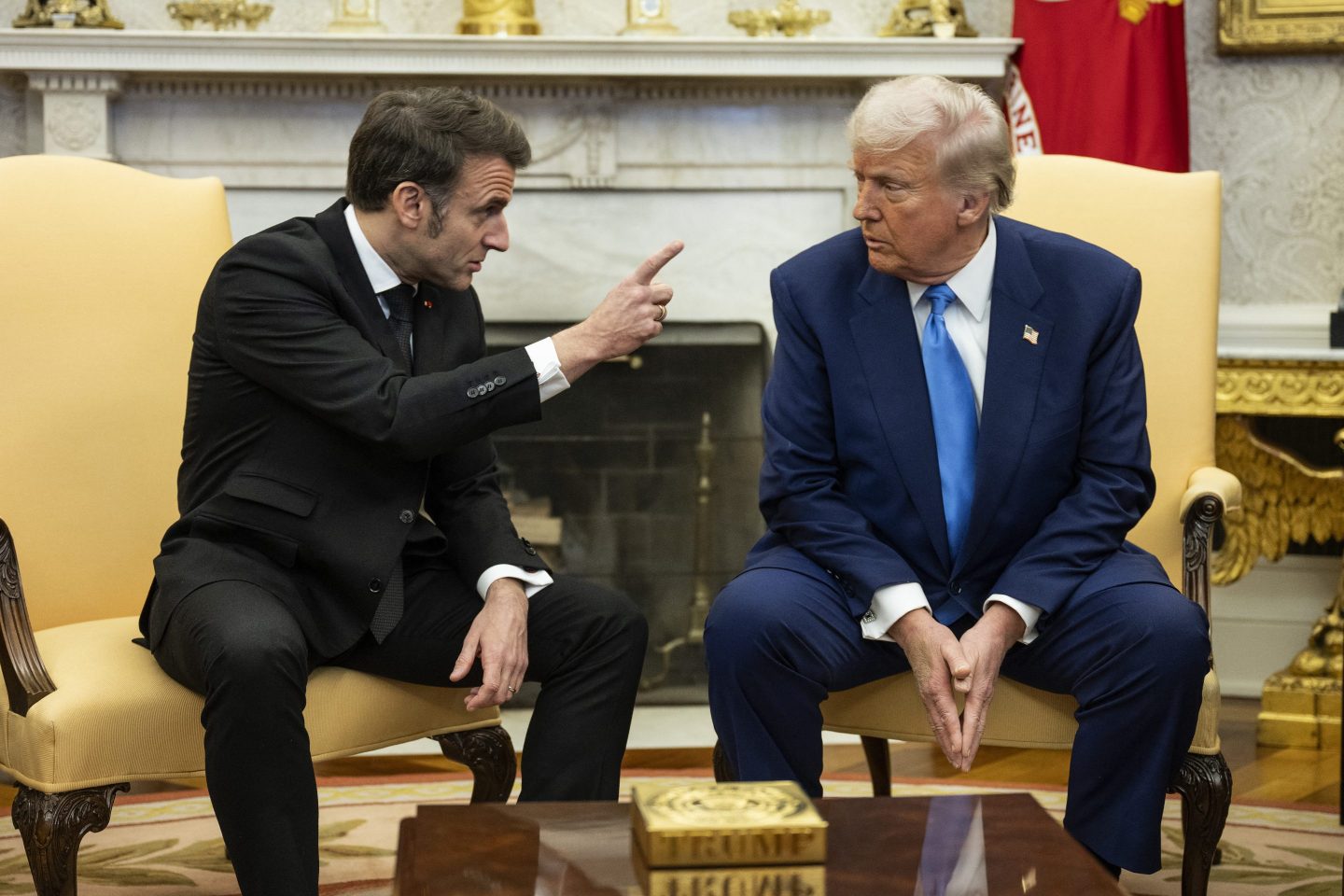
French President Emmanuel Macron is reportedly pushing the European Union to deploy its “anti-coercion instrument” as retaliation against new U.S. tariffs targeting NATO countries.
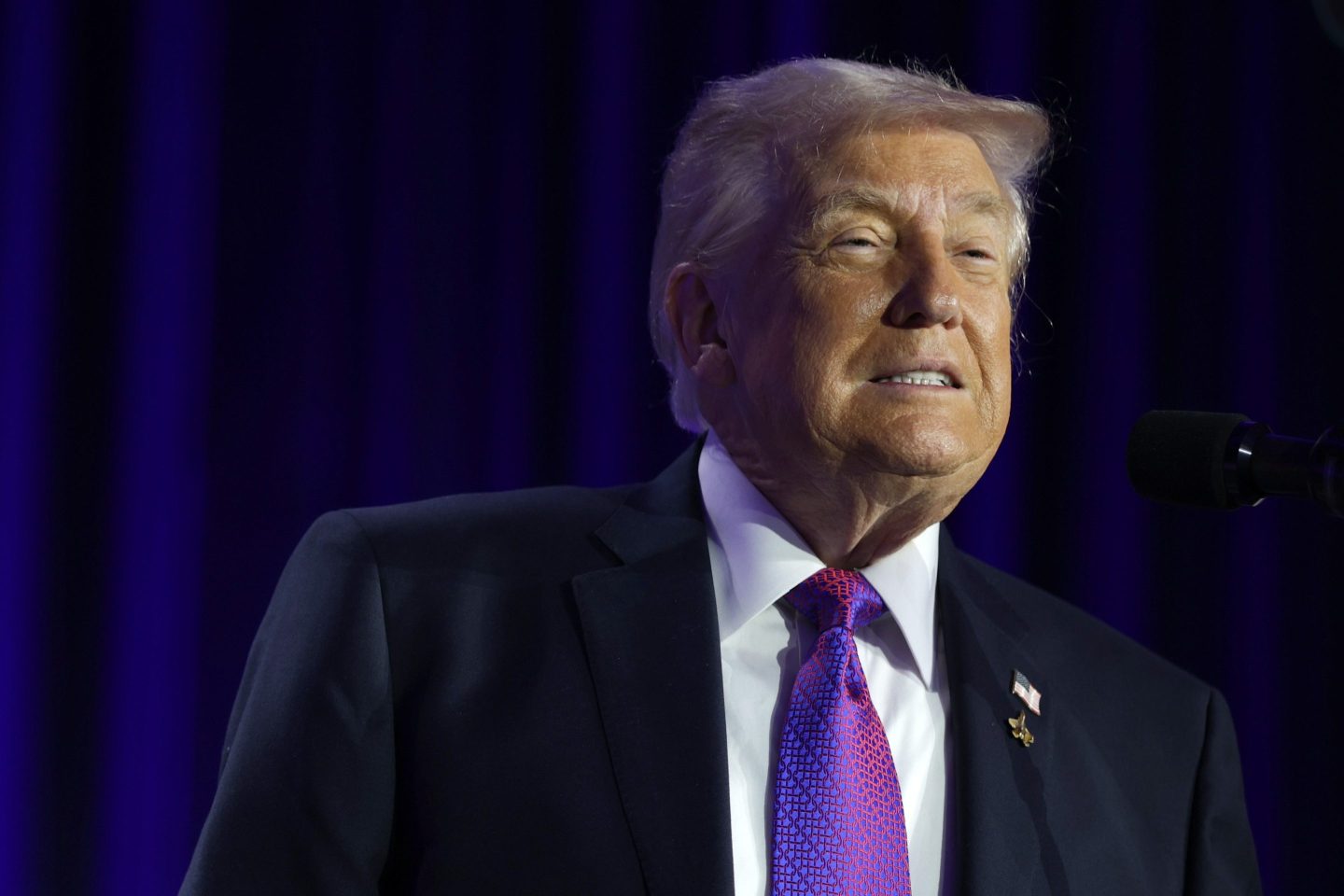
In a social media post on Saturday, President Donald Trump said Denmark, Norway, Sweden, France, Germany, the United Kingdom, the Netherlands, and Finland will be hit with a 10% tariff starting on Feb. 1 that will rise to 25% on June 1, until a “Deal is reached for the Complete and Total purchase of Greenland.”
The announcement came after those countries sent troops to Greenland this past week, ostensibly for training purposes, at the request of Denmark.
Macron will ask the EU to activate the anti-coercion instrument, which is the bloc’s most powerful trade weapon and has never been used since it was adopted in 2023, according to the Financial Times.
“He will be in contact throughout the day with his European counterparts and will request, on France’s behalf, the activation of the anti-coercion instrument,” a French official told the FT.
EU officials are due to meet Sunday to discuss how to respond to Trump’s latest tariffs, which come despite a trade deal reached in July.
That set U.S. tariffs on most products at 15% and obligated the EU to invest hundreds of billions of dollars in the U.S. But European lawmakers have yet to ratify the deal and now say the NATO levies will likely delay or kill it.
Meanwhile, the EU’s anti-coercion instrument has been described as a “trade bazooka” for its scope and severity.
It was designed as a deterrent to protect the EU from “economic coercion” by nonmember states trying to influence certain policy choices. In addition to limiting trade in goods and services, the anti-coercion instrument could also target foreign direct investment and financial markets.
In response to Trump’s new tariffs, such measures could include taxes on U.S. tech companies, restrictions on investments in the EU, or limits on access to the single market.
After Trump threatened the EU with his “reciprocal tariffs” last year, deployment of the anti-coercion instrument came up but was not used.
Another option short of that would be to unleash retaliatory tariffs that the EU prepared last year but put on hold after the U.S. deal was reached, sources told the FT.
The package would hit about $100 billion in U.S. exports. Its six-month suspension is due to expire on Feb. 7 unless the European Commission extends it.
A fresh U.S.-EU trade war blows up hopes for calm on the tariff front after the economy and financial markets were rocked by Trump’s “Liberation Day” shocker and subsequent high-stakes talks last year.
But Trump has refused to back down from taking over Greenland, even keeping military options on the table, while the administration has also left open the possibility of buying the island.
That’s despite estimates that extracting oil and rare earth minerals from Greenland would cost $1 trillion and take decades to yield any returns.
European officials have said sending troops there was meant to show they’re serious about security in the Arctic as Trump claims China and Russia are threatening Greenland, and not to repel a possible U.S. invasion.
Macron defended his country’s troop deployment to Greenland on Saturday, citing France’s commitment to the independence of nations as well as Arctic security.
“No intimidation or threat will influence us—neither in Ukraine, nor in Greenland, nor anywhere else in the world when we are confronted with such situations,” he posted on X. “Tariff threats are unacceptable and have no place in this context. Europeans will respond in a united and coordinated manner should they be confirmed. We will ensure that European sovereignty is upheld.”