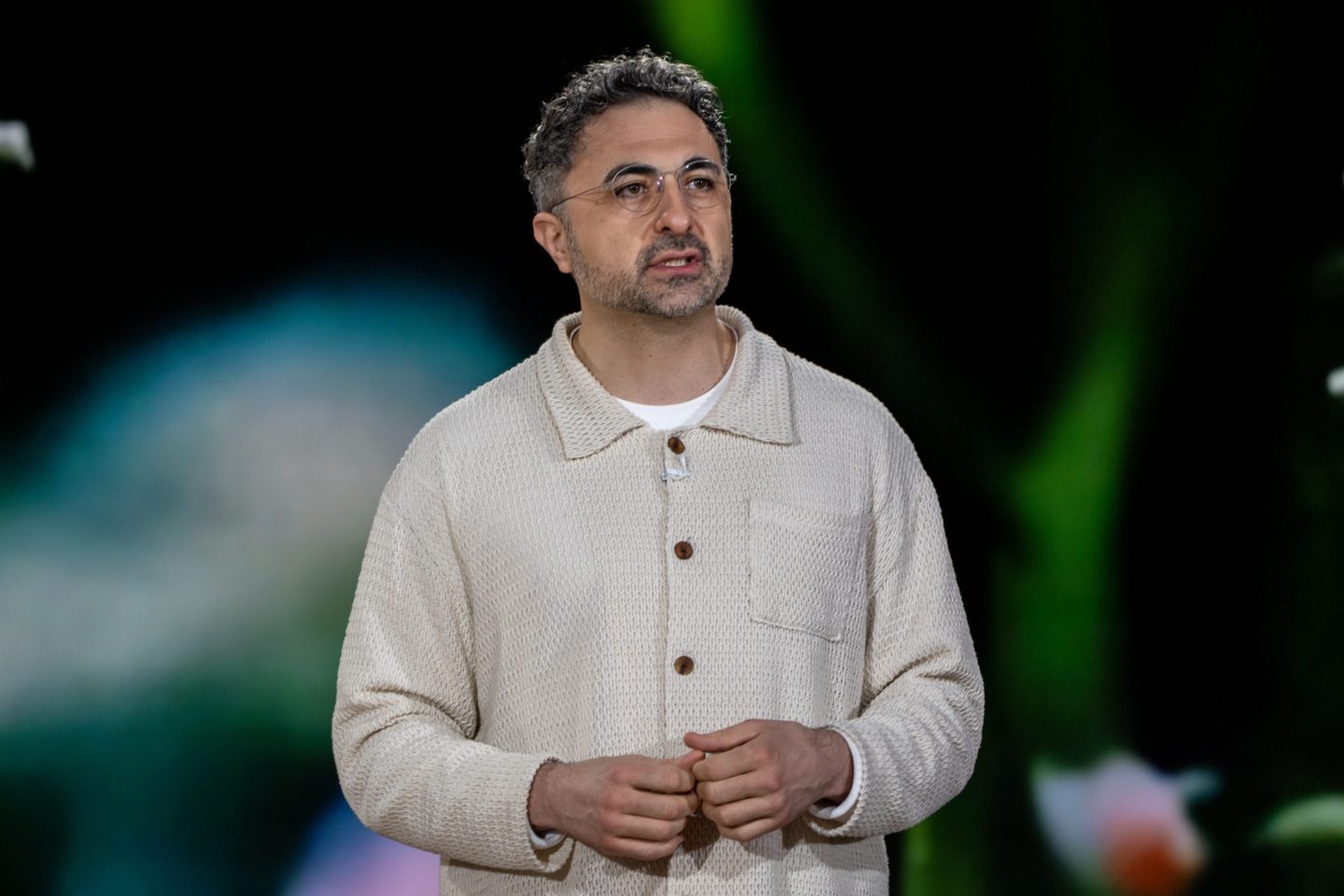
Those keeping tabs on Silicon Valley’s AI talent wars were gripped this week by news that three members of the founding team at Thinking Machines Lab, the AI startup run by former OpenAI CTO Mira Murati, are leaving to return to OpenAI, where they all worked previously.
Fidji Simo, OpenAI’s CEO of Applications, announced the hiring coup in a post on social media platform X Wednesday, saying that Brett Zoph, Luke Metz, and Sam Schoenholz are all returning to the AI juggernaut where they worked previously.
Simo said on social media that Zoph would report to her, with Metz and Schoenholz reporting to Zoph. Zoph and Metz were officially cofounders of Thinking Machines, while Schoenholz was a member of the “founding team” of researchers and engineers.
Murati told Thinking Machines staff that it had terminated Zoph’s employment due to “unethical conduct,” according to a report from tech publication Core Memory. Zoph, OpenAI, and Thinking Machines either did not respond to requests to comment for this story or declined to provide any on record response.
Simo said on social media that the hiring had been “in the works for several weeks.” Bloomberg News reported that in a memo Simo shared with OpenAi staff on Wednesday that “[Zoph] told [Murati] on Monday that he was considering leaving and she fired him today. You may have seen information from sources that Barret was fired from Thinking Machines for ‘unethical reasons.’ We do not share these concerns.”
Then on Thursday, there were reports that at least two additional Thinking Machines researchers, Lia Guy and Ian O’Connell, were also leaving, with Guy heading to OpenAI.
The bombshell news underscores the difficulties a new wave of AI labs dedicated to building state-of-the-art general purpose foundation models may have in trying to compete with more established labs such as OpenAI, Anthropic, and Google DeepMind. While several young Chinese startups, such as DeepSeek and Moonshot AI, have managed to create models that are competitive with those from these three leaders, the Chinese labs are not competing for the same talent pool.
Murati’s startup raised about $2 billion in July, in a seed funding round that was the largest ever in Silicon Valley, and which valued the nascent company at about $12 billion. Bloomberg reported late last year that the company was currently in discussions to raise additional funding at a $50 billion valuation.
But despite having raised such unprecedented sums, Murati’s startup has struggled to hold on to AI researchers. Andrew Tulloch, who was considered one of the lab’s cofounders, departed late last year to join Meta’s AI efforts. Meta had reportedly been offering compensation packages that climbed into the hundreds of millions and even billions of dollars. Now the company has lost Zoph, Metz, and Schoenholz as well as Guy and O’Connell.
Similarly, OpenAI’s former chief scientist, Ilya Sutskever, raised $1 billion for his startup Safe Super Intelligence (SSI) in late 2024. But he too saw Meta poach his confounder Daniel Gross to bolster its “superintelligence” drive.
The neo labs can’t offer the same pay deals
There are likely several reasons these high-profile “neo labs” are having trouble holding on to talent. In general, these labs, despite their huge early stage venture deals, still can’t afford to offer too many employees the high-six and seven-figure cash compensation packages that some of the more established technology companies, such as Meta, Google DeepMind, and OpenAI are reportedly using to lure and retain top AI talent.
While the neo foundation labs can offer their founding teams equity that could eventually be worth billions of dollars, they may be struggling to compete with the large cash compensation packages that the likes of Google, OpenAI, Anthropic, and particularly Meta, have been doling out.
In addition, the stock options that younger AI labs such as Thinking Machines offer may be perceived as more risky than accepting stock options from a public company, such as Google or Meta, or from a more established AI lab, such as Anthropic and OpenAI. Google and Meta have offered AI researchers large stock option packages with accelerated vesting schedules, allowing them to convert that equity to cash, sometimes within months. Meanwhile, both OpenAI and Anthropic have talked about the possibility of initial public offerings within the next year or two, which would give their employees big pay days far sooner than is likely the case for the wave of younger AI labs that are just getting going.
One former OpenAI researcher who is in contact with employees at Thinking Machines said the departures “have more to do with money than otherwise” and that some people were leaving because they “are being offered insane packages to return to OpenAI.”
This former researcher even suggested that Simo saw an opportunity to hobble Thinking Machines’ fundraising efforts by poaching prominent staff members. Venture capitalists generally don’t like to see members of a founding team jumping ship.
The neo labs don’t have access to vast computing clusters
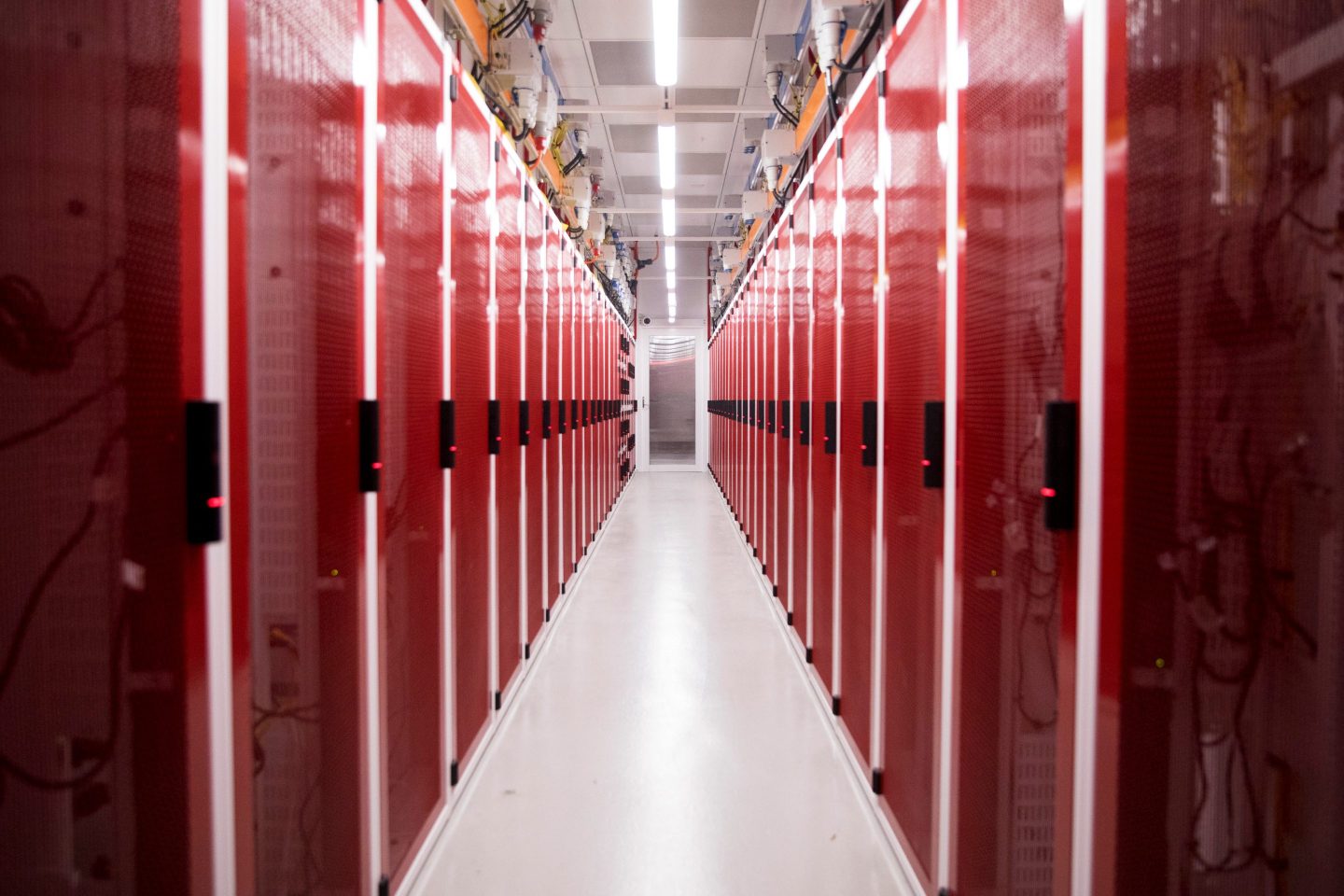
Access to computing resources may be another significant factor in the departures. The established AI labs frequently complain about being “compute constrained”—by which they mean that they don’t have enough data center capacity to conduct bluesky research, train the latest versions of their LLMs, and also serve those models to existing customers. The neo labs have the benefit of, in many cases, not yet having a product pipeline or existing customers to support. So they can devote most of their compute capacity to research.
But these younger labs may be having trouble obtaining enough GPUs to do as much research as they would like. The established labs have all invested billions now in building out their data center capacity. The volume of AI chips they purchase makes them priority customers for Nvidia, whose AI chips have been used for the training of most of the leading AI models to date. Google has its own AI chips, called TPUs, which means they are far less beholden to Nvidia for the compute. Meta, OpenAI, and Anthropic have been building out their own dedicated data centers as well as cutting deals with major cloud providers—such as Amazon Web Services and Microsoft—for the chip capacity they need. While the neo labs need fewer chips, they may still struggle to secure access to what they need.
A lack of products and unclear business plans
Finally, the neo labs may suffer from not having products in the marketplace. Thinking Machines, for instance, has said little about its business model or exactly what kind of products it has in the works. To date, it has released just one product. Released in October in a tightly-controlled beta it is named Tinker and it allows AI researchers and developers to more easily fine-tune an open source LLM. Fine-tuning is the process of honing a general purpose AI model so it performs especially well at a particular domain-specific task. Thinking Machines has also released several research papers and blogs about methods for optimizing the training of LLMs. But other than that, it has provided no hints of when it will have a widely-available model in the market or begin to make any revenue.
It is possible that operational issues at Thinking Machines, and maybe even confusion over the startup’s business plans, frustrated some employees, especially those used to the fast cadence of model roll-outs at the more established labs. “Inside Thinking Machines, there was kind of some frustrations about the lack of clarity on where the product direction was going,” the former OpenAI researcher said. But this person also added that these issues “have been resolved more recently” so it is unclear how large a role those frustrations played.
It is perhaps telling that Zoph, Metz and Schoenholz will not be reporting to Mark Chen, OpenAI’s head of research, but rather to Simo, who leads the company’s product efforts. It may signal that the three defectors are interested in building products and more applied AI research than they were able to do at Thinking Machines. It may also signal, as the former OpenAI staffer suggests, that Simo just moved opportunistically to try to disrupt Thinking Machines fundraising.
Other neo labs may also be struggling to turn research into products and establish a business model. Sutskever’s SSI, for instance, has also said next to nothing about what it is building and has yet to release a model—although in a recent podcast appearance Sutskever made some remarks that others have interpreted as hints that SSI will release something soon. Sutskever had also said previously that SSI might not release a product until it had achieved a fundamental breakthrough in techniques for making powerful AI models safer and more controllable.