
• Home
  • Latest
  • Fortune 500
  • Finance
  • Tech
  • Leadership
  • Lifestyle
  • Rankings
  • Multimedia
LawMinnesota

Most police forces banned shooting at moving vehicles decades ago, and Biden asked ICE to do it in 2022. So why isn’t it policy?

By
Ben Jones
Ben Jones
and
The Conversation
The Conversation
Down Arrow Button Icon
By
Ben Jones
Ben Jones
and
The Conversation
The Conversation
Down Arrow Button Icon
January 9, 2026, 2:50 PM ET
ICE
Members of the Hennepin County Sheriff's Office look on as people gather near the scene of a suspected shooting by an ICE agent during federal law enforcement operations on January 07, 2026 in Minneapolis, Minnesota. Stephen Maturen/Getty Images

Minneapolis is once again the focus of debates about violence involving law enforcement after an Immigration and Customs Enforcement officer shot and killed Renee Nicole Good, a 37-year-old mother, in her car.

Recommended Video

The incident quickly prompted dueling narratives. Trump administration officials defended the shooting as justified, while local officials condemned it.

The shooting will also likely prompt renewed scrutiny of training and policy of officers and the question of them shooting at moving vehicles. There has been a recent trend in law enforcement toward policies that prohibit such shootings. It is a policy shift that has shown promise in saving lives.

Decades ago, the New York City Police Department prohibited its officers from shooting at moving vehicles. That led to a drop in police killings without putting officers in greater danger.

Debates over deadly force are often contentious, but as I note in my research on police ethics and policy, for the most part there is consensus on one point: Policing should reflect a commitment to valuing human life and prioritizing its protection. Many use-of-force policies adopted by police departments endorse that principle.

Yet, as in Minneapolis, controversial law enforcement killings continue to occur. Not all agencies have implemented prohibitions on shooting at vehicles. Even in agencies that have, some policies are weak or ambiguous.

In addition, explicit prohibitions on shooting at vehicles are largely absent from the law, which means that officers responsible for fatal shootings of drivers that appear to violate departmental policies still often escape criminal penalties.

In the case of ICE, which is part of the Department of Homeland Security, its policy on shooting at moving vehicles – unlike that of many police agencies – lacks a clear instruction for officers to get out of the way of moving vehicles where feasible. It’s an omission at odds with generally recognized best practices in policing.

ICE’s policy on shooting at moving vehicles

ICE’s current use-of-force policy prohibits its officers from “discharging firearms at the operator of a moving vehicle” unless it is necessary to stop a grave threat. The policy is explicit that deadly force should not be used “solely to prevent the escape of a fleeing suspect.”

That point is relevant for evaluating the fatal shooting in Minneapolis. Videos show one officer trying to open the door of the vehicle that Good was driving, while another officer appears to be in front of the vehicle as she tried to pull away.

Shooting to prevent the driver simply from getting away would have been in violation of agency policy and obviously inconsistent with prioritizing the protection of life.

ICE’s policy lacks clear instruction, however, for its officers to get out of the way of moving vehicles where feasible. In contrast, the Department of Justice’s use-of-force policy makes it explicit that officers should not shoot at a vehicle if they can protect themselves by “moving out of the path of the vehicle.”

Notably, President Joe Biden issued an executive order in 2022 requiring federal law enforcement agencies – like ICE – to adopt use-of-force policies “that are equivalent to, or exceed, the requirements” of the Department of Justice’s policy.

Despite that order, the provision to step out of the way of moving cars never made it into the use-of-force policy that applies to ICE.

The rationale for not shooting at moving vehicles

Prioritizing the protection of life doesn’t rule out deadly force. Sometimes such force is necessary to protect lives from a grave threat, such as an active shooter. But it does rule out using deadly force when less harmful tactics can stop a threat. In such cases, deadly force is unnecessary – a key consideration in law and ethics that can render force unjustified.

That’s the concern involved with police shooting at moving vehicles. It often is not necessary because officers have a less harmful option to avoid a moving vehicle’s threat: stepping out of the way.

This guidance has the safety of both suspects and police in mind. Obviously, police not shooting lowers the risk of harm to the suspect. But it also lowers the risk to the officer in the vast majority of cases because of the laws of physics. If you shoot the driver of a car barreling toward you, that rarely brings a car to an immediate stop, and the vehicle often continues on its path.

Many police departments have incorporated these insights into their policies. A recent analysis of police department policies in the 100 largest U.S. cities found that close to three-quarters of them have prohibitions against shooting at moving vehicles.

The gap between policy and best practices for protecting life

The shooting in Minneapolis serves as a stark reminder of the stubborn gap that often persists between law and policy on the one hand and best law enforcement practices for protecting life on the other. When steps are taken to close that gap, however, they can have a meaningful impact.

Some of the most compelling examples involve local, state and federal measures that reinforce one another. Consider the “fleeing felon rule,” which used to allow police to shoot a fleeing felony suspect to prevent their escape even when the suspect posed no danger to others.

That rule was at odds with the doctrine of prioritizing the protection of life, leading some departments to revise their use-of-force policies and some states to ban the rule. In 1985, the U.S. Supreme Court ruled that it was unconstitutional for police to shoot a fleeing suspect who was not a danger.

Banning that questionable tactic notably led to a reduction in killings by police.

This history suggests that clear bans in law and policy on questionable tactics have the potential to save lives, while also strengthening the means for holding officers accountable.

Ben Jones, Assistant Professor of Public Policy and Research Associate in the Rock Ethics Institute, Penn State

This article is republished from The Conversation under a Creative Commons license. Read the original article.

The Conversation
Join us at the Fortune Workplace Innovation Summit May 19–20, 2026, in Atlanta. The next era of workplace innovation is here—and the old playbook is being rewritten. At this exclusive, high-energy event, the world’s most innovative leaders will convene to explore how AI, humanity, and strategy converge to redefine, again, the future of work. Register now.
About the Authors
By Ben Jones
See full bioRight Arrow Button Icon
By The Conversation
See full bioRight Arrow Button Icon

Latest in Law

Finance
Lorem ipsum dolor sit amet, consectetur adipiscing elit, sed do eiusmod tempor incididunt ut labore et dolore magna aliqua. Ut enim ad minim veniam
By Fortune Editors
October 20, 2025
Finance
Lorem ipsum dolor sit amet, consectetur adipiscing elit, sed do eiusmod tempor incididunt ut labore et dolore magna aliqua. Ut enim ad minim veniam
By Fortune Editors
October 20, 2025
Finance
Lorem ipsum dolor sit amet, consectetur adipiscing elit, sed do eiusmod tempor incididunt ut labore et dolore magna aliqua. Ut enim ad minim veniam
By Fortune Editors
October 20, 2025
Finance
Lorem ipsum dolor sit amet, consectetur adipiscing elit, sed do eiusmod tempor incididunt ut labore et dolore magna aliqua. Ut enim ad minim veniam
By Fortune Editors
October 20, 2025
Finance
Lorem ipsum dolor sit amet, consectetur adipiscing elit, sed do eiusmod tempor incididunt ut labore et dolore magna aliqua. Ut enim ad minim veniam
By Fortune Editors
October 20, 2025
Finance
Lorem ipsum dolor sit amet, consectetur adipiscing elit, sed do eiusmod tempor incididunt ut labore et dolore magna aliqua. Ut enim ad minim veniam
By Fortune Editors
October 20, 2025

Most Popular

Finance
Lorem ipsum dolor sit amet, consectetur adipiscing elit, sed do eiusmod tempor incididunt ut labore et dolore magna aliqua. Ut enim ad minim veniam
By Fortune Editors
October 20, 2025
Finance
Lorem ipsum dolor sit amet, consectetur adipiscing elit, sed do eiusmod tempor incididunt ut labore et dolore magna aliqua. Ut enim ad minim veniam
By Fortune Editors
October 20, 2025
Finance
Lorem ipsum dolor sit amet, consectetur adipiscing elit, sed do eiusmod tempor incididunt ut labore et dolore magna aliqua. Ut enim ad minim veniam
By Fortune Editors
October 20, 2025
Finance
Lorem ipsum dolor sit amet, consectetur adipiscing elit, sed do eiusmod tempor incididunt ut labore et dolore magna aliqua. Ut enim ad minim veniam
By Fortune Editors
October 20, 2025
Finance
Lorem ipsum dolor sit amet, consectetur adipiscing elit, sed do eiusmod tempor incididunt ut labore et dolore magna aliqua. Ut enim ad minim veniam
By Fortune Editors
October 20, 2025
Finance
Lorem ipsum dolor sit amet, consectetur adipiscing elit, sed do eiusmod tempor incididunt ut labore et dolore magna aliqua. Ut enim ad minim veniam
By Fortune Editors
October 20, 2025
Fortune Secondary Logo
Rankings
  • 100 Best Companies
  • Fortune 500
  • Global 500
  • Fortune 500 Europe
  • Most Powerful Women
  • Future 50
  • World’s Most Admired Companies
  • See All Rankings
Sections
  • Finance
  • Fortune Crypto
  • Features
  • Leadership
  • Health
  • Commentary
  • Success
  • Retail
  • Mpw
  • Tech
  • Lifestyle
  • CEO Initiative
  • Asia
  • Politics
  • Conferences
  • Europe
  • Newsletters
  • Personal Finance
  • Environment
  • Magazine
  • Education
Customer Support
  • Frequently Asked Questions
  • Customer Service Portal
  • Privacy Policy
  • Terms Of Use
  • Single Issues For Purchase
  • International Print
Commercial Services
  • Advertising
  • Fortune Brand Studio
  • Fortune Analytics
  • Fortune Conferences
  • Business Development
About Us
  • About Us
  • Editorial Calendar
  • Press Center
  • Work At Fortune
  • Diversity And Inclusion
  • Terms And Conditions
  • Site Map
Fortune Secondary Logo
  • About Us
  • Editorial Calendar
  • Press Center
  • Work At Fortune
  • Diversity And Inclusion
  • Terms And Conditions
  • Site Map
  • Facebook icon
  • Twitter icon
  • LinkedIn icon
  • Instagram icon
  • Pinterest icon

Latest in Law

Innovationwaymo
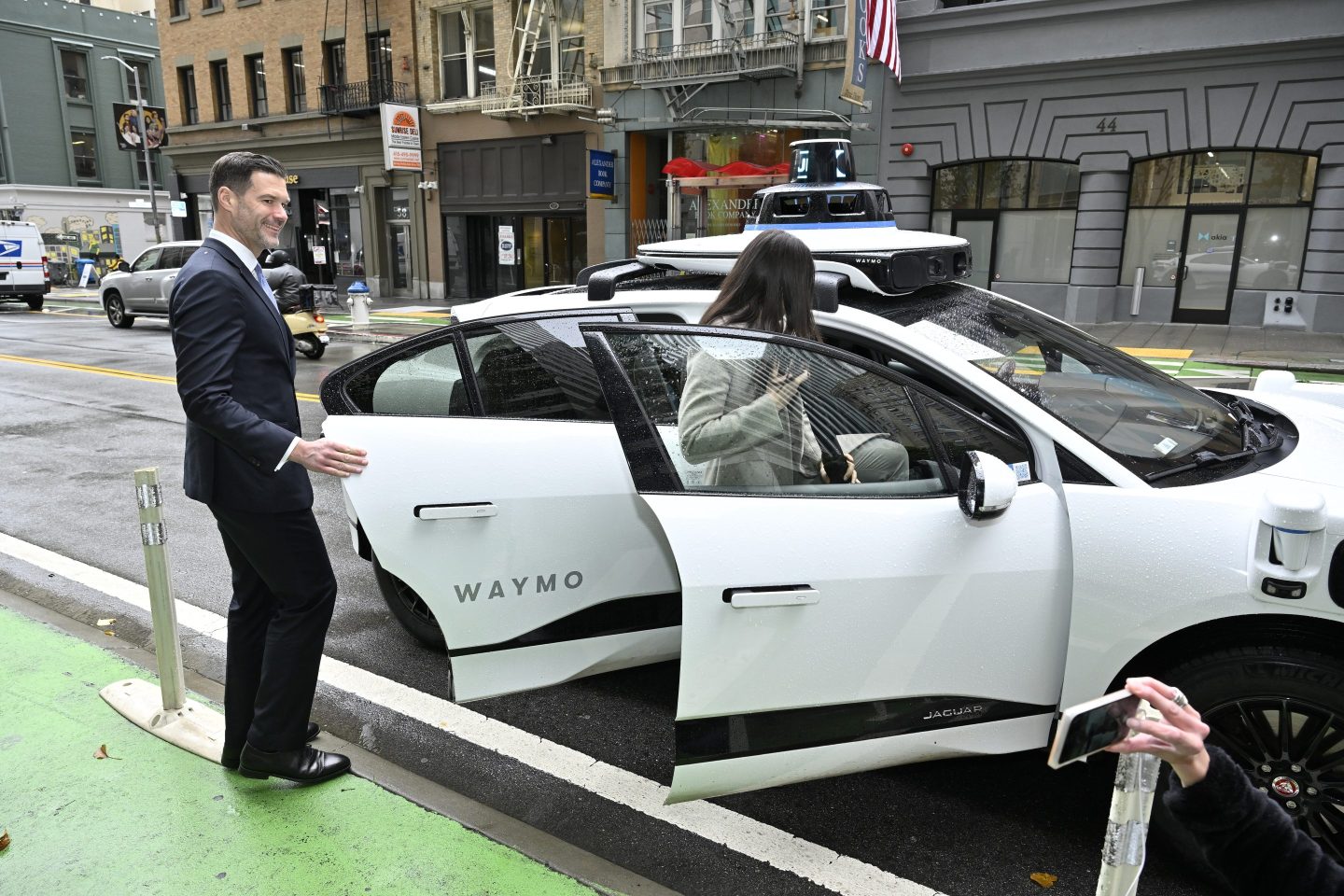
Some Waymo riders are so lazy that gig workers are getting paid $24 to close the door for them
By Catherina GioinoFebruary 25, 2026
1 hour ago
tiger
AsiaAnimals
72 tigers died in 2 Thai zoos over 10 days, but authorities tell humans not to worry
By Wasamon Audjarint and The Associated PressFebruary 24, 2026
8 hours ago
A sailor stands in front of the USNS Comfort.
PoliticsGreenland
Trump says he sent a hospital ship to Greenland, so why is it docked in Alabama?
By Kirsten Grieshaber, Konstantin Toropin, Devi Shastri and The Associated PressFebruary 24, 2026
11 hours ago
louvre
Europemuseums
France exhales as Louvre director finally resigns after stolen jewels, burst pipe near Mona Lisa, $11.8 million ticket fraud scandal
By Thomas Adamson, John Leicester and The Associated PressFebruary 24, 2026
12 hours ago
savannah
LawCrime
Savannah Guthrie offers $1 million award for info about her mother’s kidnapping
By John Seewer and The Associated PressFebruary 24, 2026
12 hours ago
A FedEx employee pushes a dolly with several boxes on it down a street
LawFedEx
FedEx is the first major company to sue for a full tariff refund after Supreme Court leaves payback open-ended
By Jacqueline MunisFebruary 24, 2026
16 hours ago

Most Popular

placeholder alt text
Economy
Scott Bessent has ’got a feeling’ that $175 billion raised under the IEEPA is lost to the American people for good
By Eleanor PringleFebruary 23, 2026
2 days ago
placeholder alt text
Cybersecurity
Discord cuts ties with Peter Thiel–backed verification software after its code was found tied to U.S. surveillance efforts
By Catherina GioinoFebruary 24, 2026
1 day ago
placeholder alt text
Economy
In less than a year, Trump erased 12 years of solvency for the trust fund that pays for Medicare Part A
By Nick LichtenbergFebruary 23, 2026
2 days ago
placeholder alt text
Economy
The record gap between corporate profits and worker pay has an ‘undercurrent of betrayal,’ top economist warns 
By Jason MaFebruary 23, 2026
2 days ago
placeholder alt text
Economy
A two-child household must earn $400,000 a year for childcare to be affordable, study says. 'It’s easy to see why birth rates are falling'
By Jason MaFebruary 22, 2026
3 days ago
placeholder alt text
Success
While Nvidia CEO Jensen Huang enjoys an over $150 billion net worth, his fellow cofounder Curtis Priem sold out in 2006—and missed out on $600 billion
By Preston ForeFebruary 23, 2026
2 days ago

© 2026 Fortune Media IP Limited. All Rights Reserved. Use of this site constitutes acceptance of our Terms of Use and Privacy Policy | CA Notice at Collection and Privacy Notice | Do Not Sell/Share My Personal Information
FORTUNE is a trademark of Fortune Media IP Limited, registered in the U.S. and other countries. FORTUNE may receive compensation for some links to products and services on this website. Offers may be subject to change without notice.