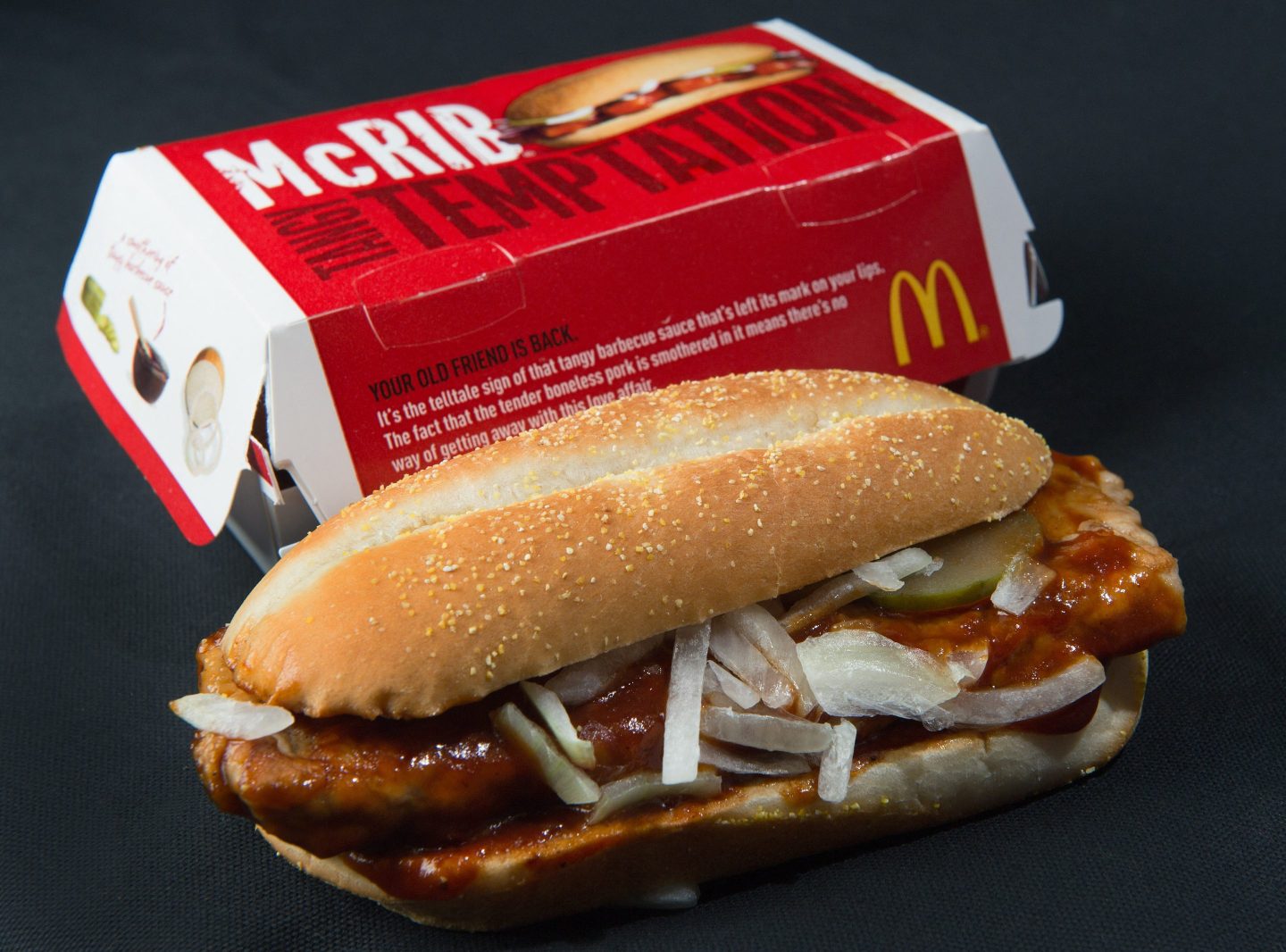
McDonald’s McRib sandwich—a limited-time menu item most recently available in November—has drawn a cult following. Now some of those same fast-food diners are suing the company, alleging the famous sandwich’s name is a misnomer.
A federal class action lawsuit filed last month in the Northern District of Illinois claims McDonald’s calling the sandwich a “McRib” is a “deliberate sleight of hand,” and contains no actual rib meat. Instead, according to the complaint, what McDonald’s calls a “pork rib patty” is actually composed of “lower-grade pork products such as, inter alia, pork shoulder, heart, tripe, and scalded stomach.”
McDonald’s told Fortune in a statement that the lawsuit “distorts the facts and the claims are meritless.”
“Our fan-favorite McRib sandwich is made with 100% pork sourced from farmers and suppliers across the U.S.–there are no hearts, tripe or scalded stomach used in the McRib patty as falsely alleged in this lawsuit,” the statement said. “We’ve always been transparent about our ingredients so guests can make the right choice for them.”
The plaintiffs seeking class-action status and unspecified damages in the lawsuit—including in New York, Illinois, California, and Washington, D.C.—allege McDonald’s intentionally misled its customers on the type of meat in the sandwich: Rib meat, as found in baby back or spare ribs, is of a premium quality that costs more than lower-quality cuts of meat, the lawsuit said.
Folded into the plaintiff’s concerns about the ingredients in the McRib is also distress about the sandwich’s affordability. Despite the McRib not containing these higher-quality cuts, the sandwich is one of the most expensive items on the menu, costing up to $7.89 before tax, the complaint said. Combined with the item’s limited-time allure, the sandwich’s name suggests customers are getting a more premium product than they are actually ordering, according to the lawsuit.
“By including the word ‘Rib’ in the name of the sandwich, McDonald’s knowingly markets the sandwich in a way that deceives reasonable consumers, who reasonably (but mistakenly) believe that a product named the ‘McRib’ will include at least some meaningful quantity of actual pork rib meat, which commands a premium price on the market,” the complaint said. “McDonald’s does this despite knowing that the sandwich in fact does not contain any meaningful quantity of actual pork rib meat—indeed, none at all.”
The lawsuit cites a 2011 Chicago Magazine report on the McRib, which featured research from scientists behind restructured meat products, credited for the technology used to create the McRib’s patty. He has previously said structured meat products contain ingredients such as tripe, heart, and scalded stomachs.
Other fast-food companies have been similarly scrutinized for their sandwich ingredients. In 2023, a district judge dismissed a lawsuit against Subway, which alleged the chain’s tuna product contained ingredients other than tuna, including chicken, pork, and cattle, as well as no tuna at all. Subway called the claims “meritless.”
McDonald’s customers’ affordability concerns
Claims from customers upset about the quality and price of their fast-food sandwiches coincides with broader outcry about an affordability crisis, as consumer confidence plummets to a five-month low, a sign that inflation worries and weak job data are still weighing on Americans, despite some rosy economic indicators like strong GDP growth.
McDonald’s has seen these affordability concerns firsthand, reporting in November that revenue fell short of estimates but that U.S. same-store sales were strong, driven by consumers gravitating toward affordable menu items. The fast-food giant has added several menu items and promotions, including Extra Value meals, the McValue Platform launched in January 2024, and the return of the $2.99 Snack Wrap, to appeal to budget-conscious diners.
At the same time, CEO Chris Kempczinski noted traffic from lower-income customers fell, a persistent trend for the last couple of years. High-income customers, he said, were continuing to dine out, though they were also looking for deals.
“There’s a lot of commentary around, ‘What’s the state of the economy, how’s it doing right now?’ And what we see is, it’s really kind of a two-tier economy,” Kempczinski told CNBC in September. “If you’re upper-income, earning over $100,000, things are good…What we see with middle- and lower-income consumers, it’s actually a different story.”
The claims in the lawsuit about the price and quality of a sandwich indicate the conversation about affordability in fast food is far from over.
“Put simply: consumers have been materially misled en masse as a result of McDonald’s deceptive labeling and marketing into purchasing sandwiches that they would not otherwise have purchased, or would only have paid less for, had they known the truth,” the complaint said.