The predawn U.S. military operation that spirited Nicolás Maduro and his wife out of Venezuela and into U.S. custody marks a watershed in hemispheric politics. In an operation that lasted just over two hours, American forces removed a foreign president. It followed months of saber-rattling and a steady buildup of America’s regional forces.
Whether under the banner of counter-narcotics or regime change, the message is unmistakable: The U.S. is prepared to act unilaterally, forcefully and, potentially, illegally. And this will have broad ramifications across Latin America, not least for Venezuela itself.
The reaction to the U.S. intervention from across the region was instantaneous. Colombia rushed troops to its frontier, bracing for potential refugees and denouncing the strikes as an affront to regional sovereignty. Cuba joined Iran, Russia and other foes of Washington in condemning the raid at the United Nations. A handful of governments, notably in Argentina, offered ringing endorsements.
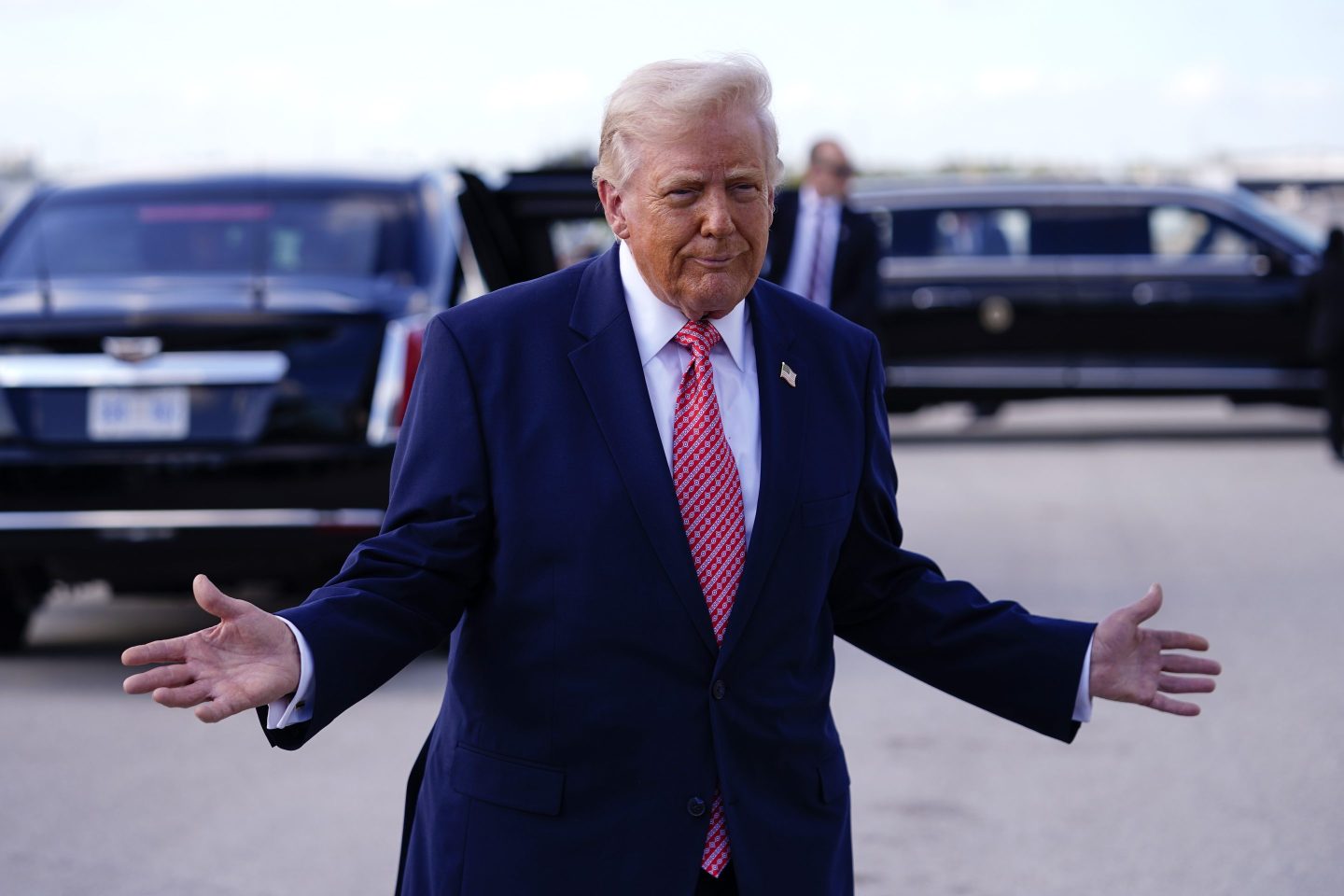
Maduro’s next public appearance will likely be in a New York court. But where do the U.S. and Venezuela go from here? President Donald Trump declared that the U.S. will “run” Venezuela until there is “a safe, proper and judicious transition” of power. He also said his administration is “not afraid of boots on the ground.”
But so far, few concrete details are on offer. Much depends on what Washington does next and how Venezuela’s fractured polity responds. As an expert on U.S.-Latin American relations, I think five broad scenarios seem likely.
1. Trump declares victory and walks away
In the first scenario, Trump will proclaim mission accomplished, parade the capture of Maduro as a triumph of American will and rapidly reduce the U.S. footprint. Venezuelan institutions would be left largely intact. Current Vice President Delcy Rodríguez, Interior Minister Diosdado Cabello and Defense Minister Vladimir Padrino López would preside over a reconstituted government that retains its commitment to the style of left-wing governance developed by the late Hugo Chavez, now minus its latest figurehead in Maduro.
This would suit American generals keen to limit U.S. troop exposure, as well as foreign powers anxious to avoid a power vacuum. But it offers little to the Venezuelan opposition or to regional governments that have borne years of refugee flows.
Above all, it would squander the leverage Washington has just expended effort and money to obtain. Having taken the extraordinary step of abducting a head of state, simply reverting to a slightly reshuffled Chavismo would look, even by the standards of foreign American interventions, oddly anticlimactic.
2. A popular uprising topples ‘Chavismo’
A second possibility is that the shock of Maduro’s removal cracks the government’s aura of inevitability and triggers a mass uprising that sweeps Chavismo from power. With the presidency vacant and the security forces demoralized or divided, a broad coalition of opposition parties, civil-society groups and disaffected Chavistas could push for a transitional council, perhaps under Organization of American States or U.N. auspices.
Yet as neat and tidy as this sounds, such revolutions — especially those supported by outside interference — rarely proceed tidily. Years of political repression, organized crime, economic misery and emigration have hollowed out Venezuela’s middle class and organized labor. Armed colectivos – paramilitary groups with a stake in the old order – would resist fiercely. The result might be not a swift democratic breakthrough but an unstable transition: a fragile caretaker government, sporadic violence and intense infighting over amnesties and control of the oil sector.
3. U.S. escalation to install a friendly opposition
Another scenario has Washington leveraging its new position to push forcefully for complete regime change. That could mean tightening sanctions on remaining power brokers, expanding strikes against security installations and militias, covertly supporting insurgent factions, and using Maduro’s prospective trial as a global stage on which to delegitimize Chavismo once and for all.
In this scenario, a recognized opposition leader would be ushered into office following some form of managed election, transitional council or negotiated handover — potentially someone like the Nobel Prize-winning María Corina Machado. The U.S. and its allies would dangle debt restructuring and reconstruction funding in exchange for market reforms and geopolitical alignment.
The risks are obvious. An overtly U.S.-produced transition would taint the new leadership’s legitimacy at home and abroad. It would deepen polarization, entrench the narrative of imperial imposition that Chavismo has long peddled, and invite proxy meddling by China, Cuba, Iran and Russia. A bruised but not broken Chavista movement could pivot into armed resistance, turning Venezuela into another theater of low-level insurgency.
4. U.S. custodianship and managed transition
A managed transition is the option Trump has now openly floated, with Washington taking an interim custodial role in Venezuela. In practice, it would resemble a trusteeship in all but name. Early priorities would be to impose a basic chain of command and restore administrative capacity, stabilizing the currency and payments system, and sequencing reforms to prevent state collapse during the handover.
The political timetable would be central. Washington would heavily influence interim governance arrangements, electoral rules and the timing of presidential and legislative votes, including reconstituting electoral authorities and setting minimum conditions for campaigning and media access. The U.S. would not necessarily need to occupy the country, but it might require American forces on the ground to deter spoilers.
The economic logic of this way forward would hinge on rapidly restoring oil output and basic services through U.S. technical support, private contractors and selective sanctions relief tied to compliance benchmarks. Companies such as Chevron, the only U.S. major oil company still positioned inside Venezuela, or oilfield service providers like Halliburton would likely be early beneficiaries.
Yet the hazards are profound. Like with the U.S.-friendly opposition above, a U.S. custodianship could inflame nationalist sentiment and validate Chavismo’s anti-imperial narrative. The implicit threat of force might deter spoilers, but it might also deepen resentment and harden resistance among armed groups, Maduro remnants or anyone else opposed to U.S. occupation.
5. Hybrid conflict and managed instability
A final outcome may a messy hybrid of some or all of the above: a protracted struggle in which no actor fully prevails. Maduro’s removal could weaken Chavismo but not erase its networks in the military, bureaucracy and low-income barrios. The opposition could be energized but divided. The U.S. under Trump will be militarily powerful but constrained by domestic fatigue with foreign wars, the upcoming midterm elections and doubts about the legality of its methods.
In this scenario, Venezuela could lurch into years of managed instability. De facto power might be shared among a weakened Chavista elite, opposition figures co-opted into a transitional arrangement, and security actors controlling local fiefdoms. Sporadic U.S. strikes and covert operations could continue, calibrated to punish spoilers and protect preferred partners, but avoiding the scale of occupation.
Monroe Doctrine 2.0?
Whatever the future, what seems clear for now is that the anti-Maduro operation can be seen by supporters and critics alike as a kind of Monroe Doctrine 2.0. This version, a follow-up to the original 19th century doctrine that saw Washington warn European powers off its sphere of influence, is a more muscular assertion that extra-hemispheric U.S. rivals, and their local clients, will not be permitted to have a say on America’s doorstep.
This aggressive signal is not limited to Caracas. Cuba and Nicaragua, already under heavy U.S. sanctions and increasingly reliant on Russian and Chinese support, will read the Venezuelan raid as a warning that even entrenched governments are not safe if their politics don’t sufficiently align with Trump. Colombia, notionally a U.S. ally yet currently led by a left-leaning government that has railed against the U.S. Venezuela policy, finds itself squeezed.
Smaller and midsized states, too, will take note — and not just those in Latin America. Panama, whose canal is critical to global trade and U.S. naval mobility, may feel renewed pressure to move toward Washington and police Chinese inroads in ports and telecommunications. Canada and Denmark, via Greenland, will hear echoes in the Arctic.
In the meantime, for Venezuelans, there seems to be yet another turning of the screw by the U.S., with a bare-minimum guarantee of insecurity and precarious limbo for the foreseeable future.
Robert Muggah, Richard von Weizsäcker Fellow na Bosch Academy e Co-fundador, Instituto Igarapé; Princeton University
This article is republished from The Conversation under a Creative Commons license. Read the original article.