• Home
  • Latest
  • Fortune 500
  • Finance
  • Tech
  • Leadership
  • Lifestyle
  • Rankings
  • Multimedia
Economynational debt

‘Military adventures cost money’: Economists’ key concern about Trump’s Venezuela action is how it weakens $38.5 trillion national debt picture

Eleanor Pringle
By
Eleanor Pringle
Eleanor Pringle
Senior Reporter, Economics and Markets
Down Arrow Button Icon
Eleanor Pringle
By
Eleanor Pringle
Eleanor Pringle
Senior Reporter, Economics and Markets
Down Arrow Button Icon
January 5, 2026, 11:38 AM ET
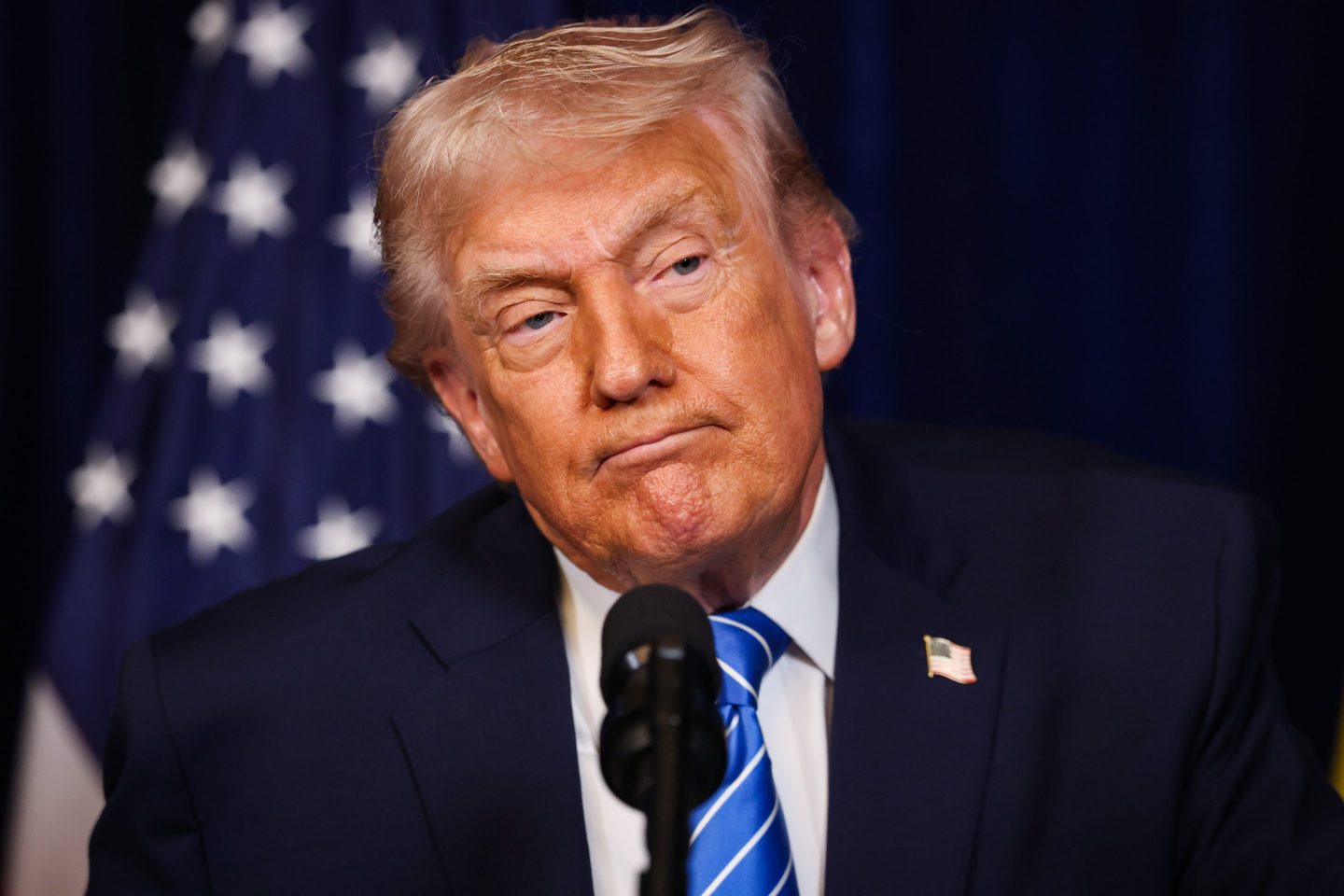
U.S. President Donald Trump
U.S. President Donald Trump’s actions in Venezuela will no doubt come with price tags attached. Joe Raedle - Getty Images

With the United States in debt to the tune of $38 trillion, President Trump has decided now is the time for the White House to also “run” another country. While the U.S. will not incur the costs needed to keep Venezuela’s economy moving, the action taken over the weekend will no doubt come with price tags attached.

This, says UBS, will be a key concern for investors evaluating the risk premium for U.S. debt going into 2026. America’s fiscal trajectory, namely its debt burden, has been a growing concern for the likes of JPMorgan Chase’s Jamie Dimon and Federal Reserve Chairman Jerome Powell, as well as droves of economists and Wall Street analysts.

These concerns are made sharper by recent changes to Trump’s tariff policies, some of which he has recently delayed. In the face of increased outlays, the Oval Office is also reducing its income. Last week the White House ordered the delay to an increase in tariff rates for upholstered furniture, kitchen cabinets, and vanities that was set to take place on Jan. 1, 2026. It was pushed back by a year.

Recommended Video

A seeming falter on tariffs—an unusual but significant policy in helping rebalance America’s books—is likely to cause investors to question how reliable the income stream will be. Indeed, cash is needed all the more at the outset of a new geopolitical upheaval.

At UBS this morning, chief economist Paul Donovan highlighted that the delay to new tariffs comes as the latest political lightning rod—affordability—continues to concern the electorate. Speaking in an audio note to clients, he added: “Reducing tariffs is a fiscal stimulus; delaying tariffs is a delayed fiscal tightening in the States, which has some marginal growth implications. It’s also important in its implications for the size of the U.S. fiscal deficit.”

A fiscal deficit is the shortfall between a government’s spending and its revenue. According to the Bipartisan Policy Center, as of November, the government’s cumulative deficit for the fiscal year 2026 was already $439 billion (it ends on the final day of September). Any deficits the government incurs year to year are added to the national debt, which currently exceeds $38.5 trillion.

“This may also be a consideration from the recent U.S. action in Venezuela,” Donovan said. “While it is not clear what, if anything, is meant by statements that the U.S. will ‘run Venezuela,’ military adventures cost money. That might be the most significant consequence of the weekend’s activities: Social media warriors may get excited about other geopolitical threats, but these are likely to be less of a focus in financial markets.”

How long is a piece of string?

It’s still early days, but how costly President Trump’s intervention into Venezuela is depends on the magnitude and longevity of the action. The bill could come to something in the palatable billions, Wharton’s professor Kent Smetters told Fortune, if U.S. troops remain offshore and a new president acceptable to both the White House and the Venezuelan public assumes power.

President Trump sidestepped questions about an election in Venezuela in a huddle with media on board Air Force One overnight, insisting that the U.S. is going to “run” the country but specifying “we’re not going to invest anything”—which oil companies will do instead. This potentially presents a net gain to the U.S. over time, the University of Pennsylvania professor added, as the nation may get access to a new heavy crude oil producer.

“However, if the Venezuela intervention becomes the new Iraq, then the costs could be hundreds of billions of dollars or even more over the next decade. So, I think the biggest risk is how this is managed going forward,” Professor Smetters said. If a conflict arises, then the “cost could be high.” Equally, if the U.S. is forced to show dominance, then this could increase the price of action to “tens of billions of dollars over the next few years,” Professor Smetters added.

America’s fiscal situation would be a pressing concern even without military intervention, according to Desmond Lachman, senior fellow at the American Enterprise Institute—but it’s certainly not helping. Lachman pointed out that America’s most pressing national debt threats remain the legality of the tariff regime (and hence, its valuable revenue) and President Trump’s pledge to give away said revenue instead of using it to pay down debt as was previously stated.

“What my concern about Venezuela is that…it’s just confirming that the United States isn’t a very reliable partner,” Lachman tells Fortune. “The bigger factor of the story, Venezuela and talking about Greenland, is going to just heighten geopolitical uncertainty. What it’s also going to do is raise questions, certainly in central banks’ minds: Do you really want to have your money in a form that the United States can freeze it, if they just decide that they don’t like you?

“My problem is that the budget deficit is so bad to begin with, and Venezuela is certainly not going to improve it. If anything, Venezuela makes it worse, so I think we’ve really got a big budget problem.” 

Join us at the Fortune Workplace Innovation Summit May 19–20, 2026, in Atlanta. The next era of workplace innovation is here—and the old playbook is being rewritten. At this exclusive, high-energy event, the world’s most innovative leaders will convene to explore how AI, humanity, and strategy converge to redefine, again, the future of work. Register now.
About the Author
Eleanor Pringle
By Eleanor PringleSenior Reporter, Economics and Markets
LinkedIn icon

Eleanor Pringle is an award-winning senior reporter at Fortune covering news, the economy, and personal finance. Eleanor previously worked as a business correspondent and news editor in regional news in the U.K. She completed her journalism training with the Press Association after earning a degree from the University of East Anglia.

See full bioRight Arrow Button Icon

Latest in Economy

Finance
Lorem ipsum dolor sit amet, consectetur adipiscing elit, sed do eiusmod tempor incididunt ut labore et dolore magna aliqua. Ut enim ad minim veniam
By Fortune Editors
October 20, 2025
Finance
Lorem ipsum dolor sit amet, consectetur adipiscing elit, sed do eiusmod tempor incididunt ut labore et dolore magna aliqua. Ut enim ad minim veniam
By Fortune Editors
October 20, 2025
Finance
Lorem ipsum dolor sit amet, consectetur adipiscing elit, sed do eiusmod tempor incididunt ut labore et dolore magna aliqua. Ut enim ad minim veniam
By Fortune Editors
October 20, 2025
Finance
Lorem ipsum dolor sit amet, consectetur adipiscing elit, sed do eiusmod tempor incididunt ut labore et dolore magna aliqua. Ut enim ad minim veniam
By Fortune Editors
October 20, 2025
Finance
Lorem ipsum dolor sit amet, consectetur adipiscing elit, sed do eiusmod tempor incididunt ut labore et dolore magna aliqua. Ut enim ad minim veniam
By Fortune Editors
October 20, 2025
Finance
Lorem ipsum dolor sit amet, consectetur adipiscing elit, sed do eiusmod tempor incididunt ut labore et dolore magna aliqua. Ut enim ad minim veniam
By Fortune Editors
October 20, 2025

Most Popular

Finance
Lorem ipsum dolor sit amet, consectetur adipiscing elit, sed do eiusmod tempor incididunt ut labore et dolore magna aliqua. Ut enim ad minim veniam
By Fortune Editors
October 20, 2025
Finance
Lorem ipsum dolor sit amet, consectetur adipiscing elit, sed do eiusmod tempor incididunt ut labore et dolore magna aliqua. Ut enim ad minim veniam
By Fortune Editors
October 20, 2025
Finance
Lorem ipsum dolor sit amet, consectetur adipiscing elit, sed do eiusmod tempor incididunt ut labore et dolore magna aliqua. Ut enim ad minim veniam
By Fortune Editors
October 20, 2025
Finance
Lorem ipsum dolor sit amet, consectetur adipiscing elit, sed do eiusmod tempor incididunt ut labore et dolore magna aliqua. Ut enim ad minim veniam
By Fortune Editors
October 20, 2025
Finance
Lorem ipsum dolor sit amet, consectetur adipiscing elit, sed do eiusmod tempor incididunt ut labore et dolore magna aliqua. Ut enim ad minim veniam
By Fortune Editors
October 20, 2025
Finance
Lorem ipsum dolor sit amet, consectetur adipiscing elit, sed do eiusmod tempor incididunt ut labore et dolore magna aliqua. Ut enim ad minim veniam
By Fortune Editors
October 20, 2025
Rankings
  • 100 Best Companies
  • Fortune 500
  • Global 500
  • Fortune 500 Europe
  • Most Powerful Women
  • Future 50
  • World’s Most Admired Companies
  • See All Rankings
Sections
  • Finance
  • Leadership
  • Success
  • Tech
  • Asia
  • Europe
  • Environment
  • Fortune Crypto
  • Health
  • Retail
  • Lifestyle
  • Politics
  • Newsletters
  • Magazine
  • Features
  • Commentary
  • Mpw
  • CEO Initiative
  • Conferences
  • Personal Finance
  • Education
Customer Support
  • Frequently Asked Questions
  • Customer Service Portal
  • Privacy Policy
  • Terms Of Use
  • Single Issues For Purchase
  • International Print
Commercial Services
  • Advertising
  • Fortune Brand Studio
  • Fortune Analytics
  • Fortune Conferences
  • Business Development
About Us
  • About Us
  • Editorial Calendar
  • Press Center
  • Work At Fortune
  • Diversity And Inclusion
  • Terms And Conditions
  • Site Map
  • Facebook icon
  • Twitter icon
  • LinkedIn icon
  • Instagram icon
  • Pinterest icon

Latest in Economy

EconomyFinance
The U.S. debt now equals $229,000 per household—and a hefty tax hike looms as the most probable outcome
By Shawn TullyJanuary 21, 2026
4 hours ago
Photo of Donald Trump
Economynational debt
Trump added $2.25 trillion to the national debt in his first year back in charge, watchdog says
By Nick LichtenbergJanuary 20, 2026
17 hours ago
A trader works on the floor of the New York Stock Exchange (NYSE) in New York on January 20, 2026.
InvestingMarkets
Selling America is a ‘dangerous bet,’ UBS CEO warns as markets panic
By Eva RoytburgJanuary 20, 2026
18 hours ago
Trump announcing "reciprocal tariffs" in April of 2025.
MagazineDonald Trump
The 9 most disruptive deals of Trump’s first year back in the White House
By Geoff ColvinJanuary 20, 2026
19 hours ago
Larry Fink speaks behind a podium and in front of a blue "World Economic Forum" background.
AIDavos
BlackRock’s billionaire CEO warns AI could be capitalism’s next big failure after 30 years of unsustainable inequality after the Cold War
By Sasha RogelbergJanuary 20, 2026
21 hours ago
US President Donald Trump looks back as a question from the press is shouted after a press conference at the World Economic Forum in Davos, Switzerland, on January 22, 2020.
BankingFederal Reserve
Trump may name Jerome Powell’s replacement at Davos: Meet the top 4 candidates for Fed chair
By Eva RoytburgJanuary 20, 2026
21 hours ago

Most Popular

placeholder alt text
AI
Elon Musk says that in 10 to 20 years, work will be optional and money will be irrelevant thanks to AI and robotics
By Sasha RogelbergJanuary 19, 2026
2 days ago
placeholder alt text
Personal Finance
Current price of silver as of Tuesday, January 20, 2026
By Joseph HostetlerJanuary 20, 2026
1 day ago
placeholder alt text
Economy
Trump added $2.25 trillion to the national debt in his first year back in charge, watchdog says
By Nick LichtenbergJanuary 20, 2026
17 hours ago
placeholder alt text
Success
Billionaire Marc Andreessen spends 3 hours a day listening to podcasts and audiobooks—that’s nearly an entire 24-hour day each week
By Preston ForeJanuary 20, 2026
22 hours ago
placeholder alt text
Politics
The U.S. Supreme Court could throw a wrench into Trump’s plan to take Greenland as soon as Tuesday
By Jim EdwardsJanuary 19, 2026
2 days ago
placeholder alt text
Success
Half of veterans leave their first post-military jobs in less than a year, and spouses face sky-high unemployment—this CEO has a $500 million fix
By Emma BurleighJanuary 19, 2026
2 days ago

© 2025 Fortune Media IP Limited. All Rights Reserved. Use of this site constitutes acceptance of our Terms of Use and Privacy Policy | CA Notice at Collection and Privacy Notice | Do Not Sell/Share My Personal Information
FORTUNE is a trademark of Fortune Media IP Limited, registered in the U.S. and other countries. FORTUNE may receive compensation for some links to products and services on this website. Offers may be subject to change without notice.