• Home
  • Latest
  • Fortune 500
  • Finance
  • Tech
  • Leadership
  • Lifestyle
  • Rankings
  • Multimedia
AIBiotech

U.K. startup CellVoyant debuts AI platform that could radically reduce the cost of cell-based therapies such as CAR-T immunotherapy for cancer

Jeremy Kahn
By
Jeremy Kahn
Jeremy Kahn
Editor, AI
Down Arrow Button Icon
Jeremy Kahn
By
Jeremy Kahn
Jeremy Kahn
Editor, AI
Down Arrow Button Icon
December 18, 2025, 7:47 AM ET
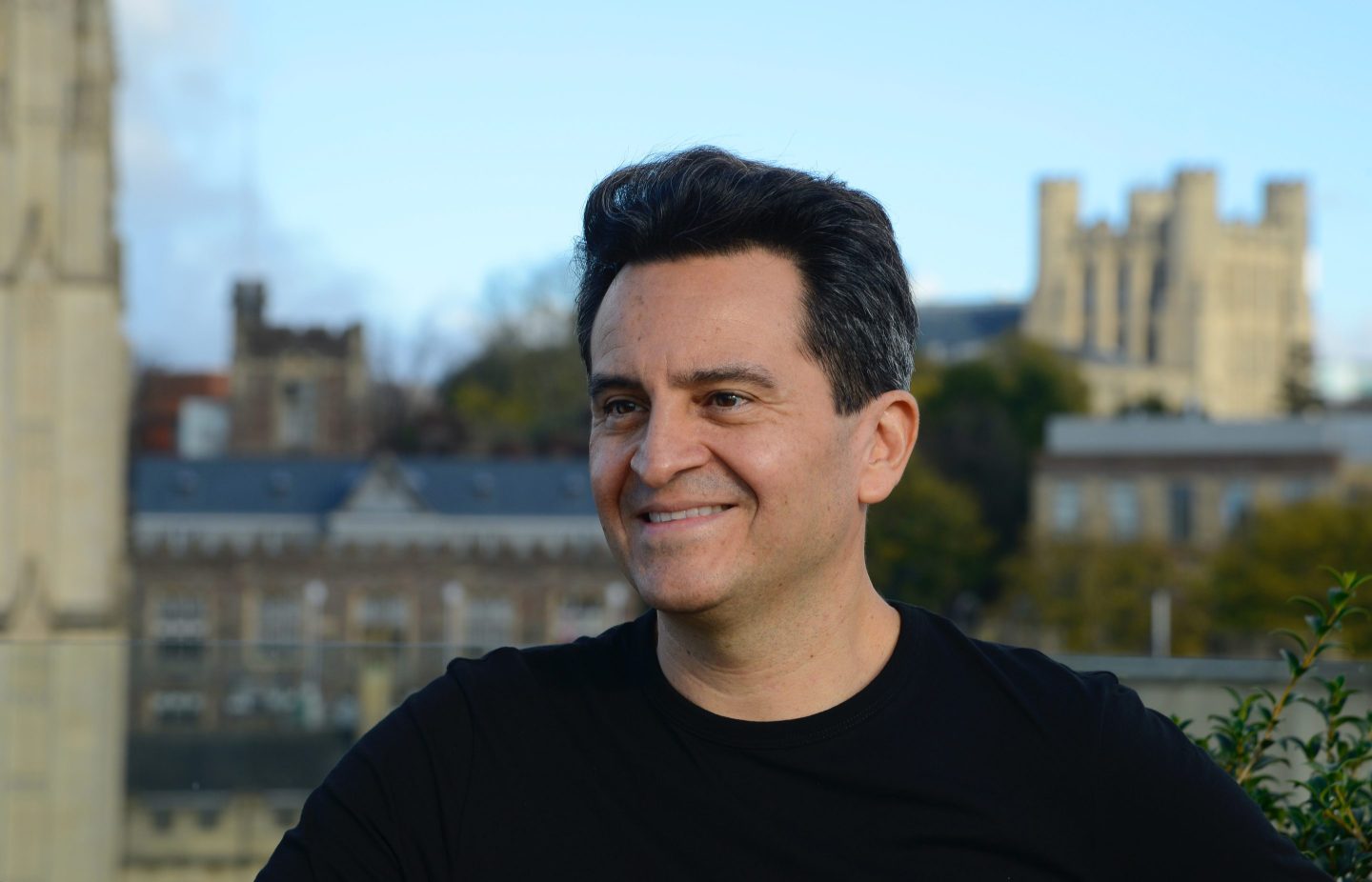
Rafael E. Carazo Salas, the founder and CEO of CellVoyant
Rafael E. Carazo Salas, the founder and CEO of CellVoyant.Photo courtesy of CellVoyant

CellVoyant, a U.K.-based startup, has launched an AI platform that allows scientists to predict the future health and performance of human cells based on their appearance in microscope images—a breakthrough that could sharply reduce the cost of cell-based medical therapies.

A growing number of treatments for diseases ranging from cancer to Parkinson’s to diabetes depend on modified human cells as the core component of the treatment. These include CAR-T, where a patient’s own immune cells are extracted, genetically reprogrammed outside the body so that they can recognize and destroy cancer cells, and then reinjected into the patient. The category also includes various stem cell-based therapies.

Currently, these cell-based therapies are among the most expensive medications available. CAR-T treatments, for example, often cost hundreds of thousands of dollars per dose.

Part of the reason they are so costly is due to the labor-intensive, highly sensitive, and relatively wasteful process that is required to produce them. Scientists have to culture a lot more cells than they need, because some of the cells will not be healthy enough or exhibit the right properties to make a good treatment dose. Although it is possible to determine some aspects of cell health simply by “eyeballing” the living cells under a microscope, scientists usually cannot gauge which cells are best without performing tests on samples, usually killing those cells being tested in the process. Then they have to hope that the cells they tested are actually representative of the other cells in the culture, which is not always the case. And while tests assess a cell’s current condition, they can’t predict how the cell will develop in the future. Sometimes entire cell lines fail to perform and have to be discarded. Sometimes an entire treatment dose winds up being ineffective. All of this adds to the cost of the treatments.

Recommended Video

CellVoyant’s new product, a platform called FateView, aims to significantly reduce the waste in this process by using AI models it has trained to classify cells by their current qualities and, critically, predict which cells will possess the right qualities in the future, simply by analyzing microscope-based imagery of the cells that use regular, white light. Currently the platform can do this for 10 different cell types—including stem cells, T-cells, cardiac cells, and blood cells—and the company is planning on training its models to work with more in the future.

Predicting cells’ behavior

The company’s platform can, according to CellVoyant, instantly identify which cells are currently exhibiting certain biomarkers, predict how well individual cells will express certain genes in the future, and forecast how well stem cells will differentiate into specific cell types—all from white light microscope images, without having to perform chemical tests that are time-consuming and can destroy cells in the process.

“We can see, understand and predict how cells behave without having to destroy them,” Rafael Carazo Salas, CellVoyant’s founder and CEO, said. He said FateView could predict a cell’s quality hours, days, or even weeks out from its present state. That should allow scientists and the companies producing cell lines for therapy to be much more selective in deciding which cells should progress, eliminating waste, improving the chances of success, and ultimately, lowering costs.

Carazo Salas gives the example of scientists who produce specific cell-types from stem cells—which has the potential to revolutionize the treatment of everything from Type 1 Diabetes to heart disease. This complex process can take weeks and the yields of usable cells tend to be low, he said. But he said CellVoyant had been able to reduce the costs of what’s called cell derivation—making those specific cell types from stem cells—by up to 80% simply by better predicting at each stage of the process which cells are most likely to progress well. Because some of these cell therapies currently have price tags approaching $1 million, that cost savings is game-changing, meaning that many more people (or their insurance companies) will be able to pay for these treatments, he said.

Image of cells under a microscope
Photo courtesy of CellVoyant


And it’s not just cell-based therapies that depend on healthy cells. The challenge of predicting cell health is also relevant for many “biologic” drugs, which are usually proteins produced by bacteria or other kinds of cells that are then harvested, and even in the case of cells needed to test the effects of the small molecules that make up the majority of pharmaceuticals. “Whether using cells to discover drugs, as a measuring device, or using cells as a factory to produce biologics, or cells as a drug, as in case of cell therapy, the unit economics is defined by cells,” Carazo Salas told Fortune. “The cost is defined by cells, batch to batch. Variation is what accounts for a lot of the cost in the industry.”

CellVoyant is making its FateView system available through a simple online interface that lets scientists upload microscope images of cells to be analyzed, as well as through an API (application programming interface) for companies that need to analyze high volumes of samples, possibly as part of a robotic laboratory workflow. Academic users will be able to access the platform for a nominal fee, while biotech and pharmaceutical companies are charged  an annual subscription, which gives them the right to store their data securely, as well as a relatively low per-use charge. 

Carazo Salas, who is also a professor of cellular and molecular medicine at the University of Bristol, in England, said CellVoyant was able to train AI models to characterize cells and predict their behavior because it had access to a large database of microscope images of the same cells taken over time, as well as the results of traditional chemical assays on cells taken at different stages of development. This time-series data allows the models to learn how the shape and visual characteristics of a cell at any point relate to its current function, as well as how it relates to its future appearance and function. The company trains a specific model for each cell type it works on—for instance, a separate model for cardiac cells and one for metabolic cells—although it is possible that in the future a single foundation model might be able to learn how to make predictions about any cell type, Carazo Salas said.

CellVoyant, whose name is a portmanteau derived from the words “cell” and “clairvoyant,” was spun out of the University of Bristol in 2021. In 2023, it received £7.6 million ($10.1 million) in seed funding from Octopus Ventures, Horizon Ventures, Verve Ventures, and Air Street Capital. 

FateView marks CellVoyant’s first major commercial product release. Previously, the company has worked with specific biotech and pharma partners, only some of which it can name, Carazo Salas said.

One of its early customers is Rinri Therapeutics, a biotech company in Sheffield, England, that is working on a cell-based regenerative therapy for hearing loss. Terri Gaskell, the chief technology officer at Rinri Therapeutics, said in a statement that CellVoyant’s platform had enabled it to predict “cell behavior in ways that haven’t been possible before.” Gaskell said that with help from CellVoyant, the company “hope[s] it will be possible to scale production [of cells] more efficiently and make it significantly more cost effective, [and] ultimately bring restorative cell therapies closer to those with hearing loss that need them most.”


Join us at the Fortune Workplace Innovation Summit May 19–20, 2026, in Atlanta. The next era of workplace innovation is here—and the old playbook is being rewritten. At this exclusive, high-energy event, the world’s most innovative leaders will convene to explore how AI, humanity, and strategy converge to redefine, again, the future of work. Register now.
About the Author
Jeremy Kahn
By Jeremy KahnEditor, AI
LinkedIn iconTwitter icon

Jeremy Kahn is the AI editor at Fortune, spearheading the publication's coverage of artificial intelligence. He also co-authors Eye on AI, Fortune’s flagship AI newsletter.

See full bioRight Arrow Button Icon

Latest in AI

Finance
Lorem ipsum dolor sit amet, consectetur adipiscing elit, sed do eiusmod tempor incididunt ut labore et dolore magna aliqua. Ut enim ad minim veniam
By Fortune Editors
October 20, 2025
Finance
Lorem ipsum dolor sit amet, consectetur adipiscing elit, sed do eiusmod tempor incididunt ut labore et dolore magna aliqua. Ut enim ad minim veniam
By Fortune Editors
October 20, 2025
Finance
Lorem ipsum dolor sit amet, consectetur adipiscing elit, sed do eiusmod tempor incididunt ut labore et dolore magna aliqua. Ut enim ad minim veniam
By Fortune Editors
October 20, 2025
Finance
Lorem ipsum dolor sit amet, consectetur adipiscing elit, sed do eiusmod tempor incididunt ut labore et dolore magna aliqua. Ut enim ad minim veniam
By Fortune Editors
October 20, 2025
Finance
Lorem ipsum dolor sit amet, consectetur adipiscing elit, sed do eiusmod tempor incididunt ut labore et dolore magna aliqua. Ut enim ad minim veniam
By Fortune Editors
October 20, 2025
Finance
Lorem ipsum dolor sit amet, consectetur adipiscing elit, sed do eiusmod tempor incididunt ut labore et dolore magna aliqua. Ut enim ad minim veniam
By Fortune Editors
October 20, 2025

Most Popular

Finance
Lorem ipsum dolor sit amet, consectetur adipiscing elit, sed do eiusmod tempor incididunt ut labore et dolore magna aliqua. Ut enim ad minim veniam
By Fortune Editors
October 20, 2025
Finance
Lorem ipsum dolor sit amet, consectetur adipiscing elit, sed do eiusmod tempor incididunt ut labore et dolore magna aliqua. Ut enim ad minim veniam
By Fortune Editors
October 20, 2025
Finance
Lorem ipsum dolor sit amet, consectetur adipiscing elit, sed do eiusmod tempor incididunt ut labore et dolore magna aliqua. Ut enim ad minim veniam
By Fortune Editors
October 20, 2025
Finance
Lorem ipsum dolor sit amet, consectetur adipiscing elit, sed do eiusmod tempor incididunt ut labore et dolore magna aliqua. Ut enim ad minim veniam
By Fortune Editors
October 20, 2025
Finance
Lorem ipsum dolor sit amet, consectetur adipiscing elit, sed do eiusmod tempor incididunt ut labore et dolore magna aliqua. Ut enim ad minim veniam
By Fortune Editors
October 20, 2025
Finance
Lorem ipsum dolor sit amet, consectetur adipiscing elit, sed do eiusmod tempor incididunt ut labore et dolore magna aliqua. Ut enim ad minim veniam
By Fortune Editors
October 20, 2025
Rankings
  • 100 Best Companies
  • Fortune 500
  • Global 500
  • Fortune 500 Europe
  • Most Powerful Women
  • Future 50
  • World’s Most Admired Companies
  • See All Rankings
Sections
  • Finance
  • Leadership
  • Success
  • Tech
  • Asia
  • Europe
  • Environment
  • Fortune Crypto
  • Health
  • Retail
  • Lifestyle
  • Politics
  • Newsletters
  • Magazine
  • Features
  • Commentary
  • Mpw
  • CEO Initiative
  • Conferences
  • Personal Finance
  • Education
Customer Support
  • Frequently Asked Questions
  • Customer Service Portal
  • Privacy Policy
  • Terms Of Use
  • Single Issues For Purchase
  • International Print
Commercial Services
  • Advertising
  • Fortune Brand Studio
  • Fortune Analytics
  • Fortune Conferences
  • Business Development
About Us
  • About Us
  • Editorial Calendar
  • Press Center
  • Work At Fortune
  • Diversity And Inclusion
  • Terms And Conditions
  • Site Map

Latest in AI

Photo of Sam Altman
AIHealth
OpenAI launches ChatGPT Health in a push to become a hub for personal health data
By Sharon GoldmanJanuary 7, 2026
4 hours ago
Future of WorkTech
The typical American plan to study for 22 years and work for 40 ‘is broken,’ VC CEO says. Thanks to AI, employees can’t coast after graduation anymore
By Marco Quiroz-GutierrezJanuary 7, 2026
4 hours ago
Woman interviews with hiring manager.
Future of WorkJobs
‘It feels challenging to break through’: Most recruiters say they can’t find talent while 80% of job seekers feel unprepared to find a job
By Jacqueline MunisJanuary 7, 2026
5 hours ago
NewslettersCIO Intelligence
Nestlé’s CIO says the value of the food giant’s AI investments goes well beyond efficiency
By John KellJanuary 7, 2026
5 hours ago
HealthChatGPT
OpenAI suggests ChatGPT play doctor as millions of Americans face spiking insurance costs: ‘In the U.S., ChatGPT has become an important ally’
By Tristan BoveJanuary 7, 2026
6 hours ago
Fridtjof Berge is the Co-Founder & Chief Business Officer of Antler
Startups & VentureVenture Capital
25 is the new 30 when it comes to AI founders as Gen Z entrepreneurs lead the way on billion-dollar unicorn startups, top VC partner says
By Nick LichtenbergJanuary 7, 2026
10 hours ago

Most Popular

placeholder alt text
Law
Amazon is cutting checks to millions of customers as part of a $2.5 billion FTC settlement. Here's who qualifies and how to get paid
By Sydney LakeJanuary 6, 2026
1 day ago
placeholder alt text
Economy
Mark Cuban on the $38 trillion national debt and the absurdity of U.S. healthcare: we wouldn't pay for potato chips like this
By Nick LichtenbergJanuary 6, 2026
1 day ago
placeholder alt text
Personal Finance
Janet Yellen warns the $38 trillion national debt is testing a red line economists have feared for decades
By Eva RoytburgJanuary 5, 2026
2 days ago
placeholder alt text
Future of Work
'Employers are increasingly turning to degree and GPA' in hiring: Recruiters retreat from ‘talent is everywhere,’ double down on top colleges
By Jake AngeloJanuary 6, 2026
1 day ago
placeholder alt text
Success
The college-to-office path is dead: CEO of the world’s biggest recruiter says Gen Z grads need to consider trade and hospitality jobs that don't even require degrees
By Orianna Rosa RoyleJanuary 6, 2026
1 day ago
placeholder alt text
Success
Blackstone exec says elite Ivy League degrees aren’t good enough—new analysts need to 'work harder' and be nice 
By Ashley LutzJanuary 5, 2026
2 days ago

© 2025 Fortune Media IP Limited. All Rights Reserved. Use of this site constitutes acceptance of our Terms of Use and Privacy Policy | CA Notice at Collection and Privacy Notice | Do Not Sell/Share My Personal Information
FORTUNE is a trademark of Fortune Media IP Limited, registered in the U.S. and other countries. FORTUNE may receive compensation for some links to products and services on this website. Offers may be subject to change without notice.