After natural gas producer BKV expanded into the power business, the company went on its IPO road show two years ago and was met with suspicion and ridicule about its then unusual business model. It’s rare—and uncomfortable for shareholders—for oil and gas producers to take over power plants that require very different skill sets. They’re both hydrocarbon industries, but drilling and extracting from the earth and producing electricity require completely different business models and technologies.
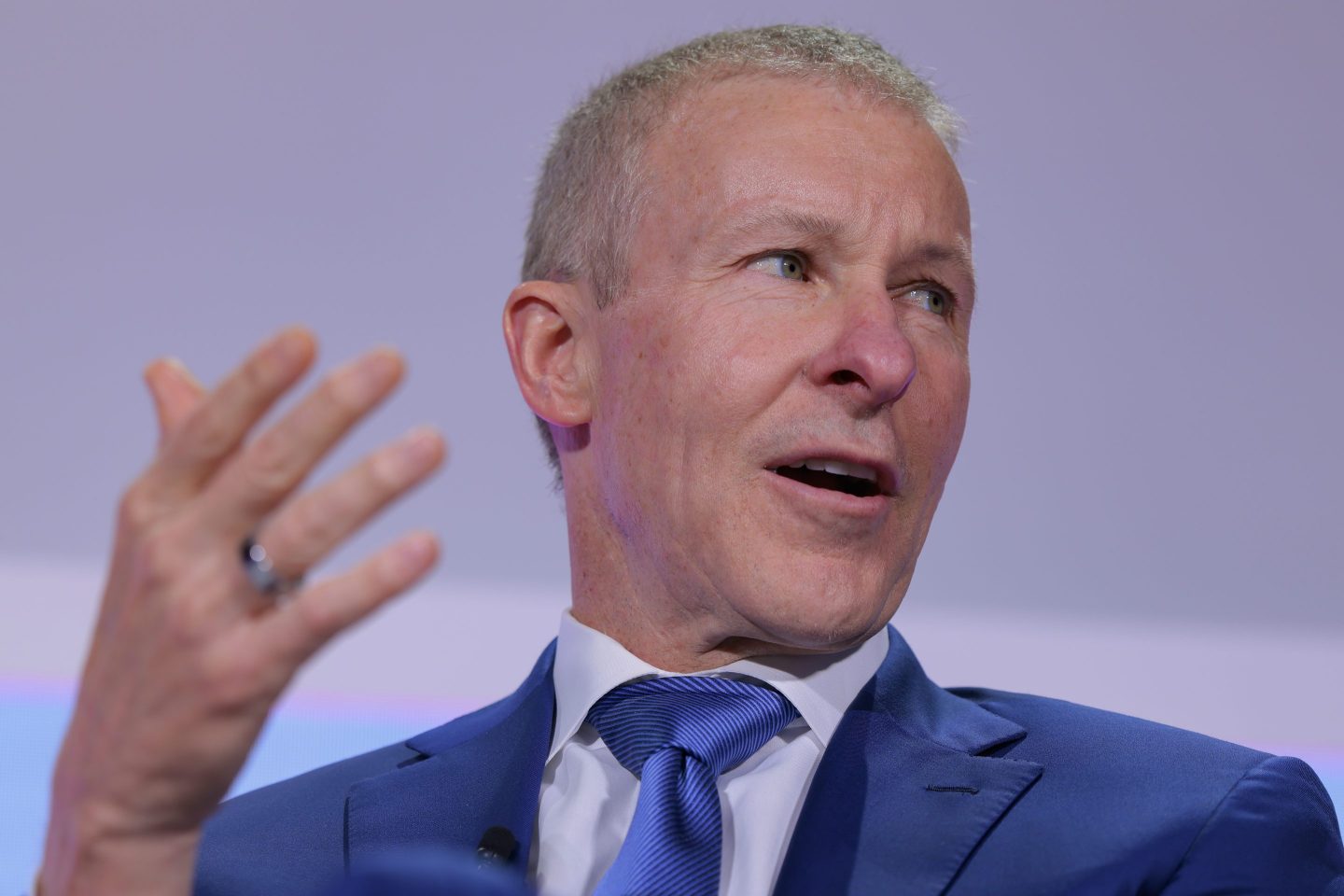
“I went to a very large institutional investor and explained our gas-to-power strategy in our business, and I got berated for like 30 minutes about how it was such a foolish thing for me to go into power,” BKV founder and CEO Chris Kalnin told Fortune.
Fast-forward to today, and BKV’s stock has spiked 50% since going public in September 2024—rising from a small-cap to a mid-market-cap value of $2.5 billion. BKV is on the brink of making a deal with a hyperscaler to provide immediate gas-fired power to an AI data center campus, according to analysts, before buying and building more power plants.
“It was a pretty controversial decision for us to buy power. It’s been, honestly, one of our best investments ever,” Kalnin said. “Hyperscalers need more generation. They used to talk about hundreds of megawatts. Now the conversations start with gigawatts: ‘Can you give me gigawatts?’
“We’re going to have to build power plants. If they want gigawatt power, we’re going to have to add more power,” he said.
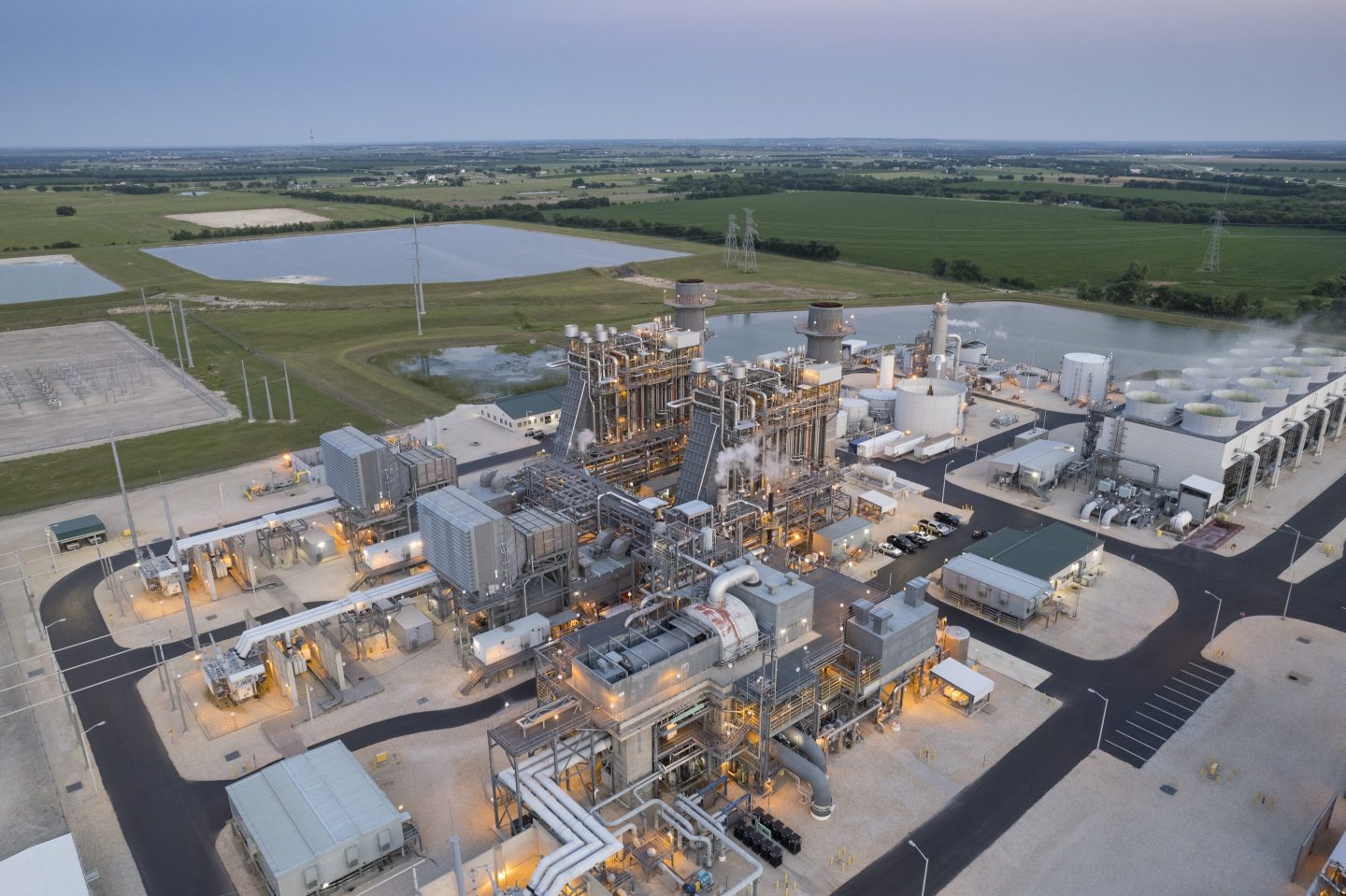
BKV was founded a decade ago in partnership with Thailand’s Banpu Power—BKV being short for Banpu Kalnin Ventures—so there was some built-in power expertise. After focusing on natural gas production, four years ago BKV started buying up two power plants in Temple, Texas—located between Austin and Dallas—which now provide a total of 1.5 gigawatts of electricity generation capacity—enough to power more than 1.1 million homes, or a major data center campus. There is room to expand.
BKV is in the process of increasing its ownership stake in the joint venture with Banpu from 50% to 75%—slated to close in the first quarter—to double down on the power business and to better disclose the financials to investors, now that BKV is public, Kalnin said.
Tim Rezvan, energy analyst for KeyBanc Capital Markets, said the new AI data center market is naturally finding its way to BKV and its power plants, as opposed to BKV chasing a boom from behind.
“It’s a lot of skill and a little bit of luck on top of that to take that power plant when they did,” Rezvan said. “They’re really in the catbird seat because they control these merchant power plants that can redirect power, in theory, the next day. The market is eagerly waiting to hear what’s going to happen with a potential, behind-the-meter deal with a hyperscaler.”
Despite BKV continuing to grow as a gas producer, Rezvan said the power segment is now a majority of the value of the stock and 90% of what investors want to talk about.
BKV also has one of the most advanced carbon capture and storage programs in the energy sector to deliver the power more cleanly, which may be especially inviting to Big Tech.
“The ability to deliver almost a carbon-neutral natural gas molecule—and then they can tie that in with the big hyperscaler—is a unique suite of services they can offer carbon-conscious consumers of power,” Rezvan said.

Birthplace of shale
An alum of McKinsey, Kalnin first connected with Banpu through that network. Banpu wanted to invest in U.S. shale gas after seeing the U.S. ship cheap natural gas to Asia in the early days of the shale boom.
The industry’s modern drilling and hydraulic fracturing, or fracking, techniques were pioneered in the Barnett Shale near Dallas, but those companies quickly fled the more mature Barnett for Louisiana’s Haynesville Shale, Pennsylvania’s Marcellus Shale, and, eventually, West Texas’ oily Permian Basin.
As everyone was moving out of the Barnett, BKV bought in cheaply and, over time, became the dominant player there. “The Barnett was heavily undervalued relative to its risk,” Kalnin said. “The only way you find deep value is you see something that other people don’t see in the fundamental value. And so that’s the origin story of BKV.
“Basically, all the players left the Barnett in that 2010 time frame and went to other plays. Those plays have evolved how you fracked, and how you drill, and how you do directional drilling, and how you target [gas] zones. None of that technology was reapplied back to the Barnett,” he said. Now, BKV is taking those advanced drilling and fracking techniques and getting much more value from the Barnett than was believed possible, he said.
A lot of gas goes toward power generation, so Kalnin saw that as a natural extension. Borrowing on his McKinsey background, Kalnin said he sought to identify “megatrends” and take advantage. “It’s the idea of a glacier moving in a direction, and you can’t stop it. The idea is you want to get into that path or get the benefit from that trend. You’re not going to figure out all the nuances, but you’re going to get the direction correct if you think through it deeply.”
That megatrend Kalnin identified was the anticipated growth of U.S. power demand and the underinvestment in the sector after more than two decades of flat demand.
“Natural gas is the baseload of U.S. power, and not just as a bridging fuel, but actually as a core fuel for the future,” Kalnin said. “Most of the research at the time was showing that it was going to be all renewables. I called absolutely BS on that, and I said, ‘I’m going to double down on gas.’”
Kalnin admittedly did not foresee the AI data center boom, but he did see the need for more power from population growth and greater electrification and manufacturing.
“We saw the trend,” he said. “And then, of course, the AI train has kicked things into high gear.”
What’s next?
BKV just expanded in the Barnett through a $370 million acquisition of assets from Bedrock Energy Partners, and the company is launching another carbon capture project next year as part of its “Barnett Zero” emissions effort.
But the real focus is on power and attracting a hyperscaler. The pitch is for “closed-loop, net-zero power” from the gas fields and pipelines to the power plants and carbon capture.
“Not only do we have the power side, we can do the pipelines, we can do the gas, we can do the grid connection, we can do the whole thing, soup to nuts, in one company, and, by the way, we can decarbonize it with carbon capture,” Kalnin said.
“I can give somebody a fixed power price for 20 years because we can produce and sell the gas to ourselves and fix the gas price. Think about the ability to do that with a hyperscaler.”
Rezvan agrees. But if BKV hasn’t signed a major power deal in the next six months or so, investors may start to get antsy.
“There will be some pressure to deliver,” Rezvan said. “The question is, why would a mega-cap tech company partner with a small energy company? The answer is because they have power right now. It’s not a greenfield project that would take many years. They could literally turn around and deliver that power in short order.
“This is a power-starved market. The ability to deliver on short notice is what gets them a deal, I believe.”