• Home
  • Latest
  • Fortune 500
  • Finance
  • Tech
  • Leadership
  • Lifestyle
  • Rankings
  • Multimedia
Economynational debt

Two months into the new fiscal year and the U.S. government is already spending more than $10 billion a week servicing national debt

Eleanor Pringle
By
Eleanor Pringle
Eleanor Pringle
Senior Reporter, Economics and Markets
Down Arrow Button Icon
Eleanor Pringle
By
Eleanor Pringle
Eleanor Pringle
Senior Reporter, Economics and Markets
Down Arrow Button Icon
December 4, 2025, 6:47 AM ET
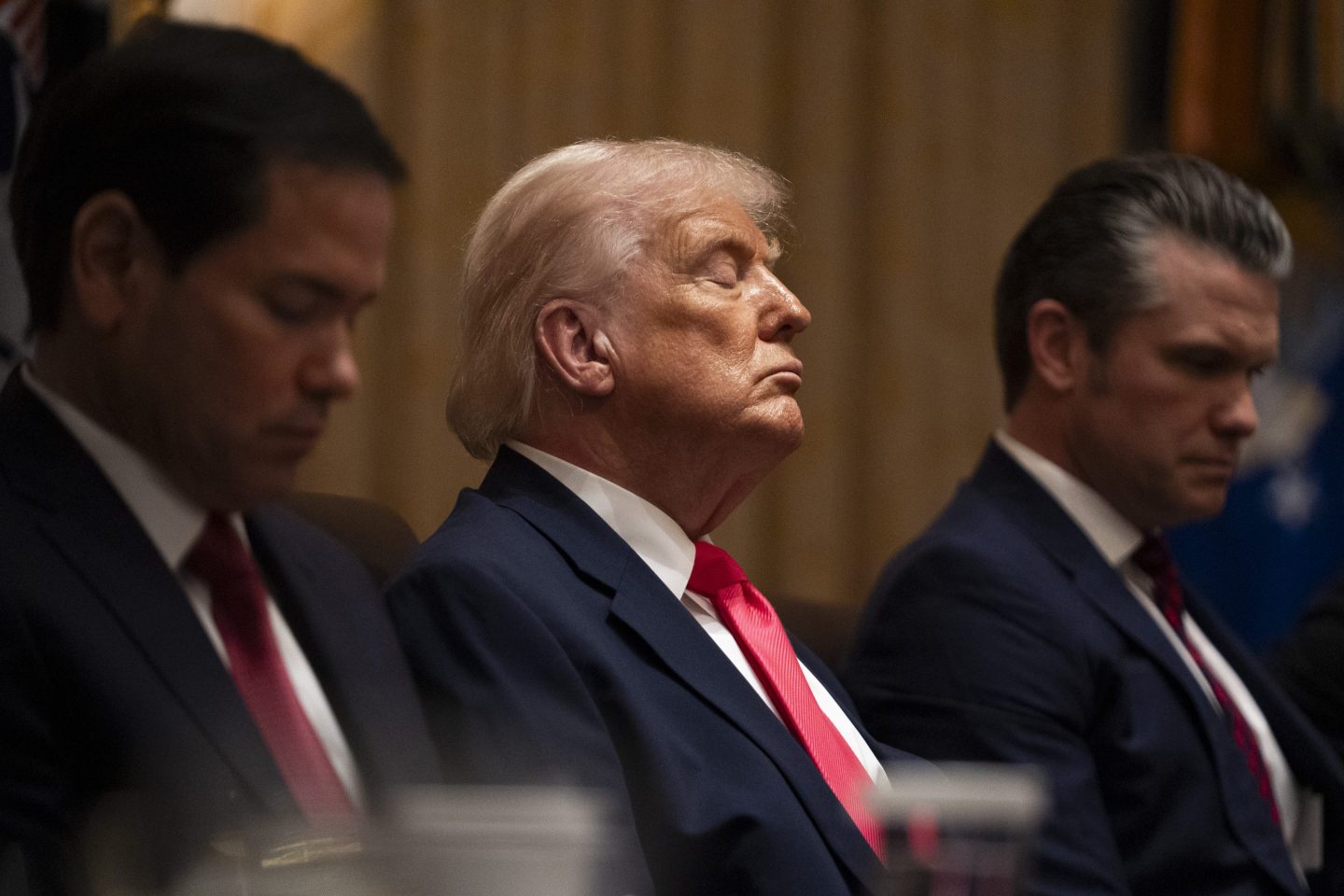
President Donald Trump attends a cabinet meeting at the White House in Washington, DC on December 2, 2025.
President Donald Trump attends a cabinet meeting at the White House in Washington, D.C., Dec. 2, 2025. Carolyn Van Houten—The Washington Post/Getty Images

The calendar year may have a few weeks left to tick off, but as far as the government’s budget is concerned, we’re in fiscal 2026. And in a matter of weeks, the Treasury has already paid out a 12-figure sum to service the nation’s debt. Unlike the tax and calendar year, the government’s financial calendar runs to the end of September. According to Treasury data, in the nine weeks since, it has spent $104 billion in interest on its $38 trillion borrowing burden. That’s more than $11 billion a week, and already represents 15% of federal spending in the current fiscal year.

Recommended Video

Economists may be hopeful that the Treasury would make some New (fiscal) Year’s resolutions: perhaps either scaling back its borrowing, and the additional interest rates on that debt as a result, or drumming up some meaningful revenue to offset the costs.

President Trump and his cabinet have been discussing debt more meaningfully in this administration. While economists say some of their methods are “peculiar,” the Oval Office has nevertheless devised some moneymaking schemes, like tariffs, estimated to offset $3 trillion through fiscal year 2035. This is, unfortunately, $1 trillion lower than previous estimates from the Congressional Budget Office earlier this year.

There’s also the issue of how much money will be left over to offset the debt from tariff revenue. Current estimations suggest that duties will bring in between $300 billion and $400 billion a year, which would help to pay a fraction of the yearly interest payments totaling more than $1 trillion in gross spending in 2025. However, President Trump has pledged to share proceeds from the tariff project with individuals: a “dividend” of $2,000 per person. This, according to the Committee for a Responsible Federal Budget, would cost $600 billion annually.

While money is coming in to help rebalance the books (unless it has already been spent, and more, on tariff rebate checks), government borrowing doesn’t appear to be slowing. Last week, the Peterson Foundation, which lobbies for responsible fiscal action, published an analysis of the Treasury’s quarterly refunding process, which shares government borrowing expectations. The foundation wrote that the government’s borrowing will go up, issuing $158 billion more in debt for the first half of this fiscal year compared with the same period a year prior.

Debt is a key risk for 2026

In its summary of macro views for global economics next year, Deutsche Bank is generally bullish. It expects global growth of 3.2% in 2026, with the U.S. economy projected to expand by 2.4%. Trade uncertainty fading will boost this growth, the bank added, with households also given a lift by tax cuts from Trump’s “One Big Beautiful Bill” Act.

But deficits cast a shadow, on a global scale, over that rosy outlook. The institution wrote: “Many countries face high deficits with limited fiscal and monetary ability. The expected structural shift towards fiscal impulse in 2026 will further widen deficits and heighten concerns around ongoing debt sustainability issues.”

In the U.S., in particular, fiscal risks are on the rise, the bank added: “We expect 2026 deficit to reach 6.7%, with further widening if we see lower tariff revenues or more targeted fiscal stimulus that renews market concerns. Congress is also up against the clock to negotiate on health care subsidies and appropriations bills before the stopgap funding again expires on January 30.”

The government may also be banking on a shift of wealth over the next few decades, which could be leveraged to balance its bottom line. The Great Wealth Transfer is expected to see $80 trillion change hands over the next 20 years, according to UBS. Some studies put that figure even higher, saying as much as $124 trillion will be passed down from older generations to their younger counterparts.

And this new flow of wealth represents an opportunity for tax revenue, UBS chief economist Paul Donovan believes. “Governments have long mobilized private wealth to support public finances,” he told a media briefing last month. “There are several approaches. One is to influence market behavior—encouraging individuals to buy government bonds through incentives like tax-free premium bonds, which channel savings directly into state financing. Prudential regulation can also steer pension funds toward domestic government debt, as seen in the U.K. after 1945, when a debt-to-GDP ratio of 240% was successfully reduced over decades.”

He added: “More contentious options exist, such as taxing wealth through capital gains or inheritance levies. In practice, the initial focus tends to be on financial repression—using tax incentives or regulation to direct money into government bonds—before moving toward wealth taxation.”


Join us at the Fortune Workplace Innovation Summit May 19–20, 2026, in Atlanta. The next era of workplace innovation is here—and the old playbook is being rewritten. At this exclusive, high-energy event, the world’s most innovative leaders will convene to explore how AI, humanity, and strategy converge to redefine, again, the future of work. Register now.
About the Author
Eleanor Pringle
By Eleanor PringleSenior Reporter, Economics and Markets
LinkedIn icon

Eleanor Pringle is an award-winning senior reporter at Fortune covering news, the economy, and personal finance. Eleanor previously worked as a business correspondent and news editor in regional news in the U.K. She completed her journalism training with the Press Association after earning a degree from the University of East Anglia.

See full bioRight Arrow Button Icon

Latest in Economy

Finance
Lorem ipsum dolor sit amet, consectetur adipiscing elit, sed do eiusmod tempor incididunt ut labore et dolore magna aliqua. Ut enim ad minim veniam
By Fortune Editors
October 20, 2025
Finance
Lorem ipsum dolor sit amet, consectetur adipiscing elit, sed do eiusmod tempor incididunt ut labore et dolore magna aliqua. Ut enim ad minim veniam
By Fortune Editors
October 20, 2025
Finance
Lorem ipsum dolor sit amet, consectetur adipiscing elit, sed do eiusmod tempor incididunt ut labore et dolore magna aliqua. Ut enim ad minim veniam
By Fortune Editors
October 20, 2025
Finance
Lorem ipsum dolor sit amet, consectetur adipiscing elit, sed do eiusmod tempor incididunt ut labore et dolore magna aliqua. Ut enim ad minim veniam
By Fortune Editors
October 20, 2025
Finance
Lorem ipsum dolor sit amet, consectetur adipiscing elit, sed do eiusmod tempor incididunt ut labore et dolore magna aliqua. Ut enim ad minim veniam
By Fortune Editors
October 20, 2025
Finance
Lorem ipsum dolor sit amet, consectetur adipiscing elit, sed do eiusmod tempor incididunt ut labore et dolore magna aliqua. Ut enim ad minim veniam
By Fortune Editors
October 20, 2025

Most Popular

Finance
Lorem ipsum dolor sit amet, consectetur adipiscing elit, sed do eiusmod tempor incididunt ut labore et dolore magna aliqua. Ut enim ad minim veniam
By Fortune Editors
October 20, 2025
Finance
Lorem ipsum dolor sit amet, consectetur adipiscing elit, sed do eiusmod tempor incididunt ut labore et dolore magna aliqua. Ut enim ad minim veniam
By Fortune Editors
October 20, 2025
Finance
Lorem ipsum dolor sit amet, consectetur adipiscing elit, sed do eiusmod tempor incididunt ut labore et dolore magna aliqua. Ut enim ad minim veniam
By Fortune Editors
October 20, 2025
Finance
Lorem ipsum dolor sit amet, consectetur adipiscing elit, sed do eiusmod tempor incididunt ut labore et dolore magna aliqua. Ut enim ad minim veniam
By Fortune Editors
October 20, 2025
Finance
Lorem ipsum dolor sit amet, consectetur adipiscing elit, sed do eiusmod tempor incididunt ut labore et dolore magna aliqua. Ut enim ad minim veniam
By Fortune Editors
October 20, 2025
Finance
Lorem ipsum dolor sit amet, consectetur adipiscing elit, sed do eiusmod tempor incididunt ut labore et dolore magna aliqua. Ut enim ad minim veniam
By Fortune Editors
October 20, 2025
Fortune Secondary Logo
Rankings
  • 100 Best Companies
  • Fortune 500
  • Global 500
  • Fortune 500 Europe
  • Most Powerful Women
  • Future 50
  • World’s Most Admired Companies
  • See All Rankings
Sections
  • Finance
  • Fortune Crypto
  • Features
  • Leadership
  • Health
  • Commentary
  • Success
  • Retail
  • Mpw
  • Tech
  • Lifestyle
  • CEO Initiative
  • Asia
  • Politics
  • Conferences
  • Europe
  • Newsletters
  • Personal Finance
  • Environment
  • Magazine
  • Education
Customer Support
  • Frequently Asked Questions
  • Customer Service Portal
  • Privacy Policy
  • Terms Of Use
  • Single Issues For Purchase
  • International Print
Commercial Services
  • Advertising
  • Fortune Brand Studio
  • Fortune Analytics
  • Fortune Conferences
  • Business Development
About Us
  • About Us
  • Editorial Calendar
  • Press Center
  • Work At Fortune
  • Diversity And Inclusion
  • Terms And Conditions
  • Site Map
Fortune Secondary Logo
  • About Us
  • Editorial Calendar
  • Press Center
  • Work At Fortune
  • Diversity And Inclusion
  • Terms And Conditions
  • Site Map
  • Facebook icon
  • Twitter icon
  • LinkedIn icon
  • Instagram icon
  • Pinterest icon

Latest in Economy

EconomyChildcare
A two-child household must earn $400,000 a year for childcare to be affordable, study says. ‘It’s easy to see why birth rates are falling’
By Jason MaFebruary 22, 2026
43 minutes ago
LawTariffs and trade
Hoping for a tariff refund? Trump officials say they are waiting for lower courts to provide instructions. ‘They created the situation’
By Jason MaFebruary 22, 2026
2 hours ago
EconomyTariffs and trade
Top EU lawmaker proposes pause on U.S. trade deal ratification, citing ‘pure tariff chaos’ from Trump administration
By The Associated PressFebruary 22, 2026
5 hours ago
Businessmen shaking hands across the table
SuccessEducation
Not all degrees are a waste of time: MBA graduates from Harvard, MIT, and Wharton are making over $245,000 just three years after graduating
By Preston ForeFebruary 22, 2026
7 hours ago
daron acemoglu
AILayoffs
The Nobel laureate who co-wrote ‘Why Nations Fail’ warns U.S. democracy won’t survive unless these two things change
By Jake AngeloFebruary 22, 2026
8 hours ago
EconomyFinance
New Fed report proves Milton Friedman and Joe Biden understood something vital about immigration—and explains why growth may sputter under Trump
By Shawn TullyFebruary 22, 2026
10 hours ago

Most Popular

placeholder alt text
Innovation
The U.S. spent $30 billion to ditch textbooks for laptops and tablets: The result is the first generation less cognitively capable than their parents
By Sasha RogelbergFebruary 21, 2026
1 day ago
placeholder alt text
Big Tech
Peter Thiel and other tech billionaires are publicly shielding their children from the products that made them rich
By Marco Quiroz-GutierrezFebruary 21, 2026
1 day ago
placeholder alt text
Startups & Venture
'I have a chip on my shoulder.' Phoebe Gates wants her $185 million AI startup Phia to succeed with 'no ties to my privilege or my last name'
By Sydney LakeFebruary 21, 2026
1 day ago
placeholder alt text
Success
40% of Stanford undergrads receive disability accommodations—but it's become a college-wide phenomenon as Gen Z try to succeed in the current climate
By Preston ForeFebruary 21, 2026
1 day ago
placeholder alt text
Economy
New Fed report proves Milton Friedman and Joe Biden understood something vital about immigration—and explains why growth may sputter under Trump
By Shawn TullyFebruary 22, 2026
10 hours ago
placeholder alt text
Economy
Trump's sudden decision to hike his new tariff rate to 15% is 'something of an eff you' to the U.K., which thought it had a better deal for 10%
By Jason MaFebruary 21, 2026
21 hours ago

© 2026 Fortune Media IP Limited. All Rights Reserved. Use of this site constitutes acceptance of our Terms of Use and Privacy Policy | CA Notice at Collection and Privacy Notice | Do Not Sell/Share My Personal Information
FORTUNE is a trademark of Fortune Media IP Limited, registered in the U.S. and other countries. FORTUNE may receive compensation for some links to products and services on this website. Offers may be subject to change without notice.