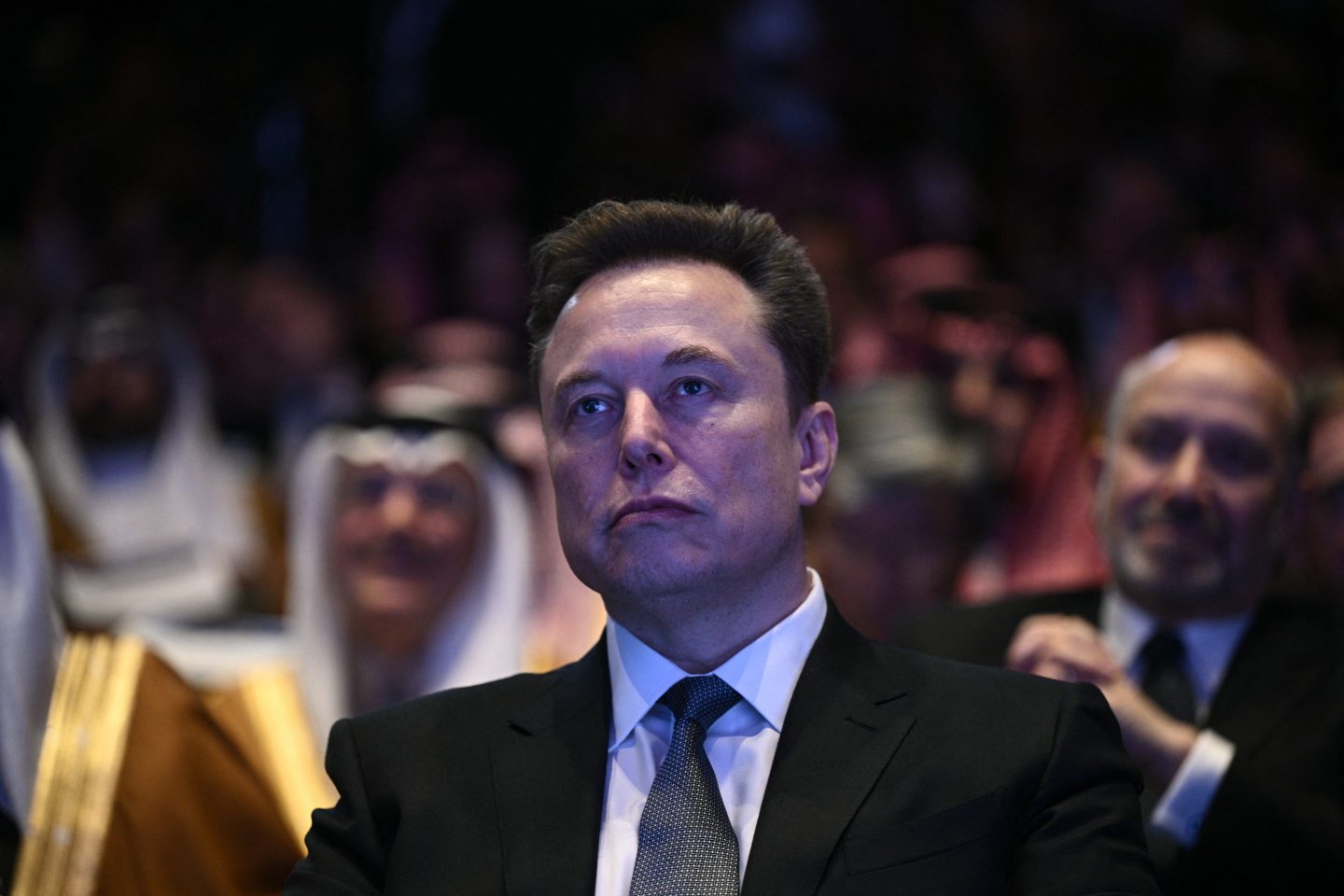
Tesla CEO Elon Musk describes his foray into the world of politics as a “very interesting side quest.” The world’s richest man plowed hundreds of millions into President Trump’s election campaign, barreled into the capital, and set off administrative hand grenades with the Department of Government Efficiency (DOGE). He then promptly fell out of favor with the White House and was dismissed back to Texas.
The separation between Trump and Musk was a breakup pretty much everyone saw coming. It came in part because of the Oval Office’s One Big Beautiful Bill Act, which the tech titan said undermined the cost-cutting work of DOGE. Musk is one of many business leaders concerned by America’s spending habits, with national debt now totaling more than $38 trillion.
Economists aren’t necessarily worried by the level of national debt—nations actually need it to underpin the bond market and keep the global economy moving—but they are worried about the interest payments on the debt and how this impacts the all-important debt-to-GDP ratio. This ratio indicates how fast a country’s economy is growing and, as a result, its ability to be able to repay the debt or keep up with interest payments on the borrowing.
And those payments are rocketing: As of October 2025, it costs $104 billion to maintain the debt, which is 15% of total federal spending in fiscal year 2026. Total interest paid on the debt for FY 2025 was $1.22 trillion.
To rebalance the debt-to-GDP ratio and avoid even higher borrowing rates, a nation can either reduce its spending or stimulate its economy to rebalance the books. Musk seems to think that the latter is the best option, via a new age of growth unlocked by AI.
“As long as civilization keeps advancing, we will have AI and robotics at very large scale,” Musk told Nikhil Kamath’s podcast in an episode aired yesterday. “I think that’s pretty much the only thing that’s going to solve the U.S. debt crisis.”
He added: “Currently the U.S. debt is insanely high, and the interest payments on the debt exceed the entire military budget of the United States, just the interest payments, and that’s—at least in the short term—going to continue to increase.”
Musk may be referring to the fact that in 2024, the Committee for a Responsible Budget reported that borrowing costs exceeded defense and Medicaid payments for the first time.
A deflation issue
“I think actually the only thing that can solve the debt situation is AI and robotics,” Musk continued, before making a caveat that the increased output in goods and services as a result of the transformative technology would likely lead to “significant deflation.”
He explained: “If you have AI and robotics, and a dramatic increase in the output of goods and services, probably you will have deflation. That seems likely because you simply won’t be able to increase the money supply as fast as you increase the output of goods and services.”
Some economists agree with Musk, though perhaps to a less extreme degree. Ron Insana, a senior advisor at Schroders, wrote in a column way back in 2023 that “with every technological advancement, workers are displaced and costs for specific goods and services decline as a consequence.” Likewise, in August this year BlackRock’s senior managing director, Rick Rieder, wrote AI may prove to be a “force that pushes unit costs down and output up. In economic terms: disinflationary growth. In investment terms: higher returns on equity, expanding margins, and a re-rating of productivity leaders.”
That said, the takes are generally of the opinion that AI may be disinflationary (a slowing of price rises) as opposed to deflationary (an outright decrease in the price levels).
Musk added the productivity gains needed to offset the current inflation rate of 3% are not there yet, but they’re not far off either. He added: “If you say, ‘How long would it take us to get there?,’ I think it’s three years. In three years or less, my guess is goods and services output will exceed the rate of inflation…like money supply growth. Maybe after those three years, you have deflation and then interest rates go to zero, and then the debt is a smaller problem than it is.”