
• Home
  • Latest
  • Fortune 500
  • Finance
  • Tech
  • Leadership
  • Lifestyle
  • Rankings
  • Multimedia
EconomyConsumer Spending

Top analyst sees ‘genuine cracks for mid- to lower-end consumers’ as the K-shaped economy continues to bite

Nick Lichtenberg
By
Nick Lichtenberg
Nick Lichtenberg
Business Editor
Down Arrow Button Icon
Nick Lichtenberg
By
Nick Lichtenberg
Nick Lichtenberg
Business Editor
Down Arrow Button Icon
November 17, 2025, 2:57 PM ET
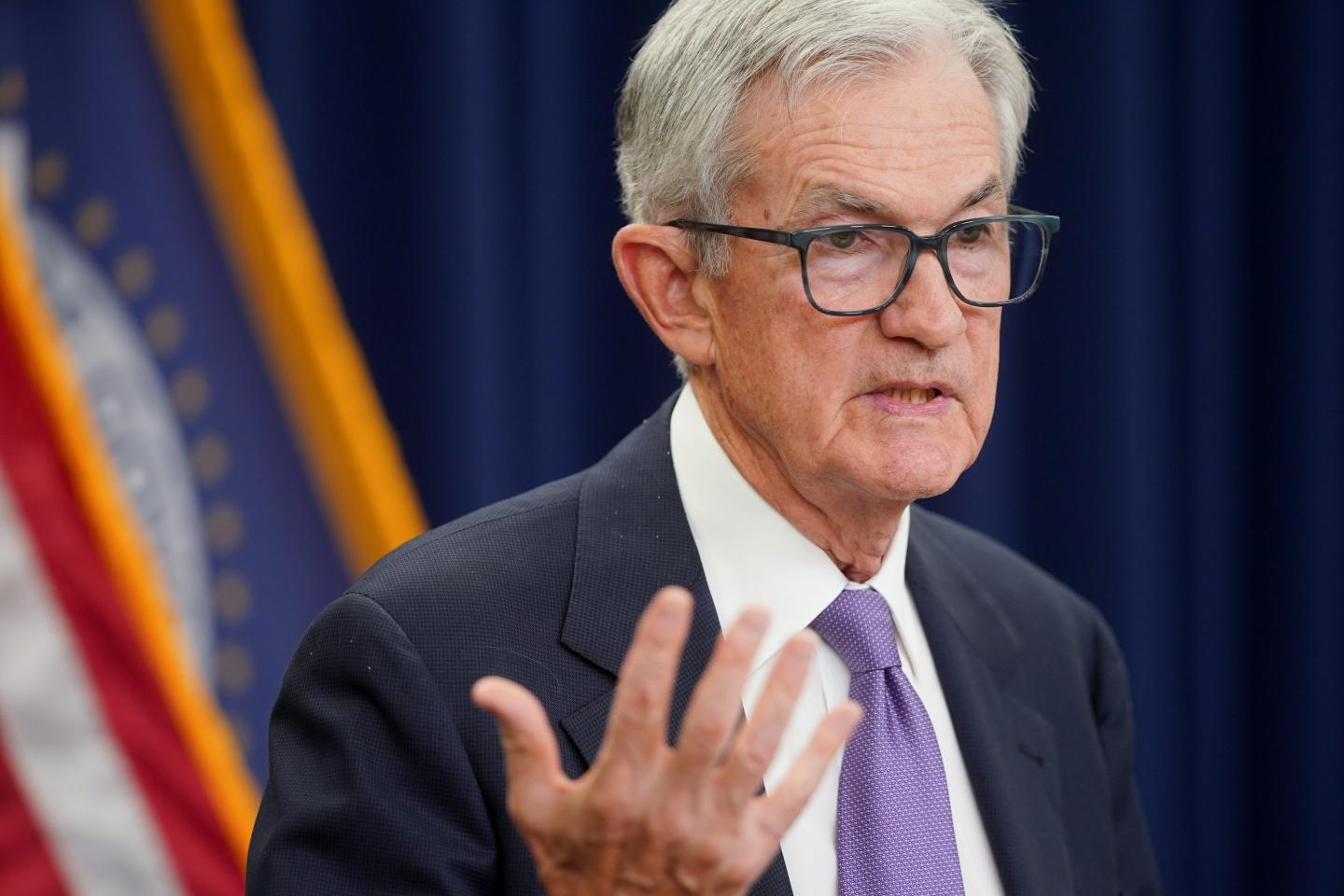
Jerome Powell
The K-shaped economy is getting stuck in.Al Drago/Bloomberg via Getty Images

The narrative surrounding the “resilient U.S. consumer,” which has been a major upside surprise in 2025, is now facing significant headwinds, according to the Global Investment Committee (GIC) at Morgan Stanley Wealth Management. While consumer spending has maintained a steady nominal growth rate of 5% to 6%, underpinning a bullish outlook for US equities in 2026, the GIC is expressing caution.

Recommended Video

Lisa Shalett, chief investment officer and head of the GIC, warned that although the broader macroeconomic picture remains cautiously optimistic, the “K-shaped” economy demands greater scrutiny. Specifically, she wrote on Monday that she sees “genuine cracks for mid- to lower-end consumers,” a cohort critical to aggregate growth. They may only account for 40% of consumption in the economy, she noted, but they make up the bulk of marginal growth in the consumption that drives the national economy. Consumer spending, after all, is roughly two-thirds of national GDP, a relationship that has been challenged in 2025 by the massive surge in data-center spending.

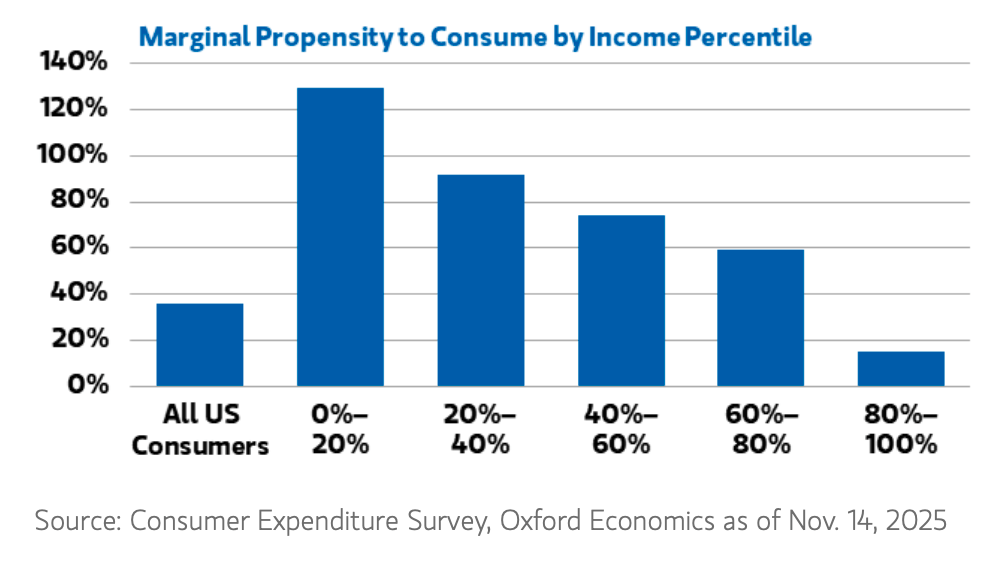
Shalett cited Oxford Economics data in arguing that the marginal propensity to spend an incremental dollar of earnings is more than 6x higher for the lowest-income quintile compared to the wealthiest cohort, making the 2026 outlook “increasingly fragile” without their continued strength. In other words, the economy only really grows at a healthy rate the more money lower- and middle-income people have to spend, and that’s more and more endangered.
The Fragility of Consumption Growth

Consumer spending has sustained a solid three-year trend, Shalet pointed out, driven largely by positive wealth effects benefiting the top two income quintiles, who own 80% of stocks. However, the lower 60% of households by income are now facing rising pressure, potentially altering the outlook for 2026.

She wasn’t alone in voicing concern as two other top Wall Street analysts chimed in on Monday, David Kelly of JPMorgan Asset Management and Torsten Slok of Apollo Global Management. The K-shaped economy—and the crucial issue of affordability—remains a big question mark for the national economy.

Kelly argued in a separate note that while the economy is doing better for everyone, it just doesn’t feel that way. Likening the economy to the hands of a clock, he said the data shows a story of boring, consistent growth, with the wealthy doing better but with the vibes getting rougher.

“The reality of today’s economy is like thirteen minutes past one on an analog clock,” he wrote. “The little hand, representing the fortunes of the top 10%, points sharply upwards and to the right. The big hand, representing the progress of everyone else, is also pointing up, but only mildly so. However, it feels like a twenty past one recession, with the little hand still pointing up but the big hand pointing down.”

Kelly cited the September University of Michigan consumer sentiment survey, in which 45% said that they and their families were worse off than a year ago. “More Americans feel that they are going backwards in economic terms than believe they are moving forward.”

He wrote that JPMorgan believes the expansion is still happening, with real GDP likely growing at roughly a 3.0% annual pace in the third quarter and likely to keep growing in 2026, albeit with growth slowing close to 0% in the fourth quarter. That being said, he highlighted some groups experiencing significant economic stress: federal workers dealing with a “tide of downsizing since the start of the year,” younger Americans facing high housing costs and often significant student debt, and the roughly 24 million Americans on the ACA marketplace facing a doubling of insurance premiums in 2026. 

Kelly estimated that 43 million Americans currently have federal student loan debt with an average balance of $39,000, “while the median age of first-time home-buyers is now an astonishing 40. Not coincidently, the median age of first marriage has increased from 22.1 years in 1974 to 29.4 years 50 years later.”

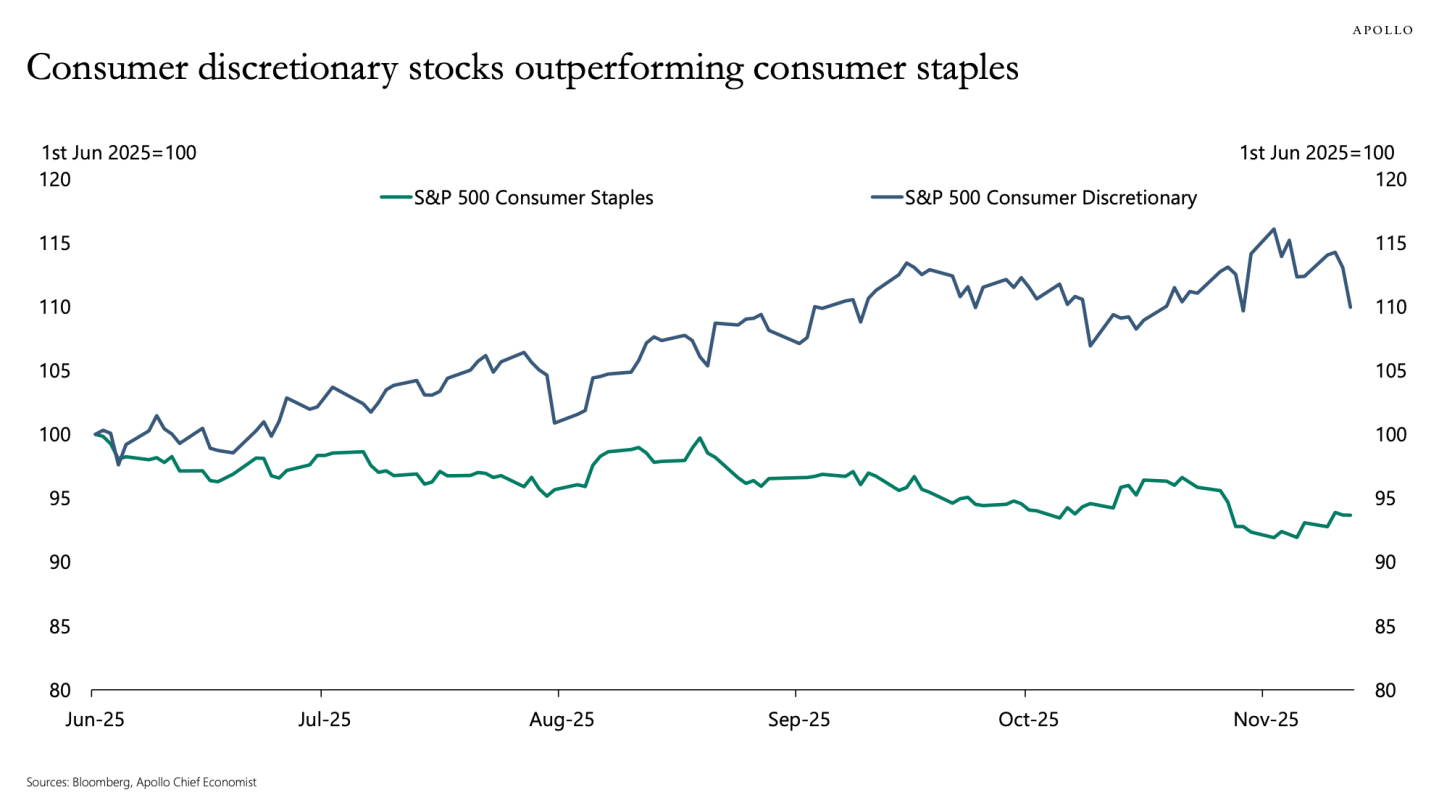
Slok, of Apollo Global Management, wrote in his Daily Spark on Monday that “it is a K-shaped economy for U.S. consumers,” noting that stock holdings and home prices have increased for wealthier Americans, while the cash flow received in fixed income, including private credit, is near the highest levels in decades. This strength in higher-income household balance sheets can be seen in stock prices, he noted, with consumer discretionary stocks outperforming consumer staples in recent months. In other words, the stuff the rich can buy is valued higher by Wall Street than the stuff people need to buy.
3 cracks to watch

According to Shalett, the risk of slowing GDP growth in 2026 hinges on whether the consumer begins to “wilt,” an outcome suggested by recent data. She added that the GIC is monitoring three key factors highlighting stress in the lower-income brackets.

1. Mounting Credit Stress and Delinquencies

Credit stress is beginning to “flash yellow” for this cohort. The overall savings rate has dipped significantly to 4.6%, resting well below the 40-year average of 6.4% and the 80-year average of 8.7%. Simultaneously, delinquencies are surging.

In auto lending, subprime 60-day delinquencies have reached 6.7%, marking the highest level since 1994. Although total household debt grew in line with real disposable income (about 4% in Q3 2025), credit card balances grew at twice that pace, hitting 8%. The latest data shows 30-day past-due credit card payments running at 5.3%, an 11-year high, alongside surging student debt defaults.

2. Affordability Crisis

Mid- to lower-income households are struggling with an “affordability crisis” catalyzed by persistently high price levels and a stable 3% inflation rate that conceals a “whack-a-mole” pattern of price spikes. These spikes have specifically impacted necessities like eggs, coffee, electricity, auto insurance, and health care. Compounding this issue, wage growth—as tracked by the Indeed Wage Tracker—slowed to 2.5% in September, diminishing consumers’ ability to outrun inflation.

3. Deteriorating Labor Sentiment

Employment-opportunity sentiment is weakening. Job openings have fallen to 7.2 million, returning to pre-COVID levels and establishing a 1:1 ratio of openings to job seekers. Furthermore, announced layoffs spiked in October, suggesting the worst year-to-date layoff trend since the Great Financial Crisis.

Consumer sentiment and job anxiety metrics have been particularly troubling. The University of Michigan’s monthly survey for November registered one of the lowest overall consumer confidence readings in the last 73 years, and expectations for employment one year from now saw the lowest reading since 1980. Anxiety linked to GenAI job replacement is clearly a factor, even among high-income workers.

The GIC advises investors that the premise of 2026 being a year where “a rising tide lifts all boats” cannot materialize without strength reaccelerating among the mid- to lower-end U.S. consumers. If the pressure on the lower 60% of households continues to rise, it could lead to slowing retail sales and real disposable income, presenting a material threat to aggregate spending growth.

Subscribe to Fortune Gulf Brief. Every Tuesday, this new newsletter will deliver clear-eyed, authoritative intelligence on the deals, decisions, policies, and power shifts shaping one of the world’s most consequential regions, written for the people who need to act on it. Sign up here.
About the Author
Nick Lichtenberg
By Nick LichtenbergBusiness Editor
LinkedIn icon

Nick Lichtenberg is business editor and was formerly Fortune's executive editor of global news.

See full bioRight Arrow Button Icon

Latest in Economy

Finance
Lorem ipsum dolor sit amet, consectetur adipiscing elit, sed do eiusmod tempor incididunt ut labore et dolore magna aliqua. Ut enim ad minim veniam
By Fortune Editors
October 20, 2025
Finance
Lorem ipsum dolor sit amet, consectetur adipiscing elit, sed do eiusmod tempor incididunt ut labore et dolore magna aliqua. Ut enim ad minim veniam
By Fortune Editors
October 20, 2025
Finance
Lorem ipsum dolor sit amet, consectetur adipiscing elit, sed do eiusmod tempor incididunt ut labore et dolore magna aliqua. Ut enim ad minim veniam
By Fortune Editors
October 20, 2025
Finance
Lorem ipsum dolor sit amet, consectetur adipiscing elit, sed do eiusmod tempor incididunt ut labore et dolore magna aliqua. Ut enim ad minim veniam
By Fortune Editors
October 20, 2025
Finance
Lorem ipsum dolor sit amet, consectetur adipiscing elit, sed do eiusmod tempor incididunt ut labore et dolore magna aliqua. Ut enim ad minim veniam
By Fortune Editors
October 20, 2025
Finance
Lorem ipsum dolor sit amet, consectetur adipiscing elit, sed do eiusmod tempor incididunt ut labore et dolore magna aliqua. Ut enim ad minim veniam
By Fortune Editors
October 20, 2025

Most Popular

Finance
Lorem ipsum dolor sit amet, consectetur adipiscing elit, sed do eiusmod tempor incididunt ut labore et dolore magna aliqua. Ut enim ad minim veniam
By Fortune Editors
October 20, 2025
Finance
Lorem ipsum dolor sit amet, consectetur adipiscing elit, sed do eiusmod tempor incididunt ut labore et dolore magna aliqua. Ut enim ad minim veniam
By Fortune Editors
October 20, 2025
Finance
Lorem ipsum dolor sit amet, consectetur adipiscing elit, sed do eiusmod tempor incididunt ut labore et dolore magna aliqua. Ut enim ad minim veniam
By Fortune Editors
October 20, 2025
Finance
Lorem ipsum dolor sit amet, consectetur adipiscing elit, sed do eiusmod tempor incididunt ut labore et dolore magna aliqua. Ut enim ad minim veniam
By Fortune Editors
October 20, 2025
Finance
Lorem ipsum dolor sit amet, consectetur adipiscing elit, sed do eiusmod tempor incididunt ut labore et dolore magna aliqua. Ut enim ad minim veniam
By Fortune Editors
October 20, 2025
Finance
Lorem ipsum dolor sit amet, consectetur adipiscing elit, sed do eiusmod tempor incididunt ut labore et dolore magna aliqua. Ut enim ad minim veniam
By Fortune Editors
October 20, 2025
Fortune Secondary Logo
Rankings
  • 100 Best Companies
  • Fortune 500
  • Global 500
  • Fortune 500 Europe
  • Most Powerful Women
  • World's Most Admired Companies
  • See All Rankings
  • Lists Calendar
Sections
  • Finance
  • Fortune Crypto
  • Features
  • Leadership
  • Health
  • Commentary
  • Success
  • Retail
  • Mpw
  • Tech
  • Lifestyle
  • CEO Initiative
  • Asia
  • Politics
  • Conferences
  • Europe
  • Newsletters
  • Personal Finance
  • Environment
  • Magazine
  • Education
Customer Support
  • Frequently Asked Questions
  • Customer Service Portal
  • Privacy Policy
  • Terms Of Use
  • Single Issues For Purchase
  • International Print
Commercial Services
  • Advertising
  • Fortune Brand Studio
  • Fortune Analytics
  • Fortune Conferences
  • Business Development
  • Group Subscriptions
About Us
  • About Us
  • Press Center
  • Work At Fortune
  • Terms And Conditions
  • Site Map
  • About Us
  • Press Center
  • Work At Fortune
  • Terms And Conditions
  • Site Map
  • Facebook icon
  • Twitter icon
  • LinkedIn icon
  • Instagram icon
  • Pinterest icon

Latest in Economy

An almond farmer inspects a fruit on a tree.
North AmericaAgriculture
California farmers must destroy 420,000 peach trees after Del Monte closes its canneries and cancels more than $550 million in long-term contracts
By Sasha RogelbergMay 7, 2026
2 hours ago
trump
PoliticsWorld Cup
Trump admits World Cup tickets are too expensive—days after Infantino insisted they were ‘market rate’ for America
By Nick LichtenbergMay 7, 2026
3 hours ago
Car salesperson showing cars to a couple shopping at the dealership
EconomyAutos
Americans owe $1.68 trillion on car loans — more than credit card debt and as much as all federal student loans
By Tristan BoveMay 7, 2026
4 hours ago
keynes
AIdisruption
The AI job apocalypse is ‘unhelpful marketing, bad economics and worse history,’ a16z says
By Nick LichtenbergMay 7, 2026
4 hours ago
Two Americas, one drive-thru: Welcome to fast food’s contradictory, split-screen economy
EconomyMcDonald's
Two Americas, one drive-thru: Welcome to fast food’s contradictory, split-screen economy
By Nick LichtenbergMay 7, 2026
5 hours ago
mcdonald's logo
RetailMcDonald's
McDonald’s posts better-than-expected first quarter sales. But higher gas prices threaten demand
By The Associated Press and Dee-Ann DurbinMay 7, 2026
6 hours ago

Most Popular

A Michigan farm town voted down plans for a giant OpenAI-Oracle data center. Weeks later, construction began
Magazine
A Michigan farm town voted down plans for a giant OpenAI-Oracle data center. Weeks later, construction began
By Sharon GoldmanMay 6, 2026
2 days ago
U.S. Treasury will have to borrow $2 trillion this year just to continue functioning—more than $166 billion every month
Economy
U.S. Treasury will have to borrow $2 trillion this year just to continue functioning—more than $166 billion every month
By Eleanor PringleMay 7, 2026
11 hours ago
Tokyo is throwing out its strict office dress code and asking workers to wear shorts amid the war in Iran energy crisis
Success
Tokyo is throwing out its strict office dress code and asking workers to wear shorts amid the war in Iran energy crisis
By Emma BurleighMay 5, 2026
2 days ago
Mark Zuckerberg once gave a Facebook engineer startup advice at 2 a.m. while 'hanging out with all the interns'—she quit and raised millions after
Success
Mark Zuckerberg once gave a Facebook engineer startup advice at 2 a.m. while 'hanging out with all the interns'—she quit and raised millions after
By Orianna Rosa RoyleMay 6, 2026
1 day ago
AI could solve America's $39 trillion debt crisis—but only if Washington abandons displaced workers, Yale Budget Lab warns
Economy
AI could solve America's $39 trillion debt crisis—but only if Washington abandons displaced workers, Yale Budget Lab warns
By Jake AngeloMay 6, 2026
1 day ago
The IRS may owe COVID-era refunds to tens of millions of taxpayers. Here’s who could qualify
Personal Finance
The IRS may owe COVID-era refunds to tens of millions of taxpayers. Here’s who could qualify
By Sydney LakeMay 6, 2026
1 day ago

© 2026 Fortune Media IP Limited. All Rights Reserved. Use of this site constitutes acceptance of our Terms of Use and Privacy Policy | CA Notice at Collection and Privacy Notice | Do Not Sell/Share My Personal Information
FORTUNE is a trademark of Fortune Media IP Limited, registered in the U.S. and other countries. FORTUNE may receive compensation for some links to products and services on this website. Offers may be subject to change without notice.