• Home
  • Latest
  • Fortune 500
  • Finance
  • Tech
  • Leadership
  • Lifestyle
  • Rankings
  • Multimedia
EconomyInflation

Top economist on the economy’s dirty truth: The only people who feel good are ‘making over $200,000’ and ‘have large stock portfolios’

By
Eva Roytburg
Eva Roytburg
Fellow, News
Down Arrow Button Icon
By
Eva Roytburg
Eva Roytburg
Fellow, News
Down Arrow Button Icon
October 24, 2025, 10:41 AM ET
Powell
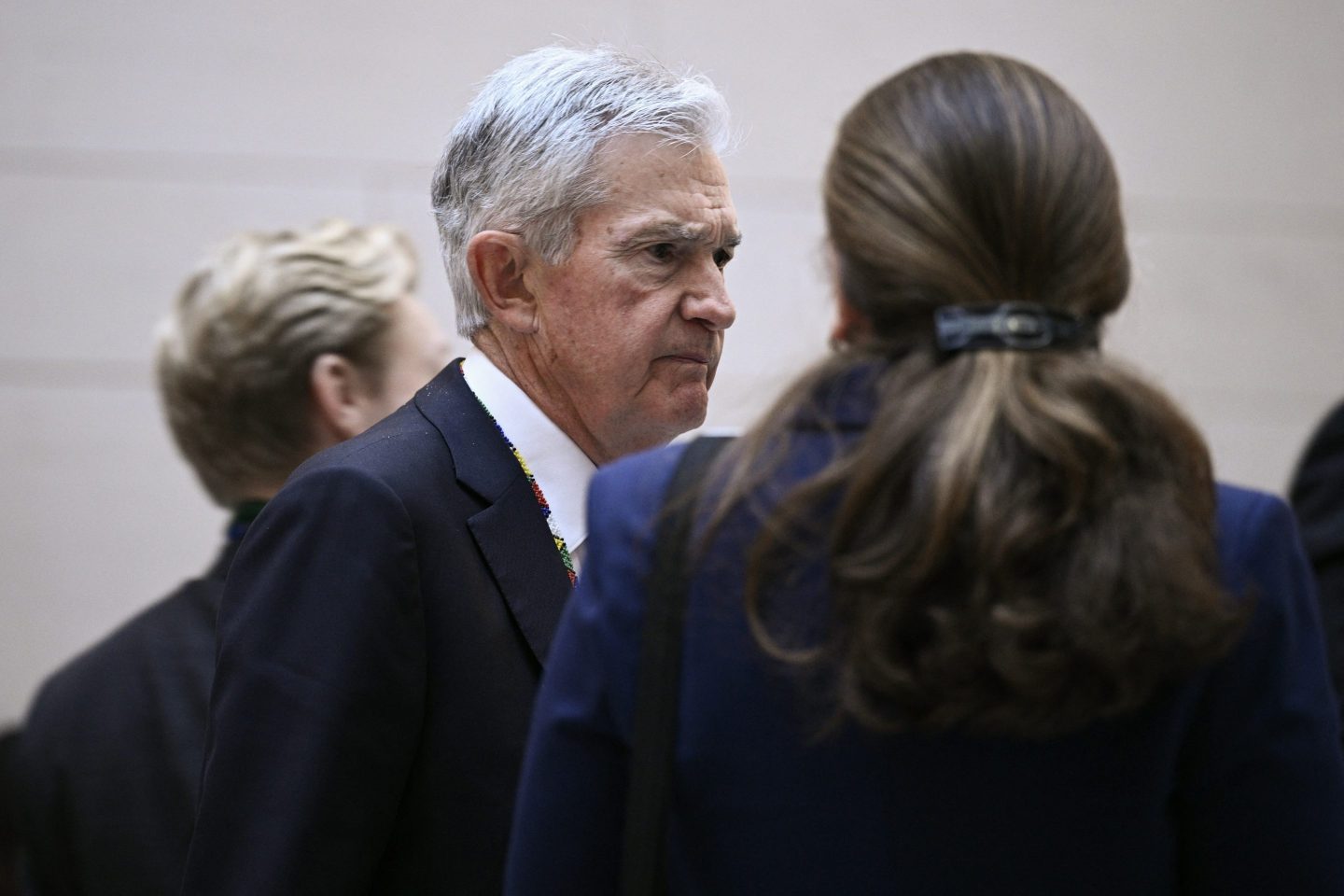
“They make how much?”BRENDAN SMIALOWSKI—AFP/Getty Images

Inflation may be increasing at a slower pace than expected, the markets might be cheering, and the Fed will likely soon be cutting, but Diane Swonk isn’t popping Champagne.

Recommended Video

The veteran economist says the economy “looks better than it feels” because the very data used to measure it is eroding, and the illusion of resilience could shatter heading into the fourth quarter.

“The only groups that feel good about the economy now are making over $200,000 in the surveys and have large stock portfolios,” Swonk said.

September’s consumer price index showed a 0.3% monthly rise and a 3% year-over-year rate, with the core index—which the Fed watches more closely than the headline—rising 0.2%. Economists had expected a slightly hotter print, calling a 0.4% monthly increase in the headline CPI and a 0.3% increase in the core rate.

Despite coming in below forecasts, inflation is still rising on an annual basis, with September’s pace accelerating from 2.9% in August. The CPI has now climbed to its highest level since January. Inflation had cooled steadily through the spring—hitting just 2.9% in May and June—before reaccelerating on higher energy costs.
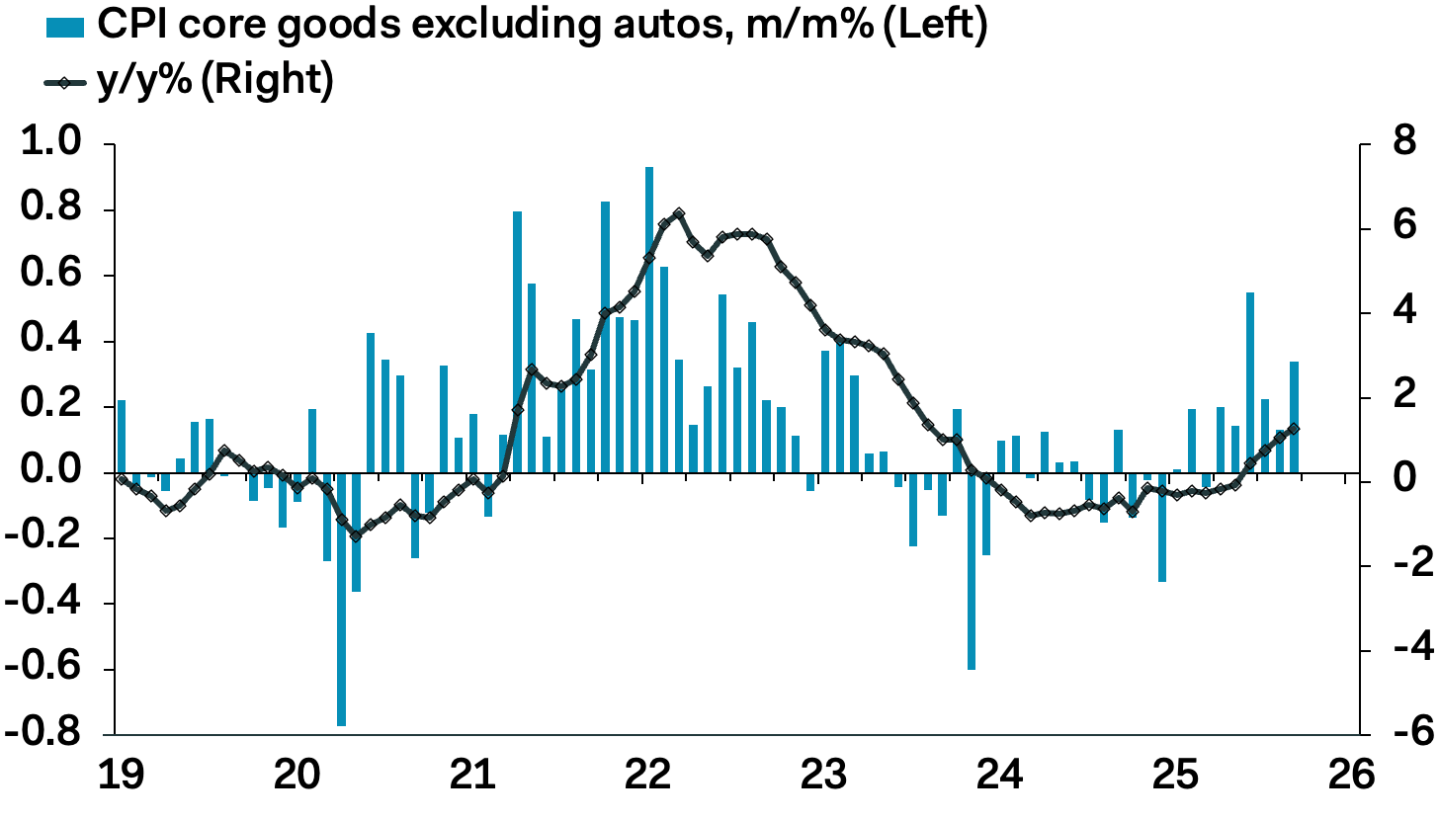
Energy costs, again, were the main driver, with gasoline up at 4.1%, while food prices moderated, and core inflation—excluding food and energy—slowed to 0.2%. Markets cheered the result as a sign that inflation remains contained, bolstering expectations for another quarter-point Fed rate cut at the FOMC meeting next week and another one in December. 

But Swonk, chief economist at KPMG, sees something else: a slow-moving problem that’s partly statistical, partly structural, and increasingly psychological.

“It’s creep instead of a surge,” she said, noting that the headline number masks persistent “stickiness” in service-sector prices and a widening split in who’s actually feeling relief. 

Beneath the surface, she argues, the U.S. is running on shaky footing, both economically and in terms of the quality of the data that guides policymakers.

A false sense of calm

Swonk pointed out that many of the categories holding inflation steady are either insulated from tariffs or benefiting from temporary waivers: computers, smartphones, and some vehicle imports. Once those fade, “goods prices are still moving up,” she said, with few signs of broad-based disinflation. Core services less shelter—a metric the Fed watches closely—rose about 0.4% in September, Swonk estimated, and remains more than 3% higher than a year ago, “well above anything we saw pre-pandemic.”

That stickiness, she warns, is amplified by a bifurcated consumer base, what some economists have called the “K shaped economy.” Affluent households continue to spend freely on travel, entertainment, and premium goods, keeping service-sector inflation stubborn. Lower- and middle-income consumers, by contrast, are pushing back, trading down, stretching budgets, or delaying purchases altogether.

“Retailers are feeling that divide,” Swonk said, describing a landscape where discount chains are seeing higher-income shoppers while subprime delinquencies creep up among those with thinner financial cushions.

The result is a headline inflation rate that understates the pain for the median household.

“People are making tough tradeoffs in their baskets,” Swonk said. “The economy looks better on paper than it feels to the majority of Americans.”

The hidden fragility in the data

Swonk also believes part of that gap between reality and perception stems from the government’s diminished capacity to collect and verify data. Even before the government shutdown that delayed the CPI release by nine days, the Bureau of Labor Statistics was operating with roughly 20% fewer staff than before the pandemic, Swonk said, because of DOGE budget cuts. That means that now, more than a third of price data in the CPI is imputed—estimated rather than directly observed—since fewer agents are collecting prices in person.

“We’re comparing something that’s similar in price, but it’s not apples to apples,” she said. “You just don’t have as many people in the field taking those samples.”

That means official inflation readings may be smoother than the real-world volatility consumers experience, particularly for categories where local price swings or shortages matter most, such as in beef prices. 

For the Fed, that introduces a serious blind spot. Policymakers rely heavily on inflation data to calibrate rate cuts, and if the CPI is built on incomplete sampling, it risks reinforcing the perception that inflation is easing faster than it actually is.

“These are still not completely clean numbers,” Swonk cautioned. “The problem isn’t the shutdown. It’s the staffing shortages we had going into it.”

To Swonk, the slow breakdown in how we measure the economy itself is almost the bigger story than the monthly inflation. Asked if she was worried that the markets and the U.S. consumer broadly might become skeptical of the BLS, or even accuse the bureau of politicization, Swonk sighed wearily. 

“Trust in the data has already been eroding for decades,” Swonk said. “Now it’s accelerating.”

A tougher road ahead

Looking forward, Swonk expects the economy to slow “dramatically” in the fourth quarter, a turn she says was already coming before the shutdown drained 750,000 federal paychecks from the economy. Consumer stress, rising delinquencies, and tariff pass-throughs will all collide with a fragile labor market and weaker retail season.

“We’re going into a very difficult holiday season,” she said, noting that surveys show consumers “want cash more than anything else,” a reflection of financial anxiety rather than confidence.

The government’s tariff waivers may soften some price increases, but she expects uneven effects across sectors. Many tariff-related price pressures “are still ahead of us,” Swonk said.

The Fortune 500 Innovation Forum will convene Fortune 500 executives, U.S. policy officials, top founders, and thought leaders to help define what’s next for the American economy, Nov. 16-17 in Detroit. Apply here.
About the Author
By Eva RoytburgFellow, News
Instagram iconLinkedIn icon

Eva covers macroeconomics, market-moving news, and the forces shaping the global economy.

See full bioRight Arrow Button Icon

Latest in Economy

Finance
Lorem ipsum dolor sit amet, consectetur adipiscing elit, sed do eiusmod tempor incididunt ut labore et dolore magna aliqua. Ut enim ad minim veniam
By Fortune Editors
October 20, 2025
Finance
Lorem ipsum dolor sit amet, consectetur adipiscing elit, sed do eiusmod tempor incididunt ut labore et dolore magna aliqua. Ut enim ad minim veniam
By Fortune Editors
October 20, 2025
Finance
Lorem ipsum dolor sit amet, consectetur adipiscing elit, sed do eiusmod tempor incididunt ut labore et dolore magna aliqua. Ut enim ad minim veniam
By Fortune Editors
October 20, 2025
Finance
Lorem ipsum dolor sit amet, consectetur adipiscing elit, sed do eiusmod tempor incididunt ut labore et dolore magna aliqua. Ut enim ad minim veniam
By Fortune Editors
October 20, 2025
Finance
Lorem ipsum dolor sit amet, consectetur adipiscing elit, sed do eiusmod tempor incididunt ut labore et dolore magna aliqua. Ut enim ad minim veniam
By Fortune Editors
October 20, 2025
Finance
Lorem ipsum dolor sit amet, consectetur adipiscing elit, sed do eiusmod tempor incididunt ut labore et dolore magna aliqua. Ut enim ad minim veniam
By Fortune Editors
October 20, 2025

Most Popular

Finance
Lorem ipsum dolor sit amet, consectetur adipiscing elit, sed do eiusmod tempor incididunt ut labore et dolore magna aliqua. Ut enim ad minim veniam
By Fortune Editors
October 20, 2025
Finance
Lorem ipsum dolor sit amet, consectetur adipiscing elit, sed do eiusmod tempor incididunt ut labore et dolore magna aliqua. Ut enim ad minim veniam
By Fortune Editors
October 20, 2025
Finance
Lorem ipsum dolor sit amet, consectetur adipiscing elit, sed do eiusmod tempor incididunt ut labore et dolore magna aliqua. Ut enim ad minim veniam
By Fortune Editors
October 20, 2025
Finance
Lorem ipsum dolor sit amet, consectetur adipiscing elit, sed do eiusmod tempor incididunt ut labore et dolore magna aliqua. Ut enim ad minim veniam
By Fortune Editors
October 20, 2025
Finance
Lorem ipsum dolor sit amet, consectetur adipiscing elit, sed do eiusmod tempor incididunt ut labore et dolore magna aliqua. Ut enim ad minim veniam
By Fortune Editors
October 20, 2025
Finance
Lorem ipsum dolor sit amet, consectetur adipiscing elit, sed do eiusmod tempor incididunt ut labore et dolore magna aliqua. Ut enim ad minim veniam
By Fortune Editors
October 20, 2025
Fortune Secondary Logo
Rankings
  • 100 Best Companies
  • Fortune 500
  • Global 500
  • Fortune 500 Europe
  • Most Powerful Women
  • Future 50
  • World’s Most Admired Companies
  • See All Rankings
Sections
  • Finance
  • Fortune Crypto
  • Features
  • Leadership
  • Health
  • Commentary
  • Success
  • Retail
  • Mpw
  • Tech
  • Lifestyle
  • CEO Initiative
  • Asia
  • Politics
  • Conferences
  • Europe
  • Newsletters
  • Personal Finance
  • Environment
  • Magazine
  • Education
Customer Support
  • Frequently Asked Questions
  • Customer Service Portal
  • Privacy Policy
  • Terms Of Use
  • Single Issues For Purchase
  • International Print
Commercial Services
  • Advertising
  • Fortune Brand Studio
  • Fortune Analytics
  • Fortune Conferences
  • Business Development
  • Group Subscriptions
About Us
  • About Us
  • Editorial Calendar
  • Press Center
  • Work At Fortune
  • Diversity And Inclusion
  • Terms And Conditions
  • Site Map
  • About Us
  • Editorial Calendar
  • Press Center
  • Work At Fortune
  • Diversity And Inclusion
  • Terms And Conditions
  • Site Map
  • Facebook icon
  • Twitter icon
  • LinkedIn icon
  • Instagram icon
  • Pinterest icon

Latest in Economy

man leaning against t shirt stand
EconomyInflation
Inflation goes up by a whopping monthly rate of nearly 1%—and it’s hitting you at the grocery store and gas station
By Catherina Gioino and Eva RoytburgApril 10, 2026
6 hours ago
evs
EconomyChina
Trump’s gift to China: a booming market for cheap, state-of-the-art EVs amid the Iran War
By Chan Ho-Him and The Associated PressApril 10, 2026
7 hours ago
gen z
Arts & EntertainmentChina
Seeking to save Gen Z from foreign influence, China has quietly banned K-Pop for a full decade
By Ken Moritsugu, Juwon Park and The Associated PressApril 10, 2026
7 hours ago
chick-fil-a
North AmericaImmigration
Why Chinese immigrants to America love Chick-fil-A so much
By Fu Ting and The Associated PressApril 10, 2026
7 hours ago
inflation
EnergyInflation
Biggest jump in gas prices in 60 years, biggest jump in inflation since Biden: CPI carnage in March
By Christopher Rugaber and The Associated PressApril 10, 2026
7 hours ago
Current price of oil as of April 10, 2026
Personal FinanceOil
Current price of oil as of April 10, 2026
By Joseph HostetlerApril 10, 2026
10 hours ago

Most Popular

The U.S. government is spending $88 billion a month in interest on national debt—equal to spending on defense and education combined
Economy
The U.S. government is spending $88 billion a month in interest on national debt—equal to spending on defense and education combined
By Fortune EditorsApril 9, 2026
1 day ago
A Meta employee created a dashboard so coworkers can compete to be the company's No. 1 AI token user—and Zuckerberg doesn't even rank in the top 250
AI
A Meta employee created a dashboard so coworkers can compete to be the company's No. 1 AI token user—and Zuckerberg doesn't even rank in the top 250
By Fortune EditorsApril 9, 2026
2 days ago
Mark Cuban admits he made a mistake letting go of the Mavericks: 'I don't regret selling. I regret who I sold to'
Investing
Mark Cuban admits he made a mistake letting go of the Mavericks: 'I don't regret selling. I regret who I sold to'
By Fortune EditorsApril 9, 2026
1 day ago
Schools across America are quietly admitting that screens in classrooms made students worse off and are reversing years of tech-first policies
Innovation
Schools across America are quietly admitting that screens in classrooms made students worse off and are reversing years of tech-first policies
By Fortune EditorsApril 10, 2026
15 hours ago
'I hate working 5 days': Zoom CEO says traditional work schedules are becoming obsolete—and predicts a 3-day workweek by 2031
Success
'I hate working 5 days': Zoom CEO says traditional work schedules are becoming obsolete—and predicts a 3-day workweek by 2031
By Fortune EditorsApril 9, 2026
1 day ago
Gen Z doesn't want your full-time job. They want several part-time roles, and it's reshaping the entire workforce
Success
Gen Z doesn't want your full-time job. They want several part-time roles, and it's reshaping the entire workforce
By Fortune EditorsApril 9, 2026
2 days ago

© 2026 Fortune Media IP Limited. All Rights Reserved. Use of this site constitutes acceptance of our Terms of Use and Privacy Policy | CA Notice at Collection and Privacy Notice | Do Not Sell/Share My Personal Information
FORTUNE is a trademark of Fortune Media IP Limited, registered in the U.S. and other countries. FORTUNE may receive compensation for some links to products and services on this website. Offers may be subject to change without notice.