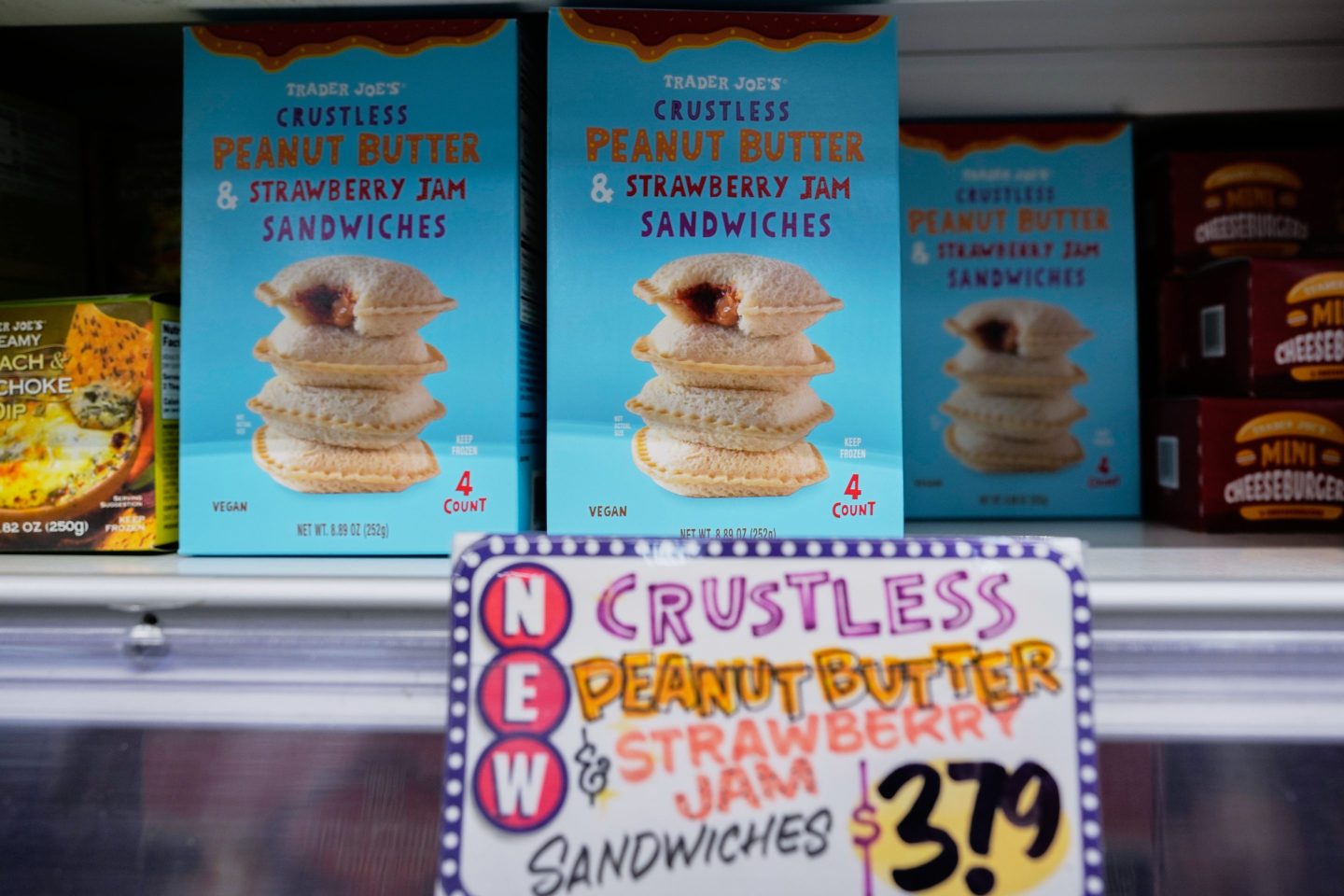
The J.M. Smucker Co. is suing Trader Joe’s, alleging the grocery chain’s new frozen peanut butter and jelly sandwiches are too similar to Smucker’s Uncrustables in their design and packaging.
In the lawsuit, which was filed Monday in federal court in Ohio, Smucker said the round, crustless sandwiches Trader Joe’s sells have the same pie-like crimp markings on their edges that Uncrustables do. Smucker said the design violates its trademarks.
Smucker also asserted that the boxes Trader Joe’s PB&J sandwiches come in violate the Orrville, Ohio-based company’s trademarks because they are the same blue color it uses for the lettering on “Uncrustables” packages.
Trader Joe’s boxes also show a sandwich with a bite mark taken out of it, which is similar to the Uncrustables design, Smucker said.
“Smucker does not take issue with others in the marketplace selling prepackaged, frozen, thaw-and-eat crustless sandwiches. But it cannot allow others to use Smucker’s valuable intellectual property to make such sales,” the company said in its lawsuit.
Smucker is seeking restitution from Trader Joe’s. It also wants a judge to require Trader Joe’s to deliver all products and packaging to Smucker to be destroyed.
A message seeking comment was left Wednesday with Trader Joe’s, which is based in Monrovia, California.
Michael Kelber, chair of the intellectual property group at Neal Gerber Eisenberg, a Chicago law firm, said Smucker’s registered trademarks will help bolster its argument. But Trader Joe’s might argue that the crimping on its sandwiches is simply functional and not something that can be trademarked, Kelber said.
Trader Joe’s sandwiches also appear to be slightly more square than Uncrustables, so the company could argue that the shape isn’t the same, Kelber said.
Uncrustables were invented by two friends who began producing them in 1996 in Fergus Falls, Minnesota. Smucker bought their company in 1998 and secured patents for a “sealed, crustless sandwich” in 1999.
But it wasn’t easy to mass produce them. In the lawsuit, Smucker said it has spent more than $1 billion developing the Uncrustables brand over the last 20 years. Smucker spent years trying to perfect Uncrustables’ stretchy bread and developing new filling flavors like chocolate and hazelnut.
Kelber said one of the biggest issues companies debate in cases like this one is whether the copycat product deceives consumers.
Smucker claims that’s already happening with Trader Joe’s sandwiches. In the lawsuit, Smucker showed a social media photo of a person claiming that Trader Joe’s is contracting with Smucker to make the sandwiches under its own private label.
This isn’t the first time Smucker has taken legal action to protect its Uncrustables brand. In 2022, it sent a cease and desist letter to a Minnesota company called Gallant Tiger, which was making upscale versions of crustless peanut butter and jelly sandwiches with crimped edges. Smucker said Wednesday that it hasn’t taken further action but continues to monitor Gallant Tiger.
Smucker likely felt it had no choice but to sue this time around, Kelber said.
“For the brand owner, what is the point of having this brand if I’m not going to enforce it?” Kelber said. “If they ignore Trader Joe’s, they are feeding that, and then the next person who does it they won’t have an argument.”
Kelber said trademark cases often wind up being settled because neither company wants to go through an expensive trial.
Smucker’s lawsuit comes a few months after a similar lawsuit filed against the Aldi by Mondelez International, which claimed that Aldi’s store-brand cookies and crackers have packaging that is too similar to Mondelez brands like Chips Ahoy, Wheat Thins and Oreos.