• Home
  • Latest
  • Fortune 500
  • Finance
  • Tech
  • Leadership
  • Lifestyle
  • Rankings
  • Multimedia
EconomyChina
Asia

‘Scandalous’: Top economist Jeremy Siegel says U.S. sleepwalked into rare earths crisis as China tightens its grip

By
Eva Roytburg
Eva Roytburg
Fellow, News
Down Arrow Button Icon
By
Eva Roytburg
Eva Roytburg
Fellow, News
Down Arrow Button Icon
October 13, 2025, 1:04 PM ET
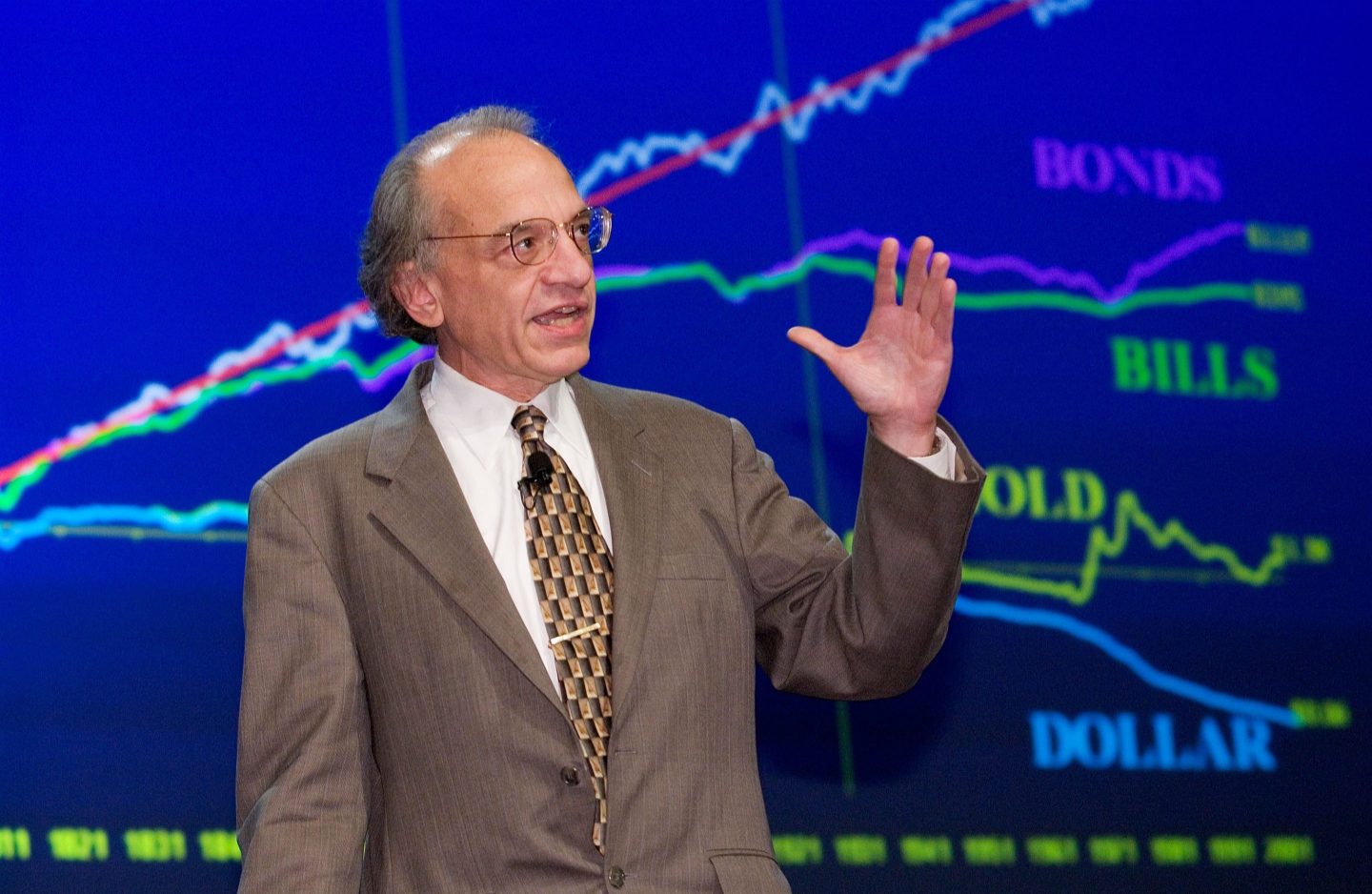
Jeremy Siegel, the Russell E. Palmer Professor of Finance at the Wharton School, addresses the Securities Industry Association during their annual meeting in Boca Raton, Florida, Thursday, November 10, 2005.
Jeremy Siegel is a Wharton finance professor and author known for his work on long-term stock market returns.Matt Stroshane—Bloomberg/Getty Images

China’s tightening grip over the minerals that power advanced technologies has moved from long-term strategic concern to immediate economic threat—and the U.S. is woefully unprepared, Wharton’s Jeremy Siegel warned.

“It’s scandalous that we don’t have a rare earth strategic reserve,” Siegel told CNBC’s Squawk Box Monday, calling it a major security failure. “We let China monopolize 90% of refining rare earth materials. Where were we, realizing the importance of these?”

Siegel urged the U.S. to build a rare earth stockpile similar to the Strategic Petroleum Reserve, which was created in 1975 after the Arab oil embargo left the country exposed to geopolitical blackmail.

His warning comes just days after Beijing unveiled sweeping new export controls that would require companies worldwide to seek Chinese approval before shipping thousands of products containing even trace amounts of rare earths. The move sent shockwaves through U.S. manufacturing and defense supply chains, which rely heavily on Chinese mineral processing.

Recommended Video

But Treasury Secretary Scott Bessent said Monday that President Donald Trump will still meet China’s Xi Jinping later this month and is ready to respond “with whatever it takes” to counter China’s export restrictions.

Bessent, speaking in a Fox Business interview, said there had been “substantial communication” between U.S. and Chinese officials over the weekend and confirmed the much-watched Trump–Xi bilateral remains scheduled during the Asia-Pacific Economic Cooperation (APEC) summit in South Korea, sometime in late October.

The meeting had been thrown into doubt after China abruptly moved to tighten exports of rare earth elements: critical minerals used in advanced weapons systems, electric vehicles, wind turbines, smartphones, and semiconductor manufacturing.

“This is China versus the world,” Bessent said, warning Beijing had “pointed a bazooka at the supply chains and industrial base of the entire free world.” 

Rare earths as leverage

Getting repetitive

While the U.S. once led the industry, refining shifted to China in the 1980s and 1990s due to lower costs and looser environmental regulation.

But the U.S. is also scrambling to reduce its long-term reliance on Beijing. The Pentagon has funded new rare-earth processing facilities in Texas and California, while the Department of Energy has backed partnerships with alternative suppliers such as Lynas Rare Earths in Australia.

Beijing has repeatedly signaled willingness to weaponize its mineral dominance during geopolitical disputes. In 2010, it briefly halted rare-earth exports to Japan over a territorial disagreement in the East China Sea. More recently, during the U.S.–China trade war in 2019, Chinese state media hinted rare earths could be used as “China’s counterweapon.”

The announcement last week enraged U.S. officials. Trump initially threatened to cancel his meeting with Xi and unveiled plans for an additional 100% tariff on Chinese goods beginning Nov. 1. The White House has framed the move as retaliation for what it calls Chinese “economic coercion.”

“Whatever it takes”

Bessent said Monday the U.S. would respond forcefully if China maintains its restrictions.

 “We have plenty of straight brute-force countermeasures we can pull,” he warned. 

He cited leverage over semiconductor software exports, access to U.S. financial markets, aircraft components from companies like GE and Honeywell, and even the presence of more than 300,000 Chinese students studying at American universities.

He also hinted the U.S. may use export controls similar to those deployed against Huawei and China’s AI chip sector in 2022 and 2023, when Washington moved to choke Beijing off from advanced technology and chipmaking tools.

“But we’re willing to do whatever it takes and to adopt whatever posture it takes,” Bessent said. “As President Trump says, we do have more cards.”

The Treasury secretary said the administration aims to rally support from Japan, South Korea, India, Australia, and European allies, many of whom also depend on Chinese refined minerals. The issue is expected to dominate discussions this week in Washington during the annual International Monetary Fund and World Bank meetings, where Bessent said Chinese and American officials will hold lower-level talks.

Siegel, for one, expects the economic fallout to be temporary.

“Once it’s resolved, given all the other good things that are happening, I see no reason why we can’t continue on to new highs,” he said, noting the S&P 500 was already rebounding after Friday’s sell-off.
Join us at the Fortune Workplace Innovation Summit May 19–20, 2026, in Atlanta. The next era of workplace innovation is here—and the old playbook is being rewritten. At this exclusive, high-energy event, the world’s most innovative leaders will convene to explore how AI, humanity, and strategy converge to redefine, again, the future of work. Register now.
About the Author
By Eva RoytburgFellow, News

Eva is a fellow on Fortune's news desk.

See full bioRight Arrow Button Icon

Latest in Economy

EconomyAgriculture
More financially distressed farmers are expected to lose their property soon as loan repayments and incomes continue to falter
By Jason MaDecember 13, 2025
41 minutes ago
PoliticsAffordable Care Act (ACA)
With just days to go before ACA subsidies expire, Congress is about to wrap up its work with no consensus solution in sight
By Kevin Freking, Lisa Mascaro and The Associated PressDecember 13, 2025
6 hours ago
HealthAffordable Care Act (ACA)
A Wisconsin couple was paying $2 a month for an ACA health plan. But as subsidies expire, it’s soaring to $1,600, forcing them to downgrade
By Ali Swenson and The Associated PressDecember 13, 2025
6 hours ago
Julian Braithwaite is the Director General of the International Alliance for Responsible Drinking
CommentaryProductivity
Gen Z is drinking 20% less than Millennials. Productivity is rising. Coincidence? Not quite
By Julian BraithwaiteDecember 13, 2025
7 hours ago
EconomyFederal Reserve
Trump names Warsh, Hassett as top Fed contenders, WSJ says
By Jennifer A. Dlouhy and BloombergDecember 12, 2025
21 hours ago
EconomyFederal Reserve
The Fed just ‘Trump-proofed’ itself with a unanimous move to preempt a potential leadership shake-up
By Jason MaDecember 12, 2025
24 hours ago

Most Popular

placeholder alt text
Economy
Tariffs are taxes and they were used to finance the federal government until the 1913 income tax. A top economist breaks it down
By Kent JonesDecember 12, 2025
1 day ago
placeholder alt text
Success
Apple cofounder Ronald Wayne sold his 10% stake for $800 in 1976—today it’d be worth up to $400 billion
By Preston ForeDecember 12, 2025
1 day ago
placeholder alt text
Success
40% of Stanford undergrads receive disability accommodations—but it’s become a college-wide phenomenon as Gen Z try to succeed in the current climate
By Preston ForeDecember 12, 2025
1 day ago
placeholder alt text
Economy
The Fed just ‘Trump-proofed’ itself with a unanimous move to preempt a potential leadership shake-up
By Jason MaDecember 12, 2025
24 hours ago
placeholder alt text
Economy
For the first time since Trump’s tariff rollout, import tax revenue has fallen, threatening his lofty plans to slash the $38 trillion national debt
By Sasha RogelbergDecember 12, 2025
1 day ago
placeholder alt text
Success
Apple CEO Tim Cook out-earns the average American’s salary in just 7 hours—to put that into context, he could buy a new $439,000 home in just 2 days
By Emma BurleighDecember 12, 2025
1 day ago
Rankings
  • 100 Best Companies
  • Fortune 500
  • Global 500
  • Fortune 500 Europe
  • Most Powerful Women
  • Future 50
  • World’s Most Admired Companies
  • See All Rankings
Sections
  • Finance
  • Leadership
  • Success
  • Tech
  • Asia
  • Europe
  • Environment
  • Fortune Crypto
  • Health
  • Retail
  • Lifestyle
  • Politics
  • Newsletters
  • Magazine
  • Features
  • Commentary
  • Mpw
  • CEO Initiative
  • Conferences
  • Personal Finance
  • Education
Customer Support
  • Frequently Asked Questions
  • Customer Service Portal
  • Privacy Policy
  • Terms Of Use
  • Single Issues For Purchase
  • International Print
Commercial Services
  • Advertising
  • Fortune Brand Studio
  • Fortune Analytics
  • Fortune Conferences
  • Business Development
About Us
  • About Us
  • Editorial Calendar
  • Press Center
  • Work At Fortune
  • Diversity And Inclusion
  • Terms And Conditions
  • Site Map

© 2025 Fortune Media IP Limited. All Rights Reserved. Use of this site constitutes acceptance of our Terms of Use and Privacy Policy | CA Notice at Collection and Privacy Notice | Do Not Sell/Share My Personal Information
FORTUNE is a trademark of Fortune Media IP Limited, registered in the U.S. and other countries. FORTUNE may receive compensation for some links to products and services on this website. Offers may be subject to change without notice.