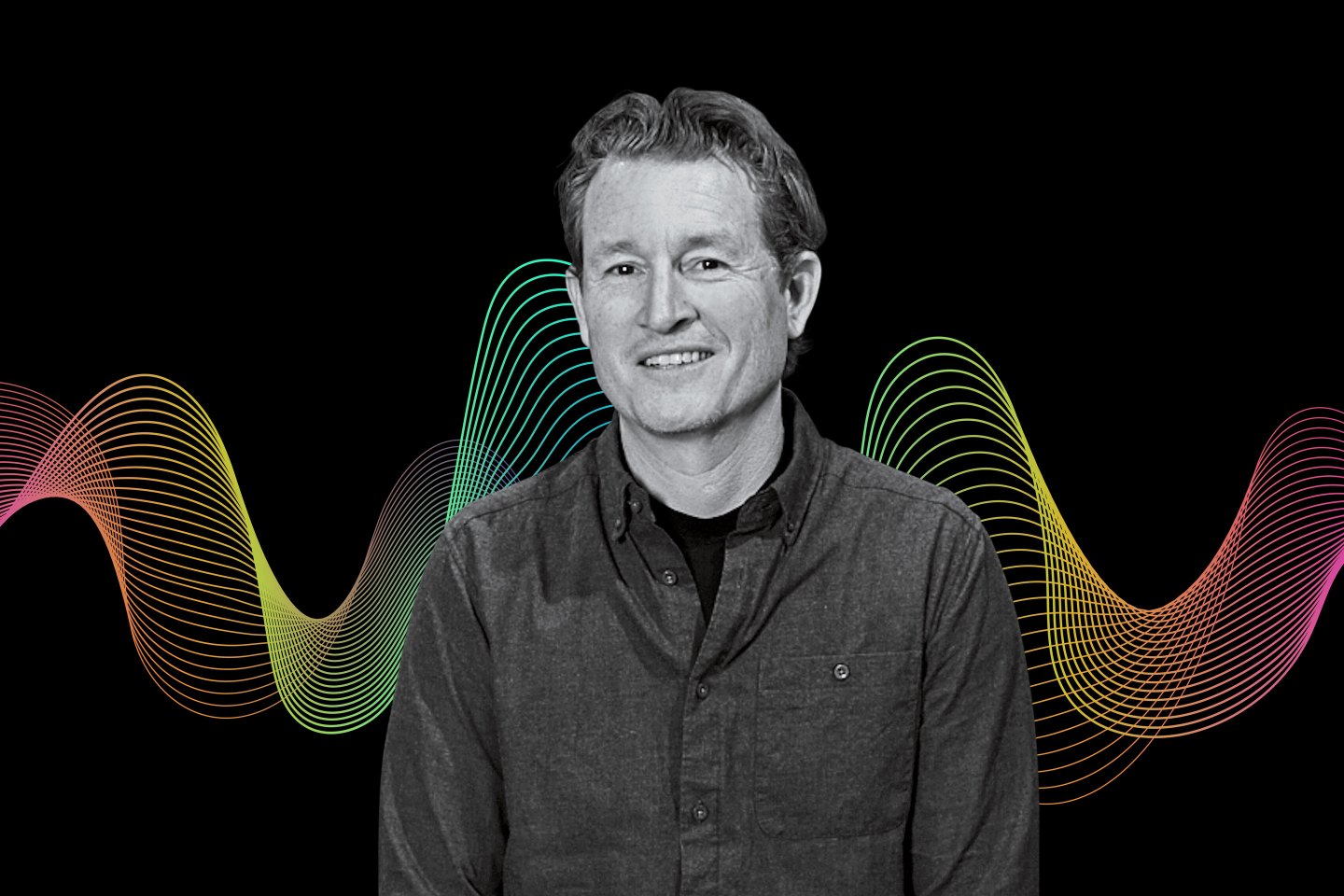
On this episode of Fortune’s Leadership Next podcast, cohosts Diane Brady, executive editorial director of the Fortune CEO Initiative and Fortune Live Media, and editorial director Kristin Stoller talk with Ryan Gellert, CEO of Patagonia. They discuss President Trump’s description of climate change as a “con job”; whether it’s easier to lead with a social mission as head of a privately held company; and Patagonia’s journey to building a national park in Albania.
Listen to the episode or read the transcript below.
Transcript:
Ryan Gellert: Science is undefeated, and if you step out of a window from the third floor talking about how gravity doesn’t exist, you’re still going to hit the ground. And so, when this era passes, these problems will be with us.
Diane Brady: Hi, everyone. Welcome to Leadership Next. The podcast about the people…
Kristin Stoller: …and trends…
Brady: …that are shaping the future of business. I’m Diane Brady.
Stoller: And I’m Kristin Stoller.
Brady: Jason Girzadas, CEO of Deloitte US and sponsor of this podcast, joins us now to talk about maximizing business transformation with AI agents.
Jason Girzadas: Great to see you, Diane. Nice to be here.
Brady: So, what should CEOs consider as they assess and prioritize use cases for AI agents?
Girzadas: I think this is on the topic of every CXO conversation I’m a part of. And I think the thought process has to be looking for high-impact areas that may not be necessarily the most glamorous or high-profile functional areas, but are ripe for automation and use of this technology to create efficiencies as well as innovation. And over time, AI agents will be also in customer-facing and growth-oriented domains. In our case, Deloitte, we’re using it within our financial organization looking at very mundane processes like expense management and working capital management. We’re seeing other organizations use it in call centers and with software development that can be automated.
Stoller: What are the key elements for successfully implementing AI agents?
Girzadas: Yeah, it comes down to intentionality. And so, I think that intentionality in going functional area by functional area, in concert with business and IT leadership in an enterprise, it needs to be a mainstream business planning effort that’s budgeted, KPIs are developed, and there’s real accountability for actual business outcomes and impact because of agentic capabilities.
Brady: Fascinating stuff. Thanks, Jason.
Stoller: Thank you.
Girzadas: Thank you.
Brady: Hi everybody. Welcome to Leadership Next. I’m Diane Brady…
Stoller: …and I’m Kristin Stoller. We have the CEO of Patagonia this week, Ryan Gellert, and he was speaking to us straight from Climate Week.
Brady: Yes, in fact, mere minutes, it felt like, after our president said that climate change, I believe, is one of the “biggest con jobs,” was that the term?
Stoller: That was his exact term, I believe. And Ryan was pretty fired up about it.
Brady: He was very fired up. And what I like is [that] he has the bravery to speak out at a time when so many leaders [say] seemingly innocuous statements. And he said some pretty direct things. I think part of the reason he can do that, in all honesty, is the nature of Patagonia itself.
Stoller: I mean, it’s a company that’s privately held. It’s not like his CEO counterparts that really have to worry about the repercussions. And yes, he does, but I think he has a bit more freedom.
Brady: And look, if you talk about values-based companies, this is a company founded by a visionary, Yvon Chouinard, the man who wrote, Let My People Go Surfing. It’s had this strong core from the time it was started in the early ’70s.
Stoller: And you’ve met him, right?
Brady: I’ve met him in a philanthropic context.
Stoller: Ooh, tell me more.
Brady: Well, he was in the process of giving his money away, right? And, in fact, it’s completely changed the business model of Patagonia. But I’ve met him at a couple of events, in essence, where we come together and we talk about the future of business. We talk about the future of leadership. I would be remiss not to mention we’re about to do that again very soon in Saudi Arabia with the Fortune Global Forum.
Stoller: Yep, we’re going to be there Oct. 26 and 27, talking to a bunch of CEOs. Recording more podcasts, just like this one, and we’ll have coverage of the whole event on fortune.com with a lot of Global 500 CEOs.
Brady: I would definitely check it out. Those of you who are listening, in addition to the conversations that we will tape and bring back, I think about those kind of gatherings, and—let’s bring it back to Ryan and the conversation you’re about to hear—making money is obviously one of the reasons business exists. Patagonia truly feels like a company that exists not just to make the planet a better place; it also is a work environment that really values work-life balance at a time when people talk about it. But you know, Ryan, I get the sense that he spends a lot of time rock climbing, and the people in his office have as much joy in their life as they do from their job, that the two are blended. And I found it very inspiring talking to him about: What is the meaning of being a leader? What is the meaning of gathering people together in a company?
Stoller: Especially when your job is such a paradox, and the fact that you are producing clothes and producing things that can contribute to the very thing you’re trying to prevent.
Brady: Yep, well, and they’ve said, “don’t buy this jacket.” I think that’s the one ad I have seen. I think it’s fascinating. It felt very meaningful. And you’re right, he was very fired up for the very reasons that many people were. Which is, a lot of people, including myself, believe climate change is real, and they believe that private sector companies like Patagonia, and policymakers, really have to do something about it before it’s too late.
Stoller: Big wake up call. Let’s hear more from Ryan.
Brady: So Ryan, we are having this conversation during climate week. I can’t think of many companies more committed to sustainability than Patagonia. So tell us a little bit about what you’re hearing, seeing, feeling right now in this environment?
Gellert: Yeah, well, first of all, Diane, super nice to be with you. I know it’s taken us some time to get this organized, and it does feel quite apt that we actually were able to make it work during Climate Week. So it’s nice to be here with both of you. So thank you. You know, I think as far as what we’re hearing and kind of feeling in Climate Week, and acknowledging we’re right in the middle of the week right now, I think people, ourselves included, showed up this week really wondering in this environment what to expect. Which I think is really novel and unique. And I’d say, for me, personally, and talking to quite a few others, I think they’re in the same place. Which is [that] the companies committed to doing this work are going to keep doing this work. The UN Global Compact just released some information that said 97% of CEOs that are on the journey, particularly around greenhouse gas emissions and decarbonization, they’re going to continue to maintain that work. And, the business case, they believe is stronger today than it was five years ago. I think 88% of CEOs said that. So I feel like there’s reasons for optimism, and then there is a lot to be concerned about right now.
Stoller: Well, speaking of that concern, Ryan, you’re one of the few CEOs I feel like right now who’s actually speaking out on political issues, on climate change, on all of that. What do you think of the silence of your peers, and what do you think is their responsibility right now?
Gellert: I think that you know, first of all, just on the general idea of leadership, something I’ve talked about quite a bit is, you know, leadership is not something that happens when it’s easy, when you’re on a brightly lit stage and people were clapping at anything you said. Leadership is what you do when things are difficult, and I think right now we’re seeing which leaders are built for this moment. So I’m disappointed, but I’m not disappointed blanketly, in everybody. There are people who are doing phenomenal work in pushing hard to drive change in their organizations, in their regions, and in their companies. So it’s not a blanket statement, but we need more leadership, and we need it from business specifically.
Brady: So I want to know what you’re doing differently. Now, of course, I want to talk about a lot of the innovation at Patagonia. But since we’re talking about the current environment, the policy environment, etc., are you making any different strategic decisions to get where you want to go?
Gellert: So, I’ll back into this a little bit. Let me talk to you just very briefly about the journey we’ve been on for our 52-year history. Let me tell you what, regardless of who occupies what office, what we’re working on right now, the problems we’re trying to solve. And then I’ll talk to you about how we’re navigating this environment. So Patagonia, 52-year history, founded by Yvon Chouinard, all pretty well documented in a bunch of different books and films.
Brady: Let My People Go Surfing.
Gellert: And a recent book by David Gelles from the New York Times, called Dirtbag Billionaire, also takes another outside-in perspective on it. But Yvon has always been—he’s built his life and, sort of unintentionally, kind of built a business around spending time in the outdoors. And if you’re somebody who enjoys spending time in the outdoors, you, by definition, should have a desire to see them protected. So that’s deeply embedded in the organization. That’s meant different things over our history. I think some of the biggest moments are moving away from conventionally grown cotton—100% from to organically grown cotton 30 years ago, now. It’s starting to basically charge ourself an Earth tax in 1985 and then co-creating the independent organization, 1% for the Planet, in 2002. So a lot of different stories, a lot of different eco-innovation, open-sourced to the industry. The reality is, what we have found on this journey is, the reward for solving a problem, whether it’s getting away from conventional agriculture or cotton, specifically or otherwise, is almost always an invitation to a bigger problem. And so where we have been on this journey is trying to first understand our greenhouse gas emission footprint and then trying to figure out, what can we do to minimize that? Not just individually as Patagonia, but can we come at this a different way and try to scale solutions that go beyond just us? So that’s really the work that we’re most focused on right now. But as we do that work, we grandfather in all the things we’ve been doing before. And so, our commitment to 1% for the Planet, that continues. Our commitment to fair trade certification for the people in our supply chains, that continues. And, and, and.
Stoller: I think that something I hear from CEOs a lot who are, you know, CEOs of public companies, is that they’re like, “Oh, well, it’s easy for private companies to take these stances, but for me, I can’t really take those risks.” What are you saying to people who are in that camp right now?
Stoller: …Love a rant on leadership…
Gellert: I think two things can be true at the same time. One of those, is, we have a really unique founder, and we’ve got really unique ownership. And that makes it easier for us than many others. And two is, it’s a simple excuse to say, well, because I lack that, I can’t do anything. And again, I’ll go back to my sort of rant on leadership … you know, which is, if it were easy, I’m not sure the title “leader” would apply. And so I think solving real problems on behalf of your employees, your customers, and the communities that you exist within, to me that’s a pretty good definition of leadership.
Brady: There was a lot of attention when the business model shifted. Talk a little bit about that. Did it make much difference on the front lines of running the company?
Gellert: You know, I think, in many ways, it hasn’t changed fundamentally what we exist to do and how we make decisions in the business. And then in other ways, it’s had a profound impact. And I think the areas where it’s had a profound impact, number one, just trying to grow into a new model with our employees and with our customers, where you don’t look to the left and look to the right and say, “I don’t know. Let’s see how others do this.” There are no others. There are some similarities with foundation-owned models, foundation-owned businesses from Europe, but they’re quite different than what we’re seeking to do. So we’re having to kind of pioneer this. Number two, I think, with the advocacy we do, and particularly the financial piece of that, 1% for the Planet—we’ve always really involved our employees. We have grants councils. They’re very involved directly in where we give the money and the organizations that we support. The work that we’re doing through Holdfast is quite different. A lot of it is land acquisition. A lot of it is large-scale land acquisition, and it’s done in partnership with others, and so it makes it very difficult to bring the employees along until these things are done. And so that’s been one of the learnings. I do think, though, on the positive side, employees are incredibly excited, invested, proud, and inspired to be a part of something when they can see the positive impact it’s having in the world.
Stoller: And you have a progress report coming out in a month or two, right? About the—after the change in the ownership structure—types of progress you’ve seen. Could you share with Diane and [me] something in there that you think is really interesting that you’ve gleaned from it?
Gellert: I mean, I think there’s a lot in there that’s really interesting. Let me step back and kind of explain to you what we’re trying to accomplish with this. So as I mentioned, 52-year history, I sort of think about the kind of big things we’ve done. I talked about organic cotton, talked about 1% for the Planet, quite a few others, as sort of chapters in a book. What we’ve never done in our 52 years is try to get our arms around the whole thing. And we’re actually calling it not so much a progress report, we’re calling it a work-in-progress report, and really demonstrating the fact that this is just the ongoing work that we do to be a more responsible business. So that’s the journey. But our desire is to tell the whole story. And look, this is how we think about growth, and this is what we’re doing with carbon footprint, and this is how we think about microplastics, and this is why we do an Earth tax, and granting, and this is what we’re doing with Holdfast, and so really just trying to tell that whole story. I think the other challenge we’re trying to square is, if it’s a completely data-dense report, it will satisfy a few and be read by even less than a few. If it is a narrative-form report, it’s going to lack the substance that I think topics like this deserve. And so we’ve really wrestled with, how do we combine those two things? And I’d welcome anybody listening to this to tell us, when that goes live in early November, how we did on that. But that’s that’s really the goal.
Brady: You know, one of the things I think about is, not climate anxiety so much, but we used to talk about climate change as something to try to avoid, and now, of course, it’s here. I’d love to get your perspective on—how are you feeling about it? How do you think your customers are feeling about it? Now that we’re, in some ways, talking more about resilience, adaptability. You know, this, it feels like a different day.
Gellert: I think you’ve described it really well, and I think that different people are navigating that differently. I’ll speak about it, maybe on behalf of the Patagonia employee. And I think there’s a general sense of how we’re feeling about this. I think it’s really sobering to understand what we are losing in real time, and I’m one of these people. I’ve got two young kids, and understanding that the world that they will inherit will be radically different than the world I grew up in, in many ways that are really negative and really meaningful. That’s a really sobering reality. I think you got to make peace with that. And I think that’s hard. I think that there’s a lot of other things going on right now that’s making life really difficult for people across this country and well beyond this country. Think polarization, geopolitical instability, a lot of things that just have people wobbling right now. I think on the topic of climate change and the narrative, I think people need optimism right now. They need solutions. And at the same time, I don’t think we should be celebrating mediocrity, and I don’t think we should be trying to simplify something beyond…
Brady: Do you mean greenwashing? What do you mean “celebrating mediocrity?”
Gellert: I think, well, you know, greenwashing is an element of that, but I think sometimes it’s, “oh, well, you’re giving this thing a shot. Great.” You know, this is a really big problem, and if we’re going to solve this, it’s going to take government doing what governments, in essence, were built to do, which is realize big opportunities and solve big problems on behalf of all of us. It’s going to take each of us, in our role as part of civil society, engaging in these issues. It’s going to take business doing something that, candidly, I think it’s been reluctant to do for far too long, which was deal with the mess we’ve made. And I think that’s the reality. And so, any honest conversation around that, any honest conversation around solutions, including real concerted efforts to mitigate your footprint, I’m all in on. And I think what we’re going to absolutely need is coalitions. I think there’s a fine line there somewhere between trying to sort of simplify this, or say everything’s going to be fine. No, if we continue this, it’s not going to be okay.
Stoller: How often do CEOs come to you and say, like, “Hey, Ryan, I want to do what you’re doing. Give me the playbook”? Or does that never happen?
Gellert: I’ll give you a couple of frames on this. I think pre-COVID, Patagonia—the outdoor industry, I’d say the apparel sector, to some degree—Patagonia as a company, was just growing really quickly. I think a lot of things sort of came together to create a moment. We were running a really good business. And so we had a lot of momentum, and we had a lot of brand heat as a result of that. And so I was looking after our business in Europe, based in Europe, and I would have a lot of CEOs and leaders at companies come in and say, “hey, look, tell me how this works.” I think you can tell in the first 10 seconds—is it, give me the easy part and I’m out of here? Or, do I really want to kind of understand this? And I’ve had lots of conversations with people that fit both descriptions. I think today we are spending a lot more time, and I personally am spending a lot more time, talking to CEOs of large organizations who are not new to this work, who have been committed to it, who are wrestling with issues that are different than the ones we are, and wrestling with issues that are a cut-and-paste of the issues that we’re dealing with. But I think you start to understand—what’s the level of commitment here? And also, candidly, what sits behind you? Whether it’s your board or otherwise. Like, is this change of CEO going to take this organization on a completely different trajectory? Or is there some level of confidence that this is almost operating at a cellular level?
Brady: I know it’s hard to distill a playbook when every company’s different, like every child, but are there particular elements or advice that you would give to people listening who do care about these issues? Not everybody can be Patagonia, but sitting in the leadership chair, what would you tell them?
Gellert: I think understanding your footprint is number one, full stop. I think in our business, and I think this is true of basically any company in the apparel or footwear space, all of the bad stuff happens in your supply chain. And that doesn’t make your partners in the supply chain the reason for the problem. That’s just where the footprint is. And so I think—understand your supply chain. Breaking that down is understanding your greenhouse gas emission footprint, understand what the biggest levers are, and then start to figure out what you can do about that. The work that we’re trying to kind of get off the ground here on decarbonization is, you know, 97% of our carbon footprint is the product that we make. It’s not the facilities we run. It’s not moving it around transportation. It’s the product that we make, and a vast majority of that is at the mill level. So converting fiber into fabric, and we don’t own any of those mills. They’re all on the other side of the planet, and we’re a small customer for all of them. And so you look at that problem, and you say, where are the opportunities for impact? And so the work we’re trying to do—we’re doing it in partnership with others, and we’re doing it in partnership with our suppliers—is, let’s understand where your energy comes from. Let’s understand how efficiently it moves within your facility. And let’s understand if we can build a carbon-insetting model, so the same basic ideas as offsetting but within the supply chain that is trackable, that other companies can participate in to help provide the kind of financial resource that that these suppliers, these mills, need to make the transition. What good looks like is they move away from coal, and there’s still a lot of coal at the mill level, in supply chains around the world for apparel, and get electrified from renewables. So that’s sometimes two, three steps—a pretty big systemic change. That’s what’s needed. That is possible, but it’s a hell of a lot of work.
Stoller: Yeah, it’s interesting that there are a lot of things that are at odds here, because you want companies to obviously sell less to make more of an impact. But you’re a clothing company, you still want to be profitable. How do you square all of those thoughts going on in your head?
Gellert: Yeah, you know, I’m going to try to rephrase that a little bit, but you tell me if I’ve got to the heart of it, because I feel like I get some version of that question a lot, which is, and I think you were very nice about it, but in essence is, you’re selling a bunch of stuff, and yet you care. You’re mission statement is “We’re in business to save our home planet.” How do you square that circle? I think first of all, I’ll start with this statement. As unpopular as it may sound to the leader of any business like ours, we are really proud of the product that we make. We engineer quality into our product. We do everything we can to minimize our footprint, and we do everything we can, and we spend a lot of money doing it on performance innovation. So we’re really proud of the product we make. And the reality is that the vast majority of product that we sell, people want, people like, but they do not need to survive. And so that’s as stark as I can make that statement.
Brady: Well, everyone needs a jacket.
Stoller: It’s a little chilly in New York.
Gellert: But I think that what we believe, and when we went through the restructuring three years ago. I’ll step back and say the first part of that process—the Chouinards were not like, “this is what we want to do.” The Chouinards were more, “these are the things we want to be true.” And when we started that process, [there were] lots of ideas. We’d love this, we’d love this, we wouldn’t like this. But we really had to distill down to a couple of central truths, like a budget of two or three. What must be true or cannot be true. And really what we came back to is [that] they wanted Patagonia to continue to exist imbued with the values that they had put into the business. They believed that it can be an example out there in the world. Not of a perfect business, not of a sustainable business, but a more responsible business. Number two, they wanted to cash flow the environment in much bigger ways right now. And so that was the model we put together. And so to come back to your question, I do believe what the world needs right now, more arguably than ever, is just examples of more responsible businesses. And so that’s my answer to your question. We’re not perfect. We wrestle with this a lot, including growth. We do a number of things to make sure that we’re not pushing growth too aggressively. We are very troubled by the role that social media plays in today’s world. We opted out of any paid advertising with Meta platforms five years ago. We haven’t spent a dime there, and that’s pretty fertile commercial ground, but we just opted out of it. So we do make those decisions, and at the same time, were unapologetically a for-profit business. And, you know, I think I described the dilemma of a business that makes a lot of stuff.
Brady: You know, Ryan, talking about climate sometimes I feel like “Debbie Downer.” But I want to just say, my former colleague, Brad Wieners, I remember when he was going to Patagonia, I thought, of course you’re going there. You’re a guy who likes to climb cliffs. You go to Burning Man. It’s kind of a fun place to work, and talk about that on a personal level. Where do you get the most joy out of your life? Well, I presume kids, that’s a baseline, but I do think it’s a place where you do emphasize getting out there and having fun?
Gellert: Yeah, well I’ll start by saying it seems like Brad knows everybody in New York City media, because his name comes up a lot.
Brady: We know him.
Gellert: Little nod to Brad. Patagonia is a really wonderful place to work. I mean, we have an incredibly informal culture. It’s a really unique campus. We’ve got on-site childcare at three of our big campuses across the U.S. We’ve got cafés that are really nice. It’s a pretty special place to work, really close to the beach. I get a lot of energy, I mean, the thing I enjoy more than anything in the world is rock climbing. Between the job and the family and where I live and everything else, I’m not doing it as much.
Brady: What is it about rock climbing?
Gellert: For me? I think it is being in incredibly beautiful places, often with one or two partners in this environment, where I’m totally focused on what I’m doing and really enjoying doing it in the places and with the people that I get to do it. So I think that’s the thing that I’ve always found incredibly addictive. I’ve been very fortunate, I spent six years in Europe. I spent five years in China. So I’ve traveled, and therefore climbed, all over the world. And it’s absolutely addictive. And so however long I’m doing what I’m doing, when it’s over, I’m right back outside.
Stoller: What’s the best place you’ve climbed?
Gellert: Well, I was just a month ago up in the Lofoten Islands in morthern Norway, which was a place I had been to in winter before for some backcountry snowboarding when I lived in Europe and always wanted to get back over to and rock climb. And so I was over there with my family in August, and was able to get a lot more climbing in than I anticipated. Part of it was those long Arctic evenings. So we were climbing till midnight, sometimes between rainstorms, and it was just spectacular.
Stoller: The other thing Diane and I heard a little rumor about is that you worked in Albania for a bit, establishing a national park? Can you tell us about that?
Gellert: Yeah, well, that was actually Patagonia work. And again, I’ll sort of step back and give some broad context. I started with Patagonia in the fall of 2014. At that same time, we did a feature-length film called DamNation, and it was about deadbeat dams, dams that had outlived their usable life, and the impact they had on the ecosystems within which they operate. We in Europe said, “Okay, how do we think about this? Is this an issue that has relevance in Europe?” What we came to understand pretty quickly was that all of the rivers across Europe, with two exceptions, the Balkans and Russia, had been channelized, had been dammed, had been otherwise impeded by human hand. Those were the only two areas left in a semi-natural state. That was the good news about the Balkans. Flip side was, there were over 3,000 hydropower projects queued up for those rivers, and so we dug in deeper to it. Built relationships with local grassroots activists and organizations. First time I went to Albania, I spent some time on the Vjosa River camping, rafting, and then ended the trip in a protest in front of Prime Minister Edi Rama’s office, which was a pretty tense protest, to be honest. I thought we were all going to spend some time in an Albanian jail. Left, came back about a year or two later at the invitation of Prime Minister Rama to talk about this and see if there was a solution. Third visit back to Albania, maybe a year after that, was for the announcement of a memorandum of understanding between Patagonia and the Albanian government to co-create the Vjosa Wild River National Park. And then the most recent time I was there was for the dedication of the park. And so it was a really interesting story, and to be honest with you, of all the rivers in the Balkans, the Vjosa was probably the one I was least convinced we would be able to make this kind of progress on, so it’s just really an inspiring story.
Stoller: Why?
Gellert: I just didn’t think that there was any path with the government. I felt like we were in such opposition, and civil society and everything was just pretty tense in those early days. I think the role we were able to play in support of the NGOs on the ground was really being an international business and kind of being able to elevate a bit above the tension with local society and kind of mediate. But we always did that in service of the of the NGOs.
Brady: You just mentioned a couple of words that strike fear in the hearts of many leaders. Like protesters, working with government, NGOs…
Stoller: …being arrested…
Brady: …but in this environment right now, certainly in this country and others, you’re seeing such polarization. What advice—again, maybe reflection, is more the right term—how are you thinking about what success looks like in terms of how we navigate? Because obviously your customers are people who care deeply, but you have to sell to the right, to the left, and in between. Any thoughts on that?
Gellert: I think how we think about product, is, we build the best product we know how to make. And as I said before, that’s product quality. We run—outside of the U.S. military, we run the largest apparel repair facility in the United States. And so if you’ve got something from us that’s 15 years old and the zipper is broken, send it to us. We’ll get it fixed and back to you. So product quality is a platform, not a platitude in how we think about our responsibility. We have started a resale business. It’s about a percentage of our total revenue, and I’d love to see it continue to scale and build. So quality is a huge part of it. Footprint—all the work we do to minimize it. And then performance innovation, and so I think that resident … relates with people across the political spectrum. I also understand that not everybody agrees with every position environmentally that we take. I think we’ve got to kind of vote our conscience. And I think what’s really important is we do this. And we advocate on issues in service of our community. That includes our employees, that includes our customers, and it’s broader than both. And that’s what we center. That’s what we exist to do. And our purpose statement is, “We’re in business to save our home planet.”
Stoller: Going forward, thinking about, obviously your work in Albania and the activism you did there. What type of activism would you like to see you, your company, your employees take here in the U.S.?
Gellert: I wish that activism wasn’t even as needed, as it feels like it is right now. I mean, it feels like everything’s really dangerous right now. Even talking about it, I feel like we’re almost talking in code. And look, I’m gonna break that for a minute, regardless of of the stakes. We’re sitting here today in New York City. A couple of hours ago, across town at the UN, we had the President of the United States talking 10 minutes about how climate change is a hoax. I will tell you this, science is undefeated. And if you step out of a window from the third floor talking about how gravity doesn’t exist, you’re still going to hit the ground. And so when this era passes, these problems will be with us. And that, I think, is something that all of us, particularly those of us that bask in the glow of the title “leader,” really give serious thought to right now. That’s not me preaching to people and giving them advice about what they must do. I think it’s a real reflection of what all of us need to think about right now.
Brady: It’s a good point. I’d love to end on the thought of just—you get asked a lot of questions, including this week. Are there questions that you feel you wish you were asked more often, or that you think we’re not asking enough right now?
Gellert: I’m not sure that a particular question comes to mind, but I think what is often missing from the dialogue is a time horizon. And, so, I think thinking about solutions and what good looks like, on 10-year time horizon, is really a needed posture right now, and it is so rare that I feel like I’m having a conversation with almost anybody that starts with that kind of perspective. And I think that’s a real miss, again, on behalf of all of us.
Stoller: Great. Well, Ryan, thank you so much for joining us. We appreciate it.
Gellert: It’s been great, thank you both so much.
Brady: Leadership Next is produced and edited by Hélène Estèves.
Stoller: Our executive producer is Lydia Randall.
Brady: Our head of video is Adam Banicki.
Stoller: Our theme is by Jason Snell.
Leadership Next episodes are produced by Fortune‘s editorial team. The views and opinions expressed by podcasters and guests are solely their own and do not reflect the opinions of Deloitte or its personnel. Nor does Deloitte advocate or endorse any individuals or entities featured on the episodes.