• Home
  • Latest
  • Fortune 500
  • Finance
  • Tech
  • Leadership
  • Lifestyle
  • Rankings
  • Multimedia
CommentaryHousing

I turned my $2,000 bar mitzvah money into a $2 billion student housing company. Here’s what I learned

By
David J. Adelman
David J. Adelman
Down Arrow Button Icon
By
David J. Adelman
David J. Adelman
Down Arrow Button Icon
September 20, 2025, 8:45 AM ET

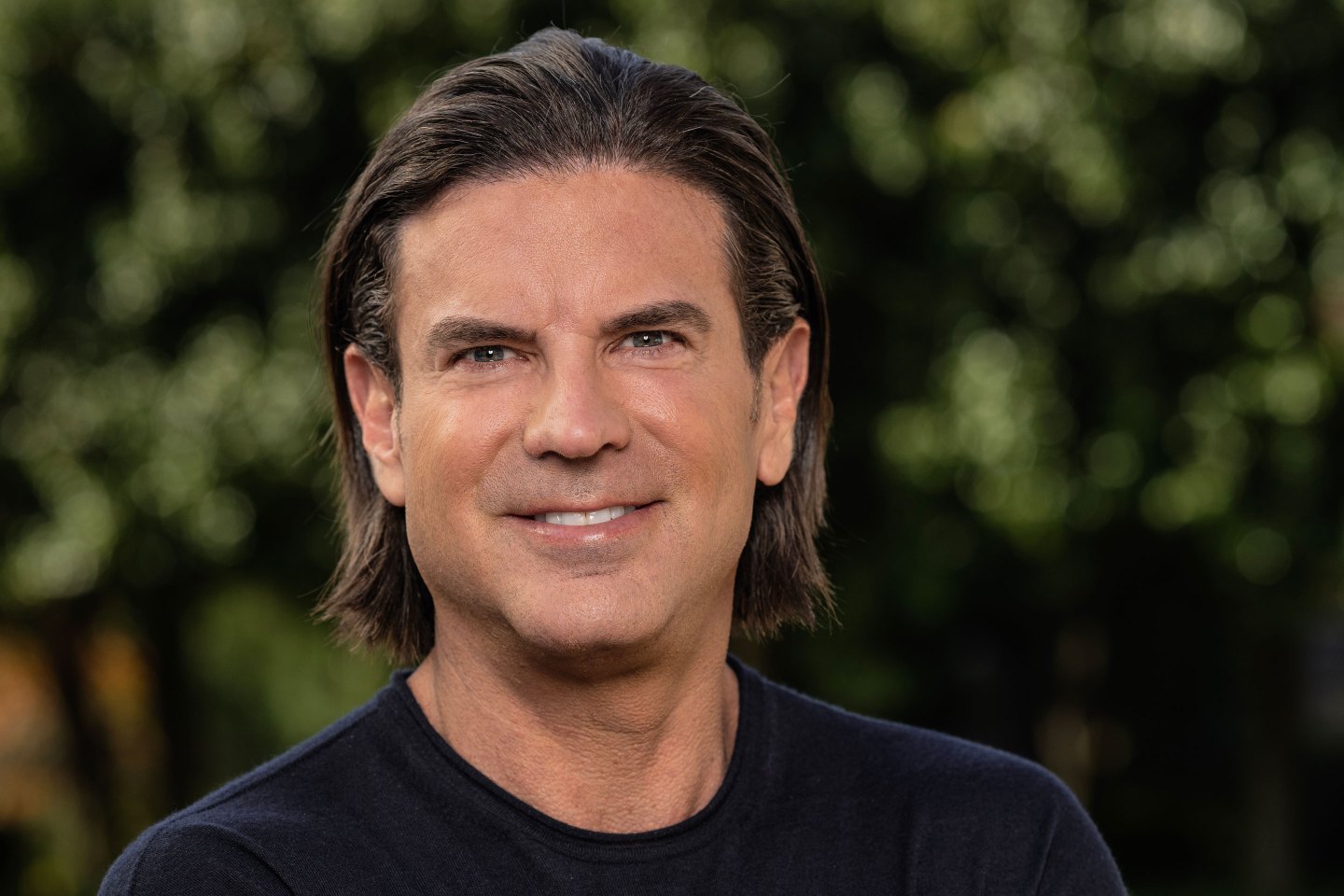
David J. Adelman is CEO of Campus Apartments, one of the nation’s largest private student housing companies. Since taking the helm in 1997, he has transformed the firm from a Philadelphia-based family business into a national platform with more than $2 billion in assets under management. Under his leadership, Campus pioneered public-private partnerships in student housing and today serves more than 25,000 students across 70 colleges and universities in 18 states. Adelman is also a part-owner of the Philadelphia 76ers and the New Jersey Devils.

David Adelman
David Adelman.David Adelman

As CEO of a national student housing company, I’ve learned that the most valuable business lessons aren’t in sales or spreadsheets—they’re about people, patience, and perspective. 

Recommended Video

I first learned that at 13, after losing a basketball game bet to family friend Alan Horwitz, founder of Campus Apartments. My loss landed me in the glamorous role of cleaning his real-estate office every Saturday. What began as punishment turned into a curiosity about the business, and soon thereafter, I invested $2,000 of my bar mitzvah money into one of Campus Apartments’ Philadelphia properties. 

Forty years later, Campus Apartments is one of the nation’s largest private student housing companies, with more than $2 billion in assets under management across 18 states. And while the company has grown significantly, the most valuable lessons I’ve learned while scaling a family business into a national leader extend far beyond real estate. 

Take smarter risks

In the mid-2000s, several student housing companies rushed to go public, convinced that institutional capital required such a platform—investors expected it, competitors were doing it, and the market seemed to reward it.

But that’s exactly why I chose a different route. 

Instead of filing for an IPO, I partnered with a sovereign wealth fund and a well-known real-estate investor to create the largest joint venture the student housing sector had ever seen. It was a risky move, but it gave us long-term capital without the pressure of meeting short-term financial goals. That choice allowed us to remain agile and invest strategically in graduate, faculty, and mixed-use housing while our competitors were constrained by public-market demands.

Some of the most pivotal decisions in business aren’t the obvious ones. They’re the nontraditional but calculated risks taken in moments of uncertainty. Long-term leaders are the ones who resist the urge to join the crowd for short-term momentum and instead position their companies for tomorrow.

Specialize in the whitespace 

When I entered the real estate sector in 1994, student housing was undervalued, overlooked, and seen through the lens of John Belushi in Animal House; most of the industry saw the greatest potential in traditional categories like office, retail, industrial, and multifamily real estate. 

But student housing represented a clear, underappreciated opportunity. Universities were quickly expanding, and most lacked both the operational expertise and financial flexibility needed to meet growing housing demands. Rather than compete in traditional, saturated markets, I focused on this clearly emerging segment. What was once considered a niche would become the foundation of our legacy.  

Through this, I learned that sustainable business growth stems from identifying untapped opportunities, committing to them for the long haul, and building the expertise to lead within them. In my experience, focusing deeply on a core strength creates a competitive edge for your company to define the standard for your industry.

Build companies on people

Capital may drive growth, but the true foundation of Campus Apartments has always been our people. Many of our executives have been with us for more than a decade, and our leadership team averages 18 years of tenure—well above the 4.9-year average for Fortune 500 C-suites.

That kind of continuity comes from a culture built on trust, autonomy, and accessibility. At Campus Apartments, that starts with leadership. I’ve maintained an open-door policy throughout my tenure, ensuring my team knows they have direct access when it matters. In businesses, senior leadership can often feel distant; fostering an environment of approachability has become a defining aspect of our culture and a key factor in our long-term resilience. 

This culture of openness has been a competitive advantage, allowing us to scale nationally without sacrificing our identity.

In my experience, leaders who invest as deliberately in their people as they do in their strategies are better equipped to navigate market shifts, downturns, and disruption. Capital drives growth, but culture is what sustains it.

Since that first investment as a teenager, the most defining outcomes in my career haven’t come from individual deals, but from a series of intentional decisions rooted in taking smart risks, building trust, creating opportunity, and leaving an impact that endures beyond any single cycle.

The opinions expressed in Fortune.com commentary pieces are solely the views of their authors and do not necessarily reflect the opinions and beliefs of Fortune.

Join us at the Fortune Workplace Innovation Summit May 19–20, 2026, in Atlanta. The next era of workplace innovation is here—and the old playbook is being rewritten. At this exclusive, high-energy event, the world’s most innovative leaders will convene to explore how AI, humanity, and strategy converge to redefine, again, the future of work. Register now.
About the Author
By David J. Adelman
See full bioRight Arrow Button Icon

Latest in Commentary

Dr. Javier Cárdenas is the director of the Rockefeller Neuroscience Institute NeuroPerformance Innovation Center.
Commentaryconcussions
Fists, not football: There is no concussion protocol for domestic violence survivors
By Javier CárdenasDecember 12, 2025
15 hours ago
Gary Locke is the former U.S. ambassador to China, U.S. secretary of commerce, and governor of Washington.
CommentaryChina
China is winning the biotech race. Patent reform is how we catch up
By Gary LockeDecember 12, 2025
15 hours ago
millennial
CommentaryConsumer Spending
Meet the 2025 holiday white whale: the millennial dad spending $500+ per kid
By Phillip GoerickeDecember 12, 2025
15 hours ago
Sarandos
CommentaryAntitrust
Netflix, Warner, Paramount and antitrust: Entertainment megadeal’s outcome must follow the evidence, not politics or fear of integration
By Satya MararDecember 12, 2025
16 hours ago
CommentaryLeadership
Leading the agentic enterprise: What the next wave of AI demands from CEOs
By François Candelon, Amartya Das, Sesh Iyer, Shervin Khodabandeh and Sam RansbothamDecember 12, 2025
19 hours ago
Sarandos
CommentaryAntitrust
Netflix’s takeover of Warner Brothers is a nightmare for consumers
By Ike BrannonDecember 11, 2025
2 days ago

Most Popular

placeholder alt text
Economy
Tariffs are taxes and they were used to finance the federal government until the 1913 income tax. A top economist breaks it down
By Kent JonesDecember 12, 2025
18 hours ago
placeholder alt text
Success
At 18, doctors gave him three hours to live. He played video games from his hospital bed—and now, he’s built a $10 million-a-year video game studio
By Preston ForeDecember 10, 2025
3 days ago
placeholder alt text
Success
Apple cofounder Ronald Wayne sold his 10% stake for $800 in 1976—today it’d be worth up to $400 billion
By Preston ForeDecember 12, 2025
14 hours ago
placeholder alt text
Success
Palantir cofounder calls elite college undergrads a ‘loser generation’ as data reveals rise in students seeking support for disabilities, like ADHD
By Preston ForeDecember 11, 2025
2 days ago
placeholder alt text
Success
40% of Stanford undergrads receive disability accommodations—but it’s become a college-wide phenomenon as Gen Z try to succeed in the current climate
By Preston ForeDecember 12, 2025
14 hours ago
placeholder alt text
Arts & Entertainment
'We're not just going to want to be fed AI slop for 16 hours a day': Analyst sees Disney/OpenAI deal as a dividing line in entertainment history
By Nick LichtenbergDecember 11, 2025
1 day ago
Rankings
  • 100 Best Companies
  • Fortune 500
  • Global 500
  • Fortune 500 Europe
  • Most Powerful Women
  • Future 50
  • World’s Most Admired Companies
  • See All Rankings
Sections
  • Finance
  • Leadership
  • Success
  • Tech
  • Asia
  • Europe
  • Environment
  • Fortune Crypto
  • Health
  • Retail
  • Lifestyle
  • Politics
  • Newsletters
  • Magazine
  • Features
  • Commentary
  • Mpw
  • CEO Initiative
  • Conferences
  • Personal Finance
  • Education
Customer Support
  • Frequently Asked Questions
  • Customer Service Portal
  • Privacy Policy
  • Terms Of Use
  • Single Issues For Purchase
  • International Print
Commercial Services
  • Advertising
  • Fortune Brand Studio
  • Fortune Analytics
  • Fortune Conferences
  • Business Development
About Us
  • About Us
  • Editorial Calendar
  • Press Center
  • Work At Fortune
  • Diversity And Inclusion
  • Terms And Conditions
  • Site Map

© 2025 Fortune Media IP Limited. All Rights Reserved. Use of this site constitutes acceptance of our Terms of Use and Privacy Policy | CA Notice at Collection and Privacy Notice | Do Not Sell/Share My Personal Information
FORTUNE is a trademark of Fortune Media IP Limited, registered in the U.S. and other countries. FORTUNE may receive compensation for some links to products and services on this website. Offers may be subject to change without notice.