• Home
  • Latest
  • Fortune 500
  • Finance
  • Tech
  • Leadership
  • Lifestyle
  • Rankings
  • Multimedia
Commentary

Tariff whiplash is hurting small businesses — and it’s only getting worse

By
Jacob Bennett
Jacob Bennett
Down Arrow Button Icon
By
Jacob Bennett
Jacob Bennett
Down Arrow Button Icon
September 18, 2025, 8:00 AM ET
Jacob Bennett is co-founder of Crux Analytics, which helps banks better serve small business clients. He previously ran a small business whilst consulting for Fortune 500 companies.
Donald Trump
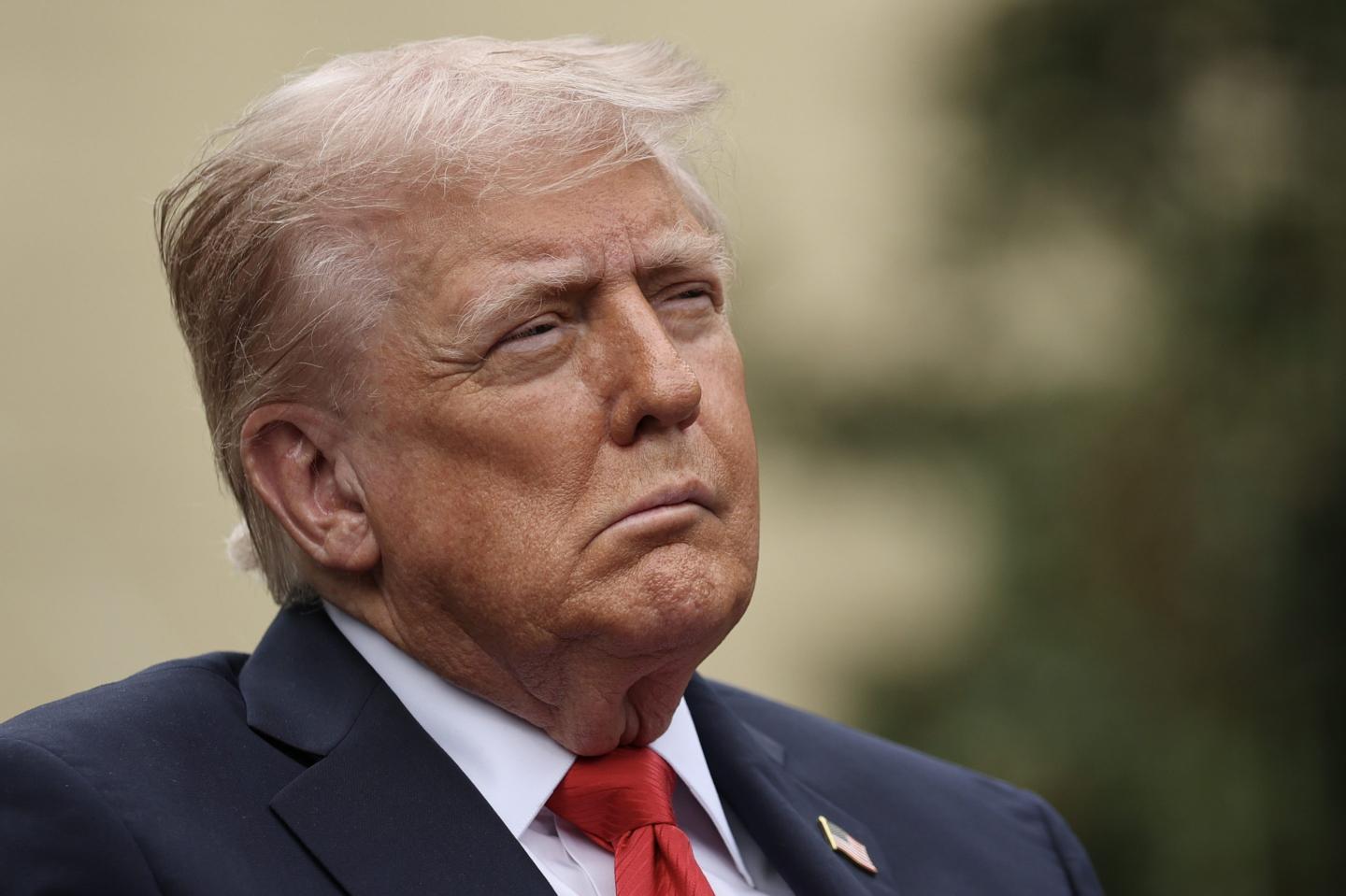
So many policy reversals.Win McNamee/Getty Images

Trump’s trade war isn’t failing. It’s working, just not for the people who voted for it.

Recommended Video

When Trump eliminated the de minimis exemption, four million packages daily lost duty-free status. That’s 92% of all cargo facing tariffs, and small businesses are drowning.

Eight major tariff adjustments in the past 12 months have created a policy whiplash that large corporations can navigate but small businesses cannot. Yet these policies assume corporate-level resources that small businesses simply don’t have, costing them $856,000 annually, while only 37% have access to business credit to weather these changes.

The policy whiplash costs

Small businesses represent 97% of all U.S. importers. Trump’s China tariff pause, extended twice beyond its original 90-day timeline, has left virtually all of them trapped in regulatory uncertainty where rules change faster than they can adapt.

The financial impact is precise and brutal. A family-run restaurant facing 40% ingredient cost increases has three impossible choices: absorb margin-killing costs, raise prices, or find non-existent domestic alternatives. For a typical small business generating about $1.2 million in annual revenue, even modest trade swings can erase 10%-15% of top-line income.

That volatility has become the new normal. Small firms plan around policy uncertainty as a baseline, despite lacking trade consultants, legal teams, and cash reserves that larger corporations use to navigate changes. Big companies can stockpile inventory ahead of tariff deadlines, diversify suppliers globally, and tap established credit lines to ride out chaos. Small businesses, without credit or capital, are forced into reactive decision-making with no cushion. Once again, the policies designed to protect them become weapons against them, strengthening the corporations they were meant to contain. Meanwhile, the small businesses that were supposed to benefit from an ‘America First’ trade policy find themselves priced out by the protection meant to help them.

The credit squeeze

The damage is not limited to higher inventory costs — policy volatility cuts off access to credit small businesses need most.

Banks demand multi-year business plans for credit approval, but trade policies change weekly. When tariffs on inputs can swing from 0% to 145% each quarter, financial projections become meaningless.

The result is a credit desert. Over half of small business owners report severe financial stress, but banks treat their volatile cost structures as evidence of mismanagement rather than symptoms of policy chaos. They’re penalised for unpredictable finances caused by policy whiplash.

Meanwhile, larger companies have the resources and established credit lines to weather any storm. Small businesses don’t.

Stockpile advantages

The credit crunch is only half the story. Many large corporations benefit from “stockpile strangulation” — bulk-ordering inventory before tariff deadlines, spreading customs fees across thousands of units and paying pennies per item.

Small businesses simply can’t afford to do this. A retailer who previously shipped $5 items now faces flat-fees of $80-$200 per package, making that $5 item cost $165 to deliver. The economics are brutal and inescapable. Without capital to play this game, small businesses are eliminated before they can compete

What banks must do

Banks lack systems that provide real-time market visibility. They already understand external shocks — ski resorts get different credit terms in summer because seasonal revenue drops are predictable business cycles, not management failures. Yet when tariffs force businesses to abandon forecasting because trade rules change weekly, lenders often misread the situation.

Many demand precise projections, treating volatile margins as red flags. Small businesses need financial partners who recognise that when the vast majority of importers face identical uncertainty, they’re looking at systemic market conditions rather than individual business problems.

The policy fix

Without accessible credit or reserves, small businesses are left reacting to policy shocks while larger competitors plan quarters ahead. They desperately need predictability. A 12–18 month tariff roadmap would let them plan strategically rather than gamble on tomorrow’s policy announcements. The administration favours negotiating flexibility over certainty, costing small-business survival. Large corporations already enjoy predictability through lobbying and insider intelligence; a public roadmap would level that playing field and remove unfair advantages created by chaos.

We’re measuring success wrong

Trade war defenders point to achievements: steel imports hit twenty-year lows, solar manufacturing doubled in Q1, and reshoring jumped 454%. These victories matter, but they mask deeper damage to the small businesses employing 46% of the private workforce.

Chaotic implementation exposes how vulnerable small businesses are to policy shocks, and when they contract, damage spreads. Workers lose jobs, labour markets weaken. Large companies can absorb the blows, but the dry cleaner, toy importer, or family-run retailer cannot.

The fundamental contradiction persists: trade protection succeeds only when protected businesses can benefit from it. Today, policies meant to strengthen American enterprise are eliminating the entrepreneurs who embody it. Small businesses drive nearly half the economy; they deserve better than being collateral damage in a trade war that works for everyone except them.

The opinions expressed in Fortune.com commentary pieces are solely the views of their authors and do not necessarily reflect the opinions and beliefs of Fortune.

Join us at the Fortune Workplace Innovation Summit May 19–20, 2026, in Atlanta. The next era of workplace innovation is here—and the old playbook is being rewritten. At this exclusive, high-energy event, the world’s most innovative leaders will convene to explore how AI, humanity, and strategy converge to redefine, again, the future of work. Register now.
About the Author
By Jacob Bennett
See full bioRight Arrow Button Icon

Latest in Commentary

Finance
Lorem ipsum dolor sit amet, consectetur adipiscing elit, sed do eiusmod tempor incididunt ut labore et dolore magna aliqua. Ut enim ad minim veniam
By Fortune Editors
October 20, 2025
Finance
Lorem ipsum dolor sit amet, consectetur adipiscing elit, sed do eiusmod tempor incididunt ut labore et dolore magna aliqua. Ut enim ad minim veniam
By Fortune Editors
October 20, 2025
Finance
Lorem ipsum dolor sit amet, consectetur adipiscing elit, sed do eiusmod tempor incididunt ut labore et dolore magna aliqua. Ut enim ad minim veniam
By Fortune Editors
October 20, 2025
Finance
Lorem ipsum dolor sit amet, consectetur adipiscing elit, sed do eiusmod tempor incididunt ut labore et dolore magna aliqua. Ut enim ad minim veniam
By Fortune Editors
October 20, 2025
Finance
Lorem ipsum dolor sit amet, consectetur adipiscing elit, sed do eiusmod tempor incididunt ut labore et dolore magna aliqua. Ut enim ad minim veniam
By Fortune Editors
October 20, 2025
Finance
Lorem ipsum dolor sit amet, consectetur adipiscing elit, sed do eiusmod tempor incididunt ut labore et dolore magna aliqua. Ut enim ad minim veniam
By Fortune Editors
October 20, 2025

Most Popular

Finance
Lorem ipsum dolor sit amet, consectetur adipiscing elit, sed do eiusmod tempor incididunt ut labore et dolore magna aliqua. Ut enim ad minim veniam
By Fortune Editors
October 20, 2025
Finance
Lorem ipsum dolor sit amet, consectetur adipiscing elit, sed do eiusmod tempor incididunt ut labore et dolore magna aliqua. Ut enim ad minim veniam
By Fortune Editors
October 20, 2025
Finance
Lorem ipsum dolor sit amet, consectetur adipiscing elit, sed do eiusmod tempor incididunt ut labore et dolore magna aliqua. Ut enim ad minim veniam
By Fortune Editors
October 20, 2025
Finance
Lorem ipsum dolor sit amet, consectetur adipiscing elit, sed do eiusmod tempor incididunt ut labore et dolore magna aliqua. Ut enim ad minim veniam
By Fortune Editors
October 20, 2025
Finance
Lorem ipsum dolor sit amet, consectetur adipiscing elit, sed do eiusmod tempor incididunt ut labore et dolore magna aliqua. Ut enim ad minim veniam
By Fortune Editors
October 20, 2025
Finance
Lorem ipsum dolor sit amet, consectetur adipiscing elit, sed do eiusmod tempor incididunt ut labore et dolore magna aliqua. Ut enim ad minim veniam
By Fortune Editors
October 20, 2025
Fortune Secondary Logo
Rankings
  • 100 Best Companies
  • Fortune 500
  • Global 500
  • Fortune 500 Europe
  • Most Powerful Women
  • World's Most Admired Companies
  • See All Rankings
  • Lists Calendar
Sections
  • Finance
  • Fortune Crypto
  • Features
  • Leadership
  • Health
  • Commentary
  • Success
  • Retail
  • Mpw
  • Tech
  • Lifestyle
  • CEO Initiative
  • Asia
  • Politics
  • Conferences
  • Europe
  • Newsletters
  • Personal Finance
  • Environment
  • Magazine
  • Education
Customer Support
  • Frequently Asked Questions
  • Customer Service Portal
  • Privacy Policy
  • Terms Of Use
  • Single Issues For Purchase
  • International Print
Commercial Services
  • Advertising
  • Fortune Brand Studio
  • Fortune Analytics
  • Fortune Conferences
  • Business Development
  • Group Subscriptions
About Us
  • About Us
  • Press Center
  • Work At Fortune
  • Terms And Conditions
  • Site Map
  • About Us
  • Press Center
  • Work At Fortune
  • Terms And Conditions
  • Site Map
  • Facebook icon
  • Twitter icon
  • LinkedIn icon
  • Instagram icon
  • Pinterest icon

Latest in Commentary

Duncan Tait, CEO of Inchcape
Europecar manufacturing
“Competition is good for the industry”. Inchcape CEO’s case for optimism in automotive’s next chapter
By Duncan TaitApril 30, 2026
26 minutes ago
agentic
CommentaryAI agents
Why your data infrastructure — not your AI model — will determine whether Agentic AI scales
By Jeffrey Sonnenfeld, Stephen Henriques, Catherine Dai and Zander JeinthanuttkanontApril 30, 2026
3 hours ago
hoskins
Commentaryoffices
Gensler Co-Chair: Hot-desking was supposed to save money. It may be costing you your culture
By Diane HoskinsApril 30, 2026
5 hours ago
tillis
CommentaryCongress
Thom Tillis: Free markets built American prosperity. Government intervention puts it at risk
By Thom Tillis and John StanfordApril 30, 2026
6 hours ago
iran
CommentaryIran
The Strait of Hormuz is a data problem, not just a military one
By Erik Bethel and Ami DanielApril 30, 2026
7 hours ago
hollywood
CommentaryMarketing
I spent 20 years learning to navigate an industry. Then I built a campaign for the man who’s dismantling it
By Matti YahavApril 29, 2026
1 day ago

Most Popular

Apple cofounder Ronald Wayne—whose stake would be worth up to $400 billion had he not sold it in 1976—says that at 91, he has no regrets
Success
Apple cofounder Ronald Wayne—whose stake would be worth up to $400 billion had he not sold it in 1976—says that at 91, he has no regrets
By Preston ForeApril 27, 2026
3 days ago
Jamie Dimon gets candid about national debt: ‘There will be a bond crisis, and then we’ll have to deal with it’
Economy
Jamie Dimon gets candid about national debt: ‘There will be a bond crisis, and then we’ll have to deal with it’
By Eleanor PringleApril 29, 2026
1 day ago
‘They left me no choice’: Powell isn’t going anywhere—blocking Trump from another Fed appointee
Banking
‘They left me no choice’: Powell isn’t going anywhere—blocking Trump from another Fed appointee
By Eva RoytburgApril 29, 2026
20 hours ago
‘The cost of compute is far beyond the costs of the employees’: Nvidia executive says right now AI is more expensive than paying human workers
AI
‘The cost of compute is far beyond the costs of the employees’: Nvidia executive says right now AI is more expensive than paying human workers
By Sasha RogelbergApril 28, 2026
2 days ago
‘Take the money and run’: Johns Hopkins economist Steve Hanke on why the UAE quit OPEC
Energy
‘Take the money and run’: Johns Hopkins economist Steve Hanke on why the UAE quit OPEC
By Shawn TullyApril 29, 2026
1 day ago
Google Cloud revenue is now 18% of Alphabet's business. Is this the beginning of the end of Google's search identity?
Big Tech
Google Cloud revenue is now 18% of Alphabet's business. Is this the beginning of the end of Google's search identity?
By Alexei OreskovicApril 29, 2026
13 hours ago

© 2026 Fortune Media IP Limited. All Rights Reserved. Use of this site constitutes acceptance of our Terms of Use and Privacy Policy | CA Notice at Collection and Privacy Notice | Do Not Sell/Share My Personal Information
FORTUNE is a trademark of Fortune Media IP Limited, registered in the U.S. and other countries. FORTUNE may receive compensation for some links to products and services on this website. Offers may be subject to change without notice.