• Home
  • News
  • Fortune 500
  • Tech
  • Finance
  • Leadership
  • Lifestyle
  • Rankings
  • Multimedia
AISam Altman

‘I haven’t had a good night of sleep since ChatGPT launched’: Sam Altman admits the weight of AI keeps him up at night

By
Eva Roytburg
Eva Roytburg
Fellow, News
Down Arrow Button Icon
By
Eva Roytburg
Eva Roytburg
Fellow, News
Down Arrow Button Icon
September 11, 2025, 1:30 PM ET
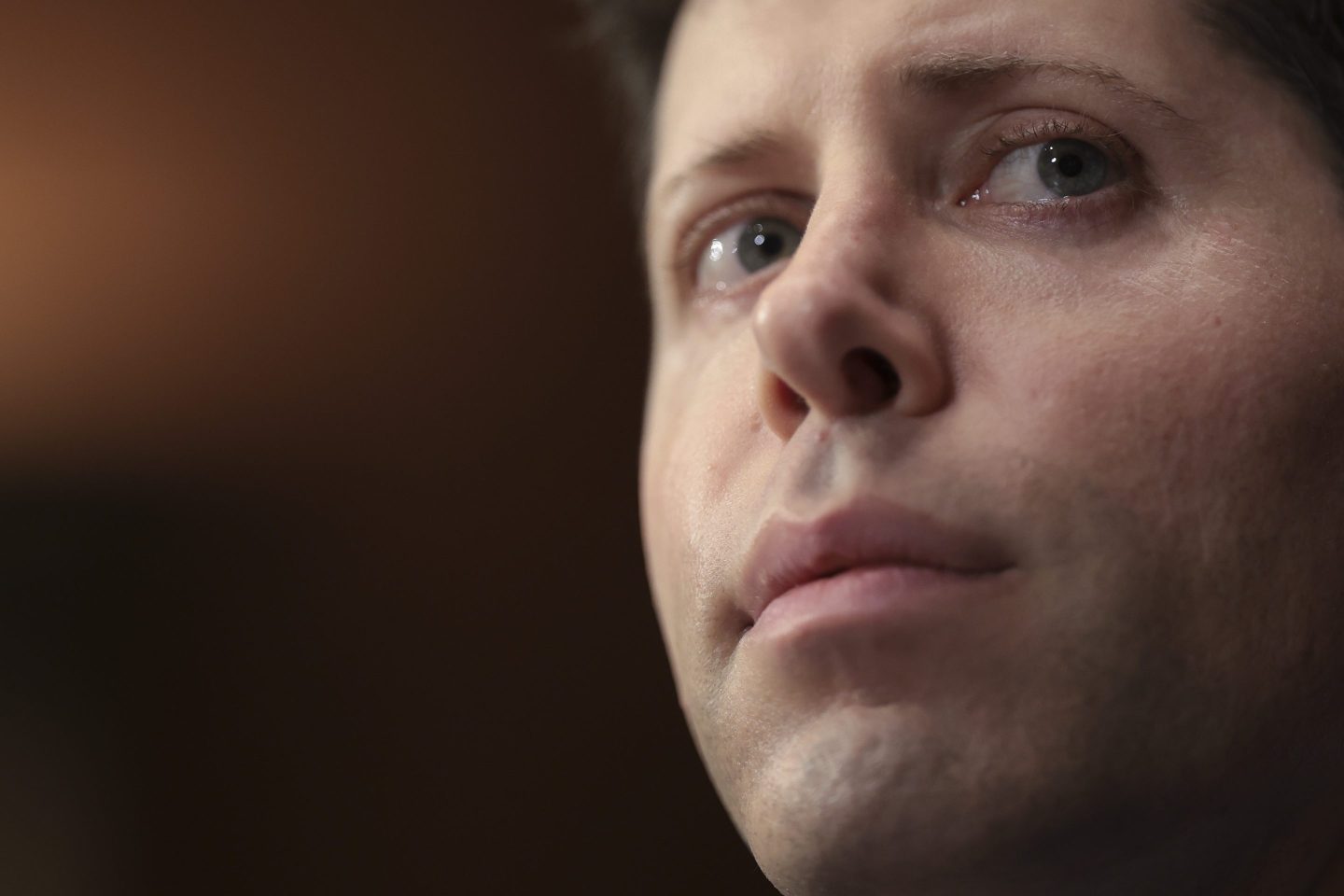
A very close-up photo of Sam Altman's pensive face.
Sam Altman, at times, came across in his interview with Tucker Carlson as a Frankenstein-esque figure, haunted by the scale of his creation. Win McNamee—Getty Images

Tucker Carlson wanted to see the “angst-filled” Sam Altman: He wanted to hear him admit he was tormented by the power he holds. After about half an hour of couching his fears in technical language and cautious caveats, the OpenAI CEO finally did. 

Recommended Video

“I haven’t had a good night’s sleep since ChatGPT launched,” Altman told Carlson. He laughed wryly. 

In his wide-ranging interview with Tucker Carlson, the OpenAI CEO described the weight of overseeing a technology that hundreds of millions of people now use daily. It’s less about the Terminator-esque scenarios or rogue robots. Rather, for Altman, it’s the ordinary, almost invisible tweaks and tradeoffs his team makes every day. It’s when the model refuses a question, how it frames an answer, when it decides to push back, and when it lets something pass.

Those small design choices, Altman explained, are replicated billions of times across the globe, shaping how people think and act in ways he can’t fully track.

“What I lose sleep over is that very small decisions we make about how a model may behave slightly differently are probably touching hundreds of millions of people,” he said. “That impact is so big.”

One example that weighs heavily: suicide. Altman noted roughly 15,000 people take their lives each week worldwide, and if 10% of them are ChatGPT users, roughly 1,500 people with suicidal thoughts may have spoken to the system—and then killed themselves anyway. (World Health Organization data confirms about 720,000 people per year worldwide take their own lives).

“We probably didn’t save their lives,” he admitted. “Maybe we could have said something better. Maybe we could have been more proactive.”

OpenAI was recently sued by parents who claim ChatGPT encouraged their 16-year-old son, Adam Raine, to kill himself. Altman told Carlson that case was a “tragedy,” and said the platform is now exploring options where if a minor talks to ChatGPT about suicide seriously, and the system cannot get in touch with their parents, that they would call authorities.

Altman added it wasn’t a “final position” of OpenAI’s, and that it would come into tension with user privacy. 

In countries where assisted suicide is legal such as in Canada or Germany, Altman said he could imagine ChatGPT telling terminally ill, suffering adults suicide was “in their option space.” But ChatGPT shouldn’t be for or against anything at all, he added. 

That tradeoff between freedom and safety runs through all of Altman’s thinking. Broadly, he said, adult users should be treated “like adults,” with wide latitude to explore ideas. But there are red lines. 

“It’s not in society’s interest for ChatGPT to help people build bioweapons,” he said flatly. For him, the hardest questions are the ones in the gray areas, when curiosity blurs into risk. 

Carlson pressed him on what moral framework governs those decisions. Altman said the base model reflects “the collective of humanity, good and bad.” 

OpenAI then layers on a behavioral code—what he called the “model spec”—informed by philosophers and ethicists, but ultimately decided by him and the board. 

“The person you should hold accountable is me,” Altman said. He stressed his aim isn’t to impose his own beliefs but to reflect a “weighted average of humanity’s moral view.” 

That, he conceded, is an impossible balance to get perfectly right.

The interview also touched on questions of power. Altman said he once worried AI would concentrate influence in the hands of a few corporations, but now believes widespread adoption has “up-leveled” billions of people, making them more productive and creative. Still, he acknowledged the trajectory could shift, and that vigilance is necessary.

Yet for all the focus now on the technology’s effects on jobs or geopolitics, what unsettles Altman most are the subtle, almost imperceptible cultural shifts that spread when millions of people interact with the same system every day. He pointed to something as trivial as ChatGPT’s cadence or overuse of em dashes, which has already seeped into human writing styles. If such quirks can ripple through society, what else might follow?

Altman, gray-haired and often looking down, came across as a Frankenstein-esque character, haunted by the scale of what he has unleashed. 

“I have to hold these two simultaneous ideas in my head,” Altman said. “One is, all of this stuff is happening because a big computer, very quickly, is multiplying large numbers in these big, huge matrices together, and those are correlated with words that are being put out one or the other. 

“On the other hand, the subjective experience of using that feels like it’s beyond just a really fancy calculator, and it is surprising to me in ways that are beyond what that mathematical reality would seem.”

OpenAI didn’t immediately respond to Fortune’s request for comment.
Fortune Brainstorm AI returns to San Francisco Dec. 8–9 to convene the smartest people we know—technologists, entrepreneurs, Fortune Global 500 executives, investors, policymakers, and the brilliant minds in between—to explore and interrogate the most pressing questions about AI at another pivotal moment. Register here.
About the Author
By Eva RoytburgFellow, News

Eva is a fellow on Fortune's news desk.

See full bioRight Arrow Button Icon

Latest in AI

AITikTok
China’s ByteDance could be forced to sell TikTok U.S., but its quiet lead in AI will help it survive—and maybe even thrive
By Nicholas GordonDecember 2, 2025
8 hours ago
United Nations
AIUnited Nations
UN warns about AI becoming another ‘Great Divergence’ between rich and poor countries like the Industrial Revolution
By Elaine Kurtenbach and The Associated PressDecember 2, 2025
9 hours ago
Anthropic cofounder and CEO Dario Amodei
AIEye on AI
How Anthropic’s safety first approach won over big business—and how its own engineers are using its Claude AI
By Jeremy KahnDecember 2, 2025
10 hours ago
Nvidia founder and CEO Jensen Huang reacts during a press conference at the Asia-Pacific Economic Cooperation (APEC) CEO Summit in Gyeongju on October 31, 2025.
AINvidia
Nvidia CFO admits the $100 billion OpenAI megadeal ‘still’ isn’t signed—two months after it helped fuel an AI rally
By Eva RoytburgDecember 2, 2025
12 hours ago
layoffs
EconomyLayoffs
What CEOs say about AI and what they mean about layoffs and job cuts: Goldman Sachs peels the onion
By Nick LichtenbergDecember 2, 2025
12 hours ago
AIOpenAI
Sam Altman declares ‘Code Red’ as Google’s Gemini surges—three years after ChatGPT caused Google CEO Sundar Pichai to do the same
By Sharon GoldmanDecember 2, 2025
12 hours ago

Most Popular

placeholder alt text
Economy
Ford workers told their CEO 'none of the young people want to work here.' So Jim Farley took a page out of the founder's playbook
By Sasha RogelbergNovember 28, 2025
4 days ago
placeholder alt text
Success
Warren Buffett used to give his family $10,000 each at Christmas—but when he saw how fast they were spending it, he started buying them shares instead
By Eleanor PringleDecember 2, 2025
18 hours ago
placeholder alt text
Economy
Elon Musk says he warned Trump against tariffs, which U.S. manufacturers blame for a turn to more offshoring and diminishing American factory jobs
By Sasha RogelbergDecember 2, 2025
12 hours ago
placeholder alt text
C-Suite
MacKenzie Scott's $19 billion donations have turned philanthropy on its head—why her style of giving actually works
By Sydney LakeDecember 2, 2025
19 hours ago
placeholder alt text
Success
Forget the four-day workweek, Elon Musk predicts you won't have to work at all in ‘less than 20 years'
By Jessica CoacciDecember 1, 2025
1 day ago
placeholder alt text
AI
More than 1,000 Amazon employees sign open letter warning the company's AI 'will do staggering damage to democracy, our jobs, and the earth’
By Nino PaoliDecember 2, 2025
20 hours ago
Rankings
  • 100 Best Companies
  • Fortune 500
  • Global 500
  • Fortune 500 Europe
  • Most Powerful Women
  • Future 50
  • World’s Most Admired Companies
  • See All Rankings
Sections
  • Finance
  • Leadership
  • Success
  • Tech
  • Asia
  • Europe
  • Environment
  • Fortune Crypto
  • Health
  • Retail
  • Lifestyle
  • Politics
  • Newsletters
  • Magazine
  • Features
  • Commentary
  • Mpw
  • CEO Initiative
  • Conferences
  • Personal Finance
  • Education
Customer Support
  • Frequently Asked Questions
  • Customer Service Portal
  • Privacy Policy
  • Terms Of Use
  • Single Issues For Purchase
  • International Print
Commercial Services
  • Advertising
  • Fortune Brand Studio
  • Fortune Analytics
  • Fortune Conferences
  • Business Development
About Us
  • About Us
  • Editorial Calendar
  • Press Center
  • Work At Fortune
  • Diversity And Inclusion
  • Terms And Conditions
  • Site Map

© 2025 Fortune Media IP Limited. All Rights Reserved. Use of this site constitutes acceptance of our Terms of Use and Privacy Policy | CA Notice at Collection and Privacy Notice | Do Not Sell/Share My Personal Information
FORTUNE is a trademark of Fortune Media IP Limited, registered in the U.S. and other countries. FORTUNE may receive compensation for some links to products and services on this website. Offers may be subject to change without notice.