
• Home
  • News
  • Fortune 500
  • Tech
  • Finance
  • Leadership
  • Lifestyle
  • Rankings
  • Multimedia
EconomyFederal Reserve

The Federal Reserve could start resembling the Supreme Court

Jason Ma
By
Jason Ma
Jason Ma
Weekend Editor
Down Arrow Button Icon
Jason Ma
By
Jason Ma
Jason Ma
Weekend Editor
Down Arrow Button Icon
August 24, 2025, 1:05 PM ET
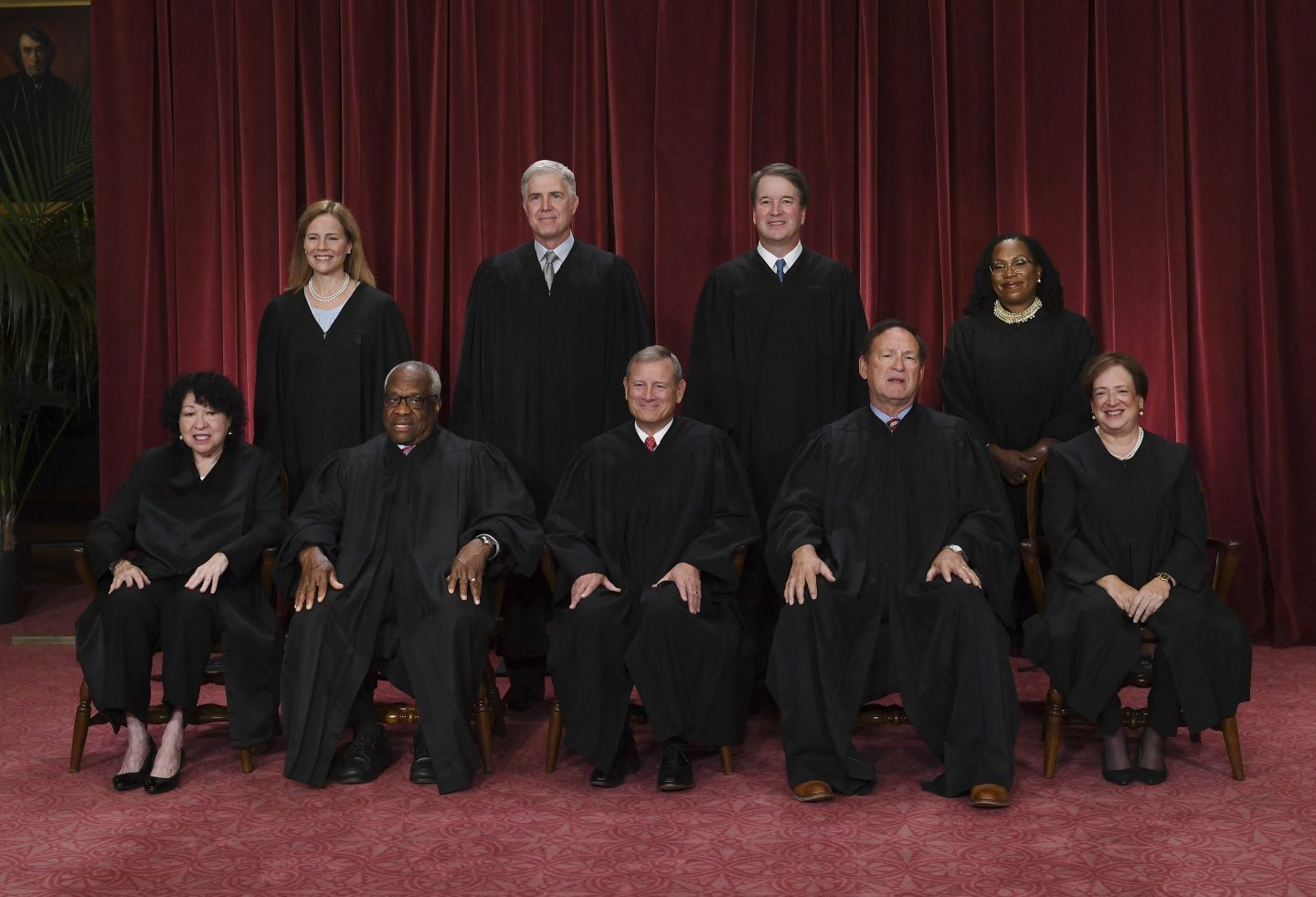
Justices of the U.S. Supreme Court pose for their official photo on Oct. 7, 2022.
Justices of the U.S. Supreme Court pose for their official photo on Oct. 7, 2022. Olivier Douliery—AFP/Getty Images
  • Federal Reserve governorstypically step down before their 14-year terms expire, but they may stay on until a president from their political party is in the White House, according to Ian Katz at Capital Alpha Partners. Meanwhile, unanimous votes on Fed rates could become less common, with split decisions becoming more of the norm.

As President Donald Trump ramps up pressure on the Federal Reserve, the typically staid, consensus-driven institution could take on some qualities of the more bitterly divided Supreme Court.

Recommended Video

Since returning to the White House, he has demanded that the Fed cut rates and routinely insults Chair Jerome Powell for not doing so. After teasing that he could fire Powell, then backing off, Trump has threatened to fire Fed governor Lisa Cook if she doesn’t resign.

For her part, Cook said she won’t be bullied into stepping down and plans to rebut accusations of mortgage fraud from a Trump administration housing official. That’s raised the question of how long she might choose to serve.

Cook joined the Fed in 2022 after being tapped by President Joe Biden to fill an unexpired term that ended in 2024, then getting reappointed. So she can stay on the Fed board until 2038, though governors typically don’t serve out their entire 14-year terms.

“However, the Fed has increasingly become a political football,” Ian Katz, managing partner at Capital Alpha Partners, said in a note Wednesday. “Trump has been clear that he wants to put loyalists on the board. As a result, some governors may choose to remain on the board until a president from their same political party is in the White House—making the Fed in that way more like the Supreme Court.”

Meanwhile, Trump has named Stephen Miran, chair of the White House’s Council of Economic Advisers, to fill a vacancy on the board left by Adriana Kugler, who stepped down before her term was due to expire in January.

He has backed Trump’s call for lower rates. More notably, Miran also cowrote a paper in 2024 calling for an overhaul of the Fed that reduces its independence.

That could factor into Cook’s decision on how long she will stay. In his note, Katz observed that “governors in the past have stepped down without concern that the president would nominate a replacement who isn’t a strong believer in Fed independence.”

Similarly, Powell’s own plans have come under scrutiny. While his term as board chair expires in May, his term as a governor extends to January 2028. 

Treasury Secretary Scott Bessent has said Powell should step down as governor when his term as chairman ends, saying that has been the tradition. Powell has declined to say what he will do.

The stakes could go well beyond how much the Fed lowers rates. Analysts at JPMorgan have even warned that Miran’s appointment represents an “existential threat” to the Fed as it signals an intention to amend the Federal Reserve Act and alter the central bank’s authority.

Split decisions

It’s not clear if Miran will be reappointed to the Fed board as the White House looks for someone to replace Powell as chairman. But either way, the Fed will have three Trump-appointed governors.

To be sure, that’s not enough to sway rate decisions on the 12-member Federal Open Market Committee, which also includes regional Fed presidents. But if Trump is able to name a fourth governor, that’s enough to tip the balance on the seven-member board.

As Axios recently pointed out, a board majority would give Trump appointees power over the Fed’s budget, staffing, and even selection of regional Fed presidents. Those presidents are appointed by directors of the regional Fed banks, but they are subject to the approval of the board. And in February, the five-year terms for all the bank presidents are scheduled to expire.

With the composition of the Fed in flux, a more divided era may be looming that also resembles that of the Supreme Court.

Fed rate decisions are usually unanimous with even one dissenting vote being rare. By contrast, the high court rarely has unanimous votes, while split decisions along ideological lines are common.

July’s Fed meeting may have been a preview of what’s to come, as two Trump-appointed governors voted to lower rates, going against the majority that kept rates steady.

And although Powell opened the door to a rate cut at the September meeting, that doesn’t guarantee a consensus either, as other FOMC members still sounded hawkish, such as Kansas City Fed president Jeffrey Schmid.

That sets up another FOMC meeting with dissenting votes. In addition, the pace of any subsequent cuts isn’t clear, providing more fodder for debate at the central bank as Trump-appointed officials push for dovish policy.

Like the chief justice of the Supreme Court, the Fed chair represents just one vote but is also a first among equals who carries outsize influence. So whoever replaces Powell may need to rely on their powers of persuasion at a Fed with more conflicting views.

Fortune Brainstorm AI returns to San Francisco Dec. 8–9 to convene the smartest people we know—technologists, entrepreneurs, Fortune Global 500 executives, investors, policymakers, and the brilliant minds in between—to explore and interrogate the most pressing questions about AI at another pivotal moment. Register here.
About the Author
Jason Ma
By Jason MaWeekend Editor

Jason Ma is the weekend editor at Fortune, where he covers markets, the economy, finance, and housing.

See full bioRight Arrow Button Icon

Latest in Economy

Construction workers are getting a salary bump for working on data center projects during the AI boom.
AIU.S. economy
Construction workers are earning up to 30% more and some are nabbing six-figure salaries in the data center boom
By Nino PaoliDecember 5, 2025
50 minutes ago
Young family stressed over finances
SuccessWealth
People making six-figure salaries used to be considered rich—now households earning nearly $200K a year aren’t considered upper-class in some states
By Emma BurleighDecember 5, 2025
54 minutes ago
Ray Dalio attends the Fortune Global Forum Riyadh 2025 on October 27, 2025 in Riyadh, Saudi Arabia.
Economynational debt
Ray Dalio says ‘a little bit of everything’ is needed to prevent a debt crisis—but it won’t happen anyway
By Eleanor PringleDecember 5, 2025
6 hours ago
Scott Bessent speaks with Andrew Ross Roskin at Dealbook Summit
LawTariffs
Treasury Secretary Bessent insists Trump’s tariff agenda is ‘permanent,’ saying the White House can re-create it even with a Supreme Court loss
By Marco Quiroz-GutierrezDecember 5, 2025
7 hours ago
Trump
PoliticsWhite House
‘We fixed inflation, and we fixed almost everything’: Trump travels to Pennsylvania to talk affordability while denying it’s a problem
By Josh Boak and The Associated PressDecember 4, 2025
21 hours ago
Bear
RetailTariffs and trade
Build-A-Bear stock falls 15% as it reveals the real hit from tariffs, at last
By Michelle Chapman and The Associated PressDecember 4, 2025
21 hours ago

Most Popular

placeholder alt text
Economy
Two months into the new fiscal year and the U.S. government is already spending more than $10 billion a week servicing national debt
By Eleanor PringleDecember 4, 2025
1 day ago
placeholder alt text
Success
‘Godfather of AI’ says Bill Gates and Elon Musk are right about the future of work—but he predicts mass unemployment is on its way
By Preston ForeDecember 4, 2025
1 day ago
placeholder alt text
Success
Nearly 4 million new manufacturing jobs are coming to America as boomers retire—but it's the one trade job Gen Z doesn't want
By Emma BurleighDecember 4, 2025
1 day ago
placeholder alt text
Success
Nvidia CEO Jensen Huang admits he works 7 days a week, including holidays, in a constant 'state of anxiety' out of fear of going bankrupt
By Jessica CoacciDecember 4, 2025
1 day ago
placeholder alt text
Economy
Tariffs and the $38 trillion national debt: Kevin Hassett sees ’big reductions’ in deficit while Scott Bessent sees a ‘shrinking ice cube’
By Nick LichtenbergDecember 4, 2025
1 day ago
placeholder alt text
Real Estate
‘There is no Mamdani effect’: Manhattan luxury home sales surge after mayoral election, undercutting predictions of doom and escape to Florida
By Sasha RogelbergDecember 4, 2025
23 hours ago
Rankings
  • 100 Best Companies
  • Fortune 500
  • Global 500
  • Fortune 500 Europe
  • Most Powerful Women
  • Future 50
  • World’s Most Admired Companies
  • See All Rankings
Sections
  • Finance
  • Leadership
  • Success
  • Tech
  • Asia
  • Europe
  • Environment
  • Fortune Crypto
  • Health
  • Retail
  • Lifestyle
  • Politics
  • Newsletters
  • Magazine
  • Features
  • Commentary
  • Mpw
  • CEO Initiative
  • Conferences
  • Personal Finance
  • Education
Customer Support
  • Frequently Asked Questions
  • Customer Service Portal
  • Privacy Policy
  • Terms Of Use
  • Single Issues For Purchase
  • International Print
Commercial Services
  • Advertising
  • Fortune Brand Studio
  • Fortune Analytics
  • Fortune Conferences
  • Business Development
About Us
  • About Us
  • Editorial Calendar
  • Press Center
  • Work At Fortune
  • Diversity And Inclusion
  • Terms And Conditions
  • Site Map

© 2025 Fortune Media IP Limited. All Rights Reserved. Use of this site constitutes acceptance of our Terms of Use and Privacy Policy | CA Notice at Collection and Privacy Notice | Do Not Sell/Share My Personal Information
FORTUNE is a trademark of Fortune Media IP Limited, registered in the U.S. and other countries. FORTUNE may receive compensation for some links to products and services on this website. Offers may be subject to change without notice.