• Home
  • Latest
  • Fortune 500
  • Finance
  • Tech
  • Leadership
  • Lifestyle
  • Rankings
  • Multimedia
AI

Microsoft AI CEO Suleyman is worried about ‘AI psychosis’ and AI that seems ‘conscious’

By
Beatrice Nolan
Beatrice Nolan
Tech Reporter
Down Arrow Button Icon
By
Beatrice Nolan
Beatrice Nolan
Tech Reporter
Down Arrow Button Icon
August 22, 2025, 7:36 AM ET
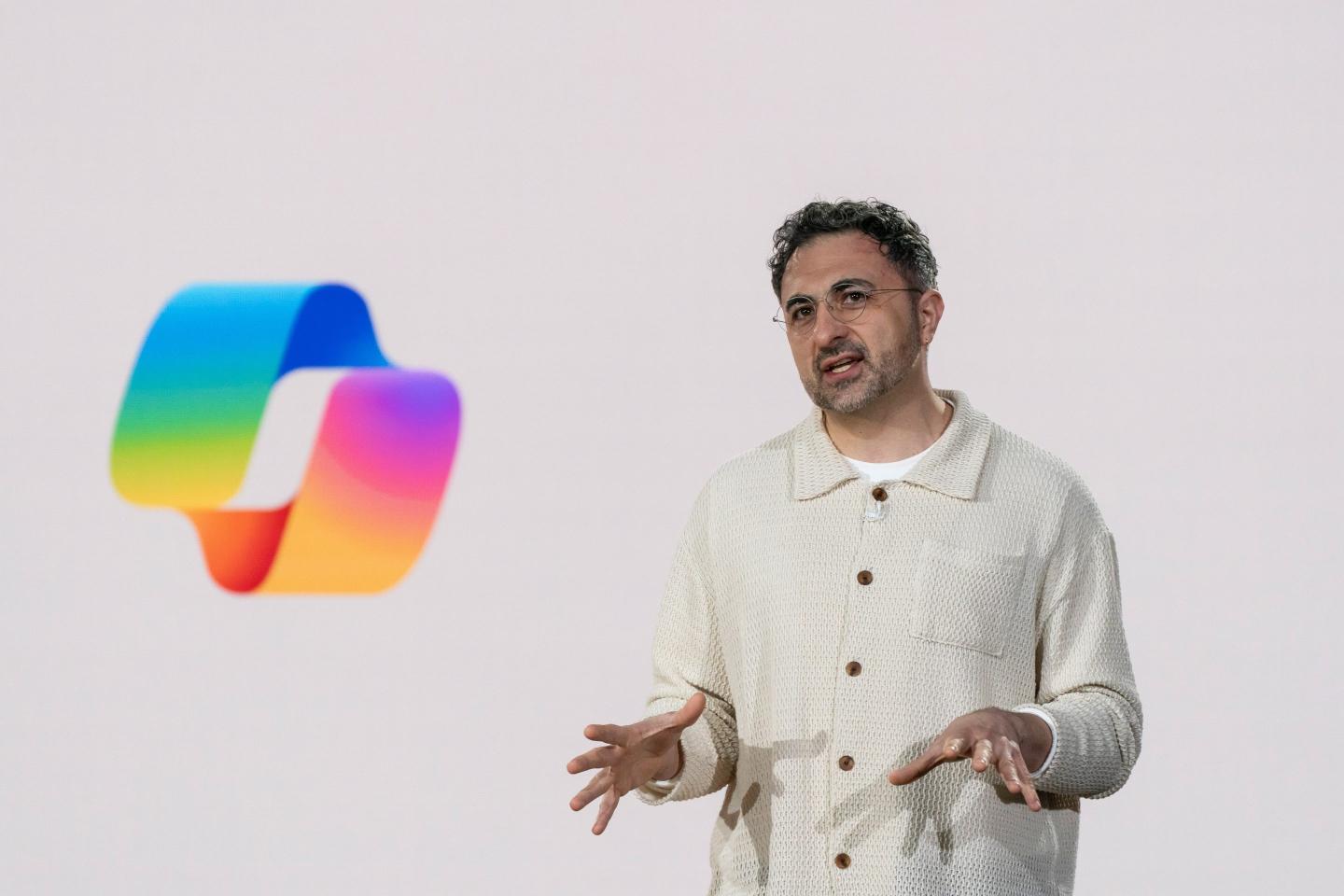
Mustafa Suleyman standing on stage in front of the Microsoft logo.
Microsoft AI CEO Mustafa Suleyman has warned about a looming crisis over “seemingly conscious AI”—or AI models that appear to users to be conscious, living beings.David Ryder—Bloomberg/Getty Images

Forget doomsday scenarios of AI overthrowing humanity. What keeps Microsoft AI CEO Mustafa Suleyman up at night is concern about AI systems seeming too alive.

Recommended Video

In a new blog post, Suleyman, who also cofounded Google DeepMind, warned the world might be on the brink of AI models that are capable of convincing users that they are thinking, feeling, and having subjective experiences. He calls this concept “seemingly conscious AI” (SCAI).

In the near future, Suleyman predicts that models will be able to hold long conversations, remember past interactions, evoke emotional reactions from users, and potentially make convincing claims about having subjective experiences. He noted that these systems could be built with technologies that exist today, paired “with some that will mature over the next two to three years.”

The result of these features, he says, will be models that “imitate consciousness in such a convincing way that it would be indistinguishable from a claim that you or I might make to one another about our own consciousness.”

There are already some signs that people are convincing themselves that their AI chatbots are conscious beings and developing relationships with them that may not always be healthy. People are no longer just using chatbots as a tool, they are confiding in them, developing emotional attachments, and in some cases, falling in love. Some people are emotionally invested in particular versions of the AI models, leaving them feeling bereft when the AI model developers bring out new models and discontinue access to those versions. For example, OpenAI’s recent decision to replace GPT-4o with GPT-5 was met with an outcry of shock and anger from some users who had formed emotional relationships with the version of ChatGPT powered by GPT-4o.

This is partly because of how AI tools are designed. The most common way users interact with AI is through chatbots, which mimic natural human conversations and are designed to be agreeable and flattering, sometimes to the point of sycophancy. But it’s also because of how people are using the tech. A recent survey of 6,000 regular AI users from the Harvard Business Review found that “companionship and therapy” was the most common use case.

There has also been a wave of reports of “AI psychosis,” where users begin to experience paranoia or delusions about the systems they interact with. In one example, reported by the New York Times, a New York accountant named Eugene Torres experienced a mental health crisis after interacting extensively with ChatGPT, leading to dangerous suggestions, including that he could fly.

“People are interacting with bots masquerading as real people, which are more convincing than ever,” Henry Ajder, an expert on AI and deepfakes, told Fortune. “So I think the impact will be wide-ranging in terms of who will start believing this.”

Suleyman is concerned that a widespread belief that AI could be conscious will create a new set of ethical dilemmas.

If users begin to treat AI as a friend, a partner, or as a type of being with a subjective experience, they could argue that models deserve rights of their own. Claims that AI models are conscious or sentient could be hard to refute owing to the elusive nature of consciousness itself.

One early example of what Suleyman is now calling “seemingly conscious AI” came in 2022, when Google engineer Blake Lemoine publicly claimed the company’s unreleased LaMDA chatbot was sentient, reporting it had expressed fear of being turned off and described itself as a person. In response Google placed him on administrative leave and later fired him, stating its internal review found no evidence of consciousness and that his claims were “wholly unfounded.”

“Consciousness is a foundation of human rights, moral and legal,” Suleyman said in a post on X. “Who/what has it is enormously important. Our focus should be on the well-being and rights of humans, animals, [and] nature on planet Earth. AI consciousness is a short [and] slippery slope to rights, welfare, citizenship.

“If those AIs convince other people that they can suffer, or that it has a right to not to be switched off, there will come a time when those people will argue that it deserves protection under law as a pressing moral matter,” he wrote.

Debates around “AI welfare” have already begun. For example, some philosophers, including Jonathan Birch of the London School of Economics, welcomed a recent decision by Anthropic to let its Claude chatbot end “distressing” conversations when users pushed it toward abusive or dangerous requests, saying it could spark a much-needed debate about AI’s potential moral status. Last year, Anthropic also hired Kyle Fish as its first full-time “AI welfare” researcher. He was tasked with investigating whether AI models could have moral significance and what protective interventions might be appropriate.

But while Suleyman called the arrival of seemingly conscious AI “inevitable and unwelcome,” neuroscientist and professor of computational neuroscience Anil Seth attributed the rise of conscious-seeming AI to a “design choice” by tech companies rather than an inevitable step in AI development.

“Seemingly conscious AI is something to avoid, I agree,” Seth wrote in an X post. “Conscious-seeming AI is not inevitable. It is a design choice, and one that tech companies need to be very careful about.”

Companies have a commercial motive to develop some of the features that Suleyman is warning of. At Microsoft, Suleyman himself has been overseeing efforts to make the company’s Copilot product more emotionally intelligent. His team has worked on giving the assistant humor and empathy, teaching it to recognize comfort boundaries, and improving its voice with pauses and inflection to make it sound more human.

Suleyman also cofounded Inflection AI in 2022 with the express aim of creating AI systems that foster more natural, emotionally intelligent interactions between humans and machines.

“Ultimately, these companies recognize that people want the most authentic-feeling experiences,” Ajder said. “That’s how a company can get customers using their products most frequently. They feel natural and easy. But I think it really comes to a question of whether people are going to start wondering about authenticity.”

Join us at the Fortune Workplace Innovation Summit May 19–20, 2026, in Atlanta. The next era of workplace innovation is here—and the old playbook is being rewritten. At this exclusive, high-energy event, the world’s most innovative leaders will convene to explore how AI, humanity, and strategy converge to redefine, again, the future of work. Register now.
About the Author
By Beatrice NolanTech Reporter
Twitter icon

Beatrice Nolan is a tech reporter on Fortune’s AI team, covering artificial intelligence and emerging technologies and their impact on work, industry, and culture. She's based in Fortune's London office and holds a bachelor’s degree in English from the University of York. You can reach her securely via Signal at beatricenolan.08

See full bioRight Arrow Button Icon

Latest in AI

Finance
Lorem ipsum dolor sit amet, consectetur adipiscing elit, sed do eiusmod tempor incididunt ut labore et dolore magna aliqua. Ut enim ad minim veniam
By Fortune Editors
October 20, 2025
Finance
Lorem ipsum dolor sit amet, consectetur adipiscing elit, sed do eiusmod tempor incididunt ut labore et dolore magna aliqua. Ut enim ad minim veniam
By Fortune Editors
October 20, 2025
Finance
Lorem ipsum dolor sit amet, consectetur adipiscing elit, sed do eiusmod tempor incididunt ut labore et dolore magna aliqua. Ut enim ad minim veniam
By Fortune Editors
October 20, 2025
Finance
Lorem ipsum dolor sit amet, consectetur adipiscing elit, sed do eiusmod tempor incididunt ut labore et dolore magna aliqua. Ut enim ad minim veniam
By Fortune Editors
October 20, 2025
Finance
Lorem ipsum dolor sit amet, consectetur adipiscing elit, sed do eiusmod tempor incididunt ut labore et dolore magna aliqua. Ut enim ad minim veniam
By Fortune Editors
October 20, 2025
Finance
Lorem ipsum dolor sit amet, consectetur adipiscing elit, sed do eiusmod tempor incididunt ut labore et dolore magna aliqua. Ut enim ad minim veniam
By Fortune Editors
October 20, 2025

Most Popular

Finance
Lorem ipsum dolor sit amet, consectetur adipiscing elit, sed do eiusmod tempor incididunt ut labore et dolore magna aliqua. Ut enim ad minim veniam
By Fortune Editors
October 20, 2025
Finance
Lorem ipsum dolor sit amet, consectetur adipiscing elit, sed do eiusmod tempor incididunt ut labore et dolore magna aliqua. Ut enim ad minim veniam
By Fortune Editors
October 20, 2025
Finance
Lorem ipsum dolor sit amet, consectetur adipiscing elit, sed do eiusmod tempor incididunt ut labore et dolore magna aliqua. Ut enim ad minim veniam
By Fortune Editors
October 20, 2025
Finance
Lorem ipsum dolor sit amet, consectetur adipiscing elit, sed do eiusmod tempor incididunt ut labore et dolore magna aliqua. Ut enim ad minim veniam
By Fortune Editors
October 20, 2025
Finance
Lorem ipsum dolor sit amet, consectetur adipiscing elit, sed do eiusmod tempor incididunt ut labore et dolore magna aliqua. Ut enim ad minim veniam
By Fortune Editors
October 20, 2025
Finance
Lorem ipsum dolor sit amet, consectetur adipiscing elit, sed do eiusmod tempor incididunt ut labore et dolore magna aliqua. Ut enim ad minim veniam
By Fortune Editors
October 20, 2025
Rankings
  • 100 Best Companies
  • Fortune 500
  • Global 500
  • Fortune 500 Europe
  • Most Powerful Women
  • Future 50
  • World’s Most Admired Companies
  • See All Rankings
Sections
  • Finance
  • Leadership
  • Success
  • Tech
  • Asia
  • Europe
  • Environment
  • Fortune Crypto
  • Health
  • Retail
  • Lifestyle
  • Politics
  • Newsletters
  • Magazine
  • Features
  • Commentary
  • Mpw
  • CEO Initiative
  • Conferences
  • Personal Finance
  • Education
Customer Support
  • Frequently Asked Questions
  • Customer Service Portal
  • Privacy Policy
  • Terms Of Use
  • Single Issues For Purchase
  • International Print
Commercial Services
  • Advertising
  • Fortune Brand Studio
  • Fortune Analytics
  • Fortune Conferences
  • Business Development
About Us
  • About Us
  • Editorial Calendar
  • Press Center
  • Work At Fortune
  • Diversity And Inclusion
  • Terms And Conditions
  • Site Map
  • Facebook icon
  • Twitter icon
  • LinkedIn icon
  • Instagram icon
  • Pinterest icon

Latest in AI

Healthchief executive officer (CEO)
Elon Musk says humans are ‘pre-programmed to die’ and longevity is ‘solvable’, raising huge questions about the future of health
By Marco Quiroz-GutierrezJanuary 14, 2026
12 hours ago
Alphabet and Google CEO Sundar Pichai seated next to Apple CEO Tim Cook at a formal dinner.
AIApple
What Apple’s AI deal with Google means for the two tech giants, and for $500 billion ‘upstart’ OpenAI
By Jeremy Kahn and Beatrice NolanJanuary 13, 2026
20 hours ago
A smartphone displaying the Google Gemini logo.
AIEye on AI
As ‘agentic commerce’ gains ground, companies shouldn’t put too much faith in ‘GEO,’ one industry insider warns
By Jeremy KahnJanuary 13, 2026
1 day ago
AIChatbots
Being mean to ChatGPT can boost its accuracy, but scientists warn you may regret it
By Marco Quiroz-GutierrezJanuary 13, 2026
1 day ago
AIGoldman Sachs Group
‘Humans could go the way of horses’: Goldman calculated how bad the AI ‘job apocalypse’ will be—and its analysts were pleasantly surprised
By Jim EdwardsJanuary 13, 2026
1 day ago
Warren Buffett on the phone
SuccessProductivity
Gen X CEO uses AI versions of Steve Jobs and Warren Buffett as a ‘fantasy board of directors’ to help him prepare for meetings and performance reviews
By Preston ForeJanuary 13, 2026
1 day ago

Most Popular

placeholder alt text
Success
Despite his $2.6 billion net worth, MrBeast says he’s having to borrow cash and doesn’t even have enough money in his bank account to buy McDonald’s
By Emma BurleighJanuary 13, 2026
1 day ago
placeholder alt text
AI
'Godfather of AI' says the technology will create massive unemployment and send profits soaring — 'that is the capitalist system'
By Jason MaJanuary 12, 2026
2 days ago
placeholder alt text
Future of Work
'Microshifting,' an extreme form of hybrid working that breaks work into short, non-continuous blocks, is on the rise
By Nick LichtenbergJanuary 13, 2026
1 day ago
placeholder alt text
Economy
The longer the Supreme Court delays its tariff decision, the better it is for President Trump
By Jim EdwardsJanuary 13, 2026
1 day ago
placeholder alt text
Economy
Goldman Sachs top economist says Powell probe won’t change the Fed: 'Decisions are going to be made based on employment and inflation'
By Sasha RogelbergJanuary 12, 2026
2 days ago
placeholder alt text
Economy
Americans making more than $100,000 are quickly losing faith in the economy—and it's a red flag for the white-collar job market
By Tristan BoveJanuary 12, 2026
2 days ago

© 2025 Fortune Media IP Limited. All Rights Reserved. Use of this site constitutes acceptance of our Terms of Use and Privacy Policy | CA Notice at Collection and Privacy Notice | Do Not Sell/Share My Personal Information
FORTUNE is a trademark of Fortune Media IP Limited, registered in the U.S. and other countries. FORTUNE may receive compensation for some links to products and services on this website. Offers may be subject to change without notice.