It turns out many Americans aren’t great at identifying which personal decisions contribute most to climate change.
A study recently published by the National Academy of Sciences found that when asked to rank actions, such as swapping a car that uses gasoline for an electric one, carpooling or reducing food waste, participants weren’t very accurate when assessing how much those actions contributed to climate change, which is caused mostly by the release of greenhouse gases that happen when fuels like gasoline, oil and coal are burned.
“People over-assign impact to actually pretty low-impact actions such as recycling, and underestimate the actual carbon impact of behaviors much more carbon intensive, like flying or eating meat,” said Madalina Vlasceanu, report co-author and professor of environmental social sciences at Stanford University.
The top three individual actions that help the climate, including avoiding plane flights, choosing not to get a dog and using renewable electricity, were also the three that participants underestimated the most. Meanwhile, the lowest-impact actions were changing to more efficient appliances and swapping out light bulbs, recycling, and using less energy on washing clothes. Those were three of the top four overestimated actions in the report.
There are many reasons people get it wrong
Vlasceanu said marketing focuses more on recycling and using energy-efficient light bulbs than on why flights or dog adoption are relatively bad for the climate, so participants were more likely to give those actions more weight.
How the human brain is wired also plays a role.
“You can see the bottle being recycled. That’s visible. Whereas carbon emissions, that’s invisible to the human eye. So that’s why we don’t associate emissions with flying,” said Jiaying Zhao, who teaches psychology and sustainability at the University of British Columbia.
Zhao added it’s easier to bring actions to mind that we do more often. “Recycling is an almost daily action, whereas flying is less frequent. It’s less discussed,” she said. “As a result, people give a higher psychological weight to recycling.”
Of course, there is also a lot of misleading information. For example, some companies tout the recycling they do while not telling the public about pollution that comes from their overall operations.
“There has been a lot of deliberate confusion out there to support policies that are really out of date,” said Brenda Ekwurzel, a climate scientist with the Union of Concerned Scientists, a nonprofit.
Why dogs have a big climate impact
Dogs are big meat eaters, and meat is a significant contributor to climate change. That is because many of the farm animals, which will become food, release methane, a greenhouse gas that contributes to climate change. Beef is especially impactful, in part because around the world cattle are often raised on land that was illegally deforested. Since trees absorb carbon dioxide, the most abundant greenhouse gas, cutting them to then raise cattle is a double whammy.
“People just don’t associate pets with carbon emissions. That link is not clear in people’s minds,” Zhao said.
Not all pets are the same, however. Zhao owns a dog and three rabbits.
“I can adopt 100 bunnies that will not be close to the emissions of a dog, because my dog is a carnivore,” she said.
The owner of a meat-eating pet can lower their impact by looking for food made from sources other than beef. Zhao, for example, tries to minimize her dog’s carbon footprint by feeding her less carbon-intensive protein sources, including seafood and turkey.
Pollution from air travel
Planes emit a lot of carbon dioxide and nitrogen oxides, also greenhouse gases. Additionally, planes emit contrails, or vapor trails that prevent planet-warming gases from escaping into space. A round-trip economy-class flight on a 737 from New York to Los Angeles produces more than 1,300 pounds of emissions per passenger, according to the International Civil Aviation Organization, a United Nations agency.
Skipping that single flight saves about as much carbon as swearing off eating all types of meat a year, or living without a car for more than three months, according to U.N. estimates.
Other decisions, both impactful and minor
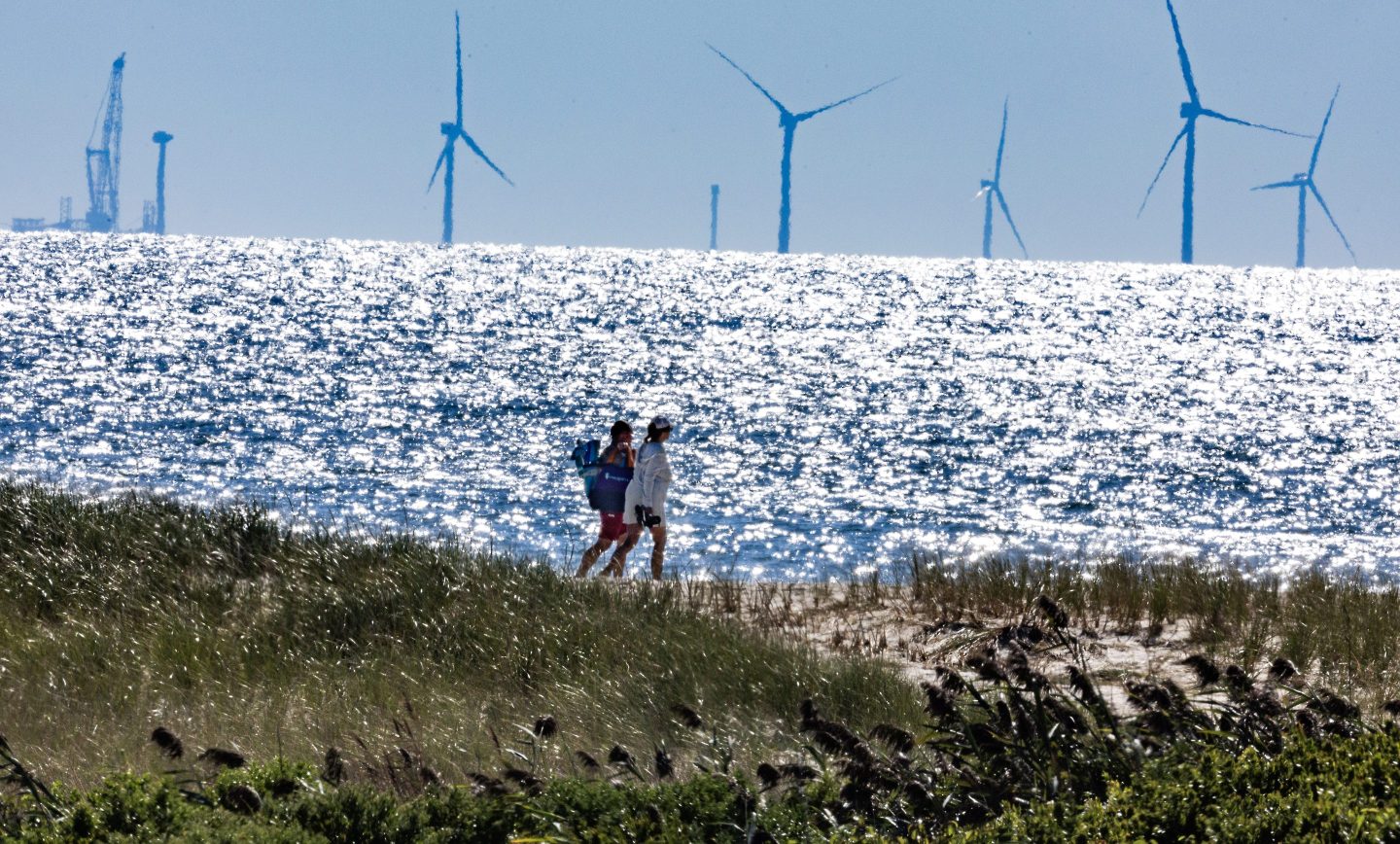
Switching to energy that comes from renewable sources, such as solar and wind, has a large positive impact because such sources don’t emit greenhouse gases. Some of the biggest climate decisions individuals can make include how they heat and cool their homes and the types of transportation they use. Switching to renewable energy minimizes the impact of both.
Recycling is effective at reducing waste headed for landfill, but its climate impact is relatively small because transporting, processing and repurposing recyclables typically relies on fossil fuels. Plus, less than 10% of plastics actually get recycled, according to the Environmental Protection Agency.
Other decisions with overestimated impact, including washing clothes in cold water and switching to more efficient light bulbs, are relatively less important. That is because those appliances have a relatively small impact compared to other things, such as plane flights and dogs, so improving on them, while beneficial, has a much more limited influence.
Experts say the best way to combat the human tendency to miscalculate climate-related decisions is with more readily available information. Zhao said that people are already more accurate in their estimations than they would have been 10 or 20 years ago because it’s easier to learn.
The study backs up that hypothesis. After participants finished ranking actions, the researchers corrected their mistakes, and they changed which actions they said they’d take to help the planet.
“People do learn from these interventions,” Vlasceanu said. “After learning, they are more willing to commit to actually more impactful actions.”
___
The Associated Press’ climate and environmental coverage receives financial support from multiple private foundations. AP is solely responsible for all content. Find AP’s standards for working with philanthropies, a list of supporters and funded coverage areas at AP.org.