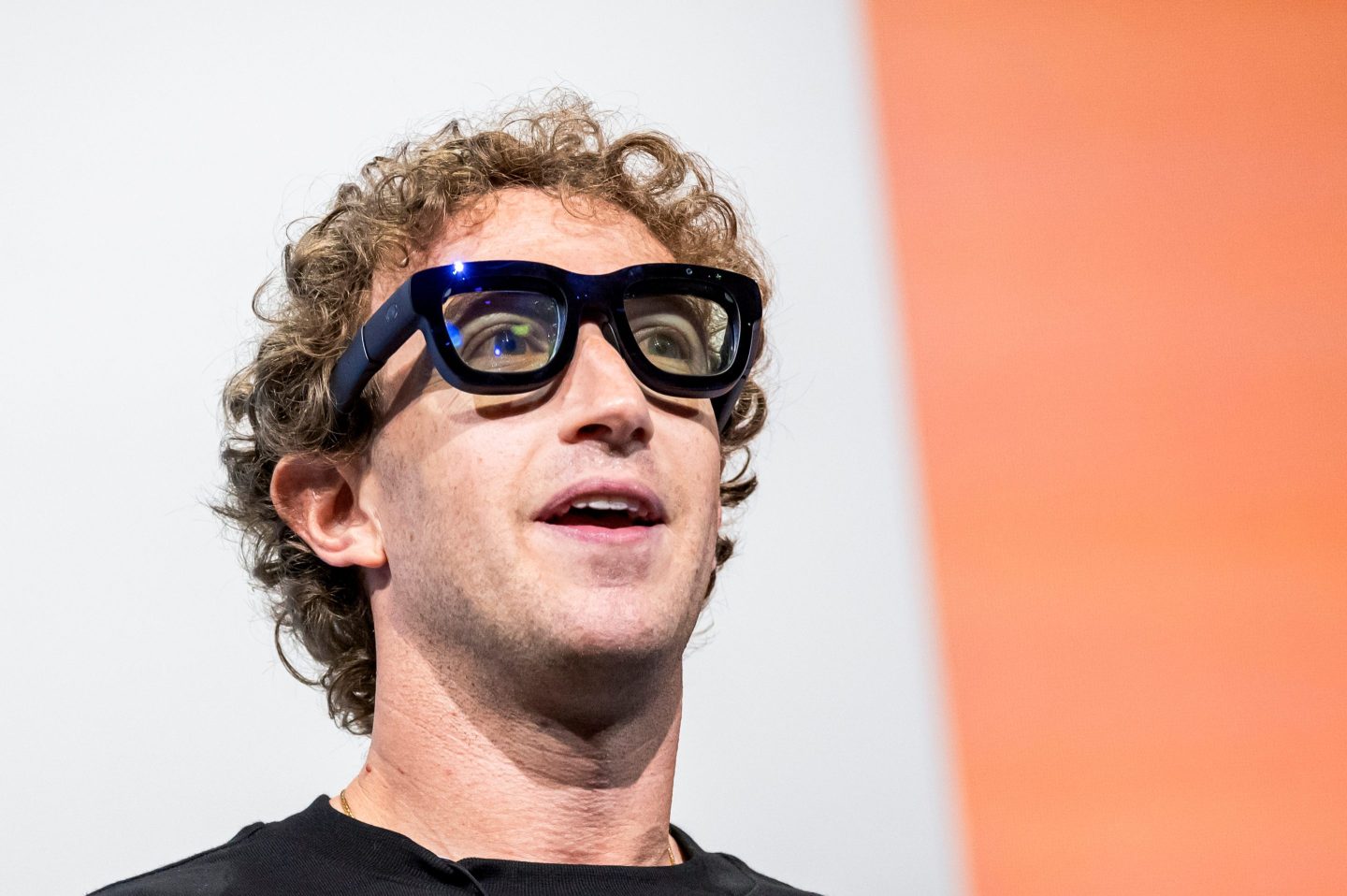
In the last week alone, Meta has poached more than a dozen top AI researchers from peer companies, giving each one immediate cash bonuses worth up to $100 million in a frantic effort to keep up with the AI arms race after falling behind market leaders such as OpenAI and Anthropic.
But perhaps Meta CEO Mark Zuckerberg should have remembered the timeless refrain from the classic 1960s hit Beatles song that money “can’t buy me love”—or, in this case, buy performance.
Many remember the implosion of Michael Eisner at Disney soon after losing $140 million hiring super-agent Michael Ovitz, who left in failure soon after joining. Similarly, Yahoo stole the celebrated Google star Henrique de Castro for about $60 million, but he washed out just after his first year in 2014.
There are many examples across sectors and across history which show that throwing up boatloads of money to poach top talent from competitors is never enough on its own. From sports to invention to investment management—and even our own field, academia—the road to decline is littered with cautionary tales of misplaced confidence from throwing money at top talent unsuccessfully. Greatness, it turns out, is harder to buy than it looks, and unless Zuckerberg can stem the underlying drivers of AI and innovation stagnation at Meta, then his recent hiring spree may only turn into another cautionary tale.
Fanfare to failure—messianic misfires
One reason poaching top talent from rivals frequently ends poorly is because oftentimes these firms are getting top talent after they have already hit their peak. Nowhere is this challenge more evident than in the world of sports, where most athletes peak young and deteriorate with age and injuries.
In the 1980s, New York Yankees owner George Steinbrenner became infamous for showering lavish megadeals on aging stars more famous for their decorated pasts than their current performance or future potential. As Steinbrenner established record after record for the largest contracts ever doled out, the Yankees languished in mediocrity as these aging stars turned into injury-plagued busts.
Their egos hurt, many of these frustrated, self-indulgent stars lashed out, turning the Yankees into a laughingstock of infighting, dysfunction, and needless drama amidst a championship drought of more than a decade. Ironically, it was only after Steinbrenner was suspended—after he tried to pay a gambler to dig up dirt on an aging star to get out of a particularly onerous bad contract—and after had-beens finally got out of the way of younger stars on the ascent that the Yankees finally rebounded.
That phenomenon of early-career productivity followed by late-career stagnation and decline is prevalent beyond sports. In academia, numerous studies have shown that university faculty and researchers, in fields ranging from the sciences to mathematics, publish most prolifically early in their careers, and that their research output declines dramatically after they achieve tenure. Similarly, Ivy League schools are often accused of trophy hiring, bringing in Nobel Prize winners and other high-profile scholars after they have already reached the peak of their intellectual contributions.
Messiahs brought in from the outside to rescue flailing enterprises rarely live up to expectations. Consider the case of Ray Ozzie, the widely admired software visionary who created groundbreaking software such as Lotus Notes and Groove. Ozzie was brought in by Bill Gates to rescue Microsoft in the early 2000s, but despite Ozzie’s peerless pedigree, he quickly flamed out at the company as he was unable to recreate his early-career magic and failed to develop much in the way of new software.
Correspondence between pay and performance
It’s not just about late-career decline. From the outset, the correspondence between pay and performance is less clear than one would expect—and sometimes even resembles a negative correlation.
In the business world, numerous studies have found that higher CEO pay has little impact on the long-term stock performance of companies. In fact, according to MSCI, average shareholder returns tend to be significantly higher when a company’s CEO is in the bottom 20% of pay, while share returns tend to be lower when a company’s CEO is in the top 20% of earners.
Indeed, revered CEOs such as Warren Buffett, Jensen Huang, and Jeff Bezos have been notorious for drawing comparatively low cash salaries despite extremely strong performance, similar to legendary founders such as Jim Sinegal of Costco, Bernie Marcus of Home Depot, and Jim Casey of UPS, who took their compensation largely in stock. On the other hand, far more controversial CEOs such as Adam Neumann at WeWork and Dennis Kozlowski at Tyco made out lavishly, misappropriating funds from their corporate treasuries while steering their companies into the ground.
Similarly, in our prior research on the historical investment underperformance of Connecticut’s public pension funds relative to all 50 state pension funds, we found that the more a state’s chief investment officer is paid, the worse their performance.
Innovative geniuses often go unrewarded financially
In Meta’s case, it’s clear that Zuckerberg is counting on his spending spree to fuel AI innovation as Meta falls behind its peers. This ignores a fundamental problem of innovation and inventiveness, which is that many of the innovative geniuses who devised transformative inventions failed to profit financially from their own ingenuity while more aggressive, entrepreneurial bystanders claimed credit and profit.
These examples include Tim Berners-Lee, who never earned a penny from the creation of the World Wide Web; Eli Whitney, who fared similarly from his invention of the cotton gin; Martin Cooper, the Motorola engineer who was the father of the modern handheld cellphone yet never profited from it; Robert Kearns, who invented the intermittent windshield wiper but was stuck in litigation for the rest of his life against the automakers to protect his patent; and Spencer Silver, a 3M engineer whose creation, the Post-it note, was requisitioned by colleagues who claimed credit for his invention.
Such inventive introverts transformed the world with inventions undergirding the industrial and technological revolutions, yet they were either unwilling or unable to play the game, falling prey to more aggressive and entrepreneurial personalities around them who commandeered the lucrative financial rewards.
Skating to where the puck is, not where the puck is going
If there were ever telltale signs of when the top of a bubble frenzy could be near, it would be the following: First, when every taxi driver and hairdresser is talking about it and diving in; second, when all the business school students are trying to get related jobs; and third, when firms are dishing out eye-popping cash bonuses to poach talent from competitors.
That is exactly what happened with Wall Street’s arms race for mortgage traders in the lead-up to the Great Financial Crisis, which offers some striking lessons for Meta. The then-CEO of Merrill Lynch, Stan O’Neal, offered cash bonuses of about $50 million to poach elite mortgage traders from competitors such as Credit Suisse and Bear Stearns, and authorized those mercenaries to take tremendous risks with little oversight. These traders then built a massive mortgage portfolio which quickly blew up when the 2008 crisis hit, with Merrill losing billions practically overnight and forced into a fire-sale merger with Bank of America.
In Meta’s case, poaching top AI engineers could represent a similar case of skating to where the puck is, not where the puck is going, as the rapid pace of innovation in AI has led to many of genuinely new AI breakthroughs coming from startups and upstart disruptors rather than entrenched incumbents. Furthermore, many engineers claim the advent of AI has resulted in coding becoming increasingly commoditized, turning some software developers into interchangeable parts.
Reliance on stars vs. cultures of inspiration
Already, leading voices within Meta are warning that Meta’s AI woes run much deeper, with a top AI researcher warning just this week of the “metastatic cancer” afflicting Meta’s AI development amidst a “culture of fear” and inept leadership.
This year’s Super Bowl offers a potent reminder of the pitfalls of relying on stars versus the potential for cultures of inspiration to propel underdogs toward unexpected heights. The odds favored the Kansas City Chiefs, with recognizable superstars such as Patrick Mahomes and Travis Kelce, but they fell to a dominant Philadelphia Eagles boasting a cohesive unit of ascendant stars who perhaps lacked the grandiosity and individual stature of any number of Chiefs players.
For Mark Zuckerberg, the Super Bowl is a potent reminder that money can buy lots of things—but it can’t buy everything.
The opinions expressed in Fortune.com commentary pieces are solely the views of their authors and do not necessarily reflect the opinions and beliefs of Fortune.
Read more:
- Mark Zuckerberg is determined to build an AI superteam—and he’s poaching from Sam Altman with multimillion-dollar pay packages
- Mark Zuckerberg has a literal list of AI all-stars to whom he’s offering fantastic sums of money. An expert explains why he’s hiring so aggressively
- Inside the rise of Alexandr Wang and Meta’s $14 billion bet that the MIT dropout will help bring AI supremacy
- Meta stock hits a record high as Mark Zuckerberg reveals poached new recruits from OpenAI, Anthropic and Google