
• Home
  • News
  • Fortune 500
  • Tech
  • Finance
  • Leadership
  • Lifestyle
  • Rankings
  • Multimedia
SuccessRetail

Labubu craze skyrocketed a small Beijing toy store to a $46.1 billion global success—now its CEO is China’s 10th richest man

Emma Burleigh
By
Emma Burleigh
Emma Burleigh
Reporter, Success
Down Arrow Button Icon
Emma Burleigh
By
Emma Burleigh
Emma Burleigh
Reporter, Success
Down Arrow Button Icon
June 18, 2025, 10:00 AM ET
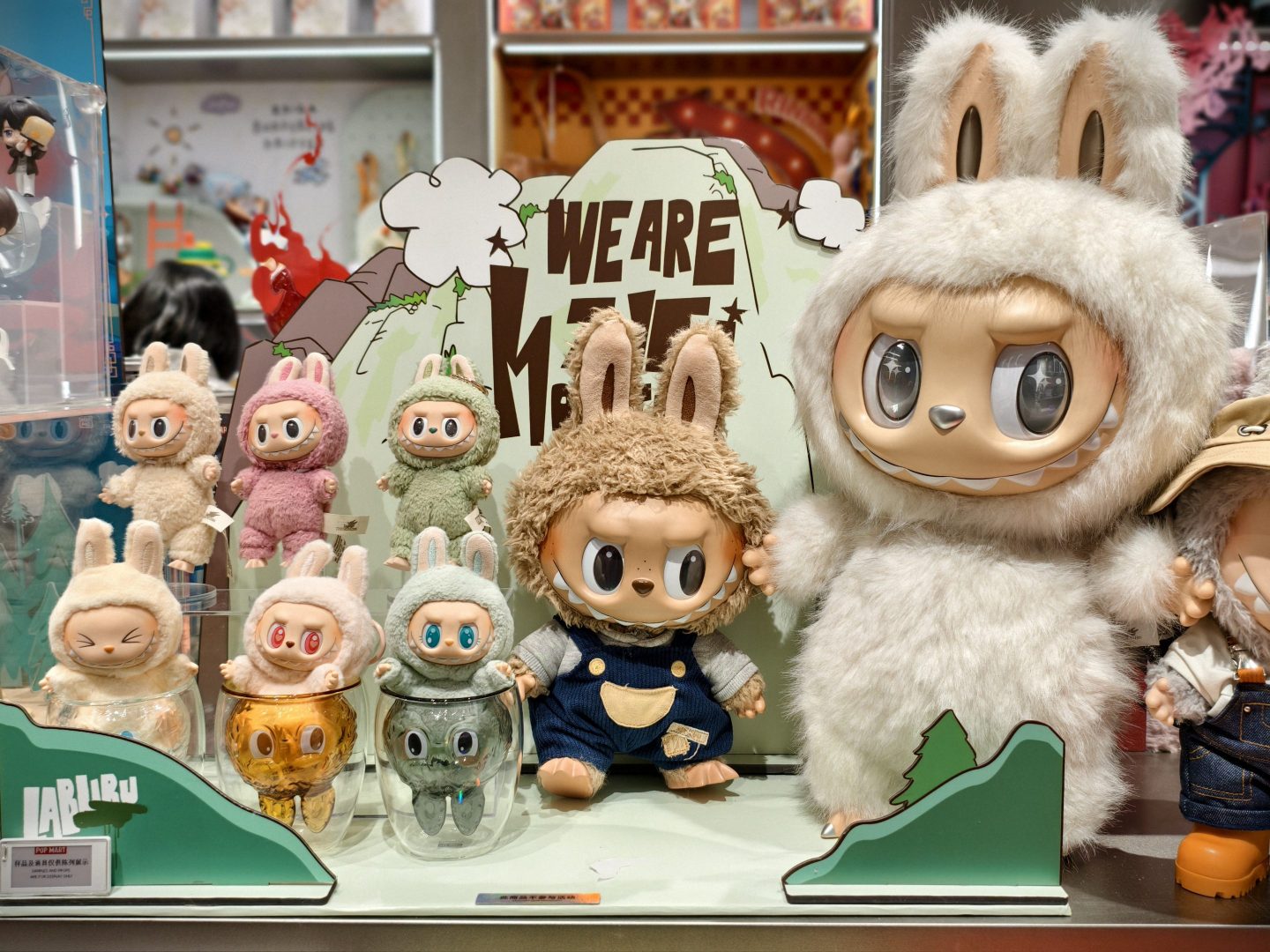
A Labubu display at a Pop Mart in Guangzhou, China.
A Labubu display at a Pop Mart in Guangzhou, China.VCG/VCG—Getty Images
  • Labubu toy maker Pop Mart started off as a small toy store in Beijing. Fifteen years later, the business is worth $46.1 billion, and its 38-year-old founder, Wang Ning, is now China’s 10th richest man. A huge part of this craze is driven by global Gen Z and millennial shoppers looking to revive their childhoods, with some getting in line as early as 2 a.m. for a chance to score the famous collectible toys. Its “blind boxes” are also bringing mystery back to the consumer experience.

Furry plush monsters are taking over the internet, with people bragging about their stacked collections and some rare collectibles being sold at auction for up to $170,000. Labubu dolls are causing a billion-dollar frenzy, and it all started when college graduate Wang Ning opened a toy store for grownups.

Recommended Video

Pop Mart is taking over the market, boasting a $46.1 billion market cap thanks to the success of its “blind boxes,” Labubu plushies, Crybaby figurines, Molly dolls, and other designer collectibles. The Chinese business reeled in $1.8 billion in total revenue last year, with $700 million coming from non-mainland consumers. It’s having a moment in the U.S. in particular: Getting your hands on its signature Labubu doll can set you back anywhere between $40 and $200, alongside an hours-long wait in line.

“In the U.S., we’ve had families queuing at 6 a.m. for store openings and first-time collectors grabbing blind boxes alongside seasoned fans,” Emily Brough, Pop Mart’s head of IP licensing for the Americas, told Fortune.

“With a goal of 50 U.S. store openings this year, Pop Mart’s community is only growing,” she added.

Pop Mart is now a phenomenon shaking up the market—with over 530 stores worldwide, an amusement park in Beijing, and 46 million shopping members in China alone. But it all started when Wang, now 38, launched the company in 2010 as a small toy store in the country’s capital.

From a toy store in Beijing’s Silicon Valley to a $46.1 billion phenomenon

Wang Ning is now the 10th richest man in China—with a net worth of $22.7 billion based on his Pop Mart stake—thanks to a career choice he made right out of high school. 

One year after graduating with an advertising degree from Zhengzhou University in 2009, he opened a small Pop Mart store in Zhongguancun, informally known as China’s Silicon Valley. He was a young entrepreneur inspired by Hong Kong’s Log-On retail chain. His original store sold toys, comics, and phone accessories—but by 2014, Wang realized the true market potential of selling collectible toys. 

The company’s next breakthrough happened two years later, when it partnered with Hong Kong artist Kenny Wong to launch the “Molly” line of designer toys. But the run-of-the-mill series had an interesting catch: The collection was sold in blind boxes, where shoppers didn’t know which toy they would receive. Igniting a sense of surprise, mystery, and play, consumers heavily bought into the format. 

In December 2020, the Chinese toy behemoth went public, achieving a market cap of $12.5 billion and raising $676 million in an initial public offering. And things haven’t slowed down since; last year, its shares skyrocketed 370%, putting Pop Mart ahead of most on the MSCI China Index.

The Gen Z–fueled Labubu and blind-box craze 

The popularity of Labubu dolls among young American adults might seem perplexing. Designed by Netherlands-based artist Kasing Lung, the toy merges a plush monkey’s body with the face of an elf bearing a wicked grin. 

The public is divided on whether the doll is cute or not—but it’s undoubtedly become a staple purse token and huggable collectible for millions. 

“We’ve seen the community play a huge role in fueling this movement—whether it’s fans sharing display shelves, TikTok videos, or styling their bag charms,” Pop Mart’s Brough said, adding that “occasional celebrity moments certainly add visibility.”

Superstars Dua Lipa and Rihanna both have been paparazzied rocking Labubus on their designer bags—and even Blackpink’s Lisa was pictured cuddled up to the toy. It’s all part of the toy’s organic social-media takeover, with people posting videos of themselves waiting in line at 2 a.m. to snag a Labubu, and others showing off their collections to envious viewers. But it’s not little kids queuing at the mall—it’s young adults looking to reconnect with childhood fun.

Noted Brough, “We’re seeing surging interest from Gen Z and millennials, particularly those drawn to fashion, art, and nostalgia-infused collectibles.”


Fortune Brainstorm AI returns to San Francisco Dec. 8–9 to convene the smartest people we know—technologists, entrepreneurs, Fortune Global 500 executives, investors, policymakers, and the brilliant minds in between—to explore and interrogate the most pressing questions about AI at another pivotal moment. Register here.
About the Author
Emma Burleigh
By Emma BurleighReporter, Success

Emma Burleigh is a reporter at Fortune, covering success, careers, entrepreneurship, and personal finance. Before joining the Success desk, she co-authored Fortune’s CHRO Daily newsletter, extensively covering the workplace and the future of jobs. Emma has also written for publications including the Observer and The China Project, publishing long-form stories on culture, entertainment, and geopolitics. She has a joint-master’s degree from New York University in Global Journalism and East Asian Studies.

See full bioRight Arrow Button Icon

Latest in Success

Construction workers are getting a salary bump for working on data center projects during the AI boom.
AIU.S. economy
Construction workers are earning up to 30% more and some are nabbing six-figure salaries in the data center boom
By Nino PaoliDecember 5, 2025
11 hours ago
Young family stressed over finances
SuccessWealth
People making six-figure salaries used to be considered rich—now households earning nearly $200K a year aren’t considered upper-class in some states
By Emma BurleighDecember 5, 2025
11 hours ago
Reed Hastings
SuccessCareers
Netflix cofounder started his career selling vacuums door-to-door before college—now, his $440 billion streaming giant is buying Warner Bros. and HBO
By Preston ForeDecember 5, 2025
12 hours ago
Steve Jobs holds up the first iPod Nano
Big TechApple
Apple is experiencing its biggest leadership shake-up since Steve Jobs died, with over half a dozen key executives headed for the exits
By Dave SmithDecember 5, 2025
13 hours ago
SuccessMacKenzie Scott
MacKenzie Scott is trying to close the DEI gap in higher ed, with $155 million in donations this week alone
By Sydney LakeDecember 5, 2025
13 hours ago
SuccessCareers
Elon Musk and Bill Gates are wrong about AI replacing all jobs. ‘That’s not what we’re seeing,’ LinkedIn exec says—the opposite is happening
By Orianna Rosa RoyleDecember 5, 2025
14 hours ago

Most Popular

placeholder alt text
Economy
Two months into the new fiscal year and the U.S. government is already spending more than $10 billion a week servicing national debt
By Eleanor PringleDecember 4, 2025
2 days ago
placeholder alt text
Success
‘Godfather of AI’ says Bill Gates and Elon Musk are right about the future of work—but he predicts mass unemployment is on its way
By Preston ForeDecember 4, 2025
2 days ago
placeholder alt text
Success
Nearly 4 million new manufacturing jobs are coming to America as boomers retire—but it's the one trade job Gen Z doesn't want
By Emma BurleighDecember 4, 2025
2 days ago
placeholder alt text
Success
Nvidia CEO Jensen Huang admits he works 7 days a week, including holidays, in a constant 'state of anxiety' out of fear of going bankrupt
By Jessica CoacciDecember 4, 2025
1 day ago
placeholder alt text
Real Estate
‘There is no Mamdani effect’: Manhattan luxury home sales surge after mayoral election, undercutting predictions of doom and escape to Florida
By Sasha RogelbergDecember 4, 2025
1 day ago
placeholder alt text
Economy
Tariffs and the $38 trillion national debt: Kevin Hassett sees ’big reductions’ in deficit while Scott Bessent sees a ‘shrinking ice cube’
By Nick LichtenbergDecember 4, 2025
1 day ago
Rankings
  • 100 Best Companies
  • Fortune 500
  • Global 500
  • Fortune 500 Europe
  • Most Powerful Women
  • Future 50
  • World’s Most Admired Companies
  • See All Rankings
Sections
  • Finance
  • Leadership
  • Success
  • Tech
  • Asia
  • Europe
  • Environment
  • Fortune Crypto
  • Health
  • Retail
  • Lifestyle
  • Politics
  • Newsletters
  • Magazine
  • Features
  • Commentary
  • Mpw
  • CEO Initiative
  • Conferences
  • Personal Finance
  • Education
Customer Support
  • Frequently Asked Questions
  • Customer Service Portal
  • Privacy Policy
  • Terms Of Use
  • Single Issues For Purchase
  • International Print
Commercial Services
  • Advertising
  • Fortune Brand Studio
  • Fortune Analytics
  • Fortune Conferences
  • Business Development
About Us
  • About Us
  • Editorial Calendar
  • Press Center
  • Work At Fortune
  • Diversity And Inclusion
  • Terms And Conditions
  • Site Map

© 2025 Fortune Media IP Limited. All Rights Reserved. Use of this site constitutes acceptance of our Terms of Use and Privacy Policy | CA Notice at Collection and Privacy Notice | Do Not Sell/Share My Personal Information
FORTUNE is a trademark of Fortune Media IP Limited, registered in the U.S. and other countries. FORTUNE may receive compensation for some links to products and services on this website. Offers may be subject to change without notice.