• Home
  • Latest
  • Fortune 500
  • Finance
  • Tech
  • Leadership
  • Lifestyle
  • Rankings
  • Multimedia

Trendingnow

1

Amazon workers on food stamps have tripled despite its record revenue—and it’s just the latest evidence of the new economy of shrinking labor shares

2

Jamie Dimon says the American Dream is slipping away. The dysfunctional baby boomer retirement wave is a major part of the problem

3

After Trump says he doesn't need Congress for his $5,000 'dividend,' House Speaker Mike Johnson says not so fast but vows to try to make it happen

1

Amazon workers on food stamps have tripled despite its record revenue—and it’s just the latest evidence of the new economy of shrinking labor shares

2

Jamie Dimon says the American Dream is slipping away. The dysfunctional baby boomer retirement wave is a major part of the problem

3

After Trump says he doesn't need Congress for his $5,000 'dividend,' House Speaker Mike Johnson says not so fast but vows to try to make it happen
HealthCancer

Exercise, including regular walks, boosts colon cancer survival rates—and even rivals some drugs, study shows

By
Carla K. Johnson
Carla K. Johnson
and
The Associated Press
Down Arrow Button Icon
By
Carla K. Johnson
Carla K. Johnson
and
The Associated Press
Down Arrow Button Icon
June 1, 2025, 4:56 PM ET
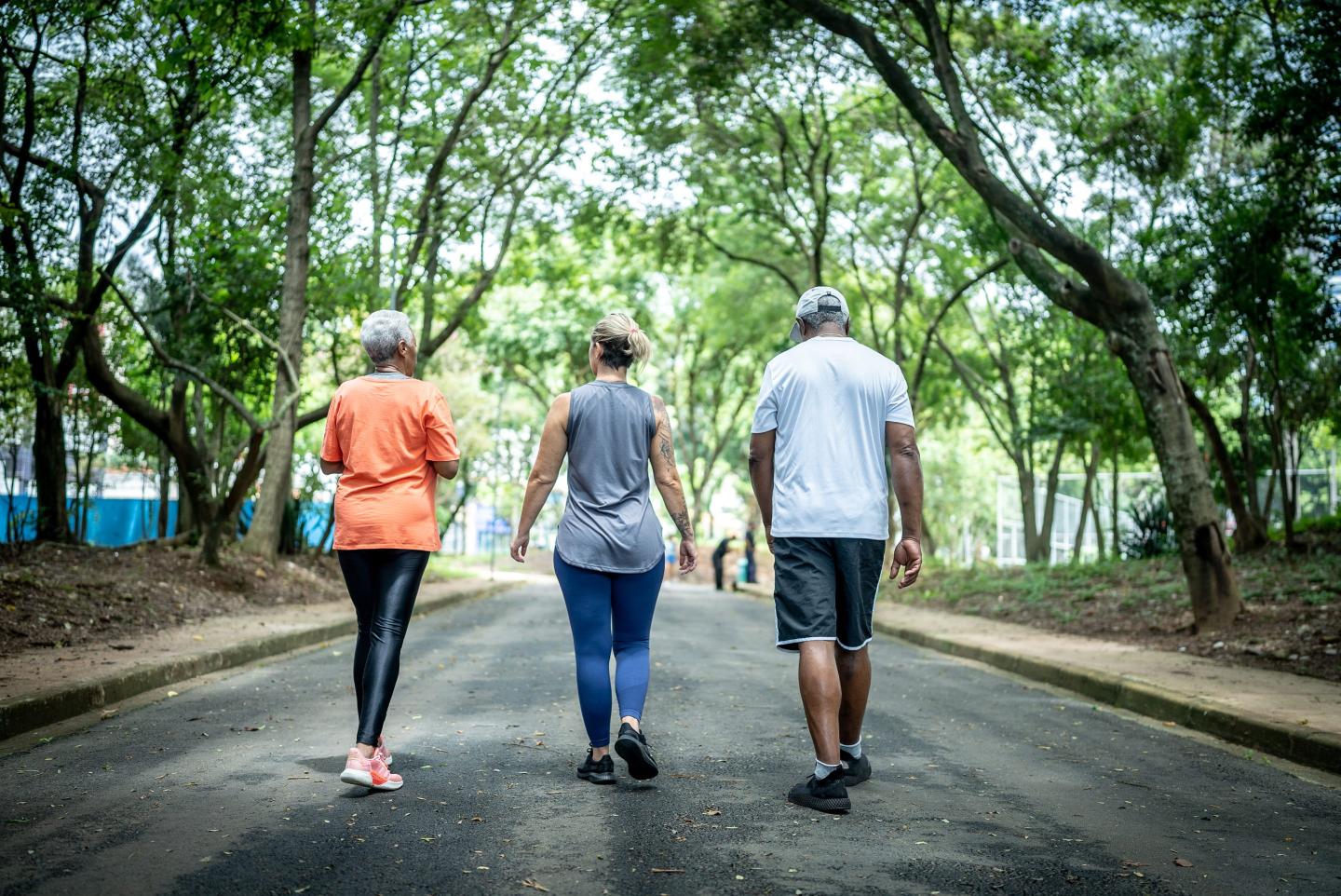
After eight years, the people in the structured exercise program had 28% fewer cancers and 37% fewer deaths from any cause.
After eight years, the people in the structured exercise program had 28% fewer cancers and 37% fewer deaths from any cause. Getty Images
Google source logo
Add Fortune on Google for similar content.

A three-year exercise program improved survival in colon cancer patients and kept disease at bay, a first-of-its-kind international experiment showed.

Recommended Video

With the benefits rivaling some drugs, experts said cancer centers and insurance plans should consider making exercise coaching a new standard of care for colon cancer survivors. Until then, patients can increase their physical activity after treatment, knowing they are doing their part to prevent cancer from coming back.

“It’s an extremely exciting study,” said Dr. Jeffrey Meyerhardt of Dana-Farber Cancer Institute, who wasn’t involved in the research. It’s the first randomized controlled trial to show a reduction in cancer recurrences and improved survival linked to exercise, Meyerhardt said.

Prior evidence was based on comparing active people with sedentary people, a type of study that can’t prove cause and effect. The new study — conducted in Canada, Australia, the United Kingdom, Israel and the United States — compared people who were randomly selected for an exercise program with those who instead received an educational booklet.

“This is about as high a quality of evidence as you can get,” said Dr. Julie Gralow, chief medical officer of the American Society of Clinical Oncology. “I love this study because it’s something I’ve been promoting but with less strong evidence for a long time.”

The findings were featured Sunday at ASCO’s annual meeting in Chicago and published by the New England Journal of Medicine. Academic research groups in Canada, Australia and the U.K. funded the work.

Researchers followed 889 patients with treatable colon cancer who had completed chemotherapy. Half were given information promoting fitness and nutrition. The others worked with a coach, meeting every two weeks for a year, then monthly for the next two years.

Coaches helped participants find ways to increase their physical activity. Many people, including Terri Swain-Collins, chose to walk for about 45 minutes several times a week.

“This is something I could do for myself to make me feel better,” said Swain-Collins, 62, of Kingston, Ontario. Regular contact with a friendly coach kept her motivated and accountable, she said. “I wouldn’t want to go there and say, ‘I didn’t do anything,’ so I was always doing stuff and making sure I got it done.”

After eight years, the people in the structured exercise program not only became more active than those in the control group but also had 28% fewer cancers and 37% fewer deaths from any cause. There were more muscle strains and other similar problems in the exercise group.

“When we saw the results, we were just astounded,” said study co-author Dr. Christopher Booth, a cancer doctor at Kingston Health Sciences Centre in Kingston, Ontario.

Exercise programs can be offered for several thousand dollars per patient, Booth said, “a remarkably affordable intervention that will make people feel better, have fewer cancer recurrences and help them live longer.”

Researchers collected blood from participants and will look for clues tying exercise to cancer prevention, whether through insulin processing or building up the immune system or something else.

Swain-Collins’ coaching program ended, but she is still exercising. She listens to music while she walks in the countryside near her home.

That kind of behavior change can be achieved when people believe in the benefits, when they find ways to make it fun and when there’s a social component, said paper co-author Kerry Courneya, who studies exercise and cancer at the University of Alberta. The new evidence will give cancer patients a reason to stay motivated.

“Now we can say definitively exercise causes improvements in survival,” Courneya said.

Exclusive: In a new sit-down interview with Fortune, OpenAI CEO Sam Altman explains safety standards are "not at a place" to push AI capabilities much further and warns AI beyond human control is "absolutely" possible. Watch or listen here.
About the Authors
By Carla K. Johnson
See full bioRight Arrow Button Icon
By The Associated Press
See full bioRight Arrow Button Icon
Google source logo
Add Fortune on Google for similar content.

Latest in Health


Most Popular

Fortune Secondary Logo
Rankings
  • 100 Best Companies
  • Fortune 500
  • Global 500
  • Fortune 500 Europe
  • Most Powerful Women
  • World's Most Admired Companies
  • See All Rankings
  • Lists Calendar
Sections
  • Finance
  • Fortune Crypto
  • Features
  • Leadership
  • Health
  • Commentary
  • Success
  • Retail
  • Mpw
  • Tech
  • Lifestyle
  • CEO Initiative
  • Asia
  • Politics
  • Conferences
  • Europe
  • Newsletters
  • Personal Finance
  • Environment
  • Magazine
  • Education
Customer Support
  • Frequently Asked Questions
  • Customer Service Portal
  • Privacy Policy
  • Terms Of Use
  • Single Issues For Purchase
  • International Print
Commercial Services
  • Advertising
  • Fortune Brand Studio
  • Fortune Analytics
  • Fortune Conferences
  • Business Development
  • Group Subscriptions
About Us
  • About Us
  • Press Center
  • Work At Fortune
  • Terms And Conditions
  • Site Map
  • About Us
  • Press Center
  • Work At Fortune
  • Terms And Conditions
  • Site Map
  • Facebook icon
  • Twitter icon
  • LinkedIn icon
  • Instagram icon
  • TikTok icon
  • YouTube icon

    Latest in Health


    Most Popular

    © 2026 Fortune Media IP Limited. All Rights Reserved. Use of this site constitutes acceptance of our Terms of Use and Privacy Policy | CA Notice at Collection and Privacy Notice | Do Not Sell/Share My Personal Information
    FORTUNE is a trademark of Fortune Media IP Limited, registered in the U.S. and other countries. FORTUNE may receive compensation for some links to products and services on this website. Offers may be subject to change without notice.