- “Shadow banking” now accounts for $250 trillion, or 49% of the world’s financial assets, according to the Financial Stability Board. Hedge funds manage 15 times as many assets combined as they did in 2008. The recent spike in bond yields—caused by hedge funds unwinding heavily leveraged trades—has some people worrying this largely unregulated business could pose a 2008-style threat to the financial system.
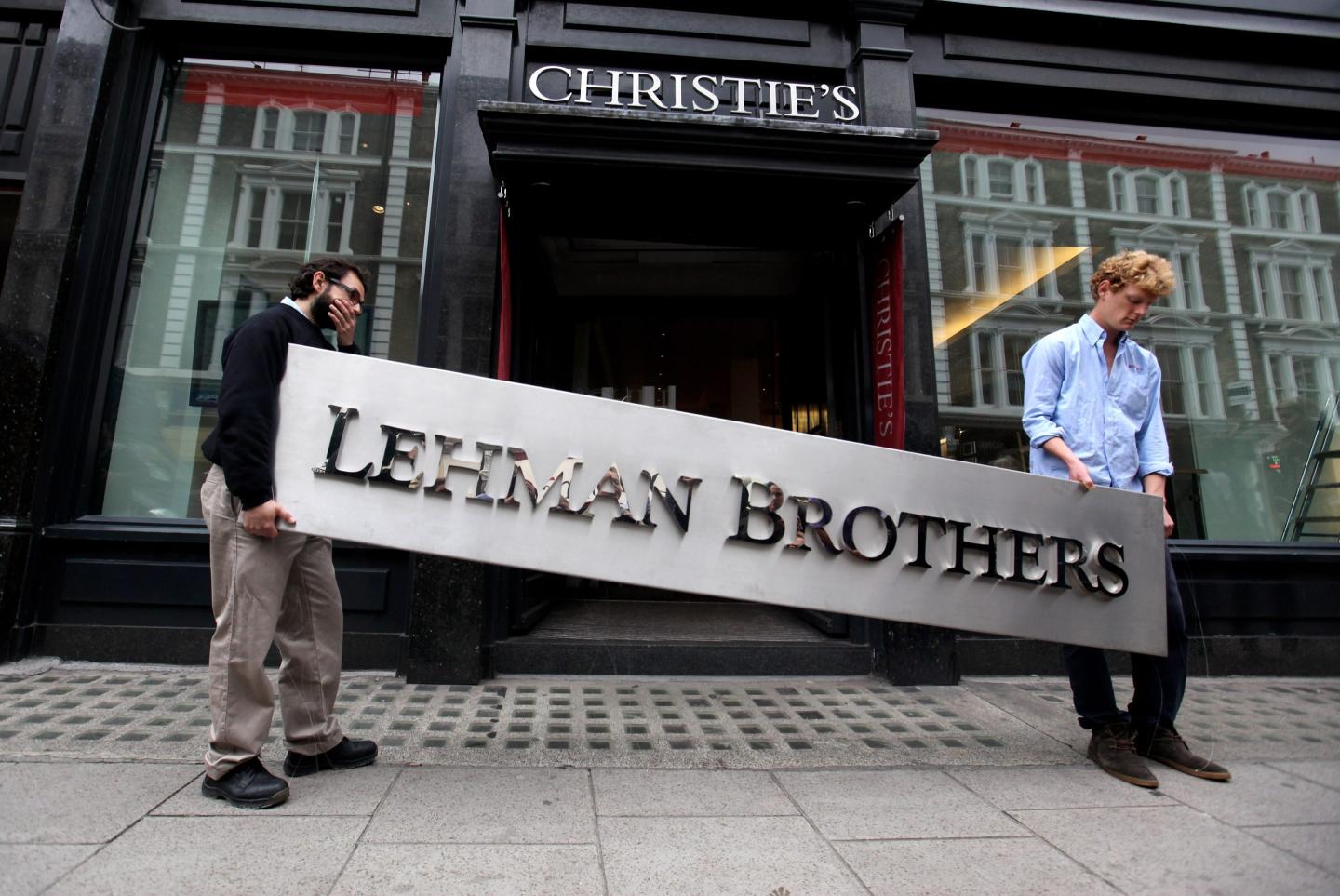
Economist Paul McCulley coined the term “shadow banking” in 2007, just over a year before Lehman Brothers collapsed. Soon it became clear that easy credit had helped fuel the subprime mortgage meltdown that brought the global financial system to its knees. Nearly two decades later, a bond market selloff triggered by President Donald Trump’s chaotic tariff rollout has sparked fears of a similar liquidity crisis.
The Great Recession highlighted how various institutions besides banks engage in lending without the same level of regulatory scrutiny applied to banks, even if they are also crucial to the health of the broader financial system. This time, however, the focus has shifted from investment banks and mortgage originators to hedge funds and private equity firms. For example, an unusual spike in U.S. Treasury yields, which rise as the price of bonds fall, has put a spotlight on how highly leveraged hedge fund trades help keep money markets humming—but might also pose a wider threat to the economy when they unravel.
Banks, of course, turn cash deposits from customers into long-term, illiquid assets like mortgages and other types of loans to consumers and businesses. Shadow banking institutions essentially do the same thing, but by raising and borrowing funds from investors instead of using consumer deposits.
While the “shadow banking” descriptor might sound sinister, there is nothing inherently bad about it, said Amit Seru, a professor of finance at the Stanford Graduate School of Business and senior fellow at the university’s Hoover Institution, a conservative-leaning think tank. In fact, shifting risky lending outside traditional banking can improve the financial system’s resilience.
“That’s often a point which is lost,” he told Fortune.
Hedge funds can take much bigger risks than banks because they raise capital from investors who often agree to “lock up” their money for an extended period, helping insulate the firm from short-term losses. As Seru noted, these investors often facilitate price discovery in markets for bonds and other securities.
One example is the so-called basis trade, when hedge funds buy Treasuries and sell futures contracts linked to those bonds to take advantage of tiny price discrepancies between them. By profiting off the arbitrage, these firms address a fundamental imbalance in credit markets created because mutual funds, pension funds, insurance companies, and other asset managers have high demand for Treasury futures.
But hedge funds must borrow heavily to make the service worthwhile, sometimes using up to 50 to 100 times leverage, so markets for short-term debt can be hit hard when the $800 billion trade unwinds.
“That creates ripple effects,” Seru said. “You always need to worry about ripple effects.”
Filling in for Lehman Brothers
Just because hedge funds are not funded by consumer deposits doesn’t mean the government may not be forced to step in when things go south. A decade before the controversial bank bailouts in 2008, hedge fund Long-Term Capital Management was also deemed “too big to fail.”
LTCM’s business centered on making highly leveraged bets on arbitrage opportunities in bond markets. It eventually came to hold about 5% of the world’s fixed-income assets, but the firm took unsustainable losses when Russia defaulted on its debt in 1998. To prevent a broader crisis, the U.S. government orchestrated a $3.6 billion rescue package—a massive sum at the time—from Wall Street banks that allowed the firm to liquidate in an orderly fashion.
“The exposures that we are dealing with now, I think, are much bigger than that,” said Itay Goldstein, finance department chair at the University of Pennsylvania’s Wharton School.
Ten years later, Lehman Brothers and Bear Stearns failed, threatening to bring much of America’s banking system, as well as federally backed enterprises like Fannie Mae and Freddie Mac, down with them. Neither investment bank took consumer deposits, but markets for short-term debt seized anyway. Suddenly, as a broad credit crunch ensued, banks and corporations were starved of capital.
Along with dramatically increasing regulation and oversight on the country’s biggest banks, the subsequent Dodd-Frank reform legislation also addressed nonbank lenders.
Still, the shadow sector has exploded since the financial crisis. It now accounts for $250 trillion, or 49% of the world’s financial assets, according to the Financial Stability Board, more than doubling the growth rate of traditional banking in 2023. Hedge funds, in particular, manage 15 times as many assets combined as they did in 2008, per Bloomberg.
The Volcker Rule, part of Dodd-Frank, banned investment banks from proprietary trading and, therefore, serving as market makers by aggressively pursuing arbitrage opportunities. Hedge funds have stepped in to fill the void. Their reliance on short-term debt and relative lack of oversight, however, poses similar concerns to 2008: They are now very big, and they may be “too big to fail.”
“If they blow up, this is going to affect other parts of the financial system, including banks, and then spill over to the real economy,” Goldstein said.
In fact, lending to institutions like hedge funds, private equity and credit firms, and buy-now, pay-later companies is the fastest-growing part of the U.S. banking system, noted Michael Green, portfolio manager and chief strategist at Simplify Asset Management, an ETF provider. Loans to the shadow banking sector have surpassed $1.2 trillion, according to weekly data from the Federal Reserve. Green, who founded a hedge fund seeded by George Soros and managed the personal capital of Peter Thiel, sees clear risk of a 2008-style calamity.
“It’s dramatically more likely,” he said, “like, not even close.”
For example, when it comes to the basis trade, periods of market stress can leave hedge funds vulnerable to margin calls and other pressures to liquidate their positions. When hedge funds dump massive amounts of Treasuries, however, the market may struggle to absorb them. Concerns about illiquidity risks can then spill over into repo markets, a cornerstone of short-term lending, where U.S. debt is the dominant form of collateral.
This scenario played out during the early days of the COVID-19 pandemic, compelling the Federal Reserve to purchase $1.6 trillion in Treasuries over a few weeks. During the recent selloff, economists and other market watchers have looked closely for signs the central bank would again need to intervene. Over the past two years, America’s 10 largest hedge funds have more than doubled their repo borrowing to $1.43 trillion, according to the Office of Financial Research.
Regulating hedge funds
Some academics say this arrangement is not ideal and have proposed the Fed set up a lending facility for hedge funds to address these types of crises in the Treasury market. But that’s a far less realistic scenario if congressional Republicans persuade Treasury Secretary Scott Bessent to curtail the government’s ability to designate major investment firms as systemically important, or “too big to fail.”
There are persistent tradeoffs in regulating these types of shadow-banking institutions, Seru said. Treat them more like traditional banks, and you inhibit price discovery and the efficient movement of funds from savers to users. But the threat of contagion looms, even if firms are just risking their own capital.
“You can’t have it both ways,” Seru said.
Also, tightening the screws on just hedge funds likely won’t help if it enables another type of institution to step in and essentially do the same thing. After all, that’s what happened when hedge funds took advantage of the increased scrutiny on investment banks.
“I’m not seeing how this is making the financial system safer,” Goldstein said.
While Seru worries about heavy-handed oversight, he said regulators need to focus on transparency in both public and private markets. For example, if hedge funds are taking on lots of risk, it’s important to know if they are linked to lenders who are backstopped by the government, like the big Wall Street banks.
If exposure to the broader system is significant, he said, that’s when measures like capital requirements should be applied to shadow-banking institutions. But Seru warns a brewing crisis—even when it involves traditional, highly regulated lenders and is seemingly obvious in hindsight—can be hard to spot, citing the collapse of Silicon Valley Bank in 2023.
“One’s got to be a bit humble on what the regulators can catch and what the markets can catch,” Seru said, “and realize that there [are] going to be issues in both sectors.”
Especially when complex risks lurk in the shadows.