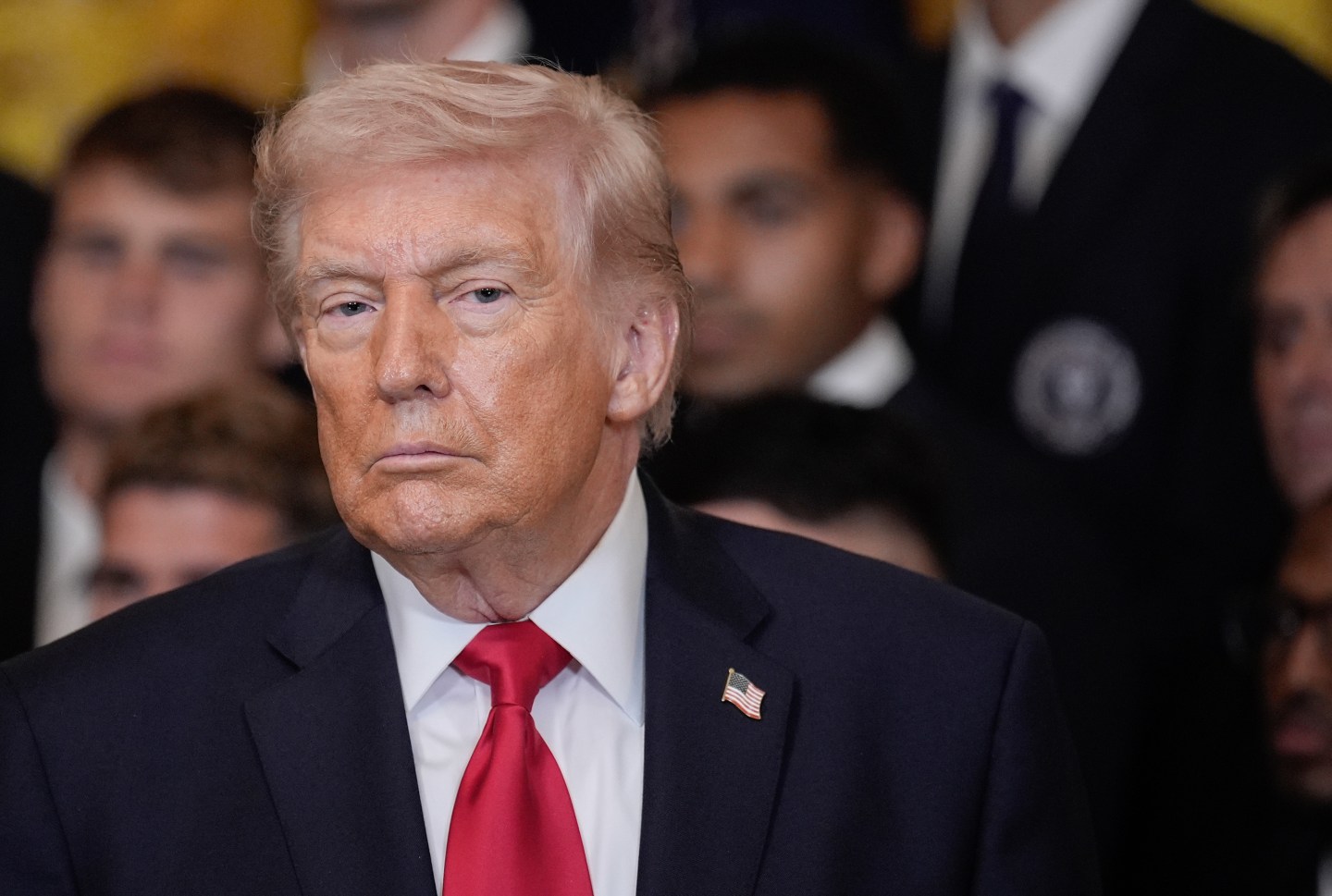
The global trade ecosystem has been overturned. President Donald Trump imposed 104% tariffs on China on Wednesday, a week after levying a host of tariffs ranging from a minimum of 10% on imports generally to 20% on EU goods and 46% on ones from Vietnam—levels not seen for nearly a century. China quickly retaliated, announcing today it will raise tariffs on American goods to 84% starting tomorrow. The White House then announced that, aside from the 10% tariff, there would be a 90-day pause on some of the higher tariffs—but not for China.
However the drama continues to unfold, we’re facing what promises to be a prolonged period of trade instability that few organizations are prepared to weather.
Many executives are justifiably worried about the direct financial implications—the immediate cost increases on imported materials and components from direct suppliers. However, that’s just the tip of the iceberg. There will be a cascading effect as tariffs impact second- and third-tier vendors as well. Businesses need to plan for not just increased costs for their business, but also lean inventories and the potential for failing due to costly errors, penalties, and reputational damage due to inaccurate reporting or regulatory non-compliance. The complexities introduced by tariffs demand a fundamental shift in how businesses approach supply chain management.
The permacrisis era
Tariffs are just the most recent example illustrating the uncertainty about economic policy and extreme volatility of business risks and the challenges they pose. I’ve written extensively about permacrisis—that perpetual state of navigating simultaneous and ongoing crises—and how our conventional risk management frameworks were simply not architected for today’s complicated trade realities. These new tariffs introduce specialized regulatory complexities that few organizations possess the internal expertise to navigate successfully.
The efficiency-driven supply chain models that dominated pre-pandemic thinking have left businesses particularly vulnerable. The pursuit of “lean” operations—minimal inventory buffers and concentrated supplier relationships—has created structural fragilities that tariff disruptions will mercilessly expose. What once represented operational excellence now constitutes existential vulnerability.
Anticipate the damage
For weeks, executives have been gathering in board rooms scrambling to understand what the tariff “end game” will look like and what the tariffs mean for them. The tariffs may feel like a shock to the system for executives, but I would advise against being blinded by the initial flash of lightning from the tariff news. Executives need to anticipate what might come next—such as potential rollbacks, and more likely, retaliatory moves. Planning for various scenarios and quantifying the financial and operational impact of each will help them understand potential outcomes and develop response and contingency strategies.
Address your supply chain and compliance
Next, you want to be prepared to address the repercussions that may come down the pipeline from these new tariffs. This will involve conducting a fundamental reassessment of your supply chain strategy, beginning with comprehensive network mapping. This means looking beyond your immediate suppliers to understand the complete ecosystem supporting your business operations. Which of your suppliers’ suppliers face direct tariff exposure? How will these costs transmit through your supply network? Where are the critical chokepoints? Real-time visibility and data-driven decisions are critical for survival.
Equally crucial is developing specialized expertise in tariff classification and customs compliance. The complexity of international trade regulations creates significant exposure to compliance failures, misclassifications, and documentation errors—each carrying substantial financial penalties. This expertise gap must be addressed, whether through internal capability building or strategic external partnerships.
Organizations must also embrace scenario planning with renewed vigor. Modeling various tariff escalation scenarios and their operational impacts provides critical insights for strategic decision-making. What happens when key components face 25% cost increases? How will currency fluctuations compound these effects? Which alternative sourcing strategies might mitigate these impacts?
Build operational resilience
When you have done the assessments of your company’s downstream risks from the tariffs, and taken action to minimize the immediate effects, you should take action to build operational resilience to protect the business when other operational threats arise. There are a number of tactical measures that companies should adopt to increase resilience for the future, specifically:
- Diversify suppliers, increase inventory buffers, and enact robust contingency plans
- Conduct comprehensive contract reviews with suppliers and customers to understand tariff-related cost allocation mechanisms and renegotiation opportunities
- Explore specialized trade programs including Foreign Trade Zones, duty drawback provisions, and bonded warehousing arrangements that may provide meaningful relief
- Reconsider inventory policies for critical components, potentially increasing strategic buffer stocks
- Implement advanced supply chain visibility technologies enabling real-time monitoring and rapid response capabilities
- Investigate product engineering modifications that reduce dependence on heavily tariffed products
The organizations that successfully navigate this environment will be those recognizing that tariffs aren’t merely a finance department concern—they represent a fundamental enterprise risk requiring coordinated cross-functional responses. Legal, supply chain, finance, enterprise risk management, internal audit, and operations must collaborate with unprecedented alignment. Adopting a connected risk approach will break down siloes and enable more successful problem solving and risk mitigation.
Prepare for the future global trade landscape
We’re in the early stages of unprecedented uncertainty with regard to global trade, what I’m calling the “fog of tariff wars.” Forward-thinking leaders should prepare for a future where global commerce increasingly fragments along geopolitical fault lines.
The competitive advantage will belong to organizations that embed adaptability into their operational DNA. This means developing not just responses to today’s tariffs but building systems capable of rapidly reconfiguring as conditions evolve. It requires viewing your supply chain not as a fixed asset but as a dynamic network that can flex and transform in response to shifting trade realities.
Businesses are not just navigating economic uncertainty, they’re facing a systemic overhaul of how goods move across borders. Companies that move with urgency to understand and mitigate the risks and adapt their organizations to the new reality will find strategic advantages where others perceive only disruption. The time to act isn’t tomorrow—it’s right now, before the full impact of the new tariffs reshapes the global trade landscape.
The opinions expressed in Fortune.com commentary pieces are solely the views of their authors and do not necessarily reflect the opinions and beliefs of Fortune.
This essay has been updated to include the Trump admin’s 90-day pause.
Read more:
- The tariff strategy is backfiring and small businesses are the collateral damage
- My solution to Trump’s tariffs: I’m starting a U.S. factory to save my small business
- USA Brands CEO: Small businesses want to thrive, not just survive. That’s where the tariffs uncertainty hurts the most