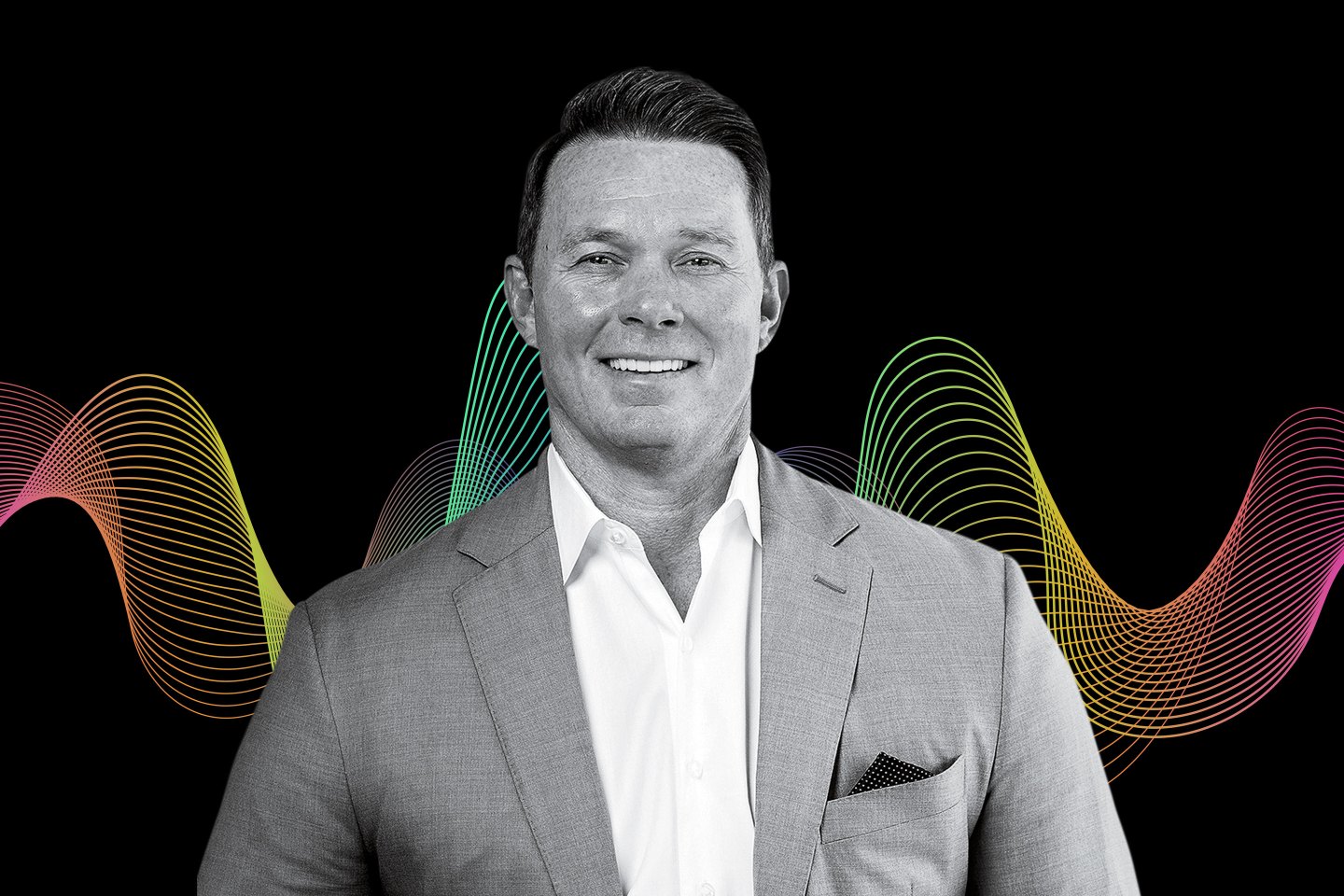
On this episode of Fortune’s Leadership Next podcast, cohosts Diane Brady, executive editorial director of the Fortune CEO Initiative and Fortune Live Media, and editorial director Kristin Stoller talk to Scott Boatwright, the CEO of Chipotle. They talk about AI’s future at the restaurant chain through the Ava Cado AI program; why Chipotle won’t raise prices in response to tariffs; and Boatwright’s relationship with Brian Niccol, his predecessor and the current CEO of Starbucks.
Listen to the episode or read the transcript below.
Transcript
Kristin Stoller: Following Brian Niccol, I know that’s probably a big, big thing in your mind. What was your mindset taking over this job from him?
Scott Boatwright: I was actually in the gym with him just this morning, talking about what’s going on at Starbucks, sharing some thoughts around what’s happening at Chipotle. You know, Brian and I started working together as far back as 2018 and we had a very close relationship, both personally and professionally, over what was about six or seven years.
Stoller: Was there one big piece of advice that he gave you before you took over that really stuck with you?
Boatwright: Of course he did. He said, “Don’t screw it up.”
Diane Brady: There you go.
Brady: Hi, everyone. Welcome to Leadership Next, the podcast about the people…
Stoller: …and trends…
Brady: …that are shaping the future of business. I’m Diane Brady.
Stoller: And I’m Kristin Stoller.
Brady: This week, we are talking about Chipotle and talking to its CEO, Scott Boatwright.
Stoller: Yes we are. Diane, what’s your Chipotle order?
Brady: Well, it’s changed since I was standing in a Chipotle when calorie counts first came through. So whatever it is, it has a lot less sour cream, cheese, and guacamole. But I’m a bowl person more than a burrito person.
Stoller: I’m a bowl person, too. I had so much of it in college, though. I used to be a burrito person. And I think you’re right, the calorie count scared me. I went to bowl, now I just get guac on the side. And I actually had it on Wednesday for the first time in, like, I would say, seven years, because I knew we were talking to Scott, had to check out the bowls—but the price has increased.
Brady: Well, for seven years, I hope so. But I think their prices are staying pretty steady, and almost famously so with the trade wars obviously impacting, or potentially impacting, the cost of avocados.
Stoller: Yeah.
Brady: Scott has said they’re going to hold fast on prices. I do eat Chipotle a fair bit. My kids eat it all the time. So I’m perhaps coming with a bit more culinary knowledge than you at this front, but one of the things I think is also fascinating about him is this friendship he has with his predecessor, Brian Niccol.
Stoller: I think that’s going to be so interesting to explore, because they seem to do everything together. They work out, they still talk. It’s a bromance that’s really, really fun.
Brady: Yep, lots to talk about. They’re using AI in many different ways. Ava Cado is a term you’ll hear in this. And, of course, he’s got a great perspective as to what’s happening in the economy and with labor. So, right after the break, we’ll be back with Scott.
Brady: Generative AI has been a transformative force in the business landscape for the last 18 months. According to the latest Fortune Deloitte CEO survey, more than half of CEOs are experimenting with generative AI in their own daily activities, and, of course, trying to spread it throughout their organizations. I’m joined by Jason Girzadas, the CEO of Deloitte US, which is the longtime sponsor of this podcast. Jason, good to see you.
Jason Girzadas: Hi, Diane. It’s great to be with you.
Brady: How are businesses integrating AI into their organizations? Where do you see the most substantial benefits?
Girzadas: I think it’s true, as you say, that every organization wants to capitalize on the benefits of AI, particularly generative AI. The benefits have been largely around efficiencies today and looking for ways to automate routine tasks. The promise is there for more insight-driven use cases and innovation use cases. That’s the next stage. We’re seeing organizations looking to move from proofs of concept and pilots to see these technologies and models put in place in true operational uses at scale.
Brady: When you think about how much change there’s been in the last 18 months, I’m really curious: How do you think it’s going to evolve in the next 18 months? 36 months?
Girzadas: I think we’re actually needing to change our timing horizon. By all indications, we’re more in six-month intervals, and I think that’s exciting, but also a challenge. Enterprises aren’t accustomed to working in that type of cadence and with that type of pace. And so the winners, if you will, will be those that can assimilate this technology that quickly, which I think is putting real strain on organizations’ ability to adapt that quickly. This is a perfect instance where leadership has to be in sync to assimilate technology that quickly. I think, as a CEO, it’s important that we lead by example. So I’ve been through all the training. I’ve been through all the productivity tools that we have available within our organization. But then, more broadly, we’ve embarked upon a significant investment to deploy this across all we do.
Brady: I’m feeling the urgency, Jason. Thanks for joining us.
Girzadas: Well, thank you, Diane.
Stoller: So, Scott, I do have to say to you, I think the last time Diane and I saw you was in December at our CEO Initiative Dinner, and you did a little trick and a prank on me that I fell for, which was that Chipotle would do fish in fish tacos, which is totally not…
Brady: …why is that a prank? Why is that a prank?
Boatwright: It was amusing simply because we don’t have freezers at Chipotle to deliver a fish product at scale. It typically comes in frozen through the supply chain. We don’t do freezers, it’s not what we do. And so that becomes a significant hurdle for us to deliver that kind of product.
Brady: I love that you’re fresh. We talked earlier, Kristin and I do eat at Chipotle. But can I just level-set: Why does it matter? Because frozen food, I’ve been raised to believe, is almost as good for you. Is it a taste thing? Is it health, or is it just kind of [to] differentiate you from the rest?
Boatwright: I think it’s a pretty significant part of differentiation for the Chipotle brand. It was founded by a culinarian who was a classically, classically trained chef. And it was his belief that fast food doesn’t have to be bad food, and his endeavor was to really create a unique meal, leveraging classic culinary techniques, utilizing the freshest ingredients he could find, and preparing that in a way, at a price point, that was skewed more towards value and the speed at which you couldn’t get anywhere else. And I think that’s really the moat that we have built around the business over the past 30-plus years: this idea that you shouldn’t have to have hundreds of dollars in your pocket, go to a chef-driven restaurant, and pay lots of money. We can deliver that at a price point that is reasonable and again, in the speed at which you can’t get anywhere else.
Brady: I want to talk about the broader environment, but you’re immediately triggering a memory for me of standing, I believe it was in Chipotle, when calorie counts came up, and suddenly realizing how much I was eating when I was adding the sour cream, the cheese, the guacamole, etc. How do you think that higher consciousness of calories, how is that impacting the way you design your menu, or even how you eat yourself?
Boatwright: Yeah, the beauty of the Chipotle experience is, you can find a meal fit for you that is allergen-free, and you can manage the calories any way you want. So you don’t have to go super, you know, heavy on calories. Obviously, if you add sour cream, cheese, and guacamole, you’re going to start to add calories pretty quickly.
Brady: That is very true.
Boatwright: But you can, you can [inaudible] the lower end as well.
Stoller: What’s your order?
Boatwright: My go-to order, traditionally, is black beans, chicken, pico de gallo, hot sauce, and cheese.
Brady: So, Scott, you have a lot of maybe headwinds and tailwinds right now, but I’m thinking of prices, immigration, fear of recession. What are you seeing? How’s business, and what do you see the next few months looking like for you?
Boatwright: Yeah, obviously, there’s a lot happening. And you know, most people I talk to in the business community are concerned about what’s next with the current administration, because there just seems to be a lot of uncertainty. And of course, markets don’t like uncertainty, and so we’ve seen a lot of sell-off within the industry, the restaurant industry specifically, but also in broader markets. And I, you know, it’s my take that the consumer is being very cautious and optimistic at present. Many are preserving cash because of the unknown, or, you know, potential consequences, downstream consequences, intended or unintended from the current administration. And so you’re seeing a pullback, a market pullback, at present. We entered the year coming off what was an extraordinary year for the Chipotle brand. We drove comp sales last year at 7.4%, largely driven by a great transaction flow. As we got into the new year, there was a lot of things, or headwinds, I should say, within the industry, specifically. Whether it was weather challenges throughout the year, the extenuation, or the later, Easter season. From a timing perspective, for some reason, in the industry we see Easter as kind of the kickoff to spring. This year, it’s about three weeks delayed, and then we’re seeing income tax payments that are a little slower this year than years prior. So I think there’s a host of reasons why, you know, there’s a bit of a slowdown in the industry. We are seeing some positive transaction with our new launch of Chipotle honey chicken, which is encouraging for us. But, yeah, that’s, that’s what we’re seeing at present.
Stoller: So spring, just want to make sure I’m understanding right, so spring, is that your busiest season?
Brady: Burrito season.
Stoller: Yeah, tell me what that means.
Boatwright: That’s right. So it launches what we call “burrito season.” And we just think it’s, you know, spring just gets people outdoors, gets them back into their kind of, their normal springtime, summer routines. And so we see that as really, the momentum in our business begins to grow as we approach Easter. And it accelerates for about 30, 60, sometimes 90 days into the summer months.
Stoller: Okay, see, I go for the bowl in the summer months, because I’ve got to, you know, worry about the bathing suit.
Brady: Pre-swimsuit season is burrito season, I did not know that. You know, I want to, I want to actually start a little bit more with your background. First of all, I will say, from LinkedIn, I know you did not start your career in 2008, you go all the way back to 15 [years old]. Didn’t you start in fast food back then?
Boatwright: Yes, I started the day I turned 15. I had my worker’s permit, and I show up at my local McDonald’s restaurant and apply for a job. And I was hired on the spot, and I think that was more out of a need for people in the restaurant versus, I was the perfect ideal candidate. Nevertheless, it was my first job. I learned a lot during my time with McDonald’s at a very young age. I was lucky to grow up in a family that really grounded itself in great values and strong work ethic. I share the story that I grew up in pretty humble beginnings, but I had a very hardworking family, that, really, my dad was a great role model for me at a very young age, and so discipline was, and accountability was, a part of my upbringing.
Brady: I started at 15 at Ponderosa, and I distinctly remember the pay and the no tipping. But it was a good–it was a good experience, almost a humbling experience, in a way, to realize how hard people do work in these restaurants. How was McDonald’s for you?
Boatwright: It was a great experience. Yeah, I learned, I learned– I came from a sports background, so I already had an idea or a grasp around, you know, teamwork, being a great teammate, not letting your team down, showing up, being on time, being dressed appropriately, in uniform, and then putting in your best work to support your teammates and whatever you’re trying to accomplish. And so, I did really well. I moved on from McDonald’s, ultimately I found an opportunity to earn a dime more at a steakhouse washing dishes and gosh, you know, that was a really unique experience in itself. Lot of hard work, as you could imagine, but I did that pretty much through my high school career.
Stoller: Speaking of role models, because you were just talking about that, I’d love to talk about, and I’m sure you get asked this a lot, but following Brian Niccol, I know that’s probably a big, big thing in your mind. What was your mindset taking over this job from him, and talk to us about what your—do you have a friendship with him? Do you still talk? Tell us about that.
Boatwright: I was actually in the gym with him just this morning, talking about what’s going on at Starbucks, sharing some thoughts around what’s happening at Chipotle. You know, Brian and I started working together as far back as 2018, and we had a very close relationship, both personally and professionally, over what was about six or seven years. A lot of respect for Brian. I really appreciate the way he approaches business, how he thinks about the impact of, you know, whether it’s the economy or, you know, certain macros that have an impact, downstream impact, on the industry, or our business specifically. And then how he thinks through those challenges, is able to navigate them with plans that keep the organization focused, obviously on the right objectives, and keep the business moving forward. So I say that to say, he’s still a mentor, he’s still a friend and someone I spend time with outside of Chipotle, because his experience, as you know, is pretty different and unique and special.
Brady: I can’t let it pass that you were working out with him this morning. So give me a sense, Scott, what is your workout routine? What do the two of you do together?
Boatwright: So, we go to a local gym, and it’s typically with trainers. So, he’s with a trainer. I’m with a trainer, and our trainers try to keep us on task, but often we get engaged in business conversations, because we both have very busy lives, as you can imagine. We have families, and we’re trying to run companies that are pretty large-scale companies. That requires a lot of time, so it’s a moment for us to just connect, catch up, and chat about the business.
Stoller: Was there one big piece of advice that he gave you before you took over that really stuck with you?
Boatwright: Of course he did. He said, “Don’t screw it up.”
Brady: There you go. Well, I always think it’s interesting. And of course, you know, we’re not going to over-index here on talking about Brian Niccol, who’s gone on to Starbucks. But do you feel you have a very different leadership style? Because, obviously, you’re creating your own imprint here. How would you say the two of you are different as leaders?
Boatwright: Yeah, we’re very different. Growing up through the operations vertical, you could imagine that, you know, through that 30-year history in operations, you become very detail-oriented, very process-oriented, and you tend to dig into the business a bit more than someone that comes through with a marketing background. Brian, you know, [is] obviously a broad aperture, very reliant on the business leaders to deliver on expectations. So my style is a little more hands on, not over-managing, but a little more involved in the details of the business. And so obviously that requires more time. And so for me, trying to find balance in my new role between digging in, when to dig in, when to just let your leaders run, becomes a nuance that you have to learn. It’s a bit of an art.
Stoller: Now, Scott, I want to go [to] something you said in the news lately that I thought was really interesting when talking about the potential tariffs and all this ongoing stuff with that, you said you at Chipotle would absorb the cost and not pass it along to customers. Is this still your mindset? And how sustainable is that, do you think, for the business?
Boatwright: I think it’s very sustainable for me, and I’ll tell you why. We have such an extraordinary balance sheet today. We have very little debt on the balance sheet. We have lots of cash that we can deploy, and we enjoy margins that are largely unprecedented in the industry to begin with. And so, the full tariff impacts that are being presented by the Trump administration would cost me about 60 basis points of margin on the year, which I can absolutely absorb, and I know our investors would understand how we balance that, because we have such a strong balance sheet. And so, we don’t understand which components of the tariffs are transitory and which will be permanent. And I think it’s unfair to the consumer to pass those costs off to the consumer, because pricing is permanent.
Brady: You know, one of the things, a lot of the leaders we speak to lead a large, salaried workforce. You, I think it’s 130,000 workers. I think you’re hiring 20,000 more for burrito season. I heard a lot of them are hourly workers. I’m sure some are being impacted by the immigration debate as well. Give us some sense as to, when you think about managing that pool of talent, what is your philosophy, your approach? You know, because it’s an industry that tends to have high turnover, and I think Chipotle less so.
Boatwright: Yeah, you know, so, that’s a big question, and so I’ll try to navigate it as successfully as I can. You know, we believe, as an organization, of solving the longstanding immigration challenge in a sustainable way, and whatever that looks like. You know, we do E-verify at Chipotle. So all of our team members go through the E-verify process. But it’s not lost on me that I could have team members within the organization that could have family members that are affected one way or another, and I think it’s important for us as leaders in the organization to ensure we are connecting with all of our people, and just a mental check-in to say, “Hey, how are you doing? How can we help? How can we support? I know you may be going through a challenging time,” but I think it’s an important moment just to connect with our people. 52% of our workforce here at Chipotle is Hispanic, and they are the absolute—the entire organization is the absolute backbone of our great company. And I believe at Chipotle we have best-in-class wages, industry leading benefits, and more importantly, we’ve created a culture that is inclusive, that is more like a family than a place of business. And that’s something I’m very proud of, and something I’m very eager to keep intact and continue to lean into.
Stoller: For your corporate employees, what are your thoughts on return to office? I think you’re four days a week now. Is that correct?
Boatwright: We are four days, with a fifth day that is optional for our team members. You know, we’re an office-based culture. I think you’re challenged with a remote workforce in a couple of ways. I think you lose an edge on innovation when you’re not together, co-located, it is challenging to develop a workforce and get them green and growing to take on larger roles when they’re working remotely, and you really just don’t have this cohesive culture that, you know, typically lends itself to incredible innovation, incredible growth, and helps people continue to push forward in their careers.
Stoller: Speaking of innovation, I’m just really curious: How do you decide which menu items make the cut? I know you have a test kitchen, I believe, but how do you—which ones make it, which ones don’t? What’s the best and the worst idea you’ve seen?
Boatwright: Sure, so we do a thorough vetting process of all ideas that come through the organization. Specific to culinary, we follow our Stage Gate process. And so our chefs are sitting in our kitchens today, working on new flavors, new ideas. And this is all grounded in this idea that we talk about often, about remaining relevant, visible, and loved as an organization. And so, you know, our Chief Brand Officer, Chris Brandt, he has one mantra, and I think it’s an important one. It’s just, “don’t be lame.” And so, and what is meant by that is, be differentiated…
Brady: …don’t screw it up and don’t be lame…
Boatwright: …be unique, be differentiated, and show up for the consumer in the most impactful way. And so it’s spun up as a benchtop sample. It typically goes through consumer testing of some degree. We’ll put it in a couple of restaurants to test its operational feasibility, and then we’ll take it to a broader market test, see how it performs, and if it does well there, it’ll end up making itself onto the national calendar at some point. Recall, we only do about two limited-time offers per year today, and so it has to be a really unique, exceptional product to make it onto that calendar. And it has to beat out previous LTOs that have performed exceptionally well for the brand.
Boatwright: You know, one thing you don’t do, if I’m not mistaken, is breakfast. Is there a reason for that? Because I do associate eggs and burritos together. Why not you?
Stoller: And breakfast tacos.
Boatwright: Yeah, breakfast is a big idea, you know, I’ll tell you: It is my personal belief that brands tend to lean into breakfast when they run out of growth, and so there’s still some so much extraordinary upside in delivering lunch and dinner in the most meaningful way, meeting the consumer where they are, and creating exceptional experiences, that breakfast is not on the radar today. That’s not to say, at some point, we couldn’t do breakfast. I think it’s, I think it stretches your dayparts, your day, I should say, in a way that is a strain on the operating model, and it stretches your management team as well. And so you’ve really got to give thoughtful consideration to the unintended consequences, or downstream impacts, of leaning into breakfast, because it can detract from lunch and dinner dayparts, which are typically more meaningful.
Brady: Well, I want to just pause a second and push back on this idea that, I mean not push back, but just drill down a little that breakfast is what you do when you’ve basically run out of other growth options. Why is that? Is that because, is it the supply chain? Is it having to hire more people? Is it dilutive because the people eating breakfast might not have stayed for lunch? I mean, give me some sense, because it does sound like there are a lot of people out there making breakfast.
Boatwright: It’s all of the above. Typically when you see people launch breakfast, if you look at, historically, when Wendy’s has launched or Taco Bell has launched breakfast, it’s typically when the brands have matured. They’re at steady growth rates of 2% to 3% annually, and they’re looking for a platform, and that platform can have a meaningful lift on the business. But there are unintended consequences, [inaudible] stretching [of] the management team, supply chain challenges, or the ability to deliver the model in an excellent way. I’ll give you an example: When you walk into a Chipotle restaurant in the a.m., pre-opening, it looks like a farmer’s market. There is produce everywhere. We’re cutting fresh romaine, we’re cutting fresh onions, we’re cutting jalapeños, bell peppers. We’re preparing, making guac. We’re preparing beans, rice, barbacoa, carnitas. It’s a full working kitchen, and there’s not a lot of space in my kitchen today to deliver another platform. And so it’ll be a unique challenge that we’ll solve for one day, just not today.
Stoller: So where do you see the growth, then? Is it international expansion? And talk about that, because I I know international expansion has been a tricky space for Chipotle.
Boatwright: Yeah, I wouldn’t say tricky. It’s just something—we haven’t had a great strategy around our company-owned restaurants in Western Europe until probably the past 12 to 18 months. And we really, really have just started this, this journey of partnerships. We inked a deal with Alshaya last year—we have about four restaurants open in the region today between Kuwait and Dubai. We’re looking at other partnerships in Latin America as well as Southeast Asia. But I’ll tell you, we can double the business twice, in its current operating model over the next 15 to 20 years. We’re at 3,700-plus restaurants in the U.S. today and Canada. We know we can double that to 7,000 or more in the next many years, and we could double that number yet again internationally through company-owned and partnerships.
Brady: It’s interesting, when I think about the fast food business, there’s a lot of tropes people have about how you expand and what the playbook is. You’re seeing this evolution of how people work, how they eat. You know, demographics shifting. Give me some sense of, help us see the world through your eyes as to how some of the changes that we’re seeing in society are also changing your strategy for where you operate, or even how big a footprint you have. I tend to get Chipotle, for example, delivered by DoorDash. I think I’ve not been in one of your outlets in several years.
Boatwright: Yeah, it’s really a matter of convenience. When I started at Chipotle in 2017, we really didn’t have a digital business. It was primarily an in-restaurant business unit, and through the consumer research we did in 2017, we learned that the Chipotle consumer was looking for more convenience and more access. It was the biggest hurdle that we faced at the time was: There’s not a Chipotle near me, and there’s really not a convenient way to access Chipotle, because typically the lines are really, really long. And so we leaned into this idea of a second makeline in every restaurant to support the digital business that was to come, and that was a significant bet that we were making back in 2017, both with capital as well as OpEx, to really stand up this digital component. When I joined the organization, it was less than 5%, we quickly moved from 5%, and next year went to 10%, 2019 we’re at 20% of the business through that channel. We digitized it. It was analog, meaning it would just spit receipts, chits that we would hang on a receipt hanger, and build the orders. We moved it to a fully digitized system that has throttle controls into each location and then delivers that experience in a more meaningful way for the team member, which obviously ladders to a better guest experience. We started out with one third-party partner. We’ve moved to multiple over the last many years, and we’ve seen significant growth. Today, that business is a $4 billion business for us, and it was because of the bets and the investments we made early on that really paid huge dividends.
Stoller: What do you think is your biggest hurdle right now?
Boatwright: You know, I think we’re all struggling to figure out, how do we deliver that digital experience even better than we have in the previous years? Whether that’s, you know, third party hitting their SLAs on their side, are our teams in-restaurant ensuring accuracy? Portioning is, you know, we lean into portioning at Chipotle. We think of big, beautiful bowls, big, beautiful burritos, and so, you know, getting that right every time for the consumer is still important. But, you know, it’s the most expensive channel to Chipotle, but I believe the best experience is the in-restaurant experience, where you can customize in the moment, you can ask for a little more rice or a little less rice, and you can do that all the way down the table and really build a bespoke bowl in the moment that is fresh and ready to go. And I think that’s still the best [inaudible] factor.
Brady: Using AI, right? I mean, you do use—I know Ava Cado, and then you’ve also got the in-store AI experience. Talk a little more about what we’re likely to see there and how that’s helping you.
Boatwright: Yeah, so we launched Ava Cado about six, eight months ago, nationally. She’s a multilingual, virtual team member that helps onboard our team members in the most efficient way. It’s reduced our onboarding time from applicant to actually starting by about 75%, which is allowing us to have better staffing, higher-caliber team members in restaurants, and less timing constraint for the general manager spending time on staffing versus delivering great guest experiences. And it’s had a meaningful impact on the business. We are better staffed today than we’ve been in the eight years I’ve been with the organization, and so that’s just one way AI can help support the general manager to make the job easier and more efficient.
Stoller: Scott, I’m curious, how often do you eat at Chipotle?
Boatwright: Probably three or four times a week. And if I’m on market visits, it’s quite a bit more, as you can imagine. I love our food, I’ve been a fan of Chipotle for 20-plus years. I was first exposed to it when I was living in Dallas working for another brand, and I’ve always loved the food. I’ve always loved the culinary, and so when I had an opportunity to join the brand in 2017, it was an easy decision for me.
Brady: You were at Arby’s for nine-years-plus, before that, anything you learned from your experience at Arby’s that you took with you to Chipotle? I know we’re going back a few years, but this is about leadership.
Boatwright: I think the most important thing for me is, coming out of the Great Recession, Roark Capital–Arby’s was traded as Wendy’s/Arby’s group. It was divested in 2011 to Roark Capital, and I was invited to come join the team in the Atlanta office, and really rebuilding this beleaguered brand that was called Arby’s that was in deep trouble at the time. There were many franchisees at the time that were facing financial troubles, obviously coming out of the Great Recession. They were having challenging times meeting bank covenants, and we were trying to keep this brand green and growing and thriving in a very challenging economy. And one of the things we did that I think was super smart, and I give Paul Brown a lot of credit for this, was leaning into the quality of the food and understanding that the consumer would pay a little bit more for high quality, great tasting food. And I think, you know, we pulled that brand out of what I believe to be a very challenging situation by leaning into great culinary and leaning into the consumer more, versus cost optimizing or discounting the product. And you know that, obviously, is kind of core to the Chipotle brand today as well, and something that I hold very dear and I’m unwilling to compromise on.
Brady: You know, before we—let me go back to what you said with regard to just the whole fast food experience, because I recall a fried chicken brand, I shan’t, will not say what it was, but they were really struggling in the U.S. market as they were thriving abroad. And it makes me think, almost like with airlines: When you start with a new fleet, it’s great, but then the fleet starts to age, some locations start to maybe be less relevant and trafficked. How do you—give me some sense as to how the footprint of Chipotle is likely to change. Because it’s not static. It’s not like you have 3,700 and then boom, you double. You must also close locations and then try to refresh. How do you keep the brand current and vibrant in the front-of-house?
Boatwright: You know, it’s quite a unique situation at Chipotle. And I understand coming from other brands, where we had to have a remodel program, a light touch every five years, and a full remodel every 10 years, and you were closing, gosh, you know, some percentage of restaurants annually. That just doesn’t happen at Chipotle. The original design, which we call our legacy units, are absolutely timeless. And I go into those restaurants, they’re still performing exceptionally well, and they have the old tenon trim and the pipe bollard seating, and they have this industrial chic design that has literally stood the test of time. And we close very few restaurants annually, and it’s, and again, very unique to our brand, and really speaks to the strength of the brand.
Brady: You know, one of the things I also—I think a lot of people who listen to this podcast are people who are earlier in their career, and they want to be leaders. You and I started at 15 in a fast food restaurant. It is very hard for teenagers to work in a restaurant like yours these days. There are a lot of, you know, your associates are full-time employees. They have families. What for that next generation? Where do you see the opportunities? What advice do you have for them?
Boatwright: Yeah, I get this question often, and oftentimes internally. You know, when I was coming through or moving my way through the ranks in this industry, I learned at a very young age that there was extraordinary opportunity, and if you were just willing to put in, what I believe to be the frontend effort—meaning, put in the work, do more work than you’re actually getting paid today, and you will ultimately get to a point where you’re you’re paid more for probably the same amount of work. It doesn’t—the load doesn’t lighten. But those individuals that will commit to personal accountability and have the resiliency to rise above circumstances, own their circumstance, and then solve the challenges ahead of them, continue to be intellectually curious, continue to learn. If a day passes you in this business where you haven’t learned something new, then you’ve missed opportunity. I would lean into goal-setting, and I would stay committed to my goals, and again, be willing and committed to putting in the work, and great things will happen to you in this industry. And I think, kind of specific to the restaurant space, we provide opportunity for people who otherwise ordinarily wouldn’t have opportunity. Meaning: You don’t have to have an advanced degree to be very successful in this industry. If you’re just willing to put in the work, again, continue learning, grow every day, great things will happen for you.
Stoller: So Scott, I’m curious, what is next for you? What’s exciting you most?
Boatwright: You know, I’m really excited for the year ahead. There’s such extraordinary growth in the Chipotle brand right now. We’re, you know, we’re not only advancing our footprint here in North America, but also in Western Europe. We’re expanding partnerships internationally. We’re leaning into some key strategies for the year. One, of this idea around being guest-obsessed and being more connected to the consumer. So no matter whether you’re working in a support center role or a restaurant role, we’re all here to serve. And then the last thing is really around this idea of modernizing the back of house at Chipotle and making the experience more efficient, allowing our teamers to more efficiently deliver the experience and focus on the tasks that are more meaningful, like leaning into the guest experience.
Brady: I love that. Anything we did not ask you that we should have asked you? I always do like to know where you get the most joy.
Boatwright: Yeah, my sanctuary is inside of a Chipotle restaurant. I don’t get to spend as much time there today…
Brady: To be expected.
Stoller: What do you do for fun, Scott? Not at the gym, after the gym.
Boatwright: You know, I have a four-and-a-half-year-old who consumes a lot of my off-duty time, which is an absolute joy for me. I am a later-in-life dad, but I am enjoying every single moment with him, and he’s just a great young man who’s just fun and a joy to be around.
Brady: Exactly. Well listen, thank you very much for joining us. Great to chat with you and get, of course, some insight and keep—I’m off to Chipotle again later this week. So you’ve got one fan here.
Stoller: Yes, getting that guac.
Boatwright: Thank you both very much. I really appreciate the time and the interest in the brand.
Brady: Leadership Next is produced and edited by Ceylan Ersoy.
Stoller: Our executive producer is Adam Banicki. Our theme is by Jason Snell.
Brady: Our studio producer is Natasha Ortiz.
Stoller: Leadership Next is a production of Fortune Media.
Brady: I’m Diane Brady.
Stoller: And I’m Kristin Stoller.
Brady: See you next time.
Leadership Next episodes are produced by Fortune‘s editorial team. The views and opinions expressed by podcast speakers and guests are solely their own and do not reflect the opinions of Deloitte or its personnel. Nor does Deloitte advocate or endorse any individuals or entities featured on the episodes.