
• Home
  • Latest
  • Fortune 500
  • Finance
  • Tech
  • Leadership
  • Lifestyle
  • Rankings
  • Multimedia
MagazineTariffs

How to survive and prosper in the Trump tariff era

Irina Ivanova
By
Irina Ivanova
Irina Ivanova
Deputy US News Editor
Down Arrow Button Icon
Irina Ivanova
By
Irina Ivanova
Irina Ivanova
Deputy US News Editor
Down Arrow Button Icon
March 24, 2025, 5:30 AM ET
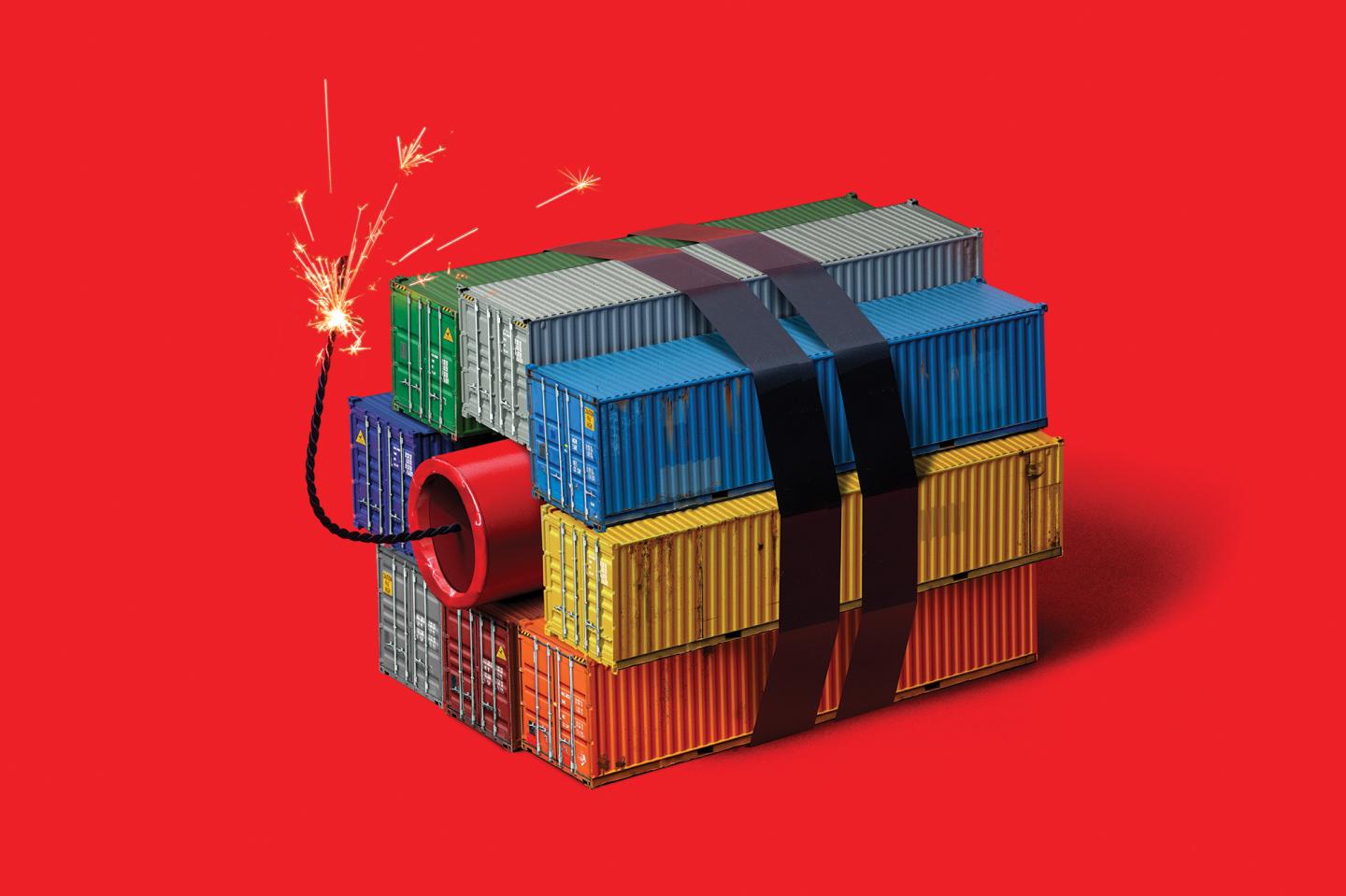
Doug Chayka for Fortune

The first few months of President Donald Trump 2.0 have drawn comparisons to the deregulation era of Ronald Reagan, the industrial policy of Alexander Hamilton, the roaring ebullience of the 1920s, the fervid patriotism of the 1950s, and the harsh cultural divisions of the 1960s.

Recommended Video

But when it comes to one of Trump’s signature policy initiatives, tariffs on foreign goods entering America, the precedent in history is clear: The increases in tariffs imposed or suggested by Trump would bring U.S. import taxes to a level last seen some 80 years ago, in the mid-1940s. Those were the last years of a protectionist era in U.S. trade policy, which started in the 1920s and endured through the Great Depression and World War II.

The 1947 establishment of the General Agreement on Tariffs and Trade (GATT), which effectively lowered global trade barriers, brought that chapter to a close, reducing tariffs to promote international trade. Lowering trade barriers after a nearly apocalyptic war left most of the U.S.’s industrialized peers in disarray was a clear benefit for American manufacturers, and the GATT set off the era of globalization that has only accelerated since. The GATT evolved into the World Trade Organization and was a precursor to the North American Free Trade Agreement that went into effect in 1994, supercharging the flow of goods between the U.S., Canada, and Mexico.

We appear to be in the midst of another sea change in trade policy. Trump’s ever-shifting America First agenda has provoked an escalating trade war with the U.S.’s three largest trading partners: its two North American neighbors and China. And it penalizes the raw materials for some of the most American of goods—big cars, beer cans, homes, computer processors. Even the universally reviled Smoot-Hawley Tariff Act of 1930, which imposed a maximum 41% levy, affected only 1.4% of GDP, while Trump’s promised tariffs as of March affect about 5% of the U.S. economy, or roughly $1.5 trillion worth of goods, according to the Peterson Institute for International Economics.

The business world is, to put it mildly, worried. Trade policy uncertainty, which measures sentiment across news reports, hit a new peak two months into Trump’s second term and is now “off the charts,” the Tax Foundation’s Erica York told me. (Its previous peak was during Trump’s first term.)

So what’s a CEO to do? The fight-or-flight, freeze-or-fawn reaction, much discussed in evolutionary biology, can be instructive here.

First, there’s “freeze.” The adage that markets hate uncertainty is true, and uncertainty has been pretty much the only constant since January. Dealmaking this year got off to the worst start in a decade; CEOs’ mood fell to a 12-year low; and investors shifted from equities to gold, sending the S&P 500 into correction territory. “That really created the uncertainty that unraveled the bullish sentiment in the market this year,” said Adam Turnquist of LPL Financial. “It’s impossible to really plan if you’re a CEO or small business.”

For some companies, “flight”—toward manufacturing within U.S. borders, that is—is one way to hedge bets. International conglomerates are now promising to build factories in the U.S. or at least consider it. Several global makers of autos, electronics, and liquor have nodded to expanding U.S. production to get around tariffs, with Honda building a Civic Hybrid in Indiana rather than Mexico, and Volkswagen and Volvo considering moving production stateside.

South Korea’s [hotlink]Hyundai Motor[/hotlink] Co., LG Electronics, and Samsung are all mulling increasing their U.S. operations, while Taiwanese electronics makers Compal and Inventec are both reportedly scoping out U.S. production sites in Texas. Luxury conglomerate LVMH credited U.S. policy with pushing it to “seriously” consider ditching France to build out its U.S. presence. And sooner or later, tariff supporters say, U.S.-based multinationals are likely to follow suit and “reshore” their production in the States.

Peak free trade

Trade agreements drove U.S. tariffs down in the 2000s.

1.2%

Average U.S. tariff rate on imports in 2008

8.4%

Estimated average 2025 tariff rate based on Trump’s proposals
Source: Tax Foundation

This may mean the tariffs are having the intended result of rebuilding U.S. industry—or merely that companies are asserting their willingness to align with the new political reality. It’s relatively easy to promise a factory; building a new one can take years. And with American manufacturing—and construction—relying extensively upon imported materials subject to tariffs, prices have already shot up across the board. Indeed, given the wild swings in prices and regulations, many of these nascent plans are better seen as prudent signaling or, at best, statements of optimism about the U.S. project, as opposed to solid promises with deadlines and jobs attached.

In parallel, there’s “fawn”: When the rules are changing day to day, get in good with the people making the rules. To that effect, industry leaders are flocking to the White House, solo or in small groups, to convince the administration of the rightness of their desired policies. Witness the front row of Trump’s inauguration ceremony, where leaders of Big Tech companies congregated after contributing millions to the inauguration fund’s record haul, or corporate leaders paying $5 million apiece to attend a “candlelight dinner” at Mar-a-Lago.

That leaves, finally, the strategy of “fight”—perhaps better phrased as “negotiate carefully.” CEOs in some highly exposed industries have been vocal about the potential for disaster from tariffs, perhaps figuring they have little to lose. Lobbying for an exemption, Ford’s Jim Farley warned that 25% tariffs would “blow a hole” in the auto industry. Alcoa’s William Oplinger told a reporter that the aluminum industry could shed 12% of jobs.

Many other business leaders, while privately saying they’re losing faith in the president, are loath to risk his wrath by criticizing him publicly. “What they’ve learned from Trump 1.0 is, you can’t poke the bear,” said Yale professor in the practice of management Jeffrey Sonnenfeld. Or at least, he added, “you need to do it collectively.” That’s why some CEOs are leaning on trade associations to make their case rather than sticking their necks out. The National Association of Manufacturers, for instance, has said that “the stakes couldn’t be higher” for its members.

Ultimately, whatever path you plan to take, don’t do it alone: Now more than ever, business leaders should consult with peers—and even competitors—to figure out how to surf the tariff waves.

This article appears in the April/May 2025 issue of Fortune with the headline “How to survive a trade war.”
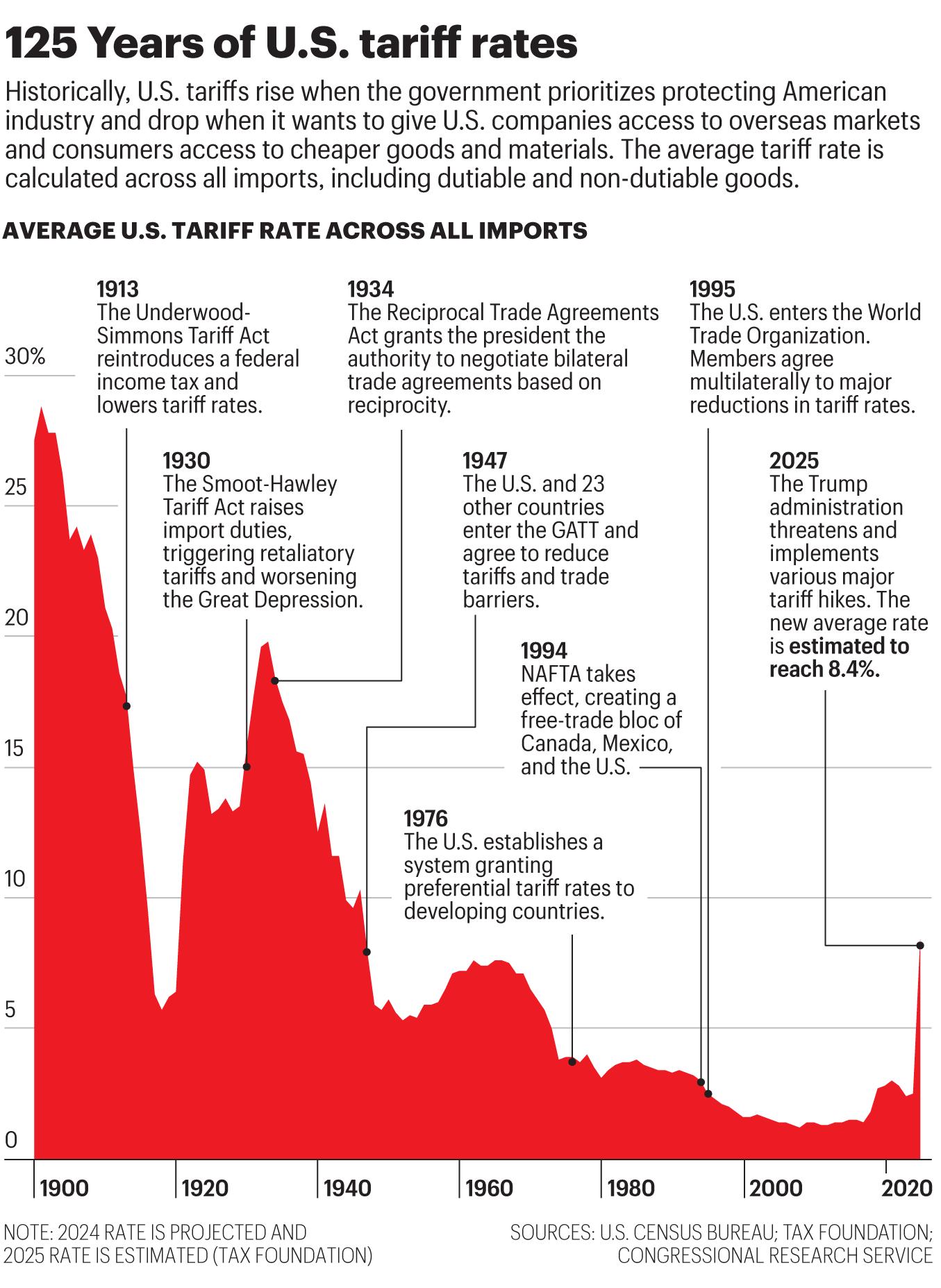

Chart shows U.S. tariff rate levels since 1900
The Fortune 500 Innovation Forum will convene Fortune 500 executives, U.S. policy officials, top founders, and thought leaders to help define what’s next for the American economy, Nov. 16-17 in Detroit. Apply here.
About the Author
Irina Ivanova
By Irina IvanovaDeputy US News Editor

Irina Ivanova is the former deputy U.S. news editor at Fortune.


See full bioRight Arrow Button Icon

Latest from the Magazine

Finance
Lorem ipsum dolor sit amet, consectetur adipiscing elit, sed do eiusmod tempor incididunt ut labore et dolore magna aliqua. Ut enim ad minim veniam
By Fortune Editors
October 20, 2025
Finance
Lorem ipsum dolor sit amet, consectetur adipiscing elit, sed do eiusmod tempor incididunt ut labore et dolore magna aliqua. Ut enim ad minim veniam
By Fortune Editors
October 20, 2025
Finance
Lorem ipsum dolor sit amet, consectetur adipiscing elit, sed do eiusmod tempor incididunt ut labore et dolore magna aliqua. Ut enim ad minim veniam
By Fortune Editors
October 20, 2025
Finance
Lorem ipsum dolor sit amet, consectetur adipiscing elit, sed do eiusmod tempor incididunt ut labore et dolore magna aliqua. Ut enim ad minim veniam
By Fortune Editors
October 20, 2025
Finance
Lorem ipsum dolor sit amet, consectetur adipiscing elit, sed do eiusmod tempor incididunt ut labore et dolore magna aliqua. Ut enim ad minim veniam
By Fortune Editors
October 20, 2025
Finance
Lorem ipsum dolor sit amet, consectetur adipiscing elit, sed do eiusmod tempor incididunt ut labore et dolore magna aliqua. Ut enim ad minim veniam
By Fortune Editors
October 20, 2025

Most Popular

Finance
Lorem ipsum dolor sit amet, consectetur adipiscing elit, sed do eiusmod tempor incididunt ut labore et dolore magna aliqua. Ut enim ad minim veniam
By Fortune Editors
October 20, 2025
Finance
Lorem ipsum dolor sit amet, consectetur adipiscing elit, sed do eiusmod tempor incididunt ut labore et dolore magna aliqua. Ut enim ad minim veniam
By Fortune Editors
October 20, 2025
Finance
Lorem ipsum dolor sit amet, consectetur adipiscing elit, sed do eiusmod tempor incididunt ut labore et dolore magna aliqua. Ut enim ad minim veniam
By Fortune Editors
October 20, 2025
Finance
Lorem ipsum dolor sit amet, consectetur adipiscing elit, sed do eiusmod tempor incididunt ut labore et dolore magna aliqua. Ut enim ad minim veniam
By Fortune Editors
October 20, 2025
Finance
Lorem ipsum dolor sit amet, consectetur adipiscing elit, sed do eiusmod tempor incididunt ut labore et dolore magna aliqua. Ut enim ad minim veniam
By Fortune Editors
October 20, 2025
Finance
Lorem ipsum dolor sit amet, consectetur adipiscing elit, sed do eiusmod tempor incididunt ut labore et dolore magna aliqua. Ut enim ad minim veniam
By Fortune Editors
October 20, 2025
Fortune Secondary Logo
Rankings
  • 100 Best Companies
  • Fortune 500
  • Global 500
  • Fortune 500 Europe
  • Most Powerful Women
  • World's Most Admired Companies
  • See All Rankings
  • Lists Calendar
Sections
  • Finance
  • Fortune Crypto
  • Features
  • Leadership
  • Health
  • Commentary
  • Success
  • Retail
  • Mpw
  • Tech
  • Lifestyle
  • CEO Initiative
  • Asia
  • Politics
  • Conferences
  • Europe
  • Newsletters
  • Personal Finance
  • Environment
  • Magazine
  • Education
Customer Support
  • Frequently Asked Questions
  • Customer Service Portal
  • Privacy Policy
  • Terms Of Use
  • Single Issues For Purchase
  • International Print
Commercial Services
  • Advertising
  • Fortune Brand Studio
  • Fortune Analytics
  • Fortune Conferences
  • Business Development
  • Group Subscriptions
About Us
  • About Us
  • Press Center
  • Work At Fortune
  • Terms And Conditions
  • Site Map
  • About Us
  • Press Center
  • Work At Fortune
  • Terms And Conditions
  • Site Map
  • Facebook icon
  • Twitter icon
  • LinkedIn icon
  • Instagram icon
  • Pinterest icon

Latest from the Magazine

Who’s really in control as AI and Big Tech race ahead?
MagazineEurope
Who’s really in control as AI and Big Tech race ahead?
By Francesca CassidyApril 10, 2026
24 days ago
Who owns ideas in the AI age?
MagazinePublishing
Who owns ideas in the AI age?
By Francesca CassidyApril 8, 2026
26 days ago
Southeast Asia’s business leaders want wellness at work—as long as the programs get real results
Magazine100 Best Companies to Work For
Southeast Asia’s business leaders want wellness at work—as long as the programs get real results
By Alice WilliamsApril 8, 2026
27 days ago
So… what are we doing with AI? Innovating in an age of caution
MagazineStrategy
So… what are we doing with AI? Innovating in an age of caution
By Francesca CassidyApril 7, 2026
27 days ago
Anthropic’s research shows that AI can already do a huge portion of many jobs; its top economist talks about how that could shape the future of work
MagazineAutomation
Anthropic’s research shows that AI can already do a huge portion of many jobs; its top economist talks about how that could shape the future of work
By Matthew Heimer and Nicolas RappApril 7, 2026
28 days ago
Fortune Archives: Who gets a seat at the table?
MagazineFortune Archives
Fortune Archives: Who gets a seat at the table?
By Indrani SenApril 5, 2026
29 days ago

Most Popular

As economic despair mounts, Russian official admits the country has had enough of Putin's war on Ukraine. 'We can’t even take one region'
Economy
As economic despair mounts, Russian official admits the country has had enough of Putin's war on Ukraine. 'We can’t even take one region'
By Jason MaMay 3, 2026
1 day ago
Diary of a CEO founder says he hired someone with 'zero' work experience because she 'thanked the security guard by name' before the interview
Success
Diary of a CEO founder says he hired someone with 'zero' work experience because she 'thanked the security guard by name' before the interview
By Emma BurleighMay 3, 2026
1 day ago
America got rich and got sad. A top economist says 2020 broke something that hasn't healed
Economy
America got rich and got sad. A top economist says 2020 broke something that hasn't healed
By Nick LichtenbergMay 3, 2026
1 day ago
Scott Bessent on financial literacy: 'it drives me crazy' to see young men in blue-collar construction jobs playing the lottery
Personal Finance
Scott Bessent on financial literacy: 'it drives me crazy' to see young men in blue-collar construction jobs playing the lottery
By Fatima Hussein and The Associated PressMay 1, 2026
3 days ago
I spent a decade selling homes to the ultra-wealthy. What I saw explains the housing market's nepo problem
Commentary
I spent a decade selling homes to the ultra-wealthy. What I saw explains the housing market's nepo problem
By Blake O'ShaughnessyMay 3, 2026
1 day ago
Sam Altman says the quiet part out loud, confirming some companies are ‘AI washing’ by blaming unrelated layoffs on the technology
AI
Sam Altman says the quiet part out loud, confirming some companies are ‘AI washing’ by blaming unrelated layoffs on the technology
By Sasha RogelbergMay 3, 2026
1 day ago

© 2026 Fortune Media IP Limited. All Rights Reserved. Use of this site constitutes acceptance of our Terms of Use and Privacy Policy | CA Notice at Collection and Privacy Notice | Do Not Sell/Share My Personal Information
FORTUNE is a trademark of Fortune Media IP Limited, registered in the U.S. and other countries. FORTUNE may receive compensation for some links to products and services on this website. Offers may be subject to change without notice.