• Home
  • News
  • Fortune 500
  • Tech
  • Finance
  • Leadership
  • Lifestyle
  • Rankings
  • Multimedia
CommentaryRussia

Trump and Putin teased ‘enormous economic deals’ in their call—but U.S. companies will experience a very different Russia if they return

By
Charles Hecker
Charles Hecker
Down Arrow Button Icon
By
Charles Hecker
Charles Hecker
Down Arrow Button Icon
March 19, 2025, 11:11 AM ET
Charles Hecker has spent 40 years traveling and working in the Soviet Union and Russia, including as a geopolitical risk consultant. He is the author of the new book Zero Sum: The Arc of International Business in Russia.
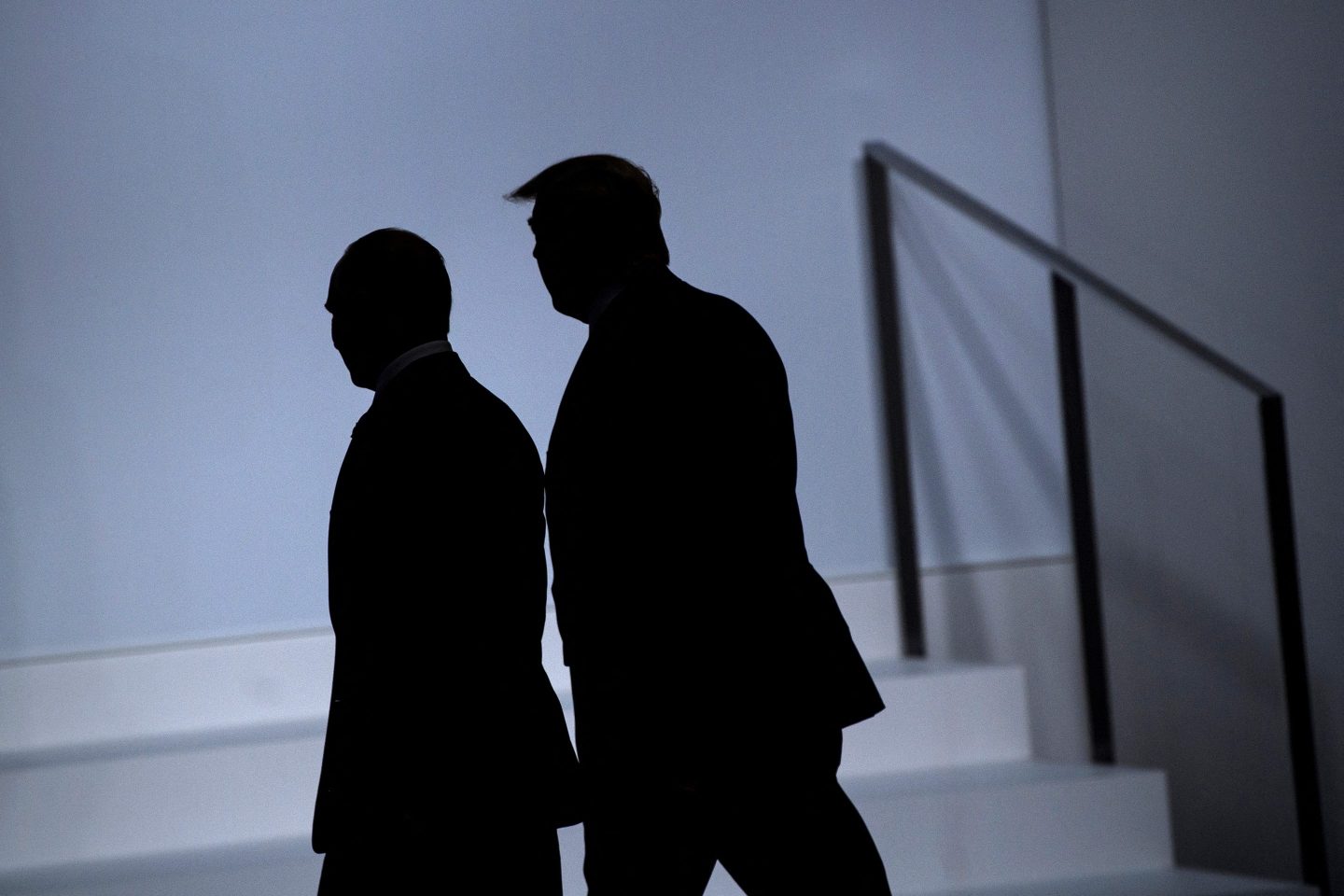
Trump sees "huge upside" in better ties with Russia, including "enormous economic deals."
Trump sees "huge upside" in better ties with Russia, including "enormous economic deals."BRENDAN SMIALOWSKI/AFP via Getty Images

There is now very little room for subtext or doubt. Relations between the U.S. and Russia will include “enormous economic deals” as part of the broader normalization of diplomatic affairs between Moscow and Washington.

That optimistic phrase, turbocharged by the expression “huge upside,” was part of the White House’s summary of Tuesday’s call between U.S. President Donald Trump and his Russian counterpart Vladimir Putin.

What started as a suggestion—would U.S. sanctions relief be on the table if Trump helped resolve the war on Ukraine?—is now a megaphone-strength alert. A stable conclusion to hostilities, whether a cease-fire or a more elaborate peace agreement, would bring an end to the Russia’s economic isolation.

To be clear, this move is further off than suggested in a breathy White House readout of the two-hour call between Trump and Putin. And the U.S. is not the only country punishing Russia politically and economically. But this is the clearest statement we have yet on Washington’s intentions. More than a few U.S. companies will take this message and run with it.

The business community began to imagine a world without sanctions on Russia when Trump won the November 2024 elections. He campaigned on ending the war in Ukraine, triggering questions about the longevity of sanctions imposed following Russia’s full-scale invasion of Ukraine in February 2022. History shows that sanctions are easy to enact and then notoriously sticky. The U.S. has been sanctioning Cuba since 1962.

But Trump’s campaign pledge is gaining a certain amount of momentum. Talks to end the war began in earnest with a phone call between Trump and Putin in February. Shortly after that, U.S. Secretary of State Marco Rubio and Russian Foreign Minister Sergei Lavrov met in Riyadh. As they departed the talks, they made a public nod to broader commercial engagement between the two countries.

Each of those moves intensified debate among U.S. companies that left Russia three years ago. Should we go back? Some businesses are having the conversation.

Hundreds of Western companies, including some of the U.S.’s most prominent brands, left Russia following the start of the full-scale invasion. Some left because sanctions made it illegal for them to do business there. Others left because their shareholders, customers, or employees wouldn’t support doing business in or with an aggressor nation. Wide public campaigns to name and shame Western companies in Russia helped focus the minds of executives in the U.S. and around the world.

Tuesday’s Trump-Putin dialogue will intensify deliberations inside U.S. companies. For some of them, sanctions relief is the sole green light they need to go back to Russia. But an end of sanctions is not the end of the discussion. It should be the beginning.

As Tuesday’s call showed, Putin is in no hurry to end the war. His strategic goal remains fully disabling Ukrainian sovereignty. As Trump and Putin negotiate an “unconditional cease-fire,” Putin only adds conditions. These talks will not end soon.

If and when they do, companies thinking of returning to Russia will find a country dramatically different from the one they left. The war on Ukraine has lasted longer than anyone predicted—long enough to see a number of important transformations on the ground in Russia.

Among those changes is the emergence of a new business elite now in possession not only of considerable political favor, but also of several Western assets sold or otherwise “reallocated” away from their former owners. Sure, some U.S. companies inserted buy-back clauses into their exits from Russia, but it is worth questioning the durability of those agreements.

The marketplace has changed, too. While the West was away, companies from non-sanctioning countries came to play. Russian car dealerships once offering sparkling new Volkswagens and Toyotas, among others, are now selling flashy Chinese models.

The law on the ground in Russia has changed, too. Intellectual property law, for example, has been eviscerated. Russian pharmaceutical companies now have government licenses to produce semaglutide injections, in complete contravention to Novo Nordisk’s patents on the drug.


Novo Nordisk is, of course, a Danish company, and relations between Europe and Russia remain hostile. This raises another complication: If the U.S. is determined to lift sanctions but Europe remains, for now, in punishment mode, how will companies navigate an asymmetrical sanctions environment? EU sanctions could, of course tumble too. They depend on periodic, unanimous renewal votes.

Finally, the U.S. business community will want to know whether Trump’s ambitious forecast for normalcy with Russia will include a backstop. Political risk insurance for companies returning to Russia will be astronomically expensive, if it is available at all. Will the White House act as an insurer of last resort, and throw its political weight behind U.S. companies if conditions once again deteriorate?

The opinions expressed in Fortune.com commentary pieces are solely the views of their authors and do not necessarily reflect the opinions and beliefs of Fortune.


Fortune Brainstorm AI returns to San Francisco Dec. 8–9 to convene the smartest people we know—technologists, entrepreneurs, Fortune Global 500 executives, investors, policymakers, and the brilliant minds in between—to explore and interrogate the most pressing questions about AI at another pivotal moment. Register here.
About the Author
By Charles Hecker
See full bioRight Arrow Button Icon

Latest in Commentary

Matt Rogers
CommentaryInfrastructure
I built the first iPhone with Steve Jobs. The AI industry is at risk of repeating an early smartphone mistake
By Matt RogersDecember 4, 2025
4 hours ago
Jerome Powell
CommentaryFederal Reserve
Fed officials like the mystique of being seen as financial technocrats, but it’s time to demystify the central bank
By Alexander William SalterDecember 4, 2025
5 hours ago
Rakesh Kumar
CommentarySemiconductors
China does not need Nvidia chips in the AI war — export controls only pushed it to build its own AI machine
By Rakesh KumarDecember 3, 2025
1 day ago
Rochelle Witharana is Chief Financial and Investment Officer for The California Wellness Foundation
Commentarydiversity and inclusion
Fund managers from diverse backgrounds are delivering standout returns and the smart money is slowly starting to pay attention
By Rochelle WitharanaDecember 3, 2025
1 day ago
Ayesha and Stephen Curry (L) and Arndrea Waters King and Martin Luther King III (R), who are behind Eat.Play.Learn and Realize the Dream, respectively.
Commentaryphilanthropy
Why time is becoming the new currency of giving
By Arndrea Waters King and Ayesha CurryDecember 2, 2025
2 days ago
Trump
CommentaryTariffs and trade
The trade war was never going to fix our deficit
By Daniel BunnDecember 2, 2025
2 days ago

Most Popular

placeholder alt text
Economy
Two months into the new fiscal year and the U.S. government is already spending more than $10 billion a week servicing national debt
By Eleanor PringleDecember 4, 2025
7 hours ago
placeholder alt text
North America
Jeff Bezos and Lauren Sánchez Bezos commit $102.5 million to organizations combating homelessness across the U.S.: ‘This is just the beginning’
By Sydney LakeDecember 2, 2025
2 days ago
placeholder alt text
Economy
Ford workers told their CEO 'none of the young people want to work here.' So Jim Farley took a page out of the founder's playbook
By Sasha RogelbergNovember 28, 2025
6 days ago
placeholder alt text
North America
Anonymous $50 million donation helps cover the next 50 years of tuition for medical lab science students at University of Washington
By The Associated PressDecember 2, 2025
2 days ago
placeholder alt text
Economy
Scott Bessent calls the Giving Pledge well-intentioned but ‘very amorphous,’ growing from ‘a panic among the billionaire class’
By Nick LichtenbergDecember 3, 2025
1 day ago
placeholder alt text
AI
IBM CEO warns there’s ‘no way’ hyperscalers like Google and Amazon will be able to turn a profit at the rate of their data center spending
By Marco Quiroz-GutierrezDecember 3, 2025
1 day ago
Rankings
  • 100 Best Companies
  • Fortune 500
  • Global 500
  • Fortune 500 Europe
  • Most Powerful Women
  • Future 50
  • World’s Most Admired Companies
  • See All Rankings
Sections
  • Finance
  • Leadership
  • Success
  • Tech
  • Asia
  • Europe
  • Environment
  • Fortune Crypto
  • Health
  • Retail
  • Lifestyle
  • Politics
  • Newsletters
  • Magazine
  • Features
  • Commentary
  • Mpw
  • CEO Initiative
  • Conferences
  • Personal Finance
  • Education
Customer Support
  • Frequently Asked Questions
  • Customer Service Portal
  • Privacy Policy
  • Terms Of Use
  • Single Issues For Purchase
  • International Print
Commercial Services
  • Advertising
  • Fortune Brand Studio
  • Fortune Analytics
  • Fortune Conferences
  • Business Development
About Us
  • About Us
  • Editorial Calendar
  • Press Center
  • Work At Fortune
  • Diversity And Inclusion
  • Terms And Conditions
  • Site Map

© 2025 Fortune Media IP Limited. All Rights Reserved. Use of this site constitutes acceptance of our Terms of Use and Privacy Policy | CA Notice at Collection and Privacy Notice | Do Not Sell/Share My Personal Information
FORTUNE is a trademark of Fortune Media IP Limited, registered in the U.S. and other countries. FORTUNE may receive compensation for some links to products and services on this website. Offers may be subject to change without notice.