• Home
  • News
  • Fortune 500
  • Tech
  • Finance
  • Leadership
  • Lifestyle
  • Rankings
  • Multimedia
FinanceEconomy

Unpack your suitcase—Job insecurity from DOGE layoffs and tariffs are shattering Americans’ vacation plans

By
Alena Botros
Alena Botros
Former staff writer
Down Arrow Button Icon
By
Alena Botros
Alena Botros
Former staff writer
Down Arrow Button Icon
March 5, 2025, 1:15 PM ET
Uncertainty is killing vacation plans.
Uncertainty is killing vacation plans.Getty Images
  • In February, the number of Americans planning a vacation in the next six months was the lowest in 15 years, excluding the pandemic when travel was pretty much obsolete, according to a survey conducted by the Conference Board. Apollo chief economist Torsten Slok points to uncertainty as the underlying rationale. 

Americans are planning fewer vacations in an era where it’s probably much needed. 

Recommended Video

Research nonprofit the Conference Board tracks Americans who plan on taking a vacation on a six-month basis. In Feb., it was the lowest in 15 years, apart from the COVID-19 pandemic, which halted almost all travel. Apollo chief economist Torsten Slok blamed policy and economic uncertainty in a research note published Wednesday. 

“The biggest downside risk is that policy uncertainty could create a sudden stop in the economy where consumers stop buying cars, stop going to restaurants, and stop going on vacation, and companies stop hiring and stop doing capex,” he wrote, referring to capital expenditures, basically the money companies spend to acquire, maintain, or improve long-term assets. 

That policy uncertainty he references lies mostly in President Donald Trump’s tariffs and Elon Musk’s non-cabinet cost-cutting body the Department of Government Efficiency (DOGE). “There are adjustment costs associated with changing trade policy and changing the size of the government sector, and the immediate question for markets is how big the short-term pain will be,” Slok wrote. 

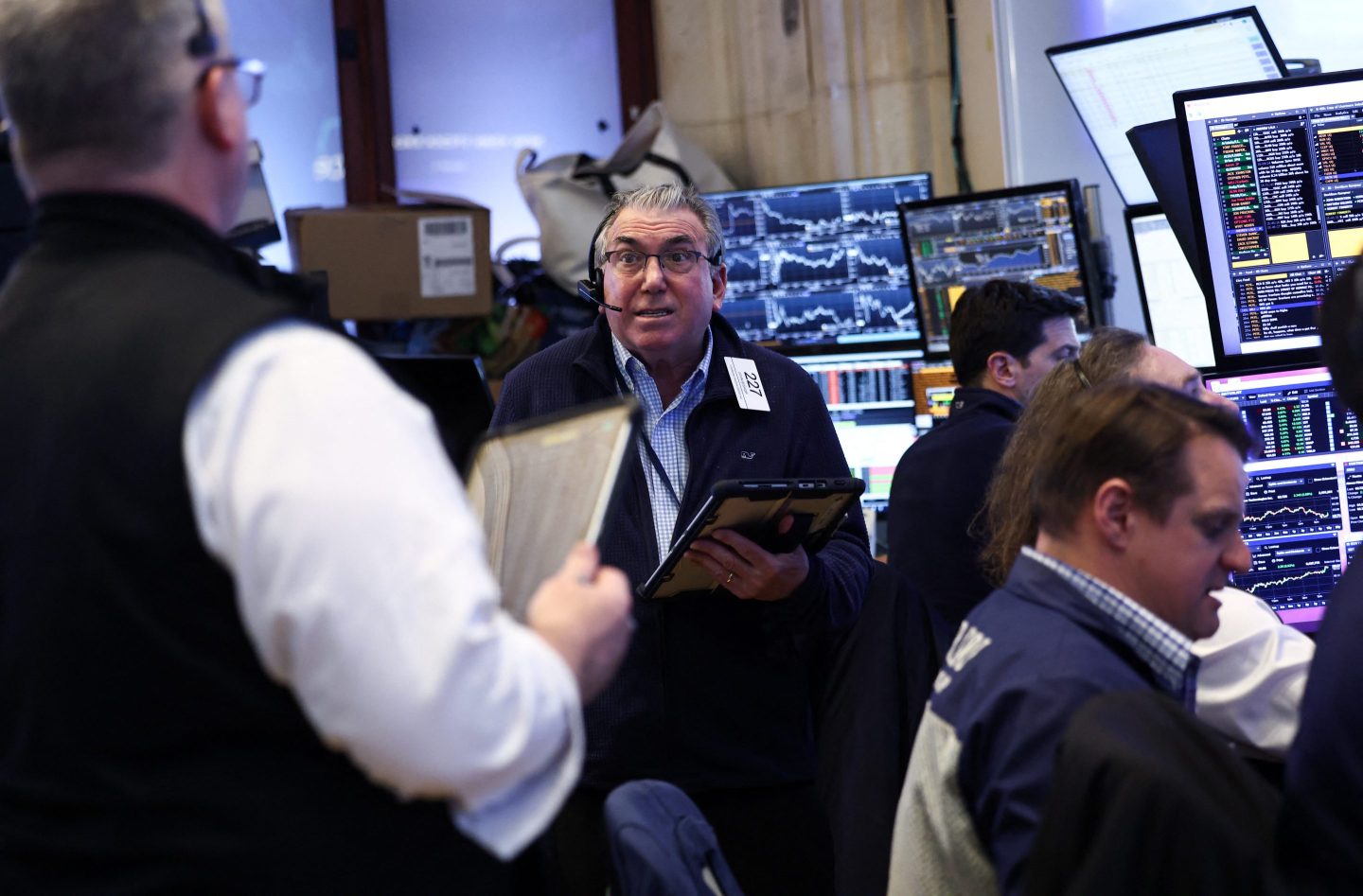
So let’s start with tariffs. The self-proclaimed “tariff man,” after a one month grace period, imposed 25% tariffs on Mexico and Canada, plus an extra tariff on China. Each country retaliated—the early makings of a global trade war. Stocks tumbled on the news, and Wall Street was worried about higher prices, slower economic growth, and increased recession risks. But the impact on markets and the economy, Slok said, depends on how long they’re in place. Commerce secretary Howard Lutnick seems to be hinting at some sort of deal. But only Trump knows his plans for tariffs. 

Nevertheless, Slok claims consumer sentiment and corporate sentiment have already taken a hit; people are expecting fewer jobs ahead, and companies are pulling back on making plans that cost money. “If policy uncertainty persists, consumers and firms may begin to hold back spending decisions,” he said. “Combined with DOGE-driven layoffs, this will put upward pressure on the unemployment rate.” 

Which brings us to the central bank. The Federal Reserve’s dual mandate is stable prices and maximum employment. “From a Fed perspective, the biggest problem is that tariffs increase prices and hence inflation,” Slok wrote. “That is why a trade war, by definition, is a stagflation shock: Higher prices and lower sales. If tariffs on Canada and Mexico continue for several months, then the Fed will focus on the rising unemployment rate and start cutting rates soon.”

Fortune Brainstorm AI returns to San Francisco Dec. 8–9 to convene the smartest people we know—technologists, entrepreneurs, Fortune Global 500 executives, investors, policymakers, and the brilliant minds in between—to explore and interrogate the most pressing questions about AI at another pivotal moment. Register here.
About the Author
By Alena BotrosFormer staff writer
LinkedIn iconTwitter icon

Alena Botros is a former reporter at Fortune, where she primarily covered real estate.

See full bioRight Arrow Button Icon

Latest in Finance

A drill pad is positioned at Critical Metals' Tanbreez Project in Greenland during a drilling campaign.
EnergyRare Earth Metal
In race to end China’s chokehold on critical minerals, the U.S. needs all the friends it can get
By Jordan BlumDecember 9, 2025
3 hours ago
Mark Zandi, chief economist at Moody's Analytics, pictured in May 2023, warns of record debt issuance by AI companies during an infrastructure boom.
Big TechTech
Borrowing by AI companies represents a ‘mounting potential threat to the financial system,’ top economist says 
By Nino PaoliDecember 9, 2025
3 hours ago
Personal Financemortgages
Current mortgage rates report for Dec. 9, 2025: Rates tick up slightly
By Glen Luke FlanaganDecember 9, 2025
3 hours ago
Personal FinanceReal Estate
Current ARM mortgage rates report for Dec. 9, 2025
By Glen Luke FlanaganDecember 9, 2025
3 hours ago
Personal Financemortgage rates
Current refi mortgage rates report for Dec. 9, 2025
By Glen Luke FlanaganDecember 9, 2025
3 hours ago
AIBrainstorm AI
Google Cloud CEO lays out 3-part strategy to meet AI’s energy demands after identifying it as the ‘most problematic thing’
By Jason MaDecember 8, 2025
9 hours ago

Most Popular

placeholder alt text
Real Estate
The 'Great Housing Reset' is coming: Income growth will outpace home-price growth in 2026, Redfin forecasts
By Nino PaoliDecember 6, 2025
3 days ago
placeholder alt text
Investing
Baby boomers have now 'gobbled up' nearly one-third of America's wealth share, and they're leaving Gen Z and millennials behind
By Sasha RogelbergDecember 8, 2025
16 hours ago
placeholder alt text
Uncategorized
Transforming customer support through intelligent AI operations
By Lauren ChomiukNovember 26, 2025
13 days ago
placeholder alt text
Economy
The most likely solution to the U.S. debt crisis is severe austerity triggered by a fiscal calamity, former White House economic adviser says
By Jason MaDecember 6, 2025
3 days ago
placeholder alt text
Success
‘Godfather of AI’ says Bill Gates and Elon Musk are right about the future of work—but he predicts mass unemployment is on its way
By Preston ForeDecember 4, 2025
5 days ago
placeholder alt text
AI
Nvidia CEO says data centers take about 3 years to construct in the U.S., while in China 'they can build a hospital in a weekend'
By Nino PaoliDecember 6, 2025
3 days ago
Rankings
  • 100 Best Companies
  • Fortune 500
  • Global 500
  • Fortune 500 Europe
  • Most Powerful Women
  • Future 50
  • World’s Most Admired Companies
  • See All Rankings
Sections
  • Finance
  • Leadership
  • Success
  • Tech
  • Asia
  • Europe
  • Environment
  • Fortune Crypto
  • Health
  • Retail
  • Lifestyle
  • Politics
  • Newsletters
  • Magazine
  • Features
  • Commentary
  • Mpw
  • CEO Initiative
  • Conferences
  • Personal Finance
  • Education
Customer Support
  • Frequently Asked Questions
  • Customer Service Portal
  • Privacy Policy
  • Terms Of Use
  • Single Issues For Purchase
  • International Print
Commercial Services
  • Advertising
  • Fortune Brand Studio
  • Fortune Analytics
  • Fortune Conferences
  • Business Development
About Us
  • About Us
  • Editorial Calendar
  • Press Center
  • Work At Fortune
  • Diversity And Inclusion
  • Terms And Conditions
  • Site Map

© 2025 Fortune Media IP Limited. All Rights Reserved. Use of this site constitutes acceptance of our Terms of Use and Privacy Policy | CA Notice at Collection and Privacy Notice | Do Not Sell/Share My Personal Information
FORTUNE is a trademark of Fortune Media IP Limited, registered in the U.S. and other countries. FORTUNE may receive compensation for some links to products and services on this website. Offers may be subject to change without notice.