• Home
  • Latest
  • Fortune 500
  • Finance
  • Tech
  • Leadership
  • Lifestyle
  • Rankings
  • Multimedia
CommentaryBillionaires

Billionaires need to launch moonshots in the heartland, not just outer space

By
Nicholas Lalla
Nicholas Lalla
Down Arrow Button Icon
By
Nicholas Lalla
Nicholas Lalla
Down Arrow Button Icon
March 4, 2025, 6:00 AM ET
Nicholas Lalla is an urbanist, working at the intersection of emerging technology and economic development. He is the author of Reinventing the Heartland: How One City’s Inclusive Approach to Innovation and Growth Can Revive the American Dream.
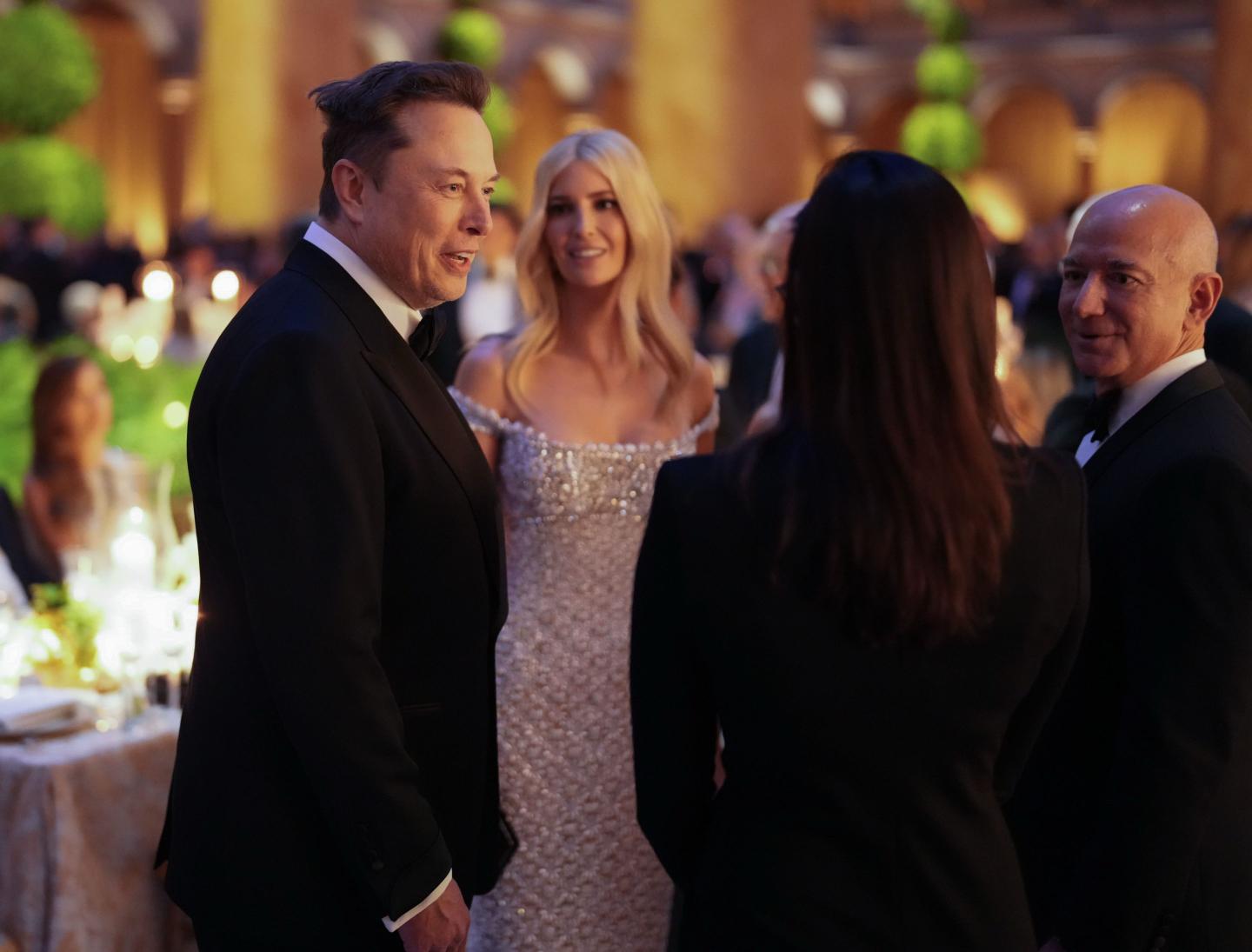
Elon Musk, Ivanka Trump, and Jeff Bezos at the National Building Museum on Jan. 19, 2025 in Washington, D.C.
Elon Musk, Ivanka Trump, and Jeff Bezos at the National Building Museum on Jan. 19, 2025 in Washington, D.C.Jabin Botsford /The Washington Post via Getty Images

A growing cohort of tech billionaires is focused on etching their imprints on extraterrestrial realms. Elon Musk wants to create a moon base and send humans to Mars. Jeff Bezos is testing a massive new rocket for outer space. And Jared Isaacman, the aerospace entrepreneur and Trump’s nominee for NASA administrator, backs colonizing Mars.

Exciting ventures all, but in their gumption, they’ve lost perspective on an opportunity here on planet Earth. The American heartland is increasingly isolated from the innovation economies that made such billionaires so wealthy. Musk, Bezos, Isaacman, and other tech billionaires should harness their immense power and contribute to a bold project at home: helping heartland cities reinvent themselves for the 21st century. The payoff from sparking Midwestern economic moonshots that create good-paying jobs may not be as romantic as playing out some Star Trek fantasy, but America needs tech billionaires to step into a more civic-minded role—and the rewards are likely to be profound.

Enduring legacies

In previous generations, industry titans harbored their own big dreams at the vanguard of innovation. During Cornelius Vanderbilt’s lifetime, steamship races on the Hudson River were a source of public spectacle. Despite the monopolies that made robber barons like Vanderbilt rich, many of their audacious investments were accompanied by a separate and contemporaneous wish to pull the whole of society up along with them. (Vanderbilt would go on to seed the Nashville university named in his honor.) The landmarks such barons left America reflected their desire to extend a ladder back down to those being left behind by technological change.

Today, the absence of any similar impulse is working to sobering effect. The decay across the middle of America isn’t just bad for those who feel trapped there in cycles of downward mobility—it also presents an opportunity for those billionaire investors and philanthropists to establish a positive legacy. Rather than look to the stars, they should seize the opportunity under their noses.

I speak from experience. In 2019, I founded Tulsa Innovation Labs, an economic development organization supported by oil tycoon George Kaiser and his family foundation. With a $6 billion endowment, Kaiser’s philanthropy is transforming Tulsa by diversifying the region’s oil and gas economy and catalyzing an innovation ecosystem. In addition to Tulsa Innovation Labs, Kaiser has funded Tulsa Remote, an incentive program attracting remote tech workers to northeast Oklahoma; Build in Tulsa, which supports Black startup founders; and the Atlas School, a coding bootcamp. After a new approach to economic development and public, private, and social sector investment, the region is expected to grow at least 20,000 tech jobs over the next decade—about a third of which are attainable without a bachelor’s degree.

Investing in middle America

Tulsa is a shining example of what could happen if some of the country’s 800-plus billionaires began launching moonshots here at home and then began holding each other accountable for following through as civic leaders. The needs are desperate. In the world of technology, AI is all the rage—the next frontier in a perpetual desire to disrupt less productive patterns in the economy and solve intractable scientific problems.

But for most of America, the labor market disruptions that could result from AI are a rumbling source of terror. For all that upheaval is celebrated by techies in New York, Seattle, and Boston, it’s viewed as a looming scourge in St. Louis, Cleveland, and Kansas City. And that is casting a generalized pall over the heartland that has been decades in the making.

In places that thrived through the post-World War II era, the working class is hurting, and the middle class is shrinking. The tech economy feels as distant as Mars. But those places would flourish again if their potential was recognized and cultivated in a smart and judicious way with a bit more investment from those otherwise focused on the stratosphere.

Supporting entrepreneurs

First, those interested in reinventing the heartland need to pursue the goal strategically—this can’t be done as a slapdash effort driven solely by personal interests. Chicago’s economy is enormous, for example, but it lags behind coastal peers in tech. Billionaire heiress Penny Pritzker’s nonprofit P33, an inclusive growth organization she launched, has crafted a targeted strategy to bolster a deepening well of innovation and entrepreneurship in quantum, biotechnology, and decarbonization—clusters ripe for growth in the Windy City. Chicago already boasts great hospitals and universities. Pritzker, who served as U.S. Commerce Secretary in the Obama admin, is weaving those existing assets into a new tech community and creating accessible pathways for Chicagoans to benefit from it.

Second, resources need to be deployed on a systematic basis, not as one-off and disconnected projects. Just as communities are interdependent, so too are innovation ecosystems. Universities, financiers, entrepreneurs, and more need one another to grow together. When the Walton Family decided to breathe new life into Northwest Arkansas, they not only invested in the local university and workforce system, but they also funded Right to Start, an initiative to support entrepreneurs from underserved communities, and built networks connecting founders, mentors, capital, and talent. To build an entrepreneurial culture, they needed to support several nodes of regional life, and in doing so, are proving that there’s real tech potential in rural parts of America.

Finally, investors should summon the courage to make big, early bets, on the expectation that others will follow if they do. The most significant barrier for most heartland cities in transitioning legacy economies to tech is in attracting their first significant backer. After Bill Ford Jr., the great-grandson son of Henry Ford, founded Michigan Central, Detroit’s 30-acre epicenter for tech and innovation, the city and state showed a new willingness to invest, and then Google entered with another major investment. Absent a commitment to Detroit’s future and that first green light from Ford, it’s not clear that the other investments would have materialized.

A more prosperous U.S.

Ventures in the cosmos and the heartland need not be mutually exclusive—but the balance of investment in these two distinct realms needs to change, and fast. America’s geography of innovation is dangerously skewed. Concentrating wealth and opportunity on the coasts leaves the nation vulnerable to economic and social instability, while limiting our global competitiveness.

Billionaires have the power to build a more resilient, equitable, and prosperous America; to do so, they should work with heartland cities in the spirit of collaboration, not colonization. The question they must ask themselves is simple: Do they want their legacies to be defined by vanity projects, or do they want to be remembered for reviving the American Dream? Mars can wait. America’s heartland cannot.

The opinions expressed in Fortune.com commentary pieces are solely the views of their authors and do not necessarily reflect the opinions and beliefs of Fortune.

Join us at the Fortune Workplace Innovation Summit May 19–20, 2026, in Atlanta. The next era of workplace innovation is here—and the old playbook is being rewritten. At this exclusive, high-energy event, the world’s most innovative leaders will convene to explore how AI, humanity, and strategy converge to redefine, again, the future of work. Register now.
About the Author
By Nicholas Lalla
See full bioRight Arrow Button Icon

Latest in Commentary

Finance
Lorem ipsum dolor sit amet, consectetur adipiscing elit, sed do eiusmod tempor incididunt ut labore et dolore magna aliqua. Ut enim ad minim veniam
By Fortune Editors
October 20, 2025
Finance
Lorem ipsum dolor sit amet, consectetur adipiscing elit, sed do eiusmod tempor incididunt ut labore et dolore magna aliqua. Ut enim ad minim veniam
By Fortune Editors
October 20, 2025
Finance
Lorem ipsum dolor sit amet, consectetur adipiscing elit, sed do eiusmod tempor incididunt ut labore et dolore magna aliqua. Ut enim ad minim veniam
By Fortune Editors
October 20, 2025
Finance
Lorem ipsum dolor sit amet, consectetur adipiscing elit, sed do eiusmod tempor incididunt ut labore et dolore magna aliqua. Ut enim ad minim veniam
By Fortune Editors
October 20, 2025
Finance
Lorem ipsum dolor sit amet, consectetur adipiscing elit, sed do eiusmod tempor incididunt ut labore et dolore magna aliqua. Ut enim ad minim veniam
By Fortune Editors
October 20, 2025
Finance
Lorem ipsum dolor sit amet, consectetur adipiscing elit, sed do eiusmod tempor incididunt ut labore et dolore magna aliqua. Ut enim ad minim veniam
By Fortune Editors
October 20, 2025

Most Popular

Finance
Lorem ipsum dolor sit amet, consectetur adipiscing elit, sed do eiusmod tempor incididunt ut labore et dolore magna aliqua. Ut enim ad minim veniam
By Fortune Editors
October 20, 2025
Finance
Lorem ipsum dolor sit amet, consectetur adipiscing elit, sed do eiusmod tempor incididunt ut labore et dolore magna aliqua. Ut enim ad minim veniam
By Fortune Editors
October 20, 2025
Finance
Lorem ipsum dolor sit amet, consectetur adipiscing elit, sed do eiusmod tempor incididunt ut labore et dolore magna aliqua. Ut enim ad minim veniam
By Fortune Editors
October 20, 2025
Finance
Lorem ipsum dolor sit amet, consectetur adipiscing elit, sed do eiusmod tempor incididunt ut labore et dolore magna aliqua. Ut enim ad minim veniam
By Fortune Editors
October 20, 2025
Finance
Lorem ipsum dolor sit amet, consectetur adipiscing elit, sed do eiusmod tempor incididunt ut labore et dolore magna aliqua. Ut enim ad minim veniam
By Fortune Editors
October 20, 2025
Finance
Lorem ipsum dolor sit amet, consectetur adipiscing elit, sed do eiusmod tempor incididunt ut labore et dolore magna aliqua. Ut enim ad minim veniam
By Fortune Editors
October 20, 2025
Fortune Secondary Logo
Rankings
  • 100 Best Companies
  • Fortune 500
  • Global 500
  • Fortune 500 Europe
  • Most Powerful Women
  • World's Most Admired Companies
  • See All Rankings
  • Lists Calendar
Sections
  • Finance
  • Fortune Crypto
  • Features
  • Leadership
  • Health
  • Commentary
  • Success
  • Retail
  • Mpw
  • Tech
  • Lifestyle
  • CEO Initiative
  • Asia
  • Politics
  • Conferences
  • Europe
  • Newsletters
  • Personal Finance
  • Environment
  • Magazine
  • Education
Customer Support
  • Frequently Asked Questions
  • Customer Service Portal
  • Privacy Policy
  • Terms Of Use
  • Single Issues For Purchase
  • International Print
Commercial Services
  • Advertising
  • Fortune Brand Studio
  • Fortune Analytics
  • Fortune Conferences
  • Business Development
  • Group Subscriptions
About Us
  • About Us
  • Press Center
  • Work At Fortune
  • Terms And Conditions
  • Site Map
  • About Us
  • Press Center
  • Work At Fortune
  • Terms And Conditions
  • Site Map
  • Facebook icon
  • Twitter icon
  • LinkedIn icon
  • Instagram icon
  • Pinterest icon

Latest in Commentary

agentic
CommentaryAI agents
Why your data infrastructure — not your AI model — will determine whether Agentic AI scales
By Jeffrey Sonnenfeld, Stephen Henriques, Catherine Dai and Zander JeinthanuttkanontApril 30, 2026
1 hour ago
hoskins
Commentaryoffices
Gensler Co-Chair: Hot-desking was supposed to save money. It may be costing you your culture
By Diane HoskinsApril 30, 2026
3 hours ago
tillis
CommentaryCongress
Thom Tillis: Free markets built American prosperity. Government intervention puts it at risk
By Thom Tillis and John StanfordApril 30, 2026
4 hours ago
iran
CommentaryIran
The Strait of Hormuz is a data problem, not just a military one
By Erik Bethel and Ami DanielApril 30, 2026
5 hours ago
hollywood
CommentaryMarketing
I spent 20 years learning to navigate an industry. Then I built a campaign for the man who’s dismantling it
By Matti YahavApril 29, 2026
24 hours ago
aging
HealthLongevity
We’re the CEOs of Peloton and the Hospital for Special Surgery. Living longer isn’t enough, we need to live better, too
By Bryan T. Kelly and Peter SternApril 29, 2026
1 day ago

Most Popular

Apple cofounder Ronald Wayne—whose stake would be worth up to $400 billion had he not sold it in 1976—says that at 91, he has no regrets
Success
Apple cofounder Ronald Wayne—whose stake would be worth up to $400 billion had he not sold it in 1976—says that at 91, he has no regrets
By Preston ForeApril 27, 2026
3 days ago
Jamie Dimon gets candid about national debt: ‘There will be a bond crisis, and then we’ll have to deal with it’
Economy
Jamie Dimon gets candid about national debt: ‘There will be a bond crisis, and then we’ll have to deal with it’
By Eleanor PringleApril 29, 2026
1 day ago
‘Take the money and run’: Johns Hopkins economist Steve Hanke on why the UAE quit OPEC
Energy
‘Take the money and run’: Johns Hopkins economist Steve Hanke on why the UAE quit OPEC
By Shawn TullyApril 29, 2026
1 day ago
‘The cost of compute is far beyond the costs of the employees’: Nvidia executive says right now AI is more expensive than paying human workers
AI
‘The cost of compute is far beyond the costs of the employees’: Nvidia executive says right now AI is more expensive than paying human workers
By Sasha RogelbergApril 28, 2026
2 days ago
‘They left me no choice’: Powell isn’t going anywhere—blocking Trump from another Fed appointee
Banking
‘They left me no choice’: Powell isn’t going anywhere—blocking Trump from another Fed appointee
By Eva RoytburgApril 29, 2026
18 hours ago
More than two-thirds of U.S. schools say they’re unable to afford the cost of student free lunch—and MAHA’s dietary guidelines may make it worse
Economy
More than two-thirds of U.S. schools say they’re unable to afford the cost of student free lunch—and MAHA’s dietary guidelines may make it worse
By Sasha RogelbergApril 29, 2026
1 day ago

© 2026 Fortune Media IP Limited. All Rights Reserved. Use of this site constitutes acceptance of our Terms of Use and Privacy Policy | CA Notice at Collection and Privacy Notice | Do Not Sell/Share My Personal Information
FORTUNE is a trademark of Fortune Media IP Limited, registered in the U.S. and other countries. FORTUNE may receive compensation for some links to products and services on this website. Offers may be subject to change without notice.