To compete in the current landscape, a coffee shop can no longer simply be an a straightforward place to get a black cup of coffee. The rise of cafe culture and remote work has led customers to desire more food options, trendy drinks—both hot and cold—and sometimes even more importantly, great WiFi.
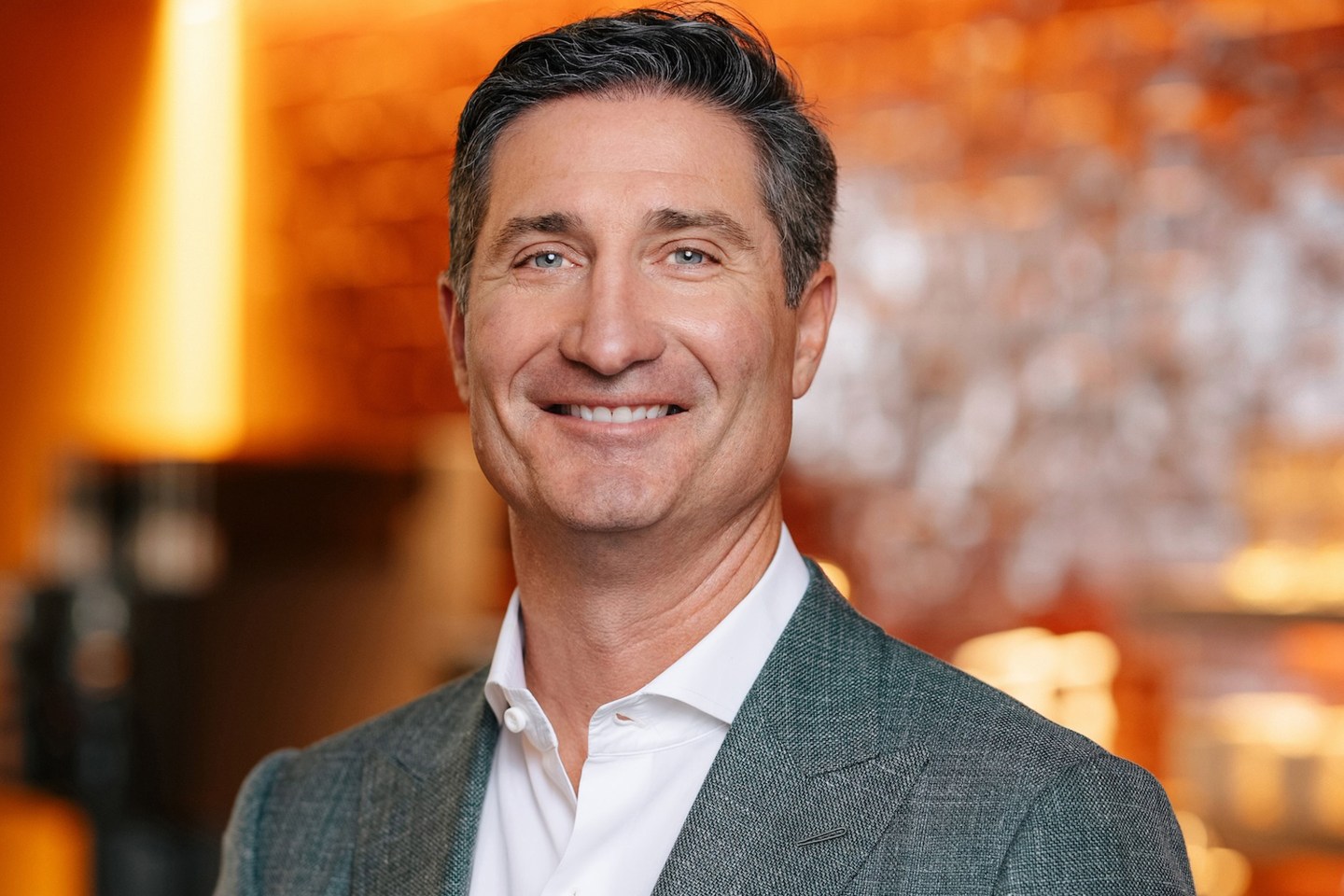
In Starbucks’ latest earnings call, CEO Brian Niccol commented on the brand’s ability to meet these consumer needs and make them fall in love with the brand again. “We’re going to, once again, be loved for our coffee, loved for the warm, loved for kind of the welcoming coffeehouse…that we have,” he said.
The company is banking on cozy mugs and meticulously curated macchiato art to bring back that coffeehouse feel that he hopes will entice customers.
One major theme of the call was menu optimization, both in simplifying the available food and drink items and also improving the digital menu displays in-store.
In the wake of an expected 30% reduction in menu choices, Niccol said the new displays, “give us the flexibility to do the merchandising of kind of different food experiences or drink experiences in the afternoon versus the morning,” while also helping to “reflect the coffeehouse feel and better showcase our simplified menu.”
Niccol also touched on Starbuck’s goal of attracting more Gen Z customers. In addition to highlighting the new digital menu boards, as well as removing extra charges for nondairy milk, Niccol said, “If we bring smart flavors with tea, refreshers, cold beverages, that’s inclusive of even iced coffee or cold brew, we continue to see progress with the younger customers.”
Some key takeaways below, followed by the full earnings transcript:
- Q1 consolidated revenue remained flat at $9.4 billion
- Starbucks is aiming to change overarching strategy, focusing on underlying issues and creating an environment of sustainable growth
- Goal to double U.S. store count
- The company is investing in its workforce, including a new precision scheduling and routine system, doubling paid parental leave, and committing to promoting 90% of retail leadership internally
Good afternoon. My name is Diego, and I will be your conference operator today. I would like to welcome everyone to Starbucks’ First Quarter Fiscal Year 2025 Conference Call. [Operator Instructions] I will now turn the call over to Tiffany Willis, Senior Vice President of Investor Relations. Ms. Willis, you may now begin your conference.
Tiffany Willis, SVP of Investor Relations: Thank you, Diego, and good afternoon, everyone, and thank you for joining us today to discuss Starbucks’ first quarter fiscal year 2025 results. Today’s discussion will be led by Brian Niccol, Chairman and Chief Executive Officer; and Rachel Ruggeri, Executive Vice President and Chief Financial Officer.
This conference call will include forward-looking statements, which are subject to various risks and uncertainties that could cause our actual results to differ from these statements. Any such statements should be considered in conjunction with cautionary statements
in our earnings release and risk factors discussed in our filings with the SEC, including our latest annual report on Form 10-K and quarterly report on Form 10-Q. Starbucks assumes no obligation to update any of these forward-looking statements or information.
Revenue, operating margin, and EPS growth metrics on today’s call are measured in constant currency and represent non-GAAP measures. Please refer to the earnings release and our website at investor.starbucks.com to find reconciliations of these non-GAAP measures to their corresponding GAAP measures. This conference call is being webcast, and an archive of the webcast will be available on our website through Friday, March 14, 2025.
Also for your calendar planning purposes, please note that our second quarter fiscal year 2025 earnings conference call has been tentatively scheduled for Tuesday, April 29, 2025. And with that, I’ll now turn the call over to Brian.
Brian Niccol, Chairman & CEO: Good afternoon, and thank you for joining today. Over the past 4 months, we’ve been focused on getting Back to Starbucks and those things that have always set us apart, a welcoming coffeehouse where people gather and where we serve the finest coffee handcrafted by our skilled baristas. We believe it’s the fundamental change in strategy we needed to solve our underlying issues, restore confidence in our brand, and return the business to sustainable long-term growth. While we’re only 1 quarter into our turnaround, we’re moving quickly to act on the Back to Starbucks efforts we outlined on our last call, and to date, we’ve seen a positive response.
As Rachel will outline in greater detail, our financial performance met our expectations for the quarter with a total company revenue of $9.4 billion, a global comparable store sales decline of 4%, a global operating margin of 11.9%, and overall earnings per share of $0.69. To be clear, these results have room for improvement, but I’m confident the disciplined investments we’re making in labor, marketing, technology, and stores this fiscal year will help stabilize the business and position Starbucks for future growth. We’re also working to change the role, structure and size of our support teams to improve efficiency and accountability. This will ensure we deliver on our commitments and our work to get Back to Starbucks.
Let me share with you some of the progress we’ve made through the quarter and what we’re focusing on next. Our path Back to Starbucks in the U.S. is driven by 4 core initiatives: reintroduce Starbucks to the world, deliver the customer experience to win the morning, reestablish Starbucks as the community coffeehouse, and ensure Starbucks is the unrivaled best job in retail, recognizing our success starts and ends with our Green Apron partners.
During the quarter, we moved quickly to refocus the business, our mission, and our marketing to align with our core identity as the premier purveyor of the finest coffee in the world. We started by reducing the frequency of discount-driven offers, resulting in 40% fewer discounted transactions year-over-year. We also removed the extra charge for nondairy milk customizations and identified several other steps we can take to make our pricing architecture more transparent for customers. And just this week, we launched a new Coffee Forward U.S. marketing campaign, reintroducing the brand to a broader customer audience.
Our work to reintroduce our brand is just beginning, but our core business is already strengthening, demonstrating that when we talk about our business, customers respond. Through the quarter, we saw a shift in our sales mix towards coffee and espresso-based beverages, which overdelivered and compensated for lower-than-expected performance across our holiday promotions. We’ve been focused on simplifying our menu to position partners for success, improve consistency, drive customer satisfaction, and enhance our economics.
As part of this work, we made some late simplifications to our holiday product lineup and believe we have more opportunity ahead as we follow a disciplined stage-gate process to innovate and bring to market fewer better beverage and food offerings that reflect our premium positioning. In the coming months, you’ll see us begin to optimize our menu offerings, resulting in a roughly 30% reduction in both beverages and food SKUs by the end of fiscal year 2025.
As we do, we’ll work to lead this market with breakthrough beverage and food innovation. We’ll do this by being responsive to customer trends and their changing preferences. We’ll rely on our highly engaged Green Apron partners for inspiration, like we did with our Lavender lineup last year and will be more responsive and tuned into cultural moments like we did with the Dubai Matcha. We also saw continued improvement in comp trends driven by Back to Starbucks efforts launched during Q1.
Non-Starbucks Rewards customer traffic grew quarter-over-quarter. Starbucks Rewards membership and spend grew both quarter- over-quarter and year-over-year. And price parity for nondairy milk customizations brought back lapsed Starbucks Rewards members. Our U.S. category share among QSRs also recovered in Q1, following 2 quarters of decline. These things tell us our actions are resonating with customers. Progress like this shows me that the Starbucks brand is still resilient and strong and that we have significant future potential. More importantly, it shows that we can sell more of our core beverages simply by demonstrating our premium value.
A key part of the premium value we provide is quickly and consistently delivering a high-quality handcrafted beverage to customers. The handoff from our barista to the customer is our brand moment of truth, and we’ve been working hard to get that moment right. Through the quarter, we’ve continued to test and learn as we position the business to achieve our 4-minute throughput goal with a moment of connection. It’s become clear through our pilot work that order sequencing creates more of a bottleneck than capacity. In short, investments in staffing and deployment, processes and algorithm technology demonstrate the greatest opportunity to deliver a 4- minute wait time in most of our cafes.
As a result, we’ve started to segment stores by transaction volume and are now targeting installation of Siren equipment only in our highest quartile stores where it is needed to meet our throughput expectations. We’ve also invested additional coverage hours across more than 3,000 U.S. company-operated stores through precision scheduling, introduced new brewed coffee and tea routines, and simplified beverage builds. And soon, we’ll launch a pilot across 700 stores, looking at staffing levels to improve our Green Apron partners’ ability to serve the world’s finest coffee with a moment of connection.
We’ll use learnings from this to inform the future investments we need to make in store coverage hours to deliver both an exceptional partner and customer experience and further differentiate our brand. Looking forward, we’re beginning to pilot a new in-store prioritization algorithm and are exploring other technology investments to improve order sequencing and our efficiency behind the counter. We’re also progressing efforts that build on the strength and popularity of the Starbucks app. This includes development of a capacity-based time slot model that allows customers to schedule mobile orders and a midyear update that will simplify customization options, improve upfront pricing, and provide real-time price changes as customers customize beverages.
Lastly, we’re planning to fully deploy digital menu boards and cafes across our U.S. company-owned stores over the next 18 months to make our offerings more easily understood and to better show customization add-ons.
We also made strides to reestablish Starbucks as the community coffeehouse. To make it easier for our customers to enjoy a cup of coffee their way, condiment bars will be back in all our U.S. company-owned stores by the end of the week. We reintroduced ceramic mugs and handwritten notes on cups to better connect with customers and elevate the cafe experience for those who choose to stay and work. We rolled out new cafe service standards and expanded free refills on hot and iced brewed coffee and tea to non-Starbucks Rewards customers and participating stores.
We announced a new coffeehouse code of conduct to prioritize our spaces for customers, and we continue to target a full rollout of Clover Vertica brewers by the end of fiscal year 2025. We’re taking a hard look at our store portfolio as well. In the U.S. alone, we still see the potential to double our store count while improving the overall health of our portfolio. We’ll do this through a strong store renovation program, new store builds and store closures. And we’re going to make sure our stores are warm and welcoming with work continuing on store design standards and cost to build.
Early customer and partner reactions to our plans show we’ve got the right strategy. Both the reintroduction of coffee condiment bars and the expansion of free refills were identified as top drivers of purchase intent. In the coming months, our teams will be focused on refreshing our menu boards and improving cafe merchandising to reflect the coffeehouse feel and better showcase our simplified menu. We’ll start an expanded test of risers and shelves at the point of handoff to help separate the cafe and mobile order experience, and we’ll begin to scale projects to increase and diversify seating across more of our cafes.
To deliver a great customer experience, we also have to deliver a great partner experience. It’s why everything we do starts and ends with our Green Apron partners and why I’m committed to ensuring Starbucks is the unrivaled best job in retail. In the past quarter, we more than doubled paid parental leave for eligible U.S. store partners, and we made a new commitment to promote from within 90% of retail leadership roles over the next 3 years, helping thousands of partners grow their careers and their incomes. As a result, through the quarter, shift completion, average hours per partner, partner retention, and hourly partner engagement improved.
Looking forward, we’ll continue to prioritize efforts that help our Green Apron partners succeed both at work, through continued improvements to our staffing model and in their lives through industry-leading benefits, competitive pay, and careers that create lasting economic opportunity.
Turning to international. I’ve had a chance to see our operations in Italy, Japan, and South Korea and meet with our international license business partners over the past few months. As I shared with them, many of our international markets set an example for the experience we aim to deliver in the U.S. and present a great long-term opportunity, particularly as we continue to grow our store footprint and recover our business in certain challenged markets.
Just last week, I also made my first market visit to China. While there, I saw firsthand the strength of our brand, our team, and the premium customer experience we offer. I saw how dynamic the market is and the opportunities ahead. I also saw several near-term changes we can make to stabilize and strengthen our business while continuing to explore strategic partnerships to grow in China. We’re processing these learnings and we will share more as we do. From my time there, I also believe there are several lessons we can learn from the strength of our supply chain in China to realize opportunities in our North American business.
If you take 1 thing from today’s call, let it be this. Despite near-term challenges, we have significant strengths and a clear plan. The response we’ve seen since fundamentally shifting our strategy to get Back to Starbucks gives us confidence we’re on the track to turn the business around. We are where we want to be 1 quarter in, but much of our work is just beginning. As we continue to learn and implement our Back to Starbucks plan, I believe we’ll make it easier to be a customer and, in turn, I believe they’ll visit more often.
We’ll also find more ways to set our partners up for success so they’re able to deliver a great customer experience every time. In doing so, we’ll reinvigorate our brand, drive stronger financial returns and return Starbucks to growth. There is important work ahead, and I look forward to bringing you along. With that, I’ll turn it over to Rachel.
Rachel Ruggeri, Executive VP & CFO: Thank you, Brian, and good afternoon, everyone. As Brian shared, we’re pleased with our start to fiscal year 2025 with our Q1 performance meeting our expectations. Our Back to Starbucks strategy has already driven early progress, including gradual top line improvement, giving us confidence that we’re focused on the right priorities. Our Q1 consolidated revenue was $9.4 billion, flat to the prior year, reflecting 7% net new company-operated store growth over the past 12 months, offset by a 4% decline in comparable store sales.
Our global comparable store sales decline was primarily due to a 4% decline in the U.S. U.S. comparable store sales improved sequentially throughout the quarter, most evident in the morning daypart as non-Starbucks Rewards customers grew from our strategic shift to broader marketing. Our ticket growth in the U.S. remained strong at 4% due to the benefits from the prior year pricing,
attach and fewer discounts. These drivers more than offset mix shift into lower-priced beverages and removal of the extra charge for nondairy milk customizations.
Turning to store growth. We opened 377 net new stores globally in Q1. And in the U.S., our new company-operated stores contributed nearly 90% revenue incrementality to the trade areas. As we continue to evaluate our stores globally, we will make disciplined decisions to further strengthen and grow our portfolio, reestablishing ourselves as the community coffeehouse as we drive sustainable long-term growth.
Shifting to margin. Our Q1 consolidated operating margin was 11.9%, contracting 380 basis points from the prior year, primarily driven by deleverage and the investments in support of Back to Starbucks, including store partner wages, benefits and hours, and the removal of the extra charge for nondairy milk customizations. The contraction was partially offset by annualization of pricing and out- of-store efficiencies largely within our supply chain.
Given the Q1 margin contraction, I want to provide additional insight into the investments as well as the offsetting efficiencies. Let me start with investments, a critical initial step for the Back to Starbucks turnaround. As Brian shared, to deliver our customer experience to win the morning, we invested additional coverage hours to support the service model of a 4-minute wait time and enabling our hospitality point of difference, moments of connection. These additional hours, coupled with wage and benefit rate increases, resulted in a 180 basis point margin pressure in the North America segment, excluding labor productivity.
As we focus on delivering the customer experience, we continue to evaluate labor needs across our store portfolio as we surgically optimize staffing levels. As you likely saw, we dialed up our marketing communication, including linear TV media as part of our priority to reintroduce Starbucks to the world. We were pleased with the positive customer reactions and improvement in our comp trend. Overall promotional spend, which is inclusive of marketing spend and discounts, remains largely neutral relative to prior year.
To improve value perception, we also removed the extra charge for nondairy milk customizations, an impact of 60 basis points on the segment’s margin in the quarter. Following this announcement, we saw strong increases in customer interactions with our brand as Brian shared previously. Additionally, nondairy customizations grew mid-single digits year-over-year off a double-digit decline in the prior year. Collectively, these targeted investments are showing signs of early progress. While there is a near-term impact on margin, we expect that through our disciplined approach to test and learn, we will make the right investments to drive long-term growth.
Importantly, we also continue focusing on driving efficiencies across the company as we balance our investments while driving margin expansion over time. In Q1, our in-store efficiencies increased as a result of improved partner stability as we focus on the Back to Starbucks strategy. Out of store, we further optimized our supply chain and recalibrated rates, resulting in meaningful sourcing efficiencies in the quarter. Collectively, in- and out-of-store efficiencies yield savings of approximately 150 basis points in Q1. We will continue to secure additional efficiencies to help fund investments as we leverage a disciplined and data-driven approach to our turnaround.
Shifting from efficiencies to G&A. For fiscal year 2025, we expect our G&A percentage to be higher than prior year as we lap lower performance-based compensation. Specific to Q2, we expect G&A as a percentage of revenue to spike as we transform the support organization, incurring near-term restructuring charges inclusive of severance pay and related benefits. At this time, we’re still working through the impact of this transformation work, and we’ll share more details regarding the financial impact during our Q2 earnings call.
Q1 EPS was $0.69, down 22% from the prior year, primarily reflecting the impact of deleverage and heightened investments. Q1 EPS also included a $0.02 year-over-year benefit from a lower effective tax rate primarily driven by a discrete item, which is not expected in the balance of this fiscal year.
Now looking at our full fiscal year 2025. Although our guidance is suspended, I’d like to provide some insights into our quarterly earnings shape. EPS is expected to be the lowest in Q2 on an absolute basis due to seasonality, the organizational restructuring I just spoke about, and elevated investments with year-over-year pressure also intensifying in the quarter. EPS is then expected to improve in the latter half of the fiscal year 2025, both sequentially and year-over-year.
Some additional aspects to consider as you think about our full year 2025 include the coffee landscape and our Channel Development segment. In regards to the coffee landscape and the trajectory of seat price, given our overall practices and hedging strategy, our year- over-year coffee price impact was minimal in Q1. We currently estimate Q2 EPS to be pressured by approximately $0.01, net of hedge gains. As a reminder, our total cost of green coffee is typically limited to 10% to 15% of our product and distribution costs.
In addition to the direct coffee pressure on EPS I just mentioned, seat price volatility also impacts our Channel Development segment and in a more meaningful way. Although we can pass this cost to our business partners, higher prices to an already pressured consumer will likely impact our segment volumes and ultimate revenue and profitability.
Finally, our balance sheet remains strong and we remain committed to our BBB+ credit rating. We continue to prioritize shareholder value through dividends, providing a predictable return of capital while we turn around our business. In closing, we are encouraged by our Q1 results, which demonstrated the effectiveness of our Back to Starbucks strategy. Although we are in the beginning chapter and have much more work ahead of us, my thanks goes to our incredible partners across the globe who are unwavering in their commitment to bring our strategy to life. And with that, Brian and I are happy to take your questions. Thank you. Operator?
Operator: Your first question comes from David Tarantino with Baird.
David Tarantino: My question, Brian, is on the sales improvement you saw through the quarter. I believe Rachel mentioned that comps improved as the quarter progressed. I guess, can you maybe talk about whether that was comparison-related or do you think you’re seeing some underlying structural improvement? And if you’re seeing some structural improvement, what do you think is driving that in terms of kind of the key components of your plan? Is it whether it be advertising or store operations? Maybe you can frame that up for us.
Niccol: Yes. And yes, as Rachel said, the good news is we did see kind of sequential improvement throughout the quarter. And I think I mentioned this in my remarks. The thing that was nice to see is as we stepped away from discounting and went into more broad-based marketing efforts to demonstrate the craft of our coffee as well as the experience or the premium experience you get from Starbucks. We saw non-Rewards customers respond with more traffic and more transactions, which was really nice to see how that progressed kind of quarter-to-quarter.
The other thing, too, that was nice to see is we saw our morning daypart continue to show improvements quarter-to-quarter as well. And so I think it’s a combination of shifting the approach as far as reaching both Rewards and non-Rewards customers with, I think, a compelling message around the craft and the quality of our coffee and our experience.
And then also, I think our partners in the stores are really embracing getting Back to Starbucks and enjoying making the espresso drinks and providing people that craft experience. And as you’ve seen even most recently, the new Back to Starbucks rollout that we’ve got in progress, and I was in some stores even this morning, and the energy is really exciting to see both from our partners and our customers. Our customers are feeling the enhanced experience coming from our partners. So definitely baby steps in both of these areas but all moving in the right direction.
Operator: Your next question comes from Andrew Charles with TD Cowen.
Andrew Charles: Brian, can you talk a little bit more about Tressie Lieberman’s plan of attack to help build on the initial marketing work around reintroducing the brand? And curious, last year, it was disclosed about $600 million of advertising spend. What level can we think about for 2025 if you can comment on that as well?
Niccol: Yes. Look, what we’re definitely doing right now is switching the dollars out of discounting into what I would call working dollars for the brands and the brand experience. And so what you’re going to continue to see is you might have saw, we just broke a new ad over the weekend, highlighting, I think, a key point of difference for Starbucks, which is centered on this connection that our baristas and our Green Apron partners have with our customers.
And one of the ways that comes through is writing on cups. And so what I love about this is, look, we’re taking these dollars, allocating it to talk about the brand experience. And it’s in such a way where it’s very executable for people to actually experience it through our partners in the stores. And so you’re going to continue to see us use these dollars to turn it into working dollars to drive towards a brand commitment but then also an experience commitment where hopefully, every time you come into a Starbucks, not only do you get your coffee or your drink but you also get this connection.
And that’s what we’re going to continue to do. I think we’re still finalizing exactly what does that spend look like ongoing. But I like the transition that we’ve made, and I’m optimistic about the campaign that we’ve just started because there’s a lot of additional elements still to come.
Ruggeri: The way to think about it, too, from a marketing as a percentage of revenue, we are increasing it. You could say close to doubling it but we’ve reduced the discount. So we’ve increased overall net revenue while we’re putting it towards, as Brian said, the working dollars in marketing. So it’s neutral to the business overall but you will see a shift in terms of how it shows up in the P&L and in the business.
Operator: And your next question comes from Danilo Gargiulo with Bernstein.
Danilo Gargiulo: Brian, I was wondering if you can help us quantify the impact of the operational improvements that you’re starting to see at Starbucks. Maybe specifically, if you can help us understand maybe what percentage of the stores are operating in line with the 4-minute handover time line that you are expecting from the stores. And what kind of comp differential do you see between the stores that are operating at the level of efficiency that you’re expecting versus the ones that need some incremental time to transform?
Niccol: Yes. So what we’ve done so far is we definitely put the stores into kind of quartiles as it relates to how many transactions they’re working through. And what we’ve — through this work, what we’ve discovered is more of the challenge comes through, frankly, the mobile ordering system not having a sequencing system. And what happens is that counter area gets really crowded, congested. And what occurs for our partners is the work switches to the task of just trying to get drinks and food solved for the rush, as opposed to being able to consistently deliver the moment of connection while they still deliver the coffee drinks.
And so the good news is we have a high percentage of stores that are already comping positively because — and when we look at those stores, we see that the connection and the craft is being executed, and we’re not in as many of these bottleneck situations. And so that’s what we’re focused on is how do we eliminate these bottleneck situations where the mobile ordering really overwhelms kind of the production experience to the point where we can no longer provide a great service experience.
So we’ve seen the difference in performance. We’ve seen the difference in — and that’s from a comp and financial performance. And we’ve also seen the difference in partner satisfaction, customer satisfaction. So we’re working through exactly how we measure these things because, unfortunately, currently, we don’t have a great system in place to measure the time frame on these things, which we are putting into place.
But as I mentioned earlier, the good news is I was in one of our stores this morning where we’ve already started to put this algorithm in that happens kind of behind the scenes. And it smooths out, I would say, those rushes of mobile orders such that our teams are able to provide great moments of connection for the in-cafe customer and the mobile order customer as well as our drive-through customers. And we’re seeing — now we’re only 2 weeks in on this, by the way, and it’s only in 3 stores, but we’re seeing really good performance both in the financial performance, partner satisfaction, and customer satisfaction.
Operator: Your next question comes from Sara Senatore with Bank of America. We’ll move on to the next question. Our next question comes from David Palmer with Evercore ISI.
David Palmer: I wanted to ask you a question about productivity. There was a previous belief that there might be a $4 billion productivity opportunity over the 4 years ending 2028. Obviously, that’s a big number. It could be 250 to 300 basis points of margin help before considering other investments, and that was going to be largely COGS-driven. Do you still see — does Starbucks still see that sort of opportunity before considering investments that you might be making in the business?
Ruggeri: David, this is Rachel. Thanks for the question. What I’d say is we’re continuing to be focused on efficiencies, and we see continued opportunity, both in our store as well as out of store, which is largely, as you pointed out, COGS are through our supply chain. And as I shared in my prepared remarks, we had collectively about 150 basis points of margin expansion this quarter due to the efficiency.
So we continue to believe that’s an important part of how we think about our Back to Starbucks strategy, helping us to balance the investments we’ll be making and eventually leading to margin expansion over time. But I think as far as it relates to the $4 billion, we’re still working through what’s going to be the right level of efficiencies for us as we go forward. And so I wouldn’t stick to the $4 billion. I would just say that we will continue efficiency work as we think about how we drive margin expansion in the future.
Operator: And our next question comes from Brian Harbour with Morgan Stanley.
Brian Harbour: Just on some of the announcements you made about the support organization. You’ve also made some management changes. What needs to change there? I guess, how much do you expect that to change? And sort of related to that, Rachel, I understand the comments on G&A in 2Q. Is this something where you might expect some favorability as we get into 3Q, 4Q and you sort of start to see those changes take hold?
Niccol: Well, first of all, I would say the purpose of the changes is to get more accountability into our key lines of business. So you saw we have — we’re creating the role of a Chief Store Officer. Mike’s responsibility is going to be all about driving excellence in our stores. Putting a Chief Development Officer in place, again ensuring we’re building the right sites with the right design at the right cost and return with having a clear line of sight.
And so similar to what we’re trying to do for driving that accountability through our stores, which is really where the business happens, we want to make sure that we’ve got a support center also focused on supporting the stores in an efficient manner, in an accountable manner to where the business happens. So structurally, that’s what’s going on. And we’re in the process of evolving that over the next couple of months. The second half of that, I’ll let Rachel chime in on that piece.
Ruggeri: So Brian, in terms of your question about the G&A and the impact, as I — as we think about the full year, we would expect, while we’ll have the spike in Q2, as I shared in my prepared remarks, we would expect to see — start to see some savings in Q4 related to that particular effort. But I think what’s important to remember is that we’re also lapping lower performance-based comp this year, and that starts to take an even greater impact in Q3 and Q4.
So net-net, G&A this year will still be higher than prior year as a percentage of revenue, largely given that lap of lower-based performance comp from last year. But yes, you would expect just from the restructuring itself, you would see some benefit in Q4. And then, of course, we will expect this will drive leverage over time.
Operator: Your next question comes from Chris O’Cull with Stifel.
Christopher O’Cull: Brian, as we thought about the business, our view has been that improving the partner experience is somewhat intertwined with improving the customer experience. Are there specific customer experience issues you believe the company can resolve that should also help improve the employee experience? And sort of related to this, when you do — when do you expect the mobile ordering algorithm changes to be implemented?
Niccol: Yes. Look, I think you’re absolutely right. The idea of setting up our partners to be successful in every customer interaction results in, I think, great experiences for our customers. And they are highly intertwined. And I actually believe that’s why it’s so important that we have got kind of that great greeting moment and that great handoff moment.
And what I’m seeing in the kind of the early days of this small pilot is just that, where 2 things are happening: one, the partners are set up to deliver these craft drinks with a great kind of human touch or connection at the speed that makes our customers feel really great about getting their drink or their total orders. So they’re kind of working in tandem because what the algorithm does is it takes the stress out of the system of having the partner have to figure out how to solve these mobile orders that just came in that weren’t sequenced.
Now what it does is it sequences those mobile orders so that it can allow the cafe order to get fulfilled in a timely fashion and with a touch of humanity. And then the same thing happens with the mobile order because now we’re better sequenced stuff for when people come in to give them their drink. So we’re going to continue to expand the pilot. There are some other things we want to test around this with also adding the idea of time slots, how that compares to just changing promise times. So ideally over the next couple of months, we’re going to get a lot of learning, which then will give us clarity on the right timetable to roll out. But don’t have definitive timing just yet.
Operator: And your next question comes from Jeffrey Bernstein with Barclays.
Jeffrey Bernstein: Brian, I know comps always gone outside the tension and justifiably so, but just wanted to talk about unit growth for a moment. I know in the U.S., obviously, the unit growth could be a more consistent driver of top line. And I think you said opportunity to double the store count in the U.S., I believe you were referring, I guess, to the company-operated system, which in the U.S. is already pushing 10,000-plus. So the doubling, I guess, caught me by surprise, that was above my expectation in terms of the total addressable market.
I’m just wondering, as you think about that doubling, like what do you think is the rate of growth that’s appropriate as you look to achieve that? Maybe how did you arrive at that doubling? And are there particular geographies or store types that have greater opportunity than others? Just curious how you think about that TAM in the U.S. and that opportunity.
Niccol: Yes. Look, one of the things I’m really excited about is our ability to execute a smaller format that still has a great seat, okay, and delivers the partner experience or the engine behind the counter so that we can provide these craft drinks in a timely manner with that personal touch. And so when you combine our ability to do the drive-through, the cafe, the mobile ordering in small, medium, large kind of executions, it just starts to open up trade areas that you get really excited about.
And we’re having tremendous success in places like Texas or the southeast. And as we continue to open stores in those areas, they open with great economics and that’s what gives us a lot of confidence, versus there are other markets that, frankly, we have a lot of work to do on just resetting the estate so that we have the right mix of the small, medium, large and the right mix of the access points.
So the good news is the brand has a lot of flexibility in how we execute the experience. And that’s what gives us the confidence that we could double the store count. And then obviously, we get the sequencing figured out on mobile ordering. I think that just frees us up to another degree that we still haven’t totally comprehended, I guess.
Operator: And our next question comes from John Ivankoe with JPMorgan.
John Ivankoe: There’s been at least some conversation about perhaps limiting the menu in the morning products that were really some of the high- repeat products that would be focused on speed, accuracy, consistency, and maybe opening up the afternoon product set were more differentiated and have more customization. So I wanted to get your thought if that was a possibility of maybe having different offerings kind of in the AM and the PM at Starbucks.
And secondly and I think related to that, food warming cabinets does seem to be one of the “easiest” ways to speed up transaction times, specifically in the drive-through. Could you give us an update on that element of Siren specifically in terms of what you might expect the rollout to be?
Niccol: Yes, yes. Thanks for the question. And look, that’s one of the key pieces of driving our digital menu board execution is that does give us the flexibility to do the merchandising of kind of different food experiences or drink experiences in the afternoon versus the morning. And as I mentioned, I think in my prepared remarks, we are dialing back the menu, both in food and beverage to the tune of roughly 30% between now and the end of our fiscal year, which then frees us up, frankly, to make sure we’ve got what I would call the right food offerings in the morning.
And then also, we’re looking at how do we provide the right kind of snack/food offerings as you get further into the day. And like I said, the digital menu boards allow us the flexibility then to merchandise accordingly. Regarding the hot hold equipment, what we find is that’s a great solution depending on the volume or transactions that we have in the store, regardless of whether there’s a drive- through or not. And so you’re right. Obviously, if we had a hot hold when the person just showed up to the order board, it could be much faster.
But we find the trade-off in that hot hold versus just cooking it fresh to order, at those moments, it’s not the right trade-off in investing in that type of equipment and also the experience that you get from it. So right now, it’s much more contingent upon the volume thresholds than it is moving speed along kind of for all day kind of experiences is the way I’d describe it.
Operator: And your next question comes from Katherine Griffin with Bank of America.
Katherine Anne Griffin: This is Katherine on behalf of Sara Senatore. So earlier, I think, Rachel, you were talking about having less promotions as a positive impact on revenue. I think the goal from here is to move towards more of a traffic-driven same-store sales growth model, but we didn’t see much of that this quarter. I think you mentioned that promotional transactions were 40% lower year-over-year. But can you quantify what the impact of that was on ticket? And was that because of fewer promotions? And then I guess to the extent that you’re encouraged by these results, is that what you’re looking at? You’re looking for more full-priced sales?
Ruggeri: I would start by saying, we’re looking for a combination. I mean, our Rewards customers continue to be incredibly important. But we’ve seen value as we speak to all of our customers. And as we’ve shifted out of discounts into more broad-based marketing, that’s helped us reach a broader base of customers, which this quarter, even though we’re early in the turnaround, we saw good signs of progress. As Brian had shared, we had growth in the morning daypart. We had growth across our customer base but our non-SR customers grew quarter-over-quarter. And importantly, we saw their growth as high as where we were about a year ago. So that gives us a lot of confidence that it’s the right strategy.
And in terms of the impact on ticket, as I had shared in my prepared remarks, our ticket in North America was about 4%, a little over 4%. And within that ticket, that was benefiting from annualized pricing but it also benefited from fewer discounts. And that was partially then offset by the mix shift towards lower-priced items as well as the decision we had made to remove the [ all-day ] pricing. So we see that removal of the discount or shifting of the discount, we’re still discounting, but shifting the discount as a way for us to strengthen ticket but also strengthen the overall proposition as we speak to more customers more broadly.
Operator: And your next question comes from Peter Saleh with BTIG.
Peter Saleh: Brian, I want to ask about the Siren System. It sounds like you guys are only going to implement this in the highest quartile stores. Just curious, it sounds like there’s a little bit of a difference from what you were initially expecting last quarter, and I know it’s early, but why don’t the other stores, the remaining systems need it? And can they get to the 4-minute coffee time without this system? I’m just curious as to the timing on rolling this Siren System out to the top-performing stores.
Niccol: Yes. Look, you’re right. It’s a new learning that we picked up over the last couple of months, specifically as we’ve gotten very focused on getting the 4-minute solution and bringing order to mobile ordering. And what has become clear is it’s not — in most stores, it is not driven by a lack of capacity. It’s more the process combined with the algorithm to sequence the mobile orders with the cafe.
So there’s a threshold where the volume gets to a place where the additional equipment is necessary, but that’s only happening in like the top quartile of stores. And in the majority of our stores, just kind of putting the right process, the right deployment combined with the algorithm, we see a big unlock in transaction throughput capability. So that’s what we’re focused on. And it’s a learning we’ve picked up over the last couple of months. And I think this is what’s great about taking the test and learn approach is as we learn, we adapt and what we’re adapting towards is making sure that we get the best experience for both the partner and our customer.
Operator: Your next question comes from Christine Cho with Goldman Sachs.
Hyun Jin Cho: So Brian, as you come into the coffee business with a fresh pair of eyes, I was hoping to get your assessment on the challenges of drawing younger customers back to stores. Do you still view this as an important strategic focus in your turnaround plans in North America? And if so, why do you think they’re more hesitant? Is it premium prices? Is it that they’re drinking less coffee in general? Are they attracted to more local coffeehouses? And more importantly, how do these observations inform your menu and marketing strategy going forward?
Niccol: Yes. Look, obviously, I think we’ve talked about this. One of the things we want to do is broaden our reach. So we’ve said we want to be winning with Gen Z all the way through to the over 50, 60 crowd. And what we’ve discovered is, and this is actually a really nice piece of the business, is the younger customer is definitely attracted to the whole tea proposition that we have, the matcha latte solution. You might have seen we most recently brought out the unsweetened matcha. And then that caught a little bit of social media buzz with the Dubai Matcha.
And so what we’re seeing, we’re seeing nice movement actually in all age groups. And it does appear that if we bring smart flavors with tea, refreshers, cold beverages, that’s inclusive of even iced coffee or cold brew, we continue to see progress with the younger customers. So I think it’s just — it’s a much more balanced approach is how I would describe it as opposed to a, you know what, we’re just focused on young and cold drinks. That’s not what we want to be about.
We want to be about being a solution, frankly, for all those that want that third place experience with a customized handcrafted drink. And the nice thing is we can do that through tea, we can do that through cold. We can do that through coffee. And so we’re seeing nice progress on all those fronts.
Operator: Your next question comes from Lauren Silberman with Deutsche Bank.
Lauren Danielle Silberman: I wanted to ask about the partner investments. You added additional hours to 3,000 stores. You talked about the 700-store pilot. How are you assessing the current level of staffing across the U.S. system and magnitude of investment that might still be necessary? And then to what extent do you see opportunities to offset these investments through other areas as we think through run rate margins or full sales leverage be enough?
Niccol: Yes. So we put in the labor into those 3,000 stores from a precision standpoint, which was really just going back and looking at the labor tables to find out where potentially we’ve just gotten too thin in certain areas. And so we’ve implemented that. The good news is we’ve seen a positive response on that front.
In regard to the pilot that we’re just about to kick off, this is all about understanding the labor model necessary to have a great customer connection for our partners, deliver the speed and handcrafted experience we want. And what we know is if we do all those things, our partners are excited about the job at hand and our customers love the experience that they receive. And we see that playing out as they’ll come more often, and it further differentiates the Starbucks business and the premium value that we provide.
So this is all about delivering the brand experience, reinforcing the premium experience that you get and doing things, frankly, that you really can’t get anywhere else. When you get a handcrafted beverage with the personal connection that we provide, it’s a huge point of difference. It’s meaningful for our partners and it’s meaningful for our customers. And just like recently with bringing back the writing on cups and bags, the feedback I’ve received from our partners is they love delighting their customers.
And you know what I’ve heard from our customers is they love getting these little messages and moments of connection from our partners. So this is back to the core of what makes Starbucks a unique experience. That’s where we’re working towards understanding, what type of model do we need in order to deliver that experience. And then obviously, we’ll figure out how we can grow the business accordingly with that type of investment.
As Rachel mentioned, longer term, what we’re looking for is to grow margins from where we are today and grow the business from where we are today. The goal of doing all this isn’t just to stand still. The goal in doing all this is put the brand on its front foot, establish the premium value, the premium experience that we provide, and then use that as a launching point to grow the business, both from transactions that then play out into, obviously, the economics.
Ruggeri: And if I would just add to that really quickly, Lauren, what I would say is when we think about the labor investments, which are — we have a precision staffing model we use, so they are targeted. While there is a near-term impact, there is a near-term unfavorable impact as we make these types of investments. It will be accretive to the business longer term as these investments will drive traffic, to Brian’s point.
That’s why we’re doing this. And so it wouldn’t be in every store. I mean, it’s really about what the store needs and it’s based on that precision staffing. So I think about it as, first and foremost, the way we make this work is through traffic and ensuring that we drive the traffic over the longer term. And then to balance all the investments we’re making, while we do expect these investments will be accretive and they’ll — we’ll see broader traffic improvement from these collective investments that we’re making, I do think it’s important to just remind that we will continue to work on efficiencies as well. We still have opportunities in the business across our business to be able to balance this, and all this will lead to margin expansion in the future.
Operator: And your next question comes from Sharon Zackfia with William Blair.
Sharon Zackfia: I guess as I think about the different channels that you have coming into North America, whether it’s walk-in or drive-through or mobile, what part of the equation is the furthest off from that 4-minute total? And as you think about labor deployment, is there a way to kind of disaggregate the production of those channels as they come in to make it kind of more aligned?
Niccol: Yes. Look, thanks for the question. I will tell you, probably right now, the biggest challenge is the fact that the mobile ordering has no sequencing. It’s just first in, first out. And when you compare that to how drive-through works on kind of all the access points, drive- through is a very, I would say, controlled access point, right? You’ve got the queue that creates a governor. You got the order board, where we actually give a great greeting, and then you get to the window and we give a great handoff.
That operates pretty well. We have really good metrics. We know how to get the window times we’re after. Obviously, you have the unexpected order that might slow things down but we can recover quickly. The place where we run into problems, frankly, is the fact that there is just no gating on the mobile orders. And the problem we run into is you’ve seen this. All these orders come flooding in. Frankly, they come flooding in faster than even our customer can get there so all these drinks are sitting on the counter, and it’s at the expense of providing any other experience for a customer that’s right in the store.
Like the thing I was most excited about is this morning, I swung by one of our stores with this pilot and there was no congestion at the counter. And what was also really nice is the in-cafe customer, I love this term we have around here. They ask for their for here cup, and they’re like, we call it a mug hug, right? They’re like holding on to that ceramic mug and they’re enjoying their moment in the cafe, and there’s not all this congestion surrounding the counter. So it’s just a much more pleasant, peaceful, coffee experience.
But meanwhile, when the mobile order customer comes in, the drinks are synced up in rhythm with people coming in to get their drinks and go. And so that’s what we’re after. And that’s why I go back to this of, look, we put a lot of things in place, I think, in really short order, right? The coffee condiment bar. The other thing that was great, this was unexpected, but literally, one of our customers, she stopped me. I was like, “Hey, I just wanted to say thanks for the coffee condiment bar,” because she was able to do her own customization and be on her way.
And then we changed the operation of getting brewed coffee right at the POS. So it was a really fast transaction for that customer that chose to come into our store, get a brewed cup of coffee, customize it for themselves and move on. So what we’re after is getting rid of that kind of that choke point that happens around the counter. And it really happens because right now, mobile ordering is just a first in, first out proposition and we’ve got to fix it. And that’s what we’ve got a full court press on is solving the sequencing of that to deliver these moments of connection in what I would think is a reasonable time period, call it 4 minutes or less.
So I was really excited about what I saw. And the good news is we’ve got a lot of stores that are doing it. And then when we make this better with technology behind it, I just think there’s the brand will be right back where it needs to be, which is it’s a premium experience, it’s a crafted experience. It’s an experience that our partners provide with some level of humanity that you actually don’t get anywhere else. And it just creates an environment where you like being there, whether you’re a partner or a customer.
Sorry, long answer to that. But this is what I’m most excited about because it was really good learning over the last couple of months to understand where we got to zero in, in order to get the unlock.
Operator: Your next question comes from Zach Fadem with Wells Fargo.
Zachary Fadem: Brian, on the 4 minutes or less, how does in-store compare to MOP today? I think it was a few quarters ago, there was a high mix of customers that walked away from MOP orders due to high wait times. So curious if you could talk about where that’s trending today. And then separately, just big picture, if you were able to get all transactions under 4 minutes, how would you frame the comp opportunity?
Niccol: Yes. Well, I would frame it as it would go up. And what I would also tell you is the good news is we’ve got some really good learning that when the mobile order promise time gets beyond 15 minutes, that’s when we have people kind of bailing. So what we’re testing is if you can do these time slots or if you can do these promise times in such a way where it doesn’t get past let’s call it, 12 to 15 minutes, then we know we’re going to delight the mobile order customer.
And then that frees up the capacity so that the in-store customer can have roughly a 4-minute experience. And what we’ve seen over and over again is when that happens, now granted, this is my pilot store I’m going off of, everything starts to move in harmony, right? It’s like the partners aren’t rushed or overwhelmed so they have the ability to provide the experience, the connectivity that we want, the craft and the product that they want to provide. The customer feels like they’re seen, they’re valued, they’ve been heard and they have a moment of connection. And that’s what we want to ultimately deliver.
That’s frankly why Starbucks is Starbucks because in the end, you get this craft customized beverage in a reasonable amount of time in a way that actually has a touch of humanity that you frankly may not get in other points of your day. And as we improve that experience, it’s really amazing to see just how the whole vibe of the coffeehouse just kind of calms down and you can kind of settle in.
And the for here or the ceramic mugs and glasses and plates just add another level of like, hey, this is a spot where I can slow down, take a minute, whether I’m connecting with others or just taking a minute for myself, this is what occurs. And it’s the same token for the customer that needs to get in, get out. We’re setting them up for success, too, versus right now the first in, first out mobile situation overwhelms the proposition at times. And when it happens, it’s not good. And so we got to figure how we don’t let those instances occur ongoing.
Operator: And the last question comes from Jon Tower with Citi.
Jon Tower: Quick clarification then a question. Rachel, quick on the clarification piece on the second quarter. Are you, from an EPS growth standpoint, suggesting that it’s going to be lower than what we saw, the 23.5% contraction in the first quarter in the second quarter? That’s a clarification. Then on the question piece, I’m just curious, Brian, like from a high level, you guys are the global coffee leader with respect to sales and the footprint, and yet you hold a premium price point across many of the markets and menu items.
So can you help us think through now that, obviously, you’re talking about even doubling the store base in the U.S. to something like 34,000 stores over time, how you think through the company’s — how you balance the 2 forces of being the most distributed potentially and yet keeping pricing and price points where they are today and what that means for pricing power over time?
Ruggeri: Jon, I’ll start and I’ll take the first part, which is, yes, we expect that margin and earnings will, on an absolute basis, will be the lowest in Q2. That’s based on seasonality but it’s also reflecting the organizational restructure as well as the elevated investments. What that means is earnings year-over-year pressure will intensify, and that’s largely driven by the organizational risk structure. So that’s how we think about Q2, but then we would expect gradual improvement in the back half of the year. And specific to EPS, we would expect that you’ll see improvement sequentially and year-over-year in the back half of the year.
Niccol: And to your second question, look, I think this is where innovation has to be a part of our model. And the good news is it’s also one of the things that’s always been a part of the Starbucks business. And you’re going to continue to see us innovate on food and beverage. It’s going to be both from a standpoint of making sure that we’ve got the right pricing architecture across the menu and that it also serves the right occasions, whether it’s a morning occasion or an afternoon occasion as well as age.
We want to make sure we got the right flavors and tea/coffee so that we’re relevant for the different taste profiles based on people’s age. So innovation is going to be a key piece of the puzzle to keep the brand relevant, keep the menu relevant. And then when you do that innovation, we’re going to be very cognizant of the pricing architecture that we’re bringing forward to support still, hey, this is a premium experience but we want to make sure we maintain being accessible. And so you’re going to see us leverage food and drink innovation to carry the day as it relates to pricing architecture, occasions as well as taste.
So I think that was the last question. Yes, okay. Well, let’s wrap up. So first of all, thanks for all the questions. Obviously, we’re — I’m a couple of months into this but truly energized by just seeing the resiliency, the humanity of this brand, and the relevance of this brand around the world. The opportunity to travel not only kind of coast to coast but then to Asia and Europe and Latin America, it really is so inspiring to see what our brand is able to do for our partners and our customers around the world.
And along those lines, I do want to say a big thank you to all our partners around the world because they make the brand so special and what we’re committed to doing is making sure that we create the systems so that we can continue to provide that special experience for everybody. So Q1, obviously, in 2025 results met our expectations, clearly show some signs of progress, but I think it’s clear we still have much work to do.
The good news is I feel like we know the work that we need to do. And we’re working to build a Starbucks that I think we’ll all be really proud of because we’re going to have a clear mission and purpose. And we’re going to, once again, be loved for our coffee, loved for the warm, loved for kind of the welcoming coffeehouse, the Green Apron partners that we have.
There’s a great piece in our building when you walk around here. And one of the questions is asked like, what’s 1 word that describes Starbucks? And the word that gets written up on the wall is love. And I think that should not be lost on what we’re trying to do for our customers and our partners. And so it’s a critical year in front of us. We have a lot of work to do to get Back to Starbucks, but I believe we do this work, we will position the company for tremendous future growth.
And I want you to also hear, we’re moving quickly on all these things. I’m committed to executing with excellence. And once we have clarity on those things, we’ll deliver on our commitments. And so look, in closing, I’m confident, okay, that we’re going to create economic opportunity for our partners, providing experience that’s worth it for our customers, and generate long-term sustainable returns for our shareholders. So this is why we love doing these jobs, and I’m just really excited about what’s in front of us at Starbucks. So thank you for joining us, and have a great afternoon.
Operator: This concludes Starbucks’ First Quarter Fiscal Year 2025 Conference Call. You may now disconnect.