• Home
  • Latest
  • Fortune 500
  • Finance
  • Tech
  • Leadership
  • Lifestyle
  • Rankings
  • Multimedia
TechAI

OpenAI ex–board member Helen Toner says revoking ban on Nvidia AI chip exports would be a ‘huge victory’ for China

Sharon Goldman
By
Sharon Goldman
Sharon Goldman
AI Reporter
Down Arrow Button Icon
Sharon Goldman
By
Sharon Goldman
Sharon Goldman
AI Reporter
Down Arrow Button Icon
January 29, 2025, 1:39 PM ET
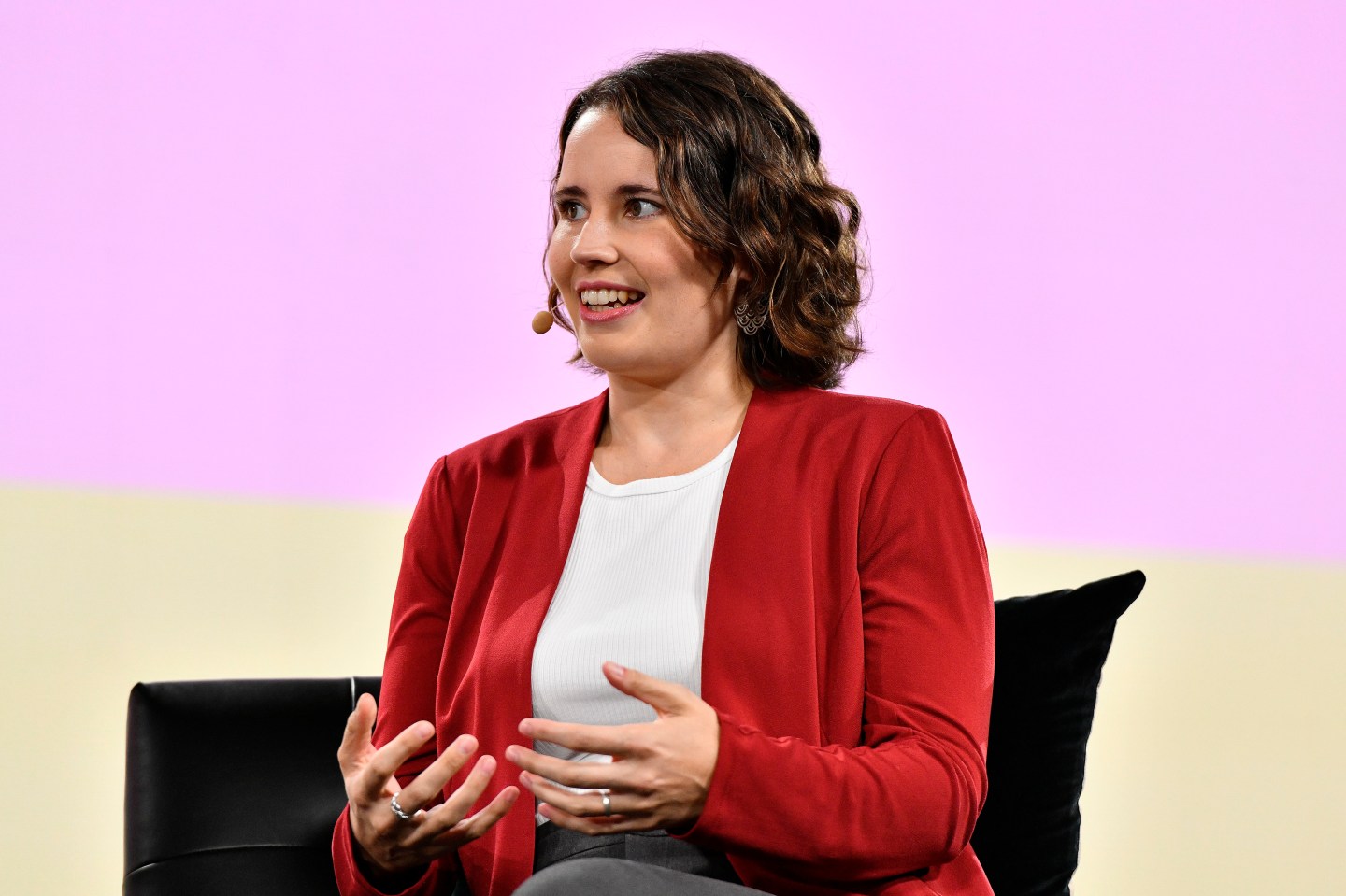
Helen Toner, director of strategy at Georgetown’s Center for Security and Emerging Technology, in September 2023.
Helen Toner, director of strategy at Georgetown’s Center for Security and Emerging Technology, in September 2023.Jerod Harris—Getty Images for Vox Media

Revoking export controls on Nvidia AI chips, or GPUs, would be a “huge victory” for China and DeepSeek, who see access to the sophisticated chips as a strategic necessity for AI dominance, said Helen Toner, director of strategy at Georgetown’s Center for Security and Emerging Technology and a former OpenAI board member.

Recommended Video

“I think it’s possible that Nvidia will use this to persuade [President] Trump that the export controls are just holding back U.S. industry and that he should just revoke them,” she told Fortune.

Toner, who left OpenAI’s board in November 2023 in the aftermath of her controversial vote to fire CEO Sam Altman, made her comments as U.S. industry leaders and policymakers come to terms with the sudden rise of China’s DeepSeek.

DeepSeek grabbed headlines last week after releasing an ultraefficient, low-cost AI model that beat OpenAI’s most sophisticated model, o1, on several benchmarks. DeepSeek got its computing power after purchasing large amounts of special Nvidia chips that were designed to comply with 2022 U.S. export controls and were purportedly less powerful than Nvidia’s most sophisticated AI chips, which were already banned from China. The special China-focused chips were also banned a year later by the Biden administration—but DeepSeek already had them. 

While there are still many unanswered questions about how DeepSeek developed its sophisticated AI models, some industry observers have pointed to its success as evidence that chip export restrictions are ineffective, and do more harm to the chip companies than to the targets of the restrictions.

“The big question is whether or not the Trump administration will pick up where the last administration left off,” Toner said, pointing out that in his last week in office Biden announced a new effort that would strengthen the earlier export controls. “But they could decide to step in and weaken it,” she said.

Notably, the latest updates to the export controls from the Biden team also included measures to stop China from bypassing Nvidia and using manufacturing leader Huawei, through shell companies, to get TSMC (Taiwan Semiconductor Manufacturing Co., which designs and manufactures chips for Nvidia and others) to manufacture chips for the company. 

“Without access to TSMC, Huawei has to rely on [Chinese manufacturer] SMIC to fab their chips, and SMIC is around two generations behind the leading edge, so that’s a meaningful disadvantage,” she noted. 

That said, Toner emphasized that she has “mixed feelings” about the export controls, saying that it is an “open question” whether they are ultimately a wise strategy. But now that the U.S. has started down this path, she explained, it should stay the course. 

“It doesn’t make any sense to try to walk it back,” she explained. “We’ve paid the price … putting China on high alert that chips are a strategic technology, and incentivizing the whole global supply chain to avoid using U.S. components so as not to be subject to extraterritorial controls.” The focus, she said, should be on making sure the controls actually work and are enforced as intended. 

Toner’s take is similar to that of Anthropic CEO Dario Amodei, who published an essay today making the case that export control policies “are even more existentially important than they were a week ago.” Export controls, he said, are vitally important to keep democratic nations at the forefront of AI development. “In the end, AI companies in the U.S. and other democracies must have better models than those in China if we want to prevail,” he wrote. “But we shouldn’t hand the Chinese Communist Party technological advantages when we don’t have to.”

However, Toner said that DeepSeek, as well as China’s Alibaba—which released a new version of its Qwen model today that it claimed surpasses DeepSeek’s R1—are not currently overtaking U.S. frontier AI efforts, and that it is not what a16z founder Marc Andreessen called “AI’s Sputnik moment.” 

“So far, DeepSeek is acting as a fast follower, not leading the pack,” she said. Chinese access to compute remains quite restricted, Toner said, adding that it also has a talent disadvantage, though restrictive U.S. immigration policy helps China to recruit better talent. 

“China is doing everything they can to keep up with the U.S. in AI, and they’re doing well at fast-following,” she said. “But to imply they’re out ahead of us is clearly wrong.” 

Join us at the Fortune Workplace Innovation Summit May 19–20, 2026, in Atlanta. The next era of workplace innovation is here—and the old playbook is being rewritten. At this exclusive, high-energy event, the world’s most innovative leaders will convene to explore how AI, humanity, and strategy converge to redefine, again, the future of work. Register now.
About the Author
Sharon Goldman
By Sharon GoldmanAI Reporter
LinkedIn icon

Sharon Goldman is an AI reporter at Fortune and co-authors Eye on AI, Fortune’s flagship AI newsletter. She has written about digital and enterprise tech for over a decade.

See full bioRight Arrow Button Icon

Latest in Tech

Sarandos
Arts & EntertainmentM&A
It’s a sequel, it’s a remake, it’s a reboot: Lawyers grow wistful for old corporate rumbles as Paramount, Netflix fight for Warner
By Nick LichtenbergDecember 13, 2025
2 hours ago
Oracle chairman of the board and chief technology officer Larry Ellison delivers a keynote address during the 2019 Oracle OpenWorld on September 16, 2019 in San Francisco, California.
AIOracle
Oracle’s collapsing stock shows the AI boom is running into two hard limits: physics and debt markets
By Eva RoytburgDecember 13, 2025
3 hours ago
robots
InnovationRobots
‘The question is really just how long it will take’: Over 2,000 gather at Humanoids Summit to meet the robots who may take their jobs someday
By Matt O'Brien and The Associated PressDecember 12, 2025
16 hours ago
Man about to go into police vehicle
CryptoCryptocurrency
Judge tells notorious crypto scammer ‘you have been bitten by the crypto bug’ in handing down 15 year sentence 
By Carlos GarciaDecember 12, 2025
17 hours ago
three men in suits, one gesturing
AIBrainstorm AI
The fastest athletes in the world can botch a baton pass if trust isn’t there—and the same is true of AI, Blackbaud exec says
By Amanda GerutDecember 12, 2025
18 hours ago
Brainstorm AI panel
AIBrainstorm AI
Creative workers won’t be replaced by AI—but their roles will change to become ‘directors’ managing AI agents, executives say
By Beatrice NolanDecember 12, 2025
18 hours ago

Most Popular

placeholder alt text
Economy
Tariffs are taxes and they were used to finance the federal government until the 1913 income tax. A top economist breaks it down
By Kent JonesDecember 12, 2025
1 day ago
placeholder alt text
Success
Apple cofounder Ronald Wayne sold his 10% stake for $800 in 1976—today it’d be worth up to $400 billion
By Preston ForeDecember 12, 2025
22 hours ago
placeholder alt text
Success
40% of Stanford undergrads receive disability accommodations—but it’s become a college-wide phenomenon as Gen Z try to succeed in the current climate
By Preston ForeDecember 12, 2025
21 hours ago
placeholder alt text
Economy
For the first time since Trump’s tariff rollout, import tax revenue has fallen, threatening his lofty plans to slash the $38 trillion national debt
By Sasha RogelbergDecember 12, 2025
17 hours ago
placeholder alt text
Economy
The Fed just ‘Trump-proofed’ itself with a unanimous move to preempt a potential leadership shake-up
By Jason MaDecember 12, 2025
15 hours ago
placeholder alt text
Success
At 18, doctors gave him three hours to live. He played video games from his hospital bed—and now, he’s built a $10 million-a-year video game studio
By Preston ForeDecember 10, 2025
3 days ago
Rankings
  • 100 Best Companies
  • Fortune 500
  • Global 500
  • Fortune 500 Europe
  • Most Powerful Women
  • Future 50
  • World’s Most Admired Companies
  • See All Rankings
Sections
  • Finance
  • Leadership
  • Success
  • Tech
  • Asia
  • Europe
  • Environment
  • Fortune Crypto
  • Health
  • Retail
  • Lifestyle
  • Politics
  • Newsletters
  • Magazine
  • Features
  • Commentary
  • Mpw
  • CEO Initiative
  • Conferences
  • Personal Finance
  • Education
Customer Support
  • Frequently Asked Questions
  • Customer Service Portal
  • Privacy Policy
  • Terms Of Use
  • Single Issues For Purchase
  • International Print
Commercial Services
  • Advertising
  • Fortune Brand Studio
  • Fortune Analytics
  • Fortune Conferences
  • Business Development
About Us
  • About Us
  • Editorial Calendar
  • Press Center
  • Work At Fortune
  • Diversity And Inclusion
  • Terms And Conditions
  • Site Map

© 2025 Fortune Media IP Limited. All Rights Reserved. Use of this site constitutes acceptance of our Terms of Use and Privacy Policy | CA Notice at Collection and Privacy Notice | Do Not Sell/Share My Personal Information
FORTUNE is a trademark of Fortune Media IP Limited, registered in the U.S. and other countries. FORTUNE may receive compensation for some links to products and services on this website. Offers may be subject to change without notice.