• Home
  • Latest
  • Fortune 500
  • Finance
  • Tech
  • Leadership
  • Lifestyle
  • Rankings
  • Multimedia
CommentaryInsurance

Climate disasters hit Black communities disproportionately hard. ‘Bluelining’ doesn’t help

By
Jerel Ezell
Jerel Ezell
Down Arrow Button Icon
By
Jerel Ezell
Jerel Ezell
Down Arrow Button Icon
January 16, 2025, 7:42 AM ET

Jerel Ezell is a professor and epidemiologist at the University of California Berkeley who studies environmental policy and health.

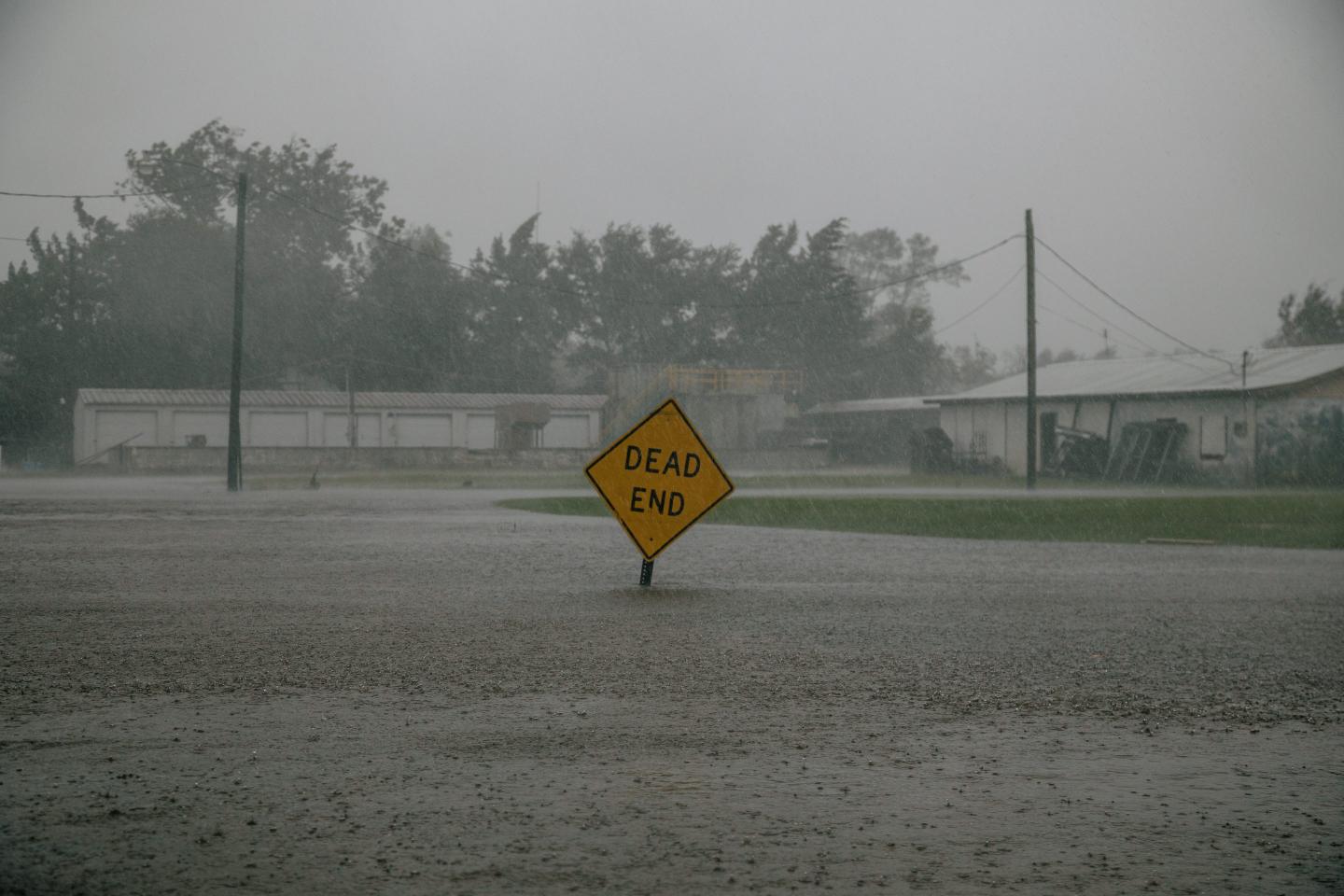
A traffic sign submerged in floodwater after Hurricane Delta made landfall in Louisiana.
A traffic sign submerged in floodwater after Hurricane Delta made landfall in Louisiana. Bryan Tarnowski/Bloomberg

As climate change’s effects continue to more directly manifest in the form of increased and more severe weather, home insurance companies in the U.S. have accelerated policies to offload costs to consumers. Nowhere has this trend been more intimately felt than in Black communities, where a racial gap in climate-related economic disadvantage is quickly deepening. Insurers play a key role in this through a process called “bluelining.”  

Bluelining speaks to how financial institutions, specifically insurers, inflate consumer costs or eliminate service in areas that are both at elevated risk for major environmental harms and inhabited mostly by minorities. The practice is deeply connected to redlining, whereby lenders refuse to extend credit to individuals who are otherwise eligible, as a discriminatory means of controlling where certain populations live. Like redlining, bluelining deepens segregation, creating a buffer between minority populations and social and economic opportunities.

Efforts to restrict bluelining are especially fragile as we begin 2025. The National Oceanic and Atmospheric Administration and the Environmental Protection Agency—government agencies tasked with addressing climate forecasting and mitigation, respectively—appear to be greatly imperiled by President-elect Donald Trump’s agenda. And Scott Bessent, Trump’s pick to head the Treasury Department, which oversees the nation’s home insurance market, strongly advocates for deregulation. 

Homes at risk

For his part, Trump, throughout his campaign, promised to downsize the entities’ workforces and reduce environmental regulations. Less than 48 hours after Hurricane Helene made landfall, he declared “the environmental stuff” to be “one of the great scams of all time.” The effects of Helene—as with the fires now ravaging the Los Angeles area—were greatly exacerbated by climate change. Helene caused an estimated $53 billion in damage in North Carolina, killing more than 100 people in the state.

Studies show that majority Black communities may have up to a 50% greater vulnerability to wildfires compared to their white counterparts. Flooding risks are also substantially elevated in Black communities, potentially increasing by 20% by 2050. Despite this, flooding preparedness efforts in Black communities tend to severely lag behind those in white communities

Severe weather events not only cause costly damage to homes in Black neighborhoods but can also generate catastrophic damage to basic infrastructure, stifling local commerce, transportation, and access to health care. The insurance industry has been watching.

Louisiana, Texas, and Alabama—states with some of the nation’s deepest legacies of redlining—rank within the top 10 states with the most expensive home insurance and also have some of the largest percentages of Black people in the country. Because property insurance is required for most mortgages and business loans, opting out typically isn’t an option. Some insurers, with redlining as their roadmap, have been artificially valuing homes, inflating insurance costs, and disproportionately denying claims in Black communities—and planting the seeds for future Black populations to be trapped in environmentally vulnerable spaces.

Property patterns

So how did we get here? Dating back to the founding of the U.S., white industrialists deliberately sought out and acquired elevated, arable land, leaving racial minorities to live and work in undesirable locations, including low-lying land more prone to flooding. 

Following Reconstruction, Black people fanned out across the country, establishing businesses such as tailoring shops and hardware stores. But racial covenants limited where they  could set up shop, impacting how much their consumer bases could grow. These discriminatory practices fostered a deficit among Black entrepreneurs that persists to this day. 

Only about 3% of businesses in the nation are Black-owned, and they account for just 1% of gross revenue from all classifiable companies. Black entrepreneurs are also disproportionately denied access to capital. And according to an analysis from the Brookings Institution, the 10 metro areas with the highest proportional representation of Black-owned businesses are all in the Southeast, arguably the most climate-imperiled region in the U.S.

Homeowner fairness

There are some steps that we can take to combat bluelining and its consequences. First, the federal government must do more to support and expand public home insurance, or Fair Access to Insurance Requirements (FAIR) programs. States like New York and Hawaii have robust FAIR offerings that provide homeowners with a more affordable alternative, simultaneously pushing private insurers to limit their premiums and stay in high-risk markets.

Second, we need better ways to assess risks. Research shows that in some cases insurers are—intentionally or unintentionally—overestimating the levels of risk that a home might be subject to. This calls for increased transparency and independent scrutiny around risk modeling and underwriting, which states such as California are currently attempting to achieve.

Finally, white communities are more likely than others to have access to federal buyout assistance, due to the limited ways in which the government and insurers promote and make these resources available. We saw this in the aftermath of Hurricane Katrina in 2005. Although the hurricane had a disproportionately greater impact on Black neighborhoods, white people were more likely to file and challenge insurance claims. Government officials and insurers must work together to better market and ease barriers to filing and challenging claims both for homeowners and businesses.

Not until the Fair Housing Act, which was passed in 1968, was redlining prohibited. And even then, the process continued in subtle ways throughout the country—and is reflected today in bluelining. Without action, bluelining has a far higher ceiling for destruction.

The opinions expressed in Fortune.com commentary pieces are solely the views of their authors and do not necessarily reflect the opinions and beliefs of Fortune.

Join us at the Fortune Workplace Innovation Summit May 19–20, 2026, in Atlanta. The next era of workplace innovation is here—and the old playbook is being rewritten. At this exclusive, high-energy event, the world’s most innovative leaders will convene to explore how AI, humanity, and strategy converge to redefine, again, the future of work. Register now.
About the Author
By Jerel Ezell
See full bioRight Arrow Button Icon

Latest in Commentary

Finance
Lorem ipsum dolor sit amet, consectetur adipiscing elit, sed do eiusmod tempor incididunt ut labore et dolore magna aliqua. Ut enim ad minim veniam
By Fortune Editors
October 20, 2025
Finance
Lorem ipsum dolor sit amet, consectetur adipiscing elit, sed do eiusmod tempor incididunt ut labore et dolore magna aliqua. Ut enim ad minim veniam
By Fortune Editors
October 20, 2025
Finance
Lorem ipsum dolor sit amet, consectetur adipiscing elit, sed do eiusmod tempor incididunt ut labore et dolore magna aliqua. Ut enim ad minim veniam
By Fortune Editors
October 20, 2025
Finance
Lorem ipsum dolor sit amet, consectetur adipiscing elit, sed do eiusmod tempor incididunt ut labore et dolore magna aliqua. Ut enim ad minim veniam
By Fortune Editors
October 20, 2025
Finance
Lorem ipsum dolor sit amet, consectetur adipiscing elit, sed do eiusmod tempor incididunt ut labore et dolore magna aliqua. Ut enim ad minim veniam
By Fortune Editors
October 20, 2025
Finance
Lorem ipsum dolor sit amet, consectetur adipiscing elit, sed do eiusmod tempor incididunt ut labore et dolore magna aliqua. Ut enim ad minim veniam
By Fortune Editors
October 20, 2025

Most Popular

Finance
Lorem ipsum dolor sit amet, consectetur adipiscing elit, sed do eiusmod tempor incididunt ut labore et dolore magna aliqua. Ut enim ad minim veniam
By Fortune Editors
October 20, 2025
Finance
Lorem ipsum dolor sit amet, consectetur adipiscing elit, sed do eiusmod tempor incididunt ut labore et dolore magna aliqua. Ut enim ad minim veniam
By Fortune Editors
October 20, 2025
Finance
Lorem ipsum dolor sit amet, consectetur adipiscing elit, sed do eiusmod tempor incididunt ut labore et dolore magna aliqua. Ut enim ad minim veniam
By Fortune Editors
October 20, 2025
Finance
Lorem ipsum dolor sit amet, consectetur adipiscing elit, sed do eiusmod tempor incididunt ut labore et dolore magna aliqua. Ut enim ad minim veniam
By Fortune Editors
October 20, 2025
Finance
Lorem ipsum dolor sit amet, consectetur adipiscing elit, sed do eiusmod tempor incididunt ut labore et dolore magna aliqua. Ut enim ad minim veniam
By Fortune Editors
October 20, 2025
Finance
Lorem ipsum dolor sit amet, consectetur adipiscing elit, sed do eiusmod tempor incididunt ut labore et dolore magna aliqua. Ut enim ad minim veniam
By Fortune Editors
October 20, 2025
Fortune Secondary Logo
Rankings
  • 100 Best Companies
  • Fortune 500
  • Global 500
  • Fortune 500 Europe
  • Most Powerful Women
  • World's Most Admired Companies
  • See All Rankings
  • Lists Calendar
Sections
  • Finance
  • Fortune Crypto
  • Features
  • Leadership
  • Health
  • Commentary
  • Success
  • Retail
  • Mpw
  • Tech
  • Lifestyle
  • CEO Initiative
  • Asia
  • Politics
  • Conferences
  • Europe
  • Newsletters
  • Personal Finance
  • Environment
  • Magazine
  • Education
Customer Support
  • Frequently Asked Questions
  • Customer Service Portal
  • Privacy Policy
  • Terms Of Use
  • Single Issues For Purchase
  • International Print
Commercial Services
  • Advertising
  • Fortune Brand Studio
  • Fortune Analytics
  • Fortune Conferences
  • Business Development
  • Group Subscriptions
About Us
  • About Us
  • Press Center
  • Work At Fortune
  • Terms And Conditions
  • Site Map
  • About Us
  • Press Center
  • Work At Fortune
  • Terms And Conditions
  • Site Map
  • Facebook icon
  • Twitter icon
  • LinkedIn icon
  • Instagram icon
  • Pinterest icon

Latest in Commentary

agentic
CommentaryAI agents
Why your data infrastructure — not your AI model — will determine whether Agentic AI scales
By Jeffrey Sonnenfeld, Stephen Henriques, Catherine Dai and Zander JeinthanuttkanontApril 30, 2026
38 minutes ago
hoskins
Commentaryoffices
Gensler Co-Chair: Hot-desking was supposed to save money. It may be costing you your culture
By Diane HoskinsApril 30, 2026
2 hours ago
tillis
CommentaryCongress
Thom Tillis: Free markets built American prosperity. Government intervention puts it at risk
By Thom Tillis and John StanfordApril 30, 2026
4 hours ago
iran
CommentaryIran
The Strait of Hormuz is a data problem, not just a military one
By Erik Bethel and Ami DanielApril 30, 2026
4 hours ago
hollywood
CommentaryMarketing
I spent 20 years learning to navigate an industry. Then I built a campaign for the man who’s dismantling it
By Matti YahavApril 29, 2026
23 hours ago
aging
HealthLongevity
We’re the CEOs of Peloton and the Hospital for Special Surgery. Living longer isn’t enough, we need to live better, too
By Bryan T. Kelly and Peter SternApril 29, 2026
1 day ago

Most Popular

Apple cofounder Ronald Wayne—whose stake would be worth up to $400 billion had he not sold it in 1976—says that at 91, he has no regrets
Success
Apple cofounder Ronald Wayne—whose stake would be worth up to $400 billion had he not sold it in 1976—says that at 91, he has no regrets
By Preston ForeApril 27, 2026
3 days ago
‘Take the money and run’: Johns Hopkins economist Steve Hanke on why the UAE quit OPEC
Energy
‘Take the money and run’: Johns Hopkins economist Steve Hanke on why the UAE quit OPEC
By Shawn TullyApril 29, 2026
1 day ago
Jamie Dimon gets candid about national debt: ‘There will be a bond crisis, and then we’ll have to deal with it’
Economy
Jamie Dimon gets candid about national debt: ‘There will be a bond crisis, and then we’ll have to deal with it’
By Eleanor PringleApril 29, 2026
1 day ago
‘The cost of compute is far beyond the costs of the employees’: Nvidia executive says right now AI is more expensive than paying human workers
AI
‘The cost of compute is far beyond the costs of the employees’: Nvidia executive says right now AI is more expensive than paying human workers
By Sasha RogelbergApril 28, 2026
2 days ago
‘They left me no choice’: Powell isn’t going anywhere—blocking Trump from another Fed appointee
Banking
‘They left me no choice’: Powell isn’t going anywhere—blocking Trump from another Fed appointee
By Eva RoytburgApril 29, 2026
18 hours ago
More than two-thirds of U.S. schools say they’re unable to afford the cost of student free lunch—and MAHA’s dietary guidelines may make it worse
Economy
More than two-thirds of U.S. schools say they’re unable to afford the cost of student free lunch—and MAHA’s dietary guidelines may make it worse
By Sasha RogelbergApril 29, 2026
1 day ago

© 2026 Fortune Media IP Limited. All Rights Reserved. Use of this site constitutes acceptance of our Terms of Use and Privacy Policy | CA Notice at Collection and Privacy Notice | Do Not Sell/Share My Personal Information
FORTUNE is a trademark of Fortune Media IP Limited, registered in the U.S. and other countries. FORTUNE may receive compensation for some links to products and services on this website. Offers may be subject to change without notice.